
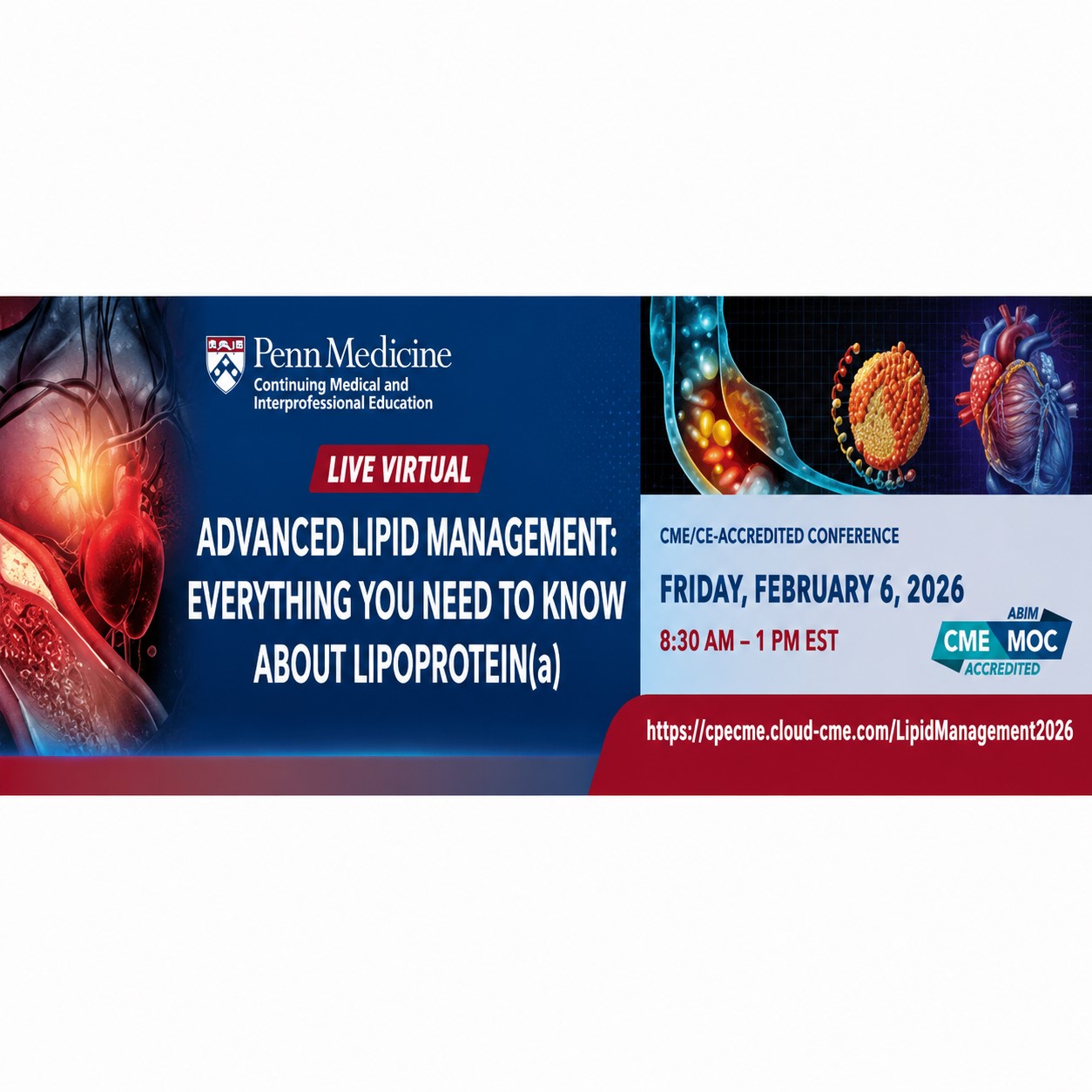
Penn Medicine Advanced Lipid Management Everything you need to know about lipoprotein(a) 2026


Original price was: $50.00.$20.00Current price is: $20.00.
This Product is shared via google drive download link, So please share your correct Gmail id while placing the order .Please note that there are no CME points or certificate associated with this course Samples for Courses Can be found here : Free Samples Here!
11 Videos (.mp4) + 11 Subtitles (.vtt) + 12 PDFs, size: 1.23 GB
Penn Medicine Advanced Lipid Management: Everything You Need to Know About Lipoprotein(a) 2026 (Videos)
Advanced Lipidology, Preventive Cardiology & Cardiovascular Risk Reduction
Overview
Penn Medicine Advanced Lipid Management: Everything You Need to Know About Lipoprotein(a) 2026 is a specialized cardiovascular education program focused exclusively on Lipoprotein(a) [Lp(a)], one of the most important inherited and underrecognized risk factors for atherosclerotic cardiovascular disease (ASCVD). This expert-led course provides a comprehensive review of Lp(a) biology, cardiovascular risk assessment, screening recommendations, clinical management strategies, and emerging therapies that are expected to transform preventive cardiology in the coming years.
Held online on February 6, 2026, this advanced lipid management symposium brings together leading experts in preventive cardiology, lipidology, and cardiovascular medicine to review current scientific evidence and practical approaches for identifying and managing patients with elevated Lp(a).
The course explores the growing role of Lp(a) in coronary artery disease, stroke, aortic valve disease, and residual cardiovascular risk while providing clinicians with the tools necessary to integrate Lp(a) testing into routine cardiovascular practice.
Course Specifications
- Course: Penn Medicine Advanced Lipid Management
- Topic: Everything You Need to Know About Lipoprotein(a)
- Date: February 6, 2026
- Format: Online Video Conference
- Level: Intermediate to Advanced
- Educational Focus: Lipidology, Preventive Cardiology & Cardiovascular Risk Assessment
Course Overview
Lipoprotein(a), commonly abbreviated Lp(a), has emerged as a major independent cardiovascular risk factor associated with:
- Coronary artery disease
- Myocardial infarction
- Ischemic stroke
- Peripheral arterial disease
- Calcific aortic valve stenosis
- Premature cardiovascular disease
Despite its clinical significance, Lp(a) remains underdiagnosed and underutilized in cardiovascular risk assessment. Growing evidence supports broader screening strategies and the incorporation of Lp(a) measurement into preventive cardiology programs.
This course provides an in-depth review of:
- Lp(a) biology and genetics
- Cardiovascular risk implications
- Patient screening strategies
- Interpretation of Lp(a) results
- Current treatment approaches
- Emerging RNA-based therapies
- Future directions in lipid management
Participants will gain practical knowledge that can be immediately applied to improve cardiovascular prevention and patient outcomes.
Learning Objectives
Upon completion of this activity, participants will be able to:
- Describe the biology and genetic determinants of Lipoprotein(a).
- Understand the association between elevated Lp(a) and cardiovascular disease.
- Identify patients who should undergo Lp(a) screening.
- Incorporate Lp(a) measurements into cardiovascular risk assessment.
- Apply current management strategies for patients with elevated Lp(a).
- Evaluate residual cardiovascular risk related to Lp(a).
- Review emerging Lp(a)-lowering therapies currently in development.
- Integrate preventive cardiology principles into lipid management practice.
- Optimize risk reduction strategies for high-risk cardiovascular patients.
Major Topics Covered
Lipoprotein(a) Biology
Structure & Function
- Lipoprotein(a) composition
- Apo(a) structure
- Genetic inheritance patterns
- Metabolic pathways
Pathophysiology
- Atherogenic mechanisms
- Pro-inflammatory effects
- Pro-thrombotic properties
- Vascular injury and plaque development
Lp(a) and Atherosclerotic Cardiovascular Disease
Coronary Artery Disease
- Premature coronary disease
- Myocardial infarction risk
- Residual cardiovascular risk
Cerebrovascular Disease
- Ischemic stroke
- Carotid artery disease
- Cerebral vascular complications
Peripheral Arterial Disease
- Lower extremity vascular disease
- Systemic atherosclerosis
Risk Stratification
- Lp(a) as an independent risk factor
- Integration with traditional risk markers
- Risk prediction models
Lp(a) and Aortic Valve Disease
Calcific Aortic Valve Stenosis
- Mechanisms of valve calcification
- Role of Lp(a) in disease progression
Structural Heart Implications
- Early disease detection
- Clinical monitoring strategies
Future Therapeutic Opportunities
- Disease-modifying approaches
- Emerging intervention targets
Screening & Patient Selection
Who Should Be Tested?
Current recommendations for:
- Patients with premature ASCVD
- Family history of early cardiovascular disease
- Familial hypercholesterolemia
- Recurrent cardiovascular events
- Unexplained residual risk
Population Screening Strategies
- One-time lifetime screening
- High-risk population assessment
- Family cascade screening
Interpretation of Lp(a) Results
Laboratory Assessment
- Measurement techniques
- Standardization challenges
- Units and reporting
Clinical Application
- Risk categorization
- Integration into preventive care
- Shared decision-making
Current Management Strategies
Lifestyle Intervention
- Diet and nutrition
- Exercise programs
- Smoking cessation
- Weight management
Aggressive Risk Factor Modification
- LDL cholesterol reduction
- Blood pressure control
- Diabetes management
- Comprehensive ASCVD prevention
Pharmacologic Management
- Statin therapy
- Ezetimibe
- PCSK9 inhibitors
- Secondary prevention strategies
Emerging Lp(a)-Lowering Therapies
RNA-Based Therapeutics
- Antisense oligonucleotides
- Small interfering RNA (siRNA)
Novel Investigational Agents
- Targeted Lp(a) reduction therapies
- Ongoing clinical trials
Future Clinical Practice
- Expected therapeutic approvals
- Potential impact on cardiovascular prevention
- Personalized lipid management
Preventive Cardiology Applications
Advanced Cardiovascular Prevention
- Personalized risk assessment
- Precision lipid management
- Long-term cardiovascular risk reduction
High-Risk Patient Management
- Secondary prevention
- Family screening programs
- Integrated prevention strategies
Educational Features
✔ Comprehensive review of Lipoprotein(a)
✔ Advanced lipidology education
✔ Preventive cardiology updates
✔ Cardiovascular risk assessment strategies
✔ Aortic valve disease implications
✔ Emerging RNA-based therapies review
✔ Evidence-based screening recommendations
✔ Clinical management algorithms
✔ Expert faculty presentations
✔ Practical implementation guidance
Who Should Attend?
This course is ideal for:
- Cardiologists
- Lipidologists
- Preventive Cardiologists
- Internal Medicine Physicians
- Endocrinologists
- Family Medicine Physicians
- Vascular Medicine Specialists
- Cardiology Fellows
- Internal Medicine Residents
- Advanced Practice Providers
- Nurse Practitioners
- Physician Assistants
Why This Course Stands Out
✔ Dedicated entirely to Lipoprotein(a) education
✔ Focuses on one of the fastest-growing areas in preventive cardiology
✔ Reviews the latest screening recommendations
✔ Covers emerging therapies likely to change future practice
✔ Integrates lipidology with cardiovascular prevention
✔ Explains practical risk assessment strategies
✔ Strong evidence-based approach
✔ Useful for both specialists and primary care clinicians
✔ Reviews Lp(a)-associated aortic valve disease
✔ Helps clinicians prepare for future therapeutic advances
Product Details
Course: Penn Medicine Advanced Lipid Management: Everything You Need to Know About Lipoprotein(a)
Date: February 6, 2026
Format: Online Video Conference
Level: Intermediate to Advanced
Educational Focus: Lipoprotein(a), Lipidology, Preventive Cardiology & Cardiovascular Risk Reduction
4. Topics
-
Case Presentation & Q&A
-
Current Treatment Strategies for Elevated Lp(a)
-
Keynote Lecture- The Initial Journey to Develop a Therapy
-
Lp(a) and Risk for Coronary Disease and Aortic Stenosis
-
Lp(a) and Risk for Peripheral Vascular Disease
-
Lp(a) and Risk for Stroke
-
Lp(a) Biology and Role in Atherosclerosis
-
Lp(a) in Females and Effect of Hormones
-
Novel Lp(a)-Lowering Therapies in Development
-
Welcome & Introductions
-
Where Does Lp(a) fit in Current Guidelines
Related products

Endocrine and Nutrition
Comprehensive Care for Persons with Diabetes 2022: A Certificate Program

Cardiology
Endocrine and Nutrition

Endocrine and Nutrition

Endocrine and Nutrition

Endocrine and Nutrition
Harvard The Blackburn Course in Obesity Medicine Treating Obesity 2023