
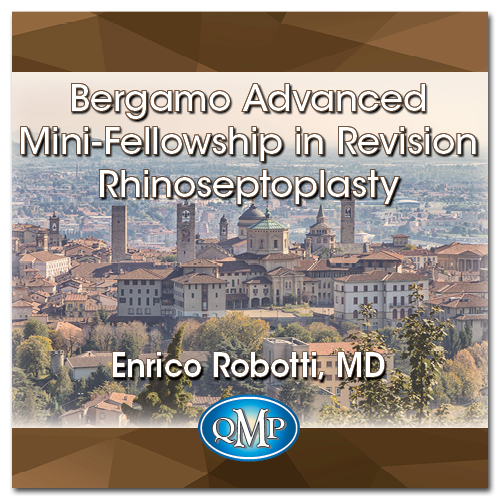
QMP 2016 Bergamo Advanced Mini-Fellowship in Revision Rhinoseptoplasty
Original price was: $225.00.$20.00Current price is: $20.00.
This Product is shared via google drive download link, So please share your correct Gmail id while placing the order .Please note that there are no CME points or certificate associated with this course Samples for Courses Can be found here : Free Samples Here!
QMP 2016 Bergamo Advanced Mini-Fellowship in Revision Rhinoseptoplasty
Master Advanced Techniques in Revision Rhinoseptoplasty
Revision rhinoseptoplasty is among the most technically demanding procedures in facial plastic surgery, requiring meticulous preoperative planning, expert surgical judgment, and mastery of advanced reconstructive techniques. Patients presenting for secondary or tertiary nasal surgery often have complex anatomical deformities, scar tissue, structural deficiencies, and functional airway problems that demand individualized surgical solutions.
QMP 2016 Bergamo Advanced Mini-Fellowship in Revision Rhinoseptoplasty offers an immersive surgical education experience featuring internationally recognized rhinoplasty expert Dr. Roberto Robotti. Through comprehensive operative demonstrations, detailed preoperative analysis, and expert commentary, participants gain valuable insights into the evaluation, planning, and execution of complex revision rhinoseptoplasty procedures.
Each surgical case is presented from initial consultation through postoperative follow-up, allowing viewers to understand every stage of decision-making involved in successful secondary nasal reconstruction. The program combines evidence-based surgical principles with practical operative pearls that help surgeons improve outcomes while minimizing complications in challenging revision cases.
Why Revision Rhinoseptoplasty Is One of the Most Challenging Facial Procedures
Unlike primary rhinoplasty, revision rhinoseptoplasty requires surgeons to address altered anatomy, extensive scar formation, previous surgical modifications, cartilage depletion, and compromised nasal support. Successful reconstruction depends on careful analysis of structural abnormalities, precise operative planning, and advanced grafting techniques that restore both nasal function and aesthetic harmony.
This fellowship provides a step-by-step approach to managing difficult revision cases using modern reconstructive strategies, emphasizing long-term stability, functional restoration, and natural aesthetic results.
Course Overview
The QMP 2016 Bergamo Advanced Mini-Fellowship in Revision Rhinoseptoplasty follows three complex revision rhinoplasty surgeries performed by Dr. Robotti.
Each procedure begins with an extensive preoperative assessment that includes clinical photography, facial analysis, CT scan interpretation, surgical planning, and postoperative simulation. Participants then observe every stage of surgery, including patient markings, incision design, tissue elevation, structural reconstruction, graft harvesting, graft shaping, fixation techniques, wound closure, postoperative dressing, and long-term clinical outcomes.
Throughout the procedures, Dr. Robotti shares practical surgical tips, technical modifications, complication avoidance strategies, and decision-making principles developed through extensive experience in revision rhinoplasty.
Postoperative photographic follow-up demonstrates long-term functional and aesthetic outcomes, allowing participants to appreciate the effectiveness of advanced reconstructive techniques.
What You’ll Learn
Participants will gain detailed knowledge in:
- Revision Rhinoseptoplasty Principles
- Secondary Rhinoplasty
- Complex Nasal Reconstruction
- Functional Rhinoplasty
- Aesthetic Rhinoplasty
- Nasal Airway Reconstruction
- Preoperative Clinical Analysis
- Facial Aesthetic Assessment
- CT Scan Interpretation
- Surgical Planning
- Digital Surgical Simulation
- Open Rhinoplasty Approach
- Surgical Markings
- Precise Incision Design
- Soft Tissue Dissection
- Scar Tissue Management
- Septal Reconstruction
- Modified Extracorporeal Septoplasty
- Differential Osteotomies
- Nasal Framework Reconstruction
- Laminated Rib Cartilage Frameworks
- Rib Cartilage Harvesting
- Temporalis Fascia Harvest
- Diced Cartilage Fascia (DCF) Grafts
- Cartilage Sculpting
- Structural Grafting Techniques
- Tip Reconstruction
- Dorsal Reconstruction
- Septal Fistula Repair
- Crooked Nose Correction
- Saddle Nose Reconstruction
- Open Roof Deformity Management
- Nasal Valve Support
- Functional Outcome Optimization
- Aesthetic Refinement
- Complication Prevention
- Postoperative Care
- Long-Term Outcome Evaluation
Learning Objectives
After completing this course, participants will be able to:
- Perform comprehensive preoperative evaluations for revision rhinoseptoplasty patients.
- Analyze clinical photographs, CT imaging, and nasal anatomy to formulate individualized surgical plans.
- Develop operative strategies for managing complex secondary nasal deformities.
- Execute precise surgical markings, incisions, and tissue dissections.
- Harvest rib cartilage and temporalis fascia safely and efficiently.
- Construct and position structural grafts for nasal reconstruction.
- Apply diced cartilage fascia techniques in complex dorsal augmentation.
- Correct severe nasal deformities, including crooked noses, saddle nose deformities, septal perforations, and residual open roof defects.
- Restore both nasal aesthetics and airway function using evidence-based reconstructive techniques.
- Recognize potential intraoperative challenges and implement strategies that reduce complications and improve surgical outcomes.
Surgical Techniques Covered
This fellowship demonstrates numerous advanced operative techniques, including:
Revision Rhinoplasty
- Secondary nasal reconstruction
- Structural rhinoplasty
- Open approach rhinoplasty
- Nasal framework restoration
- Revision tip surgery
Grafting Techniques
- Costal cartilage harvest
- Rib cartilage carving
- Laminated rib grafts
- Temporalis fascia graft harvest
- Diced Cartilage Fascia (DCF)
- Septal graft reconstruction
- Structural support grafts
Functional Reconstruction
- Septal reconstruction
- Modified extracorporeal septoplasty
- Nasal airway improvement
- Internal nasal valve correction
- External valve stabilization
Complex Deformity Correction
- Crooked nose deformity
- Saddle nose reconstruction
- Septal fistula repair
- Open roof correction
- Asymmetric nasal reconstruction
- Scar tissue management
Skills You’ll Gain
Participants will strengthen practical skills in:
- Revision Rhinoplasty Planning
- Facial Analysis
- Nasal Anatomy
- Functional Nasal Surgery
- Structural Grafting
- Rib Cartilage Harvesting
- Temporalis Fascia Harvesting
- Cartilage Sculpting
- Septal Reconstruction
- Osteotomy Planning
- Airway Preservation
- Surgical Decision-Making
- Complication Avoidance
- Intraoperative Problem Solving
- Postoperative Assessment
Who Should Attend?
This advanced fellowship is intended for surgeons seeking to improve their expertise in revision rhinoplasty and complex nasal reconstruction.
Ideal participants include:
- Plastic Surgeons
- Facial Plastic Surgeons
- Otolaryngologists (ENT Surgeons)
- Maxillofacial Surgeons
- Craniofacial Surgeons
- Cosmetic Surgeons
- Reconstructive Surgeons
- Rhinoplasty Fellows
- Plastic Surgery Residents
- ENT Residents
Course Highlights
- Three complete revision rhinoseptoplasty procedures
- Step-by-step operative demonstrations
- Comprehensive preoperative planning
- Clinical photography analysis
- CT scan interpretation
- Surgical simulation review
- Rib cartilage harvesting techniques
- Temporalis fascia harvesting
- Diced Cartilage Fascia (DCF) grafting
- Advanced structural graft placement
- Functional nasal reconstruction
- Expert surgical commentary
- Intraoperative pearls and technical tips
- Long-term postoperative results
- Evidence-based revision rhinoplasty strategies
Why Choose This Fellowship?
Revision rhinoseptoplasty demands exceptional technical skill, careful surgical planning, and extensive reconstructive experience. This fellowship provides direct access to the operative techniques and clinical reasoning of an internationally recognized rhinoplasty expert through detailed surgical demonstrations and real-world case discussions.
Rather than presenting isolated techniques, the program follows each patient from initial evaluation through postoperative recovery, allowing participants to understand every critical decision involved in successful revision surgery.
Whether your goal is improving functional outcomes, refining aesthetic results, mastering advanced grafting techniques, or managing the most challenging secondary rhinoplasty cases, this fellowship delivers practical knowledge that can immediately enhance your surgical practice.
Topics
-
Secondary Rhinoplasty in Crooked Nose With Septal Fistula: Laminated Rib Framework, Septal Extension Graft, Tip-plasty With Multiple Grafts, and Diced Cartilage Fascia.
-
Secondary Rhinoplasty With Residual Open Roof, Septal Deviation and Alar Retraction: Differential Osteotomies, Modified Extracorporeal Septoplasty, Lateral Crural Transposition, and Multiple Grafting.
-
Secondary Rhinoplasty in Previous Rib Grafting With Saddling and Multiple Deformities: New Rib Laminated Grafting, Osteotomies, Bone Reshaping, Sidewall and Tip Grafting, and Diced Cartilage Fascia.
Related products
Plastic Surgery
Plastic Surgery
Dermatology
Plastic Surgery
South American Plastic Surgery Breast & Body Experts Cancun 2020