Scripps Oncology Update 2026 (Videos + Subtitles)
Oncology Update | Multidisciplinary Cancer Care | Lung Cancer | Breast Cancer | Brain Metastases | Colorectal Cancer | Cellular Therapy
Course Overview
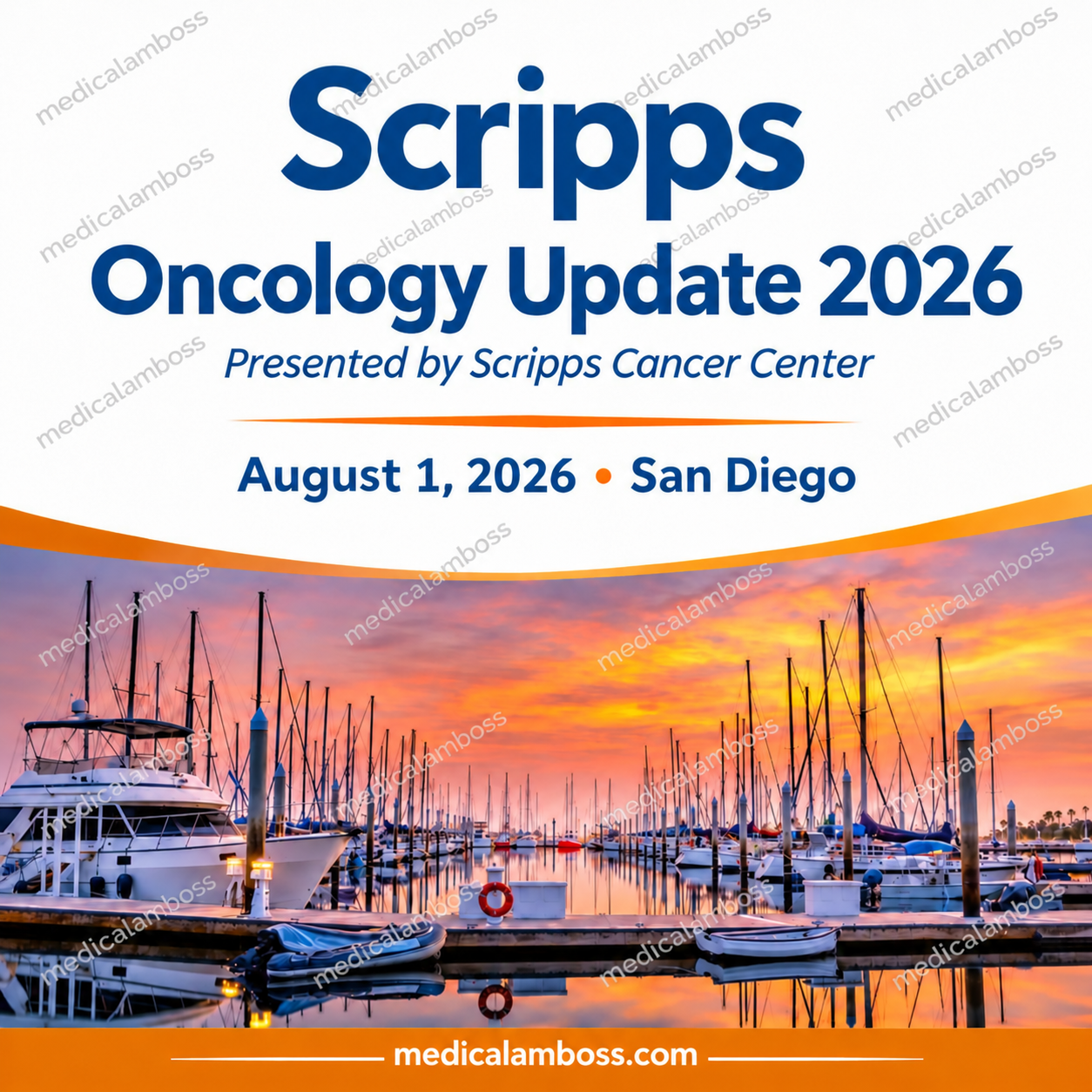
Scripps Oncology Update 2026, presented by Scripps Cancer Center, brings together perspectives from medical oncology, radiation oncology, and surgery to examine developments in multidisciplinary cancer care. The original one-day conference was held on Saturday, August 1, 2026, in San Diego.
The conference’s broader overview encompasses melanoma, lung cancer, colorectal cancer, breast cancer, metastatic prostate cancer, central nervous system (CNS) metastases, and oligometastatic disease. Its educational approach connects clinical research and findings from major national meetings with the management of complex cancer cases.
The supplied collection contains 13 recordings with accompanying subtitle files. These recordings focus on brain metastases, non-small cell lung cancer (NSCLC), HER2-positive breast cancer, colorectal cancer, and cellular therapy. Lectures, focused case discussions, and a panel discussion explore how surgery, radiation, systemic treatment, molecular findings, and emerging therapies inform treatment selection and sequencing.
Files Included and Conference Details
| Information | Details |
|---|---|
| Conference | Scripps Cancer Center Oncology Update 2026 |
| Presented By | Scripps Cancer Center |
| Original Conference Date | Saturday, August 1, 2026 |
| Location | San Diego |
| Collection Format | Videos + Subtitles |
| Included Recordings | 13 |
| Total Video Duration | 3 Hours, 39 Minutes, 45 Seconds |
| PDF Materials | No PDFs, PDF slides, or PDF syllabus are included |
Target Audience
Medical oncologists, radiation oncologists, surgeons, physicians, nurse practitioners, physician assistants, and other advanced practice providers involved in multidisciplinary cancer care.
Original Conference Educational Objectives
The following objectives describe the original conference’s educational scope:
- Integrate evidence-based treatment strategies into clinical practice to optimize patient outcomes and clinical care.
- Evaluate the latest advances in clinical oncology research and their implications for patient care.
- Examine the impact of novel diagnostic techniques in the management and assessment of various oncologic malignancies.
- Recognize and manage common and more recently appreciated side effects of cancer therapy, including cardiotoxicities and immune-related adverse events.
- Implement multidisciplinary collaboration and shared decision-making into the management of complex patient cases and treatment-related complications.
Included Video List – 13 Recordings
| No. | Video Title | Runtime |
|---|---|---|
| 1 | Skull Base and Intracranial Tumors: Multidisciplinary Surgical Strategies with 3-D Imaging, Endoscopy, and Awake Mapping | 24:06 |
| 2 | NSCLC Brain Metastases: Strategies for Integrating Surgery, SRS, IO, and Bevacizumab | 08:40 |
| 3 | HER2+ Breast Cancer Brain Metastases: Sequencing Trastuzumab Deruxtecan Before Surgery or SRS | 05:58 |
| 4 | Brain Metastases: Pre- vs Post-Op Stereotactic Radiosurgery – Multidisciplinary Sequencing Insights | 09:03 |
| 5 | HER2-Positive Breast Cancer Brain Metastases: Imaging Strategies to Distinguish Radiation Necrosis Versus Tumor Progression | 10:53 |
| 6 | Early-Stage NSCLC: Navigating Surgery vs SBRT and Molecularly Guided Adjuvant Decisions | 09:09 |
| 7 | Stage 3 NSCLC Neoadjuvant Chemo-Immunotherapy: Multidisciplinary Strategies to Achieve R0 Resection | 09:33 |
| 8 | EGFR- and ALK-Positive mNSCLC: Sequencing Next-Gen TKIs and Focal CNS Radiation at 1L and Beyond | 07:06 |
| 9 | Panel Discussion: KRAS Inhibitor Daraxonrasib, Cord Blood in HSCT, MRD in CRC, Cellular Therapy in Solid Tumors | 21:55 |
| 10 | 2026 New Systemic Treatment Approaches for Colorectal Cancer | 31:36 |
| 11 | NSCLC Biomarker-Driven Care: Sequencing Targeted, IO, and ADC Therapies From Early Stage to Metastatic | 30:35 |
| 12 | HER2-Positive Breast Cancer: Sequencing T-DXd, Tucatinib, and THP While Balancing Escalation and De-Escalation Decisions | 26:42 |
| 13 | Advances in Cellular Therapy: From Stem Cell Transplantation to Next-Generation Engineered Immune Cells | 24:29 |
Core Topics Covered
1. CNS and Brain Metastases
Explore multidisciplinary approaches to skull base and intracranial tumors, including three-dimensional imaging, endoscopy, and awake mapping. The collection also examines brain metastases arising from NSCLC and HER2-positive breast cancer, treatment sequencing, preoperative versus postoperative stereotactic radiosurgery (SRS), and imaging strategies for distinguishing radiation necrosis from tumor progression.
2. Non-Small Cell Lung Cancer (NSCLC)
Review early-stage NSCLC discussions addressing surgery versus stereotactic body radiation therapy (SBRT) and molecularly guided adjuvant decisions. Additional sessions examine neoadjuvant chemo-immunotherapy and strategies to achieve R0 resection in Stage III disease, as well as EGFR-positive and ALK-positive metastatic NSCLC. Topics include next-generation tyrosine kinase inhibitors, focal CNS radiation, and biomarker-driven sequencing of targeted therapies, immunotherapy, and antibody-drug conjugates.
3. HER2-Positive Breast Cancer
Examine systemic treatment sequencing in HER2-positive breast cancer, with discussions of trastuzumab deruxtecan (T-DXd), tucatinib, and THP. The recordings address escalation and de-escalation decisions, brain metastases, and the relationship between systemic treatment, surgery, and stereotactic radiosurgery in multidisciplinary planning.
4. Colorectal Cancer
Review new systemic treatment approaches for colorectal cancer and their relationship to clinical research and treatment developments. The panel discussion also includes minimal residual disease (MRD) in colorectal cancer, placing this topic within a broader exchange on emerging oncology strategies.
5. Cellular Therapy and Stem Cell Transplantation
Explore developments spanning hematopoietic stem cell transplantation (HSCT), the role of cord blood in HSCT, and next-generation engineered immune cells. The collection includes discussion of cellular therapy in solid tumors alongside wider advances in cellular treatment approaches.
6. Emerging Oncology Treatments
Topics include RAS-targeted therapies, including daraxonrasib, targeted treatments, immunotherapy, and antibody-drug conjugates. Across the recordings, molecularly guided treatment decisions and emerging clinical approaches provide context for reviewing how oncology practice continues to evolve.
7. Multidisciplinary Cancer Management
The collection connects medical oncology, radiation oncology, and surgical oncology through complex case management and treatment-sequencing discussions. It emphasizes the contribution of multidisciplinary collaboration, clinical decision-making, and shared decision-making to the assessment of challenging cancer cases.