Simple Education Online Cardiac Catheter Lab Courses 4 Parts


Original price was: $400.00.$25.00Current price is: $25.00.
This Product is shared via google drive download link, So please share your correct Gmail id while placing the order .Please note that there are no CME points or certificate associated with this course. Samples for Courses Can be found here : Free Samples Here!
43 Videos + 35 PPTX + 3 PDFs
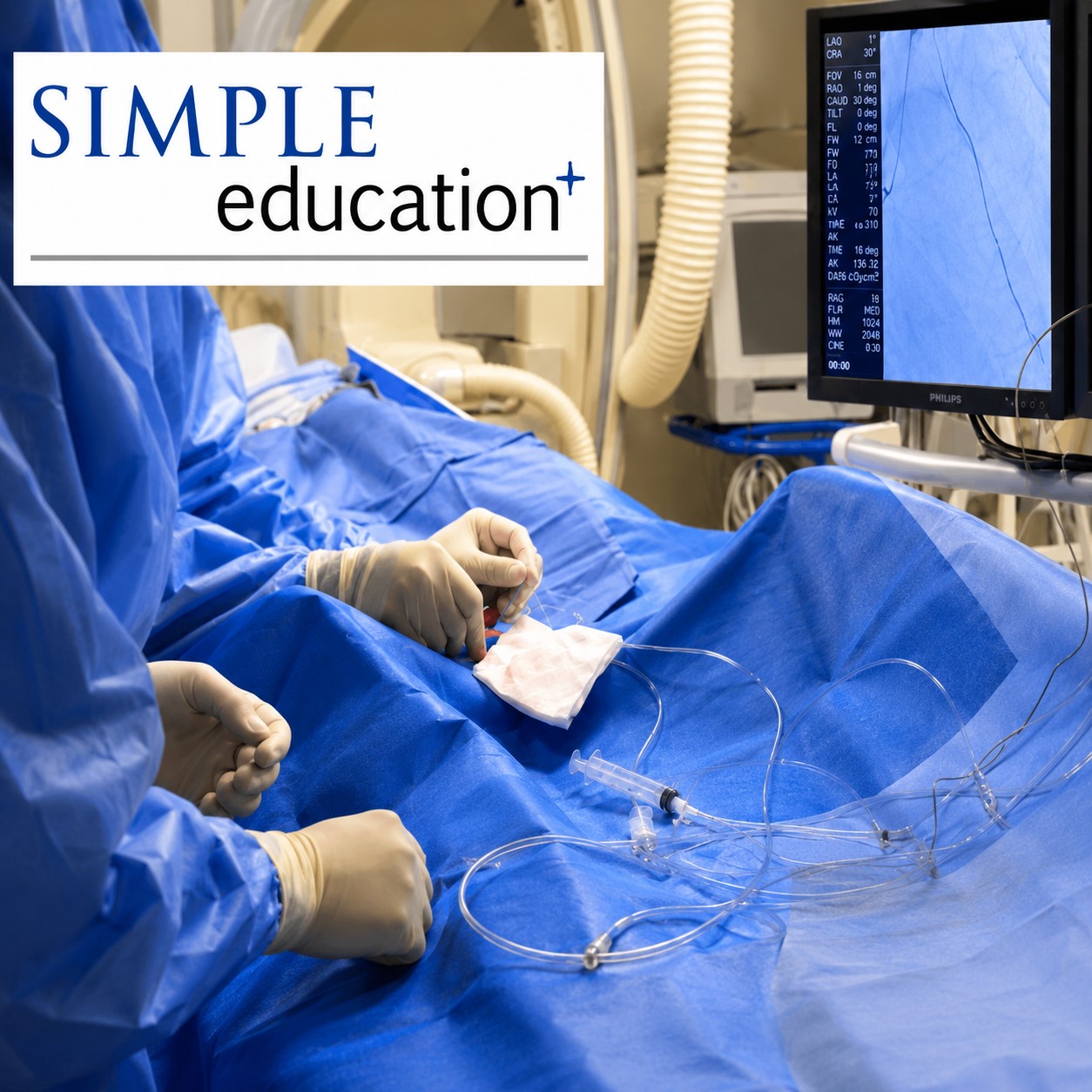
Simple Education Online Cardiac Catheter Lab Courses (4 Parts)
Complete Coronary Angiography, PCI & Structural Heart Intervention Training Program
Simple Education Online Cardiac Catheter Lab Courses (4 Parts) is a comprehensive interventional cardiology training program designed to provide healthcare professionals with practical, real-world knowledge of modern cardiac catheterization, coronary angiography, coronary intervention, structural heart procedures, and valvular heart disease management.
Featuring 43 video lectures, 35 PowerPoint presentations, and 3 PDF resources, this extensive educational package guides learners through the fundamentals and advanced concepts of contemporary catheter laboratory practice. Developed by internationally recognized interventional cardiologists from Imperial College NHS Trust, the course combines evidence-based teaching, procedural demonstrations, case-based learning, and “Case-in-a-Box” simulations to create a highly practical learning experience.
The program is designed to help participants develop the confidence and skills necessary to understand patient selection, procedural planning, catheter-based interventions, and post-procedural management in modern interventional cardiology.
Course Overview
Cardiac catheterization laboratories have evolved rapidly over the past decade with the introduction of advanced coronary interventions, transcatheter valve therapies, intracoronary imaging, physiological assessment tools, and structural heart procedures.
The Simple Education Online Cardiac Catheter Lab Courses provide a structured review of contemporary interventional cardiology practice, covering coronary angiography, coronary stenting, transcatheter aortic valve implantation (TAVI/TAVR), atrial septal defect closure, left atrial appendage occlusion, and management of valvular heart disease.
Participants gain practical insight into procedural techniques, patient selection, imaging interpretation, complication management, and multidisciplinary decision-making essential for modern catheter laboratory practice.
Learning Objectives
Upon completion of this course, participants will be able to:
- Understand the principles of cardiac catheterization laboratory practice.
- Perform systematic interpretation of coronary angiography.
- Evaluate patients for coronary intervention and revascularization.
- Understand indications and techniques for percutaneous coronary intervention (PCI).
- Identify patients suitable for structural heart interventions.
- Discuss transcatheter valve replacement and repair procedures.
- Apply contemporary evidence-based approaches to valvular heart disease.
- Interpret invasive hemodynamic and angiographic findings.
- Recognize procedural complications and management strategies.
- Improve multidisciplinary communication regarding interventional treatment options.
Major Topics Covered
Coronary Angiography
Fundamentals of Coronary Imaging
- Coronary anatomy
- Angiographic projections
- Catheter selection
- Contrast administration
- Radiation safety
Interpretation Skills
- Coronary lesion assessment
- Vessel anatomy recognition
- Severity grading
- Complex lesion evaluation
Percutaneous Coronary Intervention (PCI)
Coronary Stenting
- PCI indications
- Lesion preparation
- Balloon angioplasty
- Drug-eluting stents
- Complex PCI techniques
Advanced Coronary Intervention
- Bifurcation lesions
- Chronic total occlusions (CTO)
- Calcified coronary disease
- Left main interventions
Interventional Cardiology Fundamentals
Patient Selection
- Risk stratification
- Revascularization planning
- Heart team approach
- Evidence-based decision making
Procedural Planning
- Access strategies
- Device selection
- Procedural workflow
Structural Heart Disease
Transcatheter Structural Interventions
- Structural heart disease evaluation
- Procedural indications
- Patient selection
- Imaging guidance
Transcatheter Aortic Valve Implantation (TAVI/TAVR)
Aortic Valve Disease
- Aortic stenosis evaluation
- Surgical versus transcatheter treatment
- Procedural planning
TAVI Procedure
- Valve deployment
- Imaging guidance
- Post-procedural assessment
- Complication management
Case-in-a-Box Learning
- Live procedural demonstrations
- Real-world TAVI cases
- Expert procedural commentary
Left Atrial Appendage (LAA) Closure
Stroke Prevention
- Atrial fibrillation management
- Anticoagulation alternatives
- Patient selection criteria
LAA Occlusion Procedures
- Device implantation
- Imaging assessment
- Procedural planning
- Follow-up care
Atrial Septal Defect (ASD) Closure
Congenital Structural Heart Disease
- ASD diagnosis
- Hemodynamic assessment
- Closure indications
Percutaneous Closure Techniques
- Device selection
- Procedural guidance
- Outcome assessment
Valvular Heart Disease
Comprehensive Valve Management
- Aortic valve disease
- Mitral valve disease
- Tricuspid valve disease
Interventional Treatment Options
- Surgical versus percutaneous therapy
- Patient selection
- Long-term outcomes
Invasive Hemodynamics
Cardiac Catheterization Measurements
- Pressure waveforms
- Cardiac output calculations
- Hemodynamic assessment
- Valve disease evaluation
Complications & Safety
Procedural Complications
- Vascular access complications
- Coronary complications
- Structural intervention complications
Prevention & Management
- Risk reduction strategies
- Emergency management
- Quality improvement
Educational Features
✔ 43 comprehensive video lectures
✔ 35 PowerPoint educational presentations
✔ 3 PDF reference resources
✔ Case-based learning approach
✔ Real-world catheter laboratory training
✔ Live “Case-in-a-Box” procedural demonstrations
✔ Structural heart intervention education
✔ Coronary angiography interpretation training
✔ Practical interventional cardiology focus
✔ Developed by internationally recognized experts
Course Directors
Sayan Sen
Consultant Cardiologist specializing in coronary physiology, coronary intervention, and advanced catheter-based cardiovascular therapies.
Justin Davies
Internationally recognized expert in interventional cardiology, coronary physiology, and cardiovascular innovation.
Who Should Attend?
This course is ideal for:
- Interventional Cardiologists
- General Cardiologists
- Cardiology Fellows
- Internal Medicine Physicians
- Structural Heart Specialists
- Cardiac Catheterization Laboratory Staff
- Cardiac Nurses
- Cath Lab Technologists
- Physician Assistants
- Nurse Practitioners
- Cardiovascular Trainees
- Residents interested in cardiology
- Physicians preparing for interventional cardiology training
Why This Course Stands Out
✔ Comprehensive introduction to modern catheter laboratory practice
✔ Covers both coronary and structural heart interventions
✔ Includes TAVI, ASD closure, and LAA occlusion procedures
✔ Practical, real-world interventional cardiology training
✔ Case-based learning with procedural demonstrations
✔ Developed by internationally recognized interventional experts
✔ Suitable for beginners and advanced learners
✔ Focuses on patient selection and procedural decision-making
✔ Excellent supplement for interventional cardiology training
✔ Combines theory, imaging, and procedural practice
Topics :
- – 01 Overview
- – 02 Does This Patient Need an Angiogram
- – 03 The Definitive Guide for Successful Arterial Access
- – 04 Prevention of Contrast Induced Nephropathy
- – 05 Right and Left Heart Catheterisation Made Easy
- – 06 Recognise and Respond Promptly to the Peri-Arrest Patient
- – 07 Get it Right or Get Stuck Later – Choosing Your Catheter
- – 08 What View is This – Recognise and Refine Coronary Views
- – 09 Graft Cases – Don_t Panic – We_ll Show You How to Make Them Easy
- – 10 Become Confident and Safe with Vascular Closure
- – 11 Recognise Post Angiography Problems Early and Treat Decisively
- – 01 Introduction
- – 02 Managing Chest Pain – is NICE a Help or a Hindrance
- – 03 Using CT to Determine Patient Risk and Management
- – 04 ABC of Primary Prevention and Anti-Anginals
- – 05 When to Use ETT, DSE, CT, Nuclear and CMR
- – 06 Essential Guide to Intra-Coronary Physiology for General Cardiologist
- – 07 Essential Guide to Intra-coronary Imaging for the General Cardiologist
- – 08 Essential Guide to Stents, Bioabsorbable Vascular Scaffolds _ Drug Elution Balloons
- – 09 Essential Guide to Anti-platelets and Anti-coagulants (inc NOACS)
- – 10 Should This Patient Have a CABG or Stent or Medical Therap
- – 11 Be Confident at Your Heart Team Meeting
- – 01 overview
- – 02 Does this Patient Need an Angioplasty
- – 03 Preparing Your Patient for Angioplasty – What Complications Should You Discuss and What is their Incidence
- – 04 Fail Safe Guide to Access Routes and Guide Catheters in Acutely Unwell Patients
- – 05 Anti-platelet Therapy and Anticoagulants in ACS Patients
- – 06 Recorded Live Case and Discussion
- – 07 Thrombus Aspiration and Balloon Pumps – What_s the Bottom Line
- – 08 How Should You Treat and Assess Non-culprit Disease
- – 09 What Medication Should the Patient Have on Discharge and Why
- – 10 Post PPCI complications – When to Take the Patient Back to the Lab
- – 01 overview
- – 02 When Shall I Refer my Patient with Aortic Stenosis or Regurgitation for Surgery
- – 03 Who gets a TAVI in the UK
- – 04 What is the future of TAVI
- – 05 What Can You Do if They are Not Fit for Surgery or TAVI
- – 06 Live case in-a-box
- – 07 What You Need to Know When Managing the Post TAVI Patient
- – 08 When Shall I Refer my Patient with Mitral Stenosis or Regurgitation for Surgery
- – 09 Percutaneous ASD Closure – Recorded Case
- – 10 Who Gets a Left Atrial Appendage Closure Device
- – 11 When Should I Refer for PFO and ASD Closure
Related products

Internal Medicine
Critical Care - Emergency medicine
ASN Critical Care Nephrology – 2022 Update (On-Demand and Livestream)
Anesthesiology & pain medicine
Anesthesiology & pain medicine
Critical Care Symposium: Mastering ED Mechanical Ventilation

Internal Medicine

USMLE / kaplan and Board Review
Uworld USMLE COMLEX Level 1 Qbank, Updated Jan 2023, System- and Subject-wise (PDF)

Critical Care - Emergency medicine