
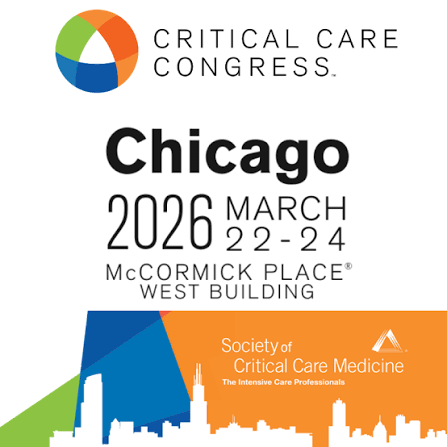
Society of Critical Care Medicine Congress Digital 2026
$150.00
Critical care congress review covering sepsis, ARDS, ventilation, ECMO, CRRT, neurocritical care, POCUS, pediatric intensive care, and data science.
Delivery Information: This Product is shared via google drive download link. Please use your correct Gmail address at checkout.
Please note: there are no CME points or certificate associated with this course.
Samples for Courses Can be found here: Free Samples Here!
Society of Critical Care Medicine (SCCM) Congress Digital 2026 (Videos)
Comprehensive Updates in Adult & Pediatric Critical Care, Sepsis, ARDS, ECMO, CRRT, Mechanical Ventilation, Artificial Intelligence, Point-of-Care Ultrasound, and Precision Intensive Care Medicine
Stay at the cutting edge of intensive care medicine with the Society of Critical Care Medicine (SCCM) Congress Digital 2026, SCCM’s official multidisciplinary critical care education program; this MedicalAmboss product provides only the listed course files and does not include SCCM membership, registration, or CME credit. Developed by the Society of Critical Care Medicine (SCCM), this comprehensive digital congress delivers the latest scientific discoveries, clinical guidelines, translational research, and technological innovations transforming the care of critically ill adult and pediatric patients.
Released April 24, 2026, the digital program features hundreds of expert-led presentations, presidential addresses, honorary lectures, scientific sessions, and multidisciplinary panel discussions covering every aspect of modern intensive care medicine. Participants gain access to the newest evidence in sepsis management, acute respiratory distress syndrome (ARDS), mechanical ventilation, extracorporeal life support, neurocritical care, critical care pharmacology, artificial intelligence, data science, and precision medicine.
The curriculum brings together internationally recognized leaders in critical care, pulmonology, emergency medicine, surgery, anesthesiology, nephrology, neurology, infectious diseases, pediatrics, obstetrics, pharmacy, and healthcare leadership to provide an evidence-based review of the rapidly evolving landscape of intensive care medicine.
Product Details
- Course: Society of Critical Care Medicine (SCCM) Congress Digital 2026
- Provider: Society of Critical Care Medicine (SCCM)
- Release Date: April 24, 2026
- Format: Digital Videos
- Language: English
- Educational Level: Advanced
- Learning Format: Scientific Lectures, Presidential Sessions, Expert Panels, Clinical Research Presentations, Case Discussions
Course Overview
Critical care medicine continues to evolve rapidly through advances in precision medicine, artificial intelligence, extracorporeal organ support, critical care pharmacology, and data-driven clinical decision-making. Modern intensivists must integrate emerging technologies with evidence-based guidelines while managing increasingly complex critically ill patients across diverse healthcare environments.
The SCCM Congress Digital 2026 provides one of the world’s most comprehensive reviews of adult and pediatric intensive care medicine. Participants explore the latest international guidelines, groundbreaking clinical trials, translational research, and practical bedside strategies for managing sepsis, respiratory failure, shock, neurological emergencies, renal replacement therapy, and multisystem organ dysfunction.
Special emphasis is placed on multidisciplinary collaboration, ICU quality improvement, workforce sustainability, resource-limited critical care, and innovative digital technologies that are reshaping modern intensive care practice.
What You’ll Learn
After completing this course, participants will be able to:
- Apply the latest 2026 Surviving Sepsis Campaign recommendations for adult and pediatric patients.
- Utilize the Phoenix Criteria for sepsis classification across various healthcare settings.
- Optimize management of complex shock states using advanced hemodynamic monitoring and point-of-care ultrasound (POCUS).
- Safely implement ECMO, CRRT, and advanced extracorporeal therapies.
- Integrate artificial intelligence and predictive analytics into ICU clinical decision-making.
- Apply evidence-based mechanical ventilation strategies for ARDS and respiratory failure.
- Optimize antimicrobial stewardship and precision pharmacotherapy in critically ill patients.
- Manage complex neurologic, pediatric, obstetric, renal, toxicologic, and surgical emergencies in the intensive care unit.
Comprehensive Topics Covered
Sepsis & Septic Shock
Review the latest international recommendations for early recognition and management.
Topics include:
- Surviving Sepsis Campaign 2026
- Pediatric Sepsis Guidelines
- Phoenix Criteria
- Septic shock
- Early resuscitation
- Biomarkers
- Precision sepsis management
Faculty discuss implementation of updated sepsis pathways across diverse healthcare systems.
Acute Respiratory Distress Syndrome (ARDS)
Strengthen evidence-based management of severe respiratory failure.
Topics include:
- ARDS phenotypes
- Lung-protective ventilation
- Prone positioning
- Recruitment strategies
- ECMO
- Personalized respiratory care
- Critical respiratory support
Mechanical Ventilation
Master advanced ventilator management for critically ill patients.
Topics include:
- Invasive ventilation
- Non-invasive ventilation
- Ventilator modes
- Driving pressure
- Weaning strategies
- Ventilator-induced lung injury
- Respiratory monitoring
Extracorporeal Organ Support
Review modern extracorporeal technologies in intensive care.
Topics include:
- Extracorporeal Membrane Oxygenation (ECMO)
- Continuous Renal Replacement Therapy (CRRT)
- Systemic anticoagulation
- Circuit management
- Extracorporeal life support
- Ethical considerations
Hemodynamic Monitoring & Shock
Enhance bedside assessment of critically ill patients.
Topics include:
- Point-of-care ultrasound (POCUS)
- Echocardiography
- Hemodynamic optimization
- Vasopressors
- Cardiogenic shock
- Distributive shock
- Mixed shock states
Artificial Intelligence & Digital Critical Care
Explore how emerging technologies are transforming ICU practice.
Topics include:
- Artificial intelligence
- Generative AI
- Predictive analytics
- Clinical decision support
- Machine learning
- Electronic Health Records (EHR)
- Tele-ICU
- Digital health integration
Faculty review practical applications of AI for triage, nutrition, workflow optimization, and personalized critical care.
Critical Care Pharmacology
Update pharmacologic management in critically ill patients.
Topics include:
- Antimicrobial stewardship
- Multidrug-resistant organisms
- Precision pharmacotherapy
- Sedation
- Analgesia
- Vasopressors
- Status epilepticus
- Toxicology
Neurocritical Care
Review current management of neurological emergencies.
Topics include:
- Acute brain injury
- Neuroprotection
- Intracranial hypertension
- Status epilepticus
- Stroke
- Neuromonitoring
- Targeted therapies
Pediatric Critical Care
Strengthen care for critically ill infants and children.
Topics include:
- Pediatric sepsis
- Viral respiratory infections
- Pediatric ARDS
- Hemodynamic stabilization
- Pediatric mechanical ventilation
- Pediatric ICU management
Obstetric & Surgical Critical Care
Enhance multidisciplinary management of specialized ICU populations.
Topics include:
- Obstetric emergencies
- Maternal critical illness
- Surgical intensive care
- Trauma resuscitation
- Perioperative critical care
- Massive transfusion
- Multidisciplinary care
ICU Leadership & Healthcare Systems
Address operational challenges in modern intensive care.
Topics include:
- ICU workforce shortages
- Resource-limited critical care
- ICU capacity management
- Healthcare quality improvement
- Leadership
- Team communication
- Critical care education
Learning Objectives
Upon completion of this educational activity, participants will be able to:
- Apply updated Surviving Sepsis Campaign recommendations and Pediatric Sepsis Guidelines.
- Utilize Phoenix Criteria for standardized sepsis classification.
- Optimize management of shock using advanced POCUS and hemodynamic monitoring.
- Safely implement ECMO, CRRT, anticoagulation, and advanced respiratory support.
- Integrate artificial intelligence, predictive analytics, and EHR interoperability into ICU practice.
- Improve management of ARDS, acute brain injury, pediatric critical illness, and obstetric emergencies.
- Apply evidence-based pharmacologic therapies, antimicrobial stewardship, and toxicology management.
- Improve ICU quality, patient safety, and multidisciplinary collaboration.
Educational Highlights
- Critical Care Medicine
- Intensive Care Unit (ICU)
- Adult Critical Care
- Pediatric Critical Care
- Surviving Sepsis Campaign
- Sepsis
- Septic Shock
- Acute Respiratory Distress Syndrome (ARDS)
- Mechanical Ventilation
- ECMO
- Continuous Renal Replacement Therapy (CRRT)
- Point-of-Care Ultrasound (POCUS)
- Artificial Intelligence (AI)
- Machine Learning
- Critical Care Pharmacology
- Antimicrobial Stewardship
- Neurocritical Care
- Precision Medicine
- Healthcare Data Science
- Official CME program context; registration and credit are not included with the MedicalAmboss files
Why This Course Stands Out
The Society of Critical Care Medicine Congress Digital 2026 is recognized as one of the world’s most comprehensive educational events in intensive care medicine. By integrating groundbreaking clinical research, international guideline updates, cutting-edge technology, and multidisciplinary expertise, the congress provides an unparalleled learning experience for clinicians caring for critically ill patients. Its extensive coverage of artificial intelligence, extracorporeal therapies, precision medicine, advanced hemodynamic monitoring, pediatric and adult critical care, and healthcare systems innovation makes it an indispensable resource for today’s intensive care professionals.
Target Audience
This educational activity is ideal for:
- Intensivists
- Critical Care Physicians
- Pediatric Critical Care Specialists
- Pulmonologists
- Emergency Medicine Physicians
- Neurologists
- Neurointensivists
- Nephrologists
- Trauma Surgeons
- General Surgeons
- Obstetricians
- Clinical Pharmacologists
- Critical Care Pharmacists
- Advanced Practice Providers (APPs)
- Critical Care Nurses
- Respiratory Therapists
- ICU Medical Directors
- Clinical Researchers
- Healthcare Administrators
- Residents and Fellows in Critical Care Medicine
Why Choose This Course?
Whether you specialize in adult critical care, pediatric intensive care, pulmonology, emergency medicine, surgery, nephrology, neurology, pharmacology, or obstetric critical care, the SCCM Congress Digital 2026 delivers one of the most authoritative and comprehensive reviews of contemporary intensive care medicine available. Featuring internationally recognized experts, landmark research, updated clinical guidelines, emerging AI technologies, and practical bedside management strategies, this program equips clinicians with the knowledge and skills needed to improve outcomes for critically ill patients across every ICU setting.
Topics
The congress features an extensive list of detailed clinical and operational topics, which include:
Sepsis and Shock Management
-
Multidisciplinary management of mixed shock and identifying the mixed shock patient.
-
New and revised Surviving Sepsis Campaign recommendations and their applicability to low- and middle-income countries (LMICs).
-
The Phoenix Criteria for sepsis classification and targeted DPP3 as a new frontier in management.
-
Polymyxin B hemoadsorption in endotoxic septic shock and the use of immunomodulators.
-
European Society of Intensive Care Medicine (ESICM) and SCCM Joint Consensus on Refractory Septic Shock.
Respiratory Care and ARDS
-
Balancing lung- and diaphragm-protective ventilation and PEEP/recruitment maneuvers in ARDS.
-
Precision medicine in ARDS, including bedside identification of subphenotypes (PHIND study).
-
Tyrosine Kinase Inhibitors and interleukin/cytokine modulation for ARDS therapy.
-
Metabolic crosstalk in acute lung injury between alveolar macrophages and epithelium.
-
Ceragenin-Coated endotracheal tubes for reducing ventilator-associated pneumonia (CEASE VAP).
Pediatric and Neonatal Critical Care
-
Implementation of the 2026 Pediatric Surviving Sepsis Campaign Guidelines.
-
Advancing outcomes in pediatric cardiac extracorporeal therapies (ACTION HF and PPETS).
-
Multi-omic approach to identifying Pediatric ARDS (PARDS) endotypes.
-
Neuroprognostication and the role of quantitative EEG after pediatric cardiac arrest.
-
WE-ROCK: Insights into renal outcomes in critically ill kids.
-
Ventilating PICU patients with severe bronchopulmonary dysplasia and severe asthma.
Neurocritical Care
-
Advances in biomarkers for acute brain injury and decoding TBI blood biomarkers.
-
Precision pharmacotherapy for refractory status epilepticus and the use of THC for status epilepticus.
-
Microvascular breakdowns in sepsis and ARDS, and innovations to restore cerebral perfusion.
-
The pharmacology of osmotherapy and mechanisms of cerebral edema.
-
NeuroShield as a next-generation neuroprotective agent for ischemic stroke and TBI.
Pharmacology and Toxicology
-
Toxicology review for critical care, including managing serotonin syndrome, magic mushrooms, and drug-related kidney diseases.
-
Pharmacokinetics, pharmacodynamics, and pharmacogenomics in drug overdoses and extracorporeal therapy.
-
Updates in neuromuscular blocker guidelines and navigating QTc-prolonging medications.
-
Delabeling medication “allergies” and handling drug reactions like SJS/TEN in the ICU.
-
Alternative treatments like Ketofol for optimizing sedative outcomes.
Extracorporeal Therapies and Resuscitation
-
Evidence and efficacy of ECPR for patients with cardiac arrest.
-
Beyond day 7: Evaluating prolonged ventilation as a contraindication for ECMO.
-
ECMO considerations in traumatic brain injuries, pregnancy, and oncologic diseases.
-
Smart CRRT strategies to predict and personalize renal support.
-
Prehospital whole blood use and novel hemostatic agents in damage control resuscitation.
Artificial Intelligence, Data, and Technology
-
Potential uses and pitfalls of Generative AI in clinical research writing and ethical AI healthcare applications.
-
Machine learning applications in transfusion medicine and personalized nutrition in the ICU.
-
Redefining telecritical care trends and evolving care models in 2026.
-
Making the EHR smarter by reducing clicks and enhancing usability.
Obstetrics, Surgery, and Trauma
-
Obstetric hemorrhage and obstetric sepsis in the post-Roe era.
-
Use of direct oral anticoagulants and prothrombin complex concentrates in high-risk obstetric populations.
-
Principles of dramatic wound care in trauma patients and necrotizing soft tissue infections.
-
Postoperative hypermetabolic syndromes and countering ageism in surgical candidacy.
Ethics, Palliative Care, and Workforce Dynamics
-
SCCM clinical practice guidelines on adult end-of-life care in the ICU.
-
The impact of anti-DEI legislation on education, health equity, and the global workforce migration.
-
Strategies for ethical resource allocation in resource-limited settings and overcoming systemic inequities.
-
Combating workplace violence (Code Calm) and recognizing pediatric medical traumatic stress.
Related products

Critical Care - Emergency medicine

Internal Medicine

USMLE / kaplan and Board Review
Uworld USMLE COMLEX Level 1 Qbank, Updated Jan 2023, System- and Subject-wise (PDF)

Cardiology
Critical Care - Emergency medicine

Critical Care - Emergency medicine
Critical Care - Emergency medicine
2022 UPDATES IN THERAPEUTICS: CRITICAL CARE PHARMACY PREPARATORY REVIEW AND RECERTIFICATION COURSE
Internal Medicine