
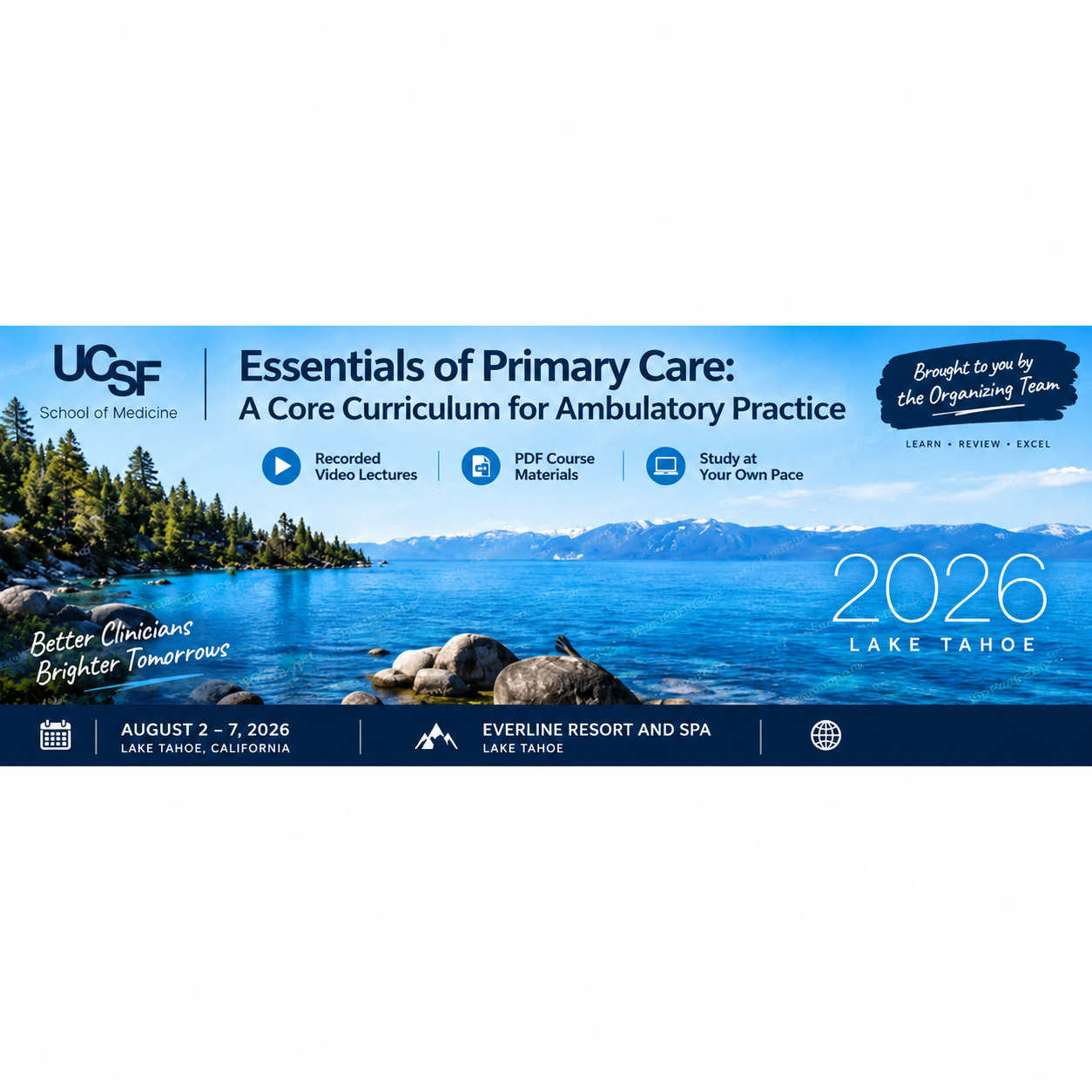
UCSF Essentials of Primary Care: A Core Curriculum for Ambulatory Practice 2026 – Videos + PDF
Original price was: $100.00.$69.00Current price is: $69.00.
This Product is shared via google drive download link, So please share your correct Gmail id while placing the order .Please note that there are no CME points or certificate associated with this course Samples for Courses Can be found here : Free Samples Here!
-
UCSF Essentials of Primary Care 2026: A Core Curriculum for Ambulatory Practice 2026 – Videos + PDF
+ Target Audience: Primary care physicians, internal medicine physicians, family medicine physicians, general practitioners, ambulatory care physicians, hospitalists, internal medicine residents, family medicine residents, clinical fellows, nurse practitioners, physician assistants, advanced practice providers, and healthcare professionals involved in primary care and outpatient medicine.
+ Information:
- Course Title: UCSF Essentials of Primary Care: A Core Curriculum for Ambulatory Practice 2026
- Organizer: University of California, San Francisco (UCSF)
- Course Dates: August 2–7, 2026
- Location: Everline Resort & Spa, Lake Tahoe, California, USA
- Course Chair: Robert B. Baron, MD, MS
- Format: Recorded Video Lectures + PDF Educational Materials
- Primary Specialty: Internal Medicine and Primary Care
- Additional Focus: Family Medicine, Ambulatory Medicine, and Preventive Care
- Learning Method: Self-Paced Study
- Language: English
+ Description:
The UCSF Essentials of Primary Care 2026: A Core Curriculum for Ambulatory Practice is a comprehensive medical education program developed by the University of California, San Francisco (UCSF), offering practical, evidence-based updates on the prevention, diagnosis, and management of common and complex conditions encountered in outpatient medicine.
Designed for primary care physicians, internists, family physicians, and advanced practice clinicians, the course integrates cardiovascular medicine, chronic kidney disease, obesity management, preventive healthcare, women’s health, neurology, dermatology, infectious diseases, psychiatry, and clinical nutrition.
The curriculum also emphasizes clinical communication, shared decision-making, motivational interviewing, healthcare equity, patient safety, and office-based diagnostic and procedural skills.
Through recorded educational lectures and supporting PDF materials, the program provides an opportunity for self-paced review of clinical guidelines, contemporary treatment approaches, and patient-centered strategies relevant to everyday ambulatory practice.
Learning Objectives
The program is designed to help clinicians:
- Apply evidence-based preventive medicine guidelines and screening recommendations.
- Improve evaluation and management of cardiovascular disease and chronic kidney disease.
- Integrate contemporary obesity treatment strategies into primary care.
- Strengthen knowledge of women’s health and reproductive medicine.
- Recognize and manage common neurological conditions.
- Improve diagnosis and treatment of frequently encountered dermatologic disorders.
- Apply appropriate approaches to common outpatient infectious diseases.
- Enhance recognition and management of mental health conditions.
- Develop practical history-taking, examination, and office-procedure skills.
- Improve clinical communication, motivational interviewing, and shared decision-making.
- Support effective collaboration among healthcare professionals.
- Promote safe, equitable, and patient-centered care.
Comprehensive Course Curriculum
1. Preventive Medicine and Cancer Screening
Review of evidence-based preventive healthcare strategies, individualized screening recommendations, early disease detection, and clinical risk reduction.
Key Topics:
- Cancer prevention and screening
- Cardiovascular disease prevention
- Breast cancer screening
- Cervical cancer prevention
- Risk assessment and early detection
- Preventive healthcare guidelines
- Office-based preventive medicine
- Individualized screening decisions
- Lifestyle modification and risk reduction
2. Cardiovascular Medicine and Chronic Disease Management
Clinical updates on the prevention, diagnosis, treatment, and long-term management of cardiovascular conditions commonly encountered in primary care.
Key Topics:
- Coronary heart disease
- Heart failure
- Stroke and vascular risk
- Cardiovascular risk assessment
- Preventive cardiology
- Chronic disease management
- Guideline-directed therapy
- Risk factor modification
- Long-term cardiovascular monitoring
3. Chronic Kidney Disease
Practical review of chronic kidney disease assessment, clinical monitoring, cardiovascular complications, and evidence-based management strategies.
Key Topics:
- Chronic kidney disease evaluation
- Diagnosis and monitoring
- Kidney function assessment
- Risk factor identification
- Management of chronic renal disease
- Cardiovascular complications
- Evidence-based treatment strategies
- Referral considerations
4. Obesity Medicine and Weight Management
Review of contemporary approaches to obesity treatment, including pharmacologic therapies, lifestyle interventions, and individualized care.
Key Topics:
- Obesity assessment
- Newer anti-obesity medications
- Lifestyle interventions
- Nutritional considerations
- Surgical treatment options
- Long-term weight management
- Obesity-related chronic diseases
- Individualized treatment selection
5. Women’s Health
Clinical education addressing preventive services, reproductive healthcare, hormonal changes, and age-related medical conditions affecting women.
Key Topics:
- Menopause management
- Contraceptive counseling
- Cervical cancer prevention
- Osteoporosis
- Reproductive healthcare
- Preventive screening
- Individualized treatment planning
- Women’s health across the lifespan
6. Neurology in Primary Care
Diagnostic and management considerations for common neurological presentations encountered in outpatient clinical practice.
Key Topics:
- Migraine and headache disorders
- Tremor
- Movement disorders
- Peripheral neuropathy
- Neurologic examination
- Diagnostic evaluation
- Treatment considerations
- Referral strategies
7. Dermatology for Primary Care
Review of frequently encountered dermatologic conditions, clinical assessment, treatment considerations, and common office-based procedures.
Key Topics:
- Skin cancer
- Eczema
- Acne
- Hair loss
- Chronic urticaria
- Drug eruptions
- Aging skin
- Dermatologic examination
- Common office-based dermatologic procedures
8. Infectious Diseases
Clinical approaches to recognizing, diagnosing, and managing common infections in primary care and ambulatory medicine.
Key Topics:
- Respiratory tract infections
- Sexually transmitted infections
- Skin and soft tissue infections
- Clinical evaluation of infectious symptoms
- Diagnostic testing
- Appropriate treatment strategies
- Evidence-based outpatient infection management
9. Psychiatry and Mental Health
Clinical education on common mental health concerns, behavioral healthcare integration, and patient-centered communication.
Key Topics:
- Depression
- Anxiety disorders
- Suicide risk assessment
- Psychological counseling
- Behavioral health evaluation
- Clinical communication
- Integration of mental healthcare
- Patient-centered treatment planning
10. Clinical Nutrition and Substance Use
Review of lifestyle, nutrition, and behavioral risk factors affecting chronic disease and patient health.
Key Topics:
- Clinical nutrition
- Lifestyle assessment
- Substance use concerns
- Behavioral risk factors
- Preventive counseling
- Chronic disease risk reduction
- Patient education
- Comprehensive clinical assessment
11. Orthopedics and Office-Based Clinical Skills
Practical educational review of musculoskeletal assessment, clinical examination, diagnostic reasoning, and office-based medical skills.
Key Topics:
- Problem-focused patient history
- Physical examination
- Common orthopedic complaints
- Musculoskeletal assessment
- Dermatologic procedures
- Neurological assessment
- Practical diagnostic approaches
- Office-based clinical decision-making
12. Communication, Patient Safety, and Healthcare Equity
Education addressing effective clinical communication, multidisciplinary collaboration, patient safety, and equitable healthcare delivery.
Key Topics:
- Motivational interviewing
- Psychological counseling
- Shared decision-making
- Patient communication
- Interprofessional collaboration
- Healthcare disparities
- Care of vulnerable populations
- Patient-centered care
- Quality improvement
- Safety and value in medical practice
Course Faculty
Robert B. Baron, MD, MS
Course Chair; Professor of Medicine, Division of General Internal Medicine, UCSFLindy P. Fox, MD
Professor of Dermatology, UCSFKenneth Fox, MD
Chief Neurologist, Kaiser Permanente San FranciscoPaul Nadler, MD
Professor of Medicine; Medical Director, UCSF Urgent Care at ParnassusEmma Samelson-Jones, MD
Clinical Professor of Psychiatry and Behavioral Sciences, Stanford UniversityMichael G. Shlipak, MD, MPH
Professor of Medicine, Epidemiology and Biostatistics, UCSFJeffrey A. Tice, MD
Professor of Medicine, UCSFJudith M. E. Walsh, MD, MPH
Professor of Medicine and Epidemiology and Biostatistics, UCSFEducational Highlights
- Comprehensive primary care and internal medicine updates
- Expert-led recorded educational lectures
- Supporting PDF educational materials
- Evidence-based clinical recommendations
- Preventive medicine and cancer screening
- Cardiovascular and chronic disease management
- Women’s health and reproductive medicine
- Neurology and dermatology updates
- Infectious disease management
- Mental health and behavioral medicine
- Practical outpatient clinical skills
- Patient communication and shared decision-making
- Healthcare equity and patient safety
- Convenient self-paced educational review
Clinical & Educational Value
The UCSF Essentials of Primary Care 2026 provides a multidisciplinary educational review relevant to primary care physicians, internists, family physicians, and advanced practice clinicians.
The curriculum integrates disease prevention, chronic condition management, diagnostic assessment, contemporary treatment approaches, patient communication, and healthcare quality.
Its emphasis on evidence-based outpatient medicine supports improved clinical reasoning, appropriate treatment selection, preventive care, multidisciplinary collaboration, and patient-centered decision-making.
Recorded lectures and accompanying PDF educational materials support independent study and convenient review of important topics in ambulatory medicine.
Important Access Information
This MedicalAmboss listing describes the digital educational materials specified in the purchased package.
The original conference information is provided for educational reference. The curriculum describes the published subject areas and learning objectives but does not independently establish a session-by-session inventory of the supplied recordings.
Purchasing these digital materials does not include live conference attendance, direct faculty interaction, an official UCSF account, provider-platform access, CME credits, or certificates.
Short Description
The UCSF Essentials of Primary Care 2026: A Core Curriculum for Ambulatory Practice – Videos + PDF provides comprehensive clinical education covering preventive medicine, cardiovascular disease, chronic kidney disease, obesity management, women’s health, neurology, dermatology, infectious diseases, mental health, clinical nutrition, and outpatient clinical skills.
Related products
Internal Medicine

Critical Care - Emergency medicine

Internal Medicine
Critical Care - Emergency medicine
Critical Care - Emergency medicine
2022 ISICEM International Symposium on Intensive Care & Emergency Medicine

Internal Medicine

Internal Medicine