
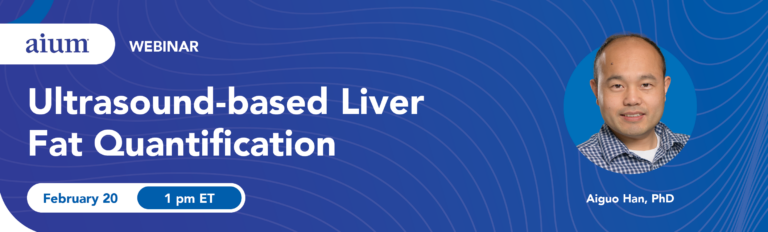
Ultrasound-based Liver Fat Quantification (Videos)

Original price was: $19.00.$5.00Current price is: $5.00.
This Product is shared via google drive download link, So please share your correct Gmail id while placing the order .Please note that there are no CME points or certificate associated with this course Samples for Courses Can be found here : Free Samples Here!
Ultrasound-based Liver Fat Quantification (Videos)
Ultrasound-based Liver Fat Quantification (Videos) is a specialized medical imaging educational presentation from the American Institute of Ultrasound in Medicine (AIUM) 2025, focusing on quantitative liver ultrasound, hepatic steatosis assessment, and emerging noninvasive techniques for evaluating liver fat. Presented by Aiguo Han, PhD, from the Department of Biomedical Engineering and Mechanics at Virginia Tech, this educational recording explores how quantitative ultrasound technologies and biomedical imaging research may contribute to improved liver tissue characterization and the assessment of fatty liver disease, including metabolic dysfunction-associated steatotic liver disease (MASLD).
Target Audience
Radiologists, Diagnostic Sonographers, Hepatologists, Gastroenterologists, Primary Care Physicians, Internal Medicine Physicians, Biomedical Engineers, Ultrasound Researchers, Basic Scientists, Medical Imaging Specialists, Medical Physicists, Liver Disease Specialists, Radiology Residents and Fellows, and healthcare professionals interested in quantitative ultrasound, hepatic steatosis evaluation, and noninvasive liver imaging technologies.
Course Information
- Course Title: Ultrasound-based Liver Fat Quantification
- Organizer: American Institute of Ultrasound in Medicine (AIUM)
- Faculty: Aiguo Han, PhD
- Institution: Virginia Tech
- Department: Biomedical Engineering and Mechanics
- Publication Year: 2025
- Format: High-Definition MP4 Video
- Included Files: 1 MP4 Video
- File Size: 484 MB
- Language: English
- Specialty: Radiology / Hepatic Ultrasound / Biomedical Imaging
The AIUM Ultrasound-based Liver Fat Quantification 2025 educational presentation examines advances in quantitative ultrasound imaging and their potential applications in evaluating hepatic fat accumulation through noninvasive imaging methods.
Hepatic steatosis is an important imaging finding associated with several metabolic and liver disorders, including metabolic dysfunction-associated steatotic liver disease (MASLD). Reliable evaluation of liver fat can contribute to clinical assessment, disease characterization, and research into metabolic liver conditions.
Traditional grayscale ultrasound is widely used in liver imaging, but its assessment of hepatic steatosis can be influenced by examination conditions, equipment settings, and differences in image interpretation. These considerations have encouraged the development of quantitative ultrasound techniques designed to provide more objective measurements of liver tissue characteristics.
Presented by Aiguo Han, PhD, this educational recording introduces the scientific principles underlying ultrasound-based liver fat quantification and examines how emerging imaging technologies may support the measurement and characterization of hepatic steatosis.
A central focus is the relationship between ultrasound imaging physics, quantitative tissue assessment, and liver fat measurement. Quantitative approaches seek to extract measurable information from ultrasound signals, potentially improving the consistency and reproducibility of hepatic fat assessment compared with qualitative image interpretation alone.
The presentation also connects developments in biomedical engineering and ultrasound research with the clinical need for accessible, noninvasive methods of liver evaluation. Understanding the technical principles and limitations of emerging imaging approaches is essential when considering their potential applications in hepatology, gastroenterology, and diagnostic radiology.
Additional educational considerations include image acquisition, quantitative measurement techniques, diagnostic interpretation, and the importance of validating emerging technologies against appropriate clinical or research reference standards.
Through this research-focused educational presentation, radiologists, hepatologists, sonographers, biomedical engineers, and medical imaging researchers can strengthen their understanding of quantitative liver ultrasound, hepatic steatosis imaging, and the potential role of advanced ultrasound technologies in noninvasive liver assessment.
Learning Objectives
Upon reviewing this educational activity, participants should be better able to:
- Understand the fundamental concepts and scientific principles of ultrasound-based liver fat quantification.
- Explain the role of quantitative ultrasound imaging in the noninvasive assessment of hepatic steatosis.
- Recognize the clinical relevance of liver fat evaluation in fatty liver conditions, including metabolic dysfunction-associated steatotic liver disease (MASLD).
- Explore emerging ultrasound imaging technologies and their potential applications in hepatic fat measurement.
- Understand how quantitative ultrasound methods may support the characterization of liver tissue properties.
- Review technical considerations related to ultrasound image acquisition, quantitative measurements, and diagnostic interpretation.
- Recognize potential limitations and challenges associated with emerging ultrasound-based liver fat assessment techniques.
- Understand the relationship between biomedical imaging research and the development of clinically relevant liver assessment methods.
- Explore the potential future role of quantitative ultrasound technologies in hepatology, radiology, and noninvasive liver disease evaluation.
These learning objectives summarize the educational scope of the supplied presentation and are not presented as verified official AIUM learning objectives.
Key Topics Covered
- Ultrasound-Based Liver Fat Quantification
- Quantitative Liver Ultrasound Imaging
- Hepatic Steatosis Assessment
- Noninvasive Liver Fat Evaluation
- Metabolic Dysfunction-Associated Steatotic Liver Disease (MASLD)
- Ultrasound Imaging Physics and Principles
- Quantitative Ultrasound Tissue Characterization
- Emerging Ultrasound Measurement Technologies
- Ultrasound Image Acquisition and Analysis
- Quantitative Imaging Techniques and Interpretation
- Liver Tissue Assessment and Diagnostic Imaging
- Biomedical Engineering Applications in Ultrasound
- Medical Imaging Research and Technology Development
- Technical Considerations in Hepatic Ultrasound
- Research Applications of Liver Fat Quantification
- Translational Biomedical Imaging
- Potential Clinical Applications in Hepatology and Gastroenterology
Clinical & Educational Value
Ultrasound-based Liver Fat Quantification (Videos) provides a focused educational overview of evolving quantitative ultrasound technologies and their relevance to hepatic fat assessment.
The presentation connects ultrasound imaging research, quantitative tissue characterization, and noninvasive evaluation of hepatic steatosis, helping learners understand how advanced imaging methods may complement established approaches to liver assessment.
Its emphasis on emerging technologies and biomedical engineering principles makes it especially relevant to professionals interested in the development, evaluation, and potential clinical application of objective liver fat measurement methods.
This educational recording is particularly valuable for radiologists, hepatologists, gastroenterologists, sonographers, biomedical engineers, and ultrasound researchers seeking to expand their knowledge of quantitative hepatic imaging.
Short Description
AIUM Ultrasound-based Liver Fat Quantification (Videos) 2025 is a specialized educational presentation featuring Aiguo Han, PhD, from Virginia Tech. This 484 MB HD MP4 recording explores quantitative liver ultrasound, hepatic steatosis assessment, noninvasive liver fat measurement, emerging ultrasound imaging technologies, and biomedical engineering applications. Designed for radiologists, hepatologists, gastroenterologists, sonographers, and medical imaging researchers interested in advanced liver imaging and MASLD assessment.
Related products
Anesthesiology & pain medicine
GULFCOAST Introduction to Ultrasound-Guided Regional Anesthesia 2019
Hematology / Oncology

Critical Care - Emergency medicine
Anesthesiology & pain medicine
Professional, Business, and OR Management Issues 2021 Module 7
Critical Care - Emergency medicine
Gulfcoast Ultrasound-Guided Upper Extremity Nerve Blocks for Emergency Medicine
Anesthesiology & pain medicine