
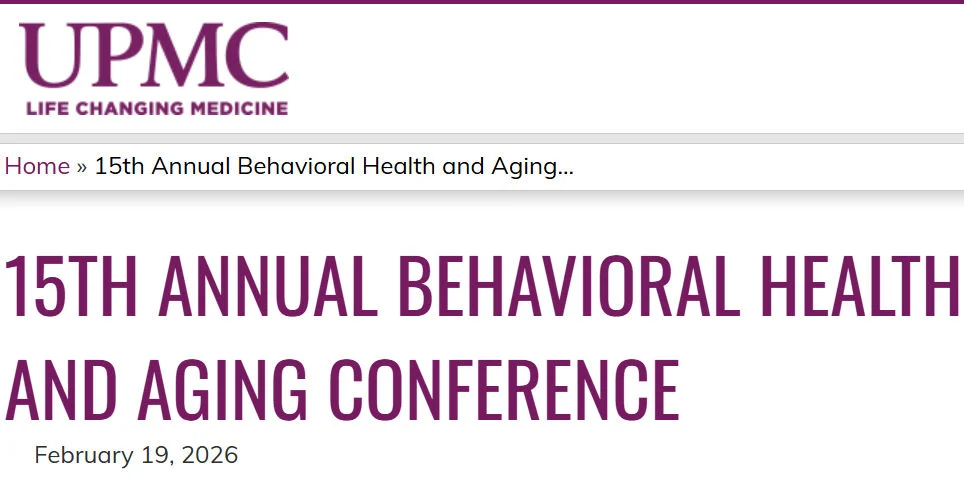
UPMC 15th Behavioral Health & Aging Conference 2026
$10.00
Behavioral Health Aging Conference 2026 covers late-life depression, personality disorders, substance use, cognitive aging, MCI, dementia and medication effects.
Delivery Information: This Product is shared via google drive download link. Please use your correct Gmail address at checkout.
Please note: there are no CME points or certificate associated with this course.
Samples for Courses Can be found here: Free Samples Here!
MedicalAmboss File Scope: This listing summarizes the official educational program for reference. Provider registration, live participation, streaming access, CME or MOC credit, certificates, apps, accounts, and post-course access are not represented as included unless they are explicitly present in the listed store files. MedicalAmboss.
-
UPMC Behavioral Health Aging Conference 2026
UPMC 15th Behavioral Health & Aging Conference 2026 is a community-based geriatric behavioral health education program focused on the mental health, cognitive, psychiatric, and substance use needs of older adults.
The conference addresses challenging personality disorders in later life, late-life depression, social isolation, substance use disorders, normal cognitive aging, mild cognitive impairment, dementia, and the safe use of psychotropic medications in older adults.
+ Target Audience
Providers working with older adults, including:
- Physicians
- Nurses
- Front-Line Staff
- Case Managers
- Service Coordinators
- Therapists
- Clinicians
- Behavioral Health Professionals
- Mental Health Professionals
- Geriatric Care Providers
- Social Workers
- Psychologists
- Advanced Practice Providers
Family members and caregivers are also welcome to attend.
+ Information
The UPMC 15th Behavioral Health & Aging Conference 2026 celebrates the 15th year of this community-based educational conference focused on the behavioral health needs of older adults.
The 2026 program centers on three broad themes.
The first addresses older adults with particularly challenging behavioral health needs, including personality disorders such as narcissistic personality disorder, as well as the continued challenge of recognizing and treating substance use disorders in later life.
The second theme focuses on cognition and aging, including how to distinguish normal age-related cognitive changes from early signs of pathological cognitive decline. The program also addresses the cognitive effects of medications, particularly psychiatric medications that may contribute to impairment in older adults.
The third theme focuses on improving treatment for late-life depression, including a newly developed evidence-based brief psychotherapy approach and the influence of social isolation, aging, cognition, and mood on psychotherapy outcomes.
The official UPMC program was held on February 19, 2026, with sessions running from approximately 8:30 AM to 4:30 PM EST.
Course Details
- Course: 15th Annual Behavioral Health and Aging Conference
- Organizer: UPMC / University of Pittsburgh
- Year: 2026
- Date: February 19, 2026
- Format: Live Educational Conference
- Primary Focus: Behavioral Health and Aging
- Specialty Areas: Geriatric Psychiatry, Psychology, Geriatric Medicine, Behavioral Health
- Educational Emphasis: Mental Health and Cognitive Disorders in Older Adults
Program Overview
The conference provides practical education for clinicians and caregivers working with older adults who have complex behavioral, psychiatric, cognitive, and substance-related conditions.
The curriculum emphasizes four major clinical areas:
- Personality disorders in later life
- Depression and psychotherapy in older adults
- Substance use disorders in the elderly
- Cognitive aging and medication-related cognitive impairment
Sessions are designed to help participants distinguish normal aging from disease, improve communication and treatment planning in difficult behavioral health situations, and make safer decisions regarding psychiatric medication use in older adults.
Learning Objectives
At the completion of this activity, participants should be able to:
- Identify models which explain maladaptive personality traits in later life.
- Describe the motivation-behavior pathways in narcissistic personality disorder and other prominent personality disorders.
- Describe social isolation’s impact on clinical work with depressed patients.
- Discuss the impact of aging, cognitive and mood-related factors in psychotherapy for depression in later life.
- Describe trends in substance use in older adults.
- Identify the preferred treatment modalities for substance use in older adults.
- Define what is considered normal cognitive changes in later life.
- Differentiate between mild cognitive impairment and dementia.
- Describe the risks versus benefits of psychotropic use in the elderly.
- Identify best practices for use of psychotropic medication in the elderly.
These learning objectives are listed in the official UPMC 2026 program.
Official Program Topics
When Personality Gets in the Way of Care
- Personality Disorders in Older Adults
- Narcissistic Personality Disorder
- Maladaptive Personality Traits
- Motivation-Behavior Pathways
- Challenging Patient Behaviors
- Personality and Aging
- Clinical Communication
- Therapeutic Boundaries
- Behavioral Management Strategies
Faculty: Anna Szücs, MD, PhD
The official agenda includes the session “When Personality Gets in the Way of Care: Working with Older Adults with Narcissistic or Other Personality Disorders.”
Late-Life Depression and Psychotherapy
- Depression in Older Adults
- Late-Life Depression
- Evidence-Based Psychotherapy
- Brief Psychotherapy
- Social Isolation
- Aging and Depression
- Cognitive Factors in Psychotherapy
- Mood-Related Factors
- Treatment Engagement
- Psychological Treatment in Later Life
Engage & Connect
The conference includes “Engage & Connect: A Neuroscience-Informed Psychotherapy for Late-Life Depression.”
Faculty: Nili Solomonov, PhD
Social Isolation and Mental Health
- Social Isolation in Older Adults
- Loneliness
- Depression
- Behavioral Health Consequences
- Clinical Assessment
- Psychotherapy
- Social Connection
- Mental Health Interventions
Social isolation is addressed as an important factor influencing clinical work with older adults experiencing depression.
Substance Use Disorders in Older Adults
- Substance Use in Later Life
- Substance Use Disorder
- Alcohol Use in Older Adults
- Drug Use in Older Adults
- Screening
- Diagnosis
- Treatment Modalities
- Behavioral Interventions
- Addiction Treatment
- Geriatric Substance Use Trends
Substance Use Disorder and the Elderly
Faculty:
- Antoine Douaihy, MD
- Dennis C. Daley, PhD
The official UPMC agenda includes a dedicated session on Substance Use Disorder and the Elderly.
Cognitive Aging
- Normal Cognitive Aging
- Age-Related Cognitive Change
- Memory Changes
- Executive Function
- Cognitive Screening
- Pathological Cognitive Decline
- Cognitive Assessment
- Early Recognition of Cognitive Disease
A key objective of the conference is helping clinicians distinguish expected age-related cognitive changes from changes that may suggest underlying neurological or psychiatric disease.
Mild Cognitive Impairment and Dementia
- Mild Cognitive Impairment
- MCI
- Dementia
- Cognitive Decline
- Neurocognitive Disorders
- Differential Diagnosis
- Early Dementia Recognition
- Cognitive Screening
- Clinical Assessment
Normal Aging vs Pathological Cognitive Decline in Late-Life
Faculty:
- Kelley M. Bellia, DO
- Chantale El Alam, MD
The official agenda specifically includes a session comparing normal aging with pathological cognitive decline in later life.
Psychotropic Medications in Older Adults
- Psychotropic Medication
- Psychiatric Medications
- Medication-Related Cognitive Impairment
- Geriatric Psychopharmacology
- Medication Safety
- Risks and Benefits
- Polypharmacy
- Cognitive Adverse Effects
- Medication Review
- Safe Prescribing in Older Adults
Medication-Related Cognitive Impairment
The conference examines cognitive impairment as a potential adverse effect of commonly used psychiatric medications.
Important areas include:
- Recognition of medication-associated cognitive symptoms
- Risk-benefit assessment
- Polypharmacy
- Age-related pharmacologic vulnerability
- Appropriate psychotropic prescribing
- Medication review and optimization
Cognitive Impairment as a Potential Side Effect of Common Psychiatric Medication
Faculty: Kavya Achyutuni, PharmD
Major Topics
- Behavioral Health and Aging
- Geriatric Psychiatry
- Geriatric Mental Health
- Personality Disorders
- Narcissistic Personality Disorder
- Maladaptive Personality Traits
- Late-Life Depression
- Psychotherapy for Older Adults
- Neuroscience-Informed Psychotherapy
- Social Isolation
- Substance Use Disorders
- Addiction in Older Adults
- Normal Cognitive Aging
- Cognitive Decline
- Mild Cognitive Impairment
- Dementia
- Neurocognitive Disorders
- Psychotropic Medications
- Geriatric Psychopharmacology
- Medication-Related Cognitive Impairment
- Polypharmacy
- Mental Health Treatment in Older Adults
- Behavioral Health Assessment
- Caregiver Education
Official 2026 Program
8:30–8:40 AM
Welcome
Ellen M. Whyte, MD8:40–10:10 AM
When Personality Gets in the Way of Care: Working with Older Adults with Narcissistic or Other Personality Disorders
Anna Szücs, MD, PhD10:25–11:40 AM
Engage & Connect: A Neuroscience-Informed Psychotherapy for Late-Life Depression
Nili Solomonov, PhD12:25–1:40 PM
Substance Use Disorder and the Elderly
Antoine Douaihy, MD
Dennis C. Daley, PhD1:40–2:55 PM
Normal Aging vs Pathological Cognitive Decline in Late-Life
Kelley M. Bellia, DO
Chantale El Alam, MD3:05–4:20 PM
Cognitive Impairment as a Potential Side Effect of Common Psychiatric Medication
Kavya Achyutuni, PharmD4:20–4:30 PM
Wrap Up and Adjourn
Ellen M. Whyte, MDThe program schedule and faculty are published by UPMC.
Course Directors
Candace M. Fraser, DO
UPMC Western Psychiatric Hospital
Assistant Professor of Psychiatry
University of Pittsburgh School of Medicine
Pittsburgh, PennsylvaniaEllen M. Whyte, MD
Service Chief & Medical Director, Geriatric Psychiatry
Medical Director, Integrated Behavioral Health in Primary Care
UPMC Western Psychiatric Hospital
Assistant Professor of Psychiatry
University of Pittsburgh School of Medicine
Pittsburgh, PennsylvaniaBoth are identified by UPMC as Course Directors for the 2026 conference.
Steering Committee
- Christopher Fullerton, MSN, CRNP, PMHNP-BC
- Sarah Goldberg, LCSW
- Holly Rearick, PA-C
- Andrea Weinstein, PhD
The steering committee represents expertise in geriatric psychiatry, behavioral health, therapy, advanced practice care, and psychology.
Faculty
Anna Szücs, MD, PhD
Research Fellow
Division of Family Medicine
Yong Loo Lin School of Medicine
National University of SingaporeNili Solomonov, PhD
Associate Attending Psychologist
NewYork-Presbyterian Hospital
Associate Professor of Psychology in Psychiatry
Weill Cornell Institute of Geriatric PsychiatryAntoine Douaihy, MD
Professor
Departments of Psychiatry and Medicine
University of Pittsburgh School of MedicineDennis C. Daley, PhD
Former Chief of Drug and Alcohol Services
UPMC Western Behavioral HealthKelley M. Bellia, DO
Geriatric Medicine Fellow
University of Pittsburgh School of MedicineChantale El Alam, MD
Geriatric Psychiatry Fellow
University of Pittsburgh School of MedicineKavya Achyutuni, PharmD
Pharmacy Resident II
Department of Psychiatry
University of Pittsburgh School of MedicineFaculty credentials and affiliations are listed in the official UPMC course materials.
Continuing Education
The official course page lists continuing education opportunities for several professional groups.
Available credits include:
- AMA PRA Category 1 Credit™
- AAPA Category I CME
- ANCC
- APA
- ASWB
- Certificate of Attendance
The detailed UPMC accreditation section states that physicians completing the activity may claim up to 6.0 AMA PRA Category 1 Credits™, while psychology and social work participants may also receive applicable continuing education credit.
Target Audience
This course is intended for providers working with older adults, including:
- Physicians
- Nurses
- Front-Line Staff
- Case Managers
- Service Coordinators
- Therapists
- Clinicians
- Psychologists
- Social Workers
- Behavioral Health Professionals
- Geriatric Care Teams
Family members and caregivers are welcome to attend.
Why This Course Is Relevant
Behavioral health care for older adults requires clinicians to distinguish between the expected effects of aging and psychiatric, neurological, medication-related, or substance-related disorders.
The UPMC 15th Behavioral Health & Aging Conference 2026 addresses several clinically challenging areas that frequently overlap in geriatric practice, including personality disorders, depression, social isolation, substance use, cognitive decline, dementia, and psychotropic medication use.
The program is particularly valuable for healthcare professionals seeking practical education in geriatric psychiatry, late-life depression, normal cognitive aging, mild cognitive impairment, dementia, substance use disorders in older adults, and geriatric psychopharmacology.
Its multidisciplinary format also makes it relevant for nurses, psychologists, social workers, therapists, case managers, physicians, and caregivers involved in the behavioral health needs of older adults.
Short Description
UPMC 15th Behavioral Health & Aging Conference 2026 provides multidisciplinary education in geriatric behavioral health, including late-life depression, personality disorders, narcissistic personality disorder, substance use in older adults, normal cognitive aging, mild cognitive impairment, dementia, psychotherapy, and safe psychotropic medication use.
- + Topics:
- 01 Working With Older Adults With Narcissistic or Other Personality Disorders
- 02 A Neuroscience-Informed Psychotherapy for Late-Life Depression
- 03 Substance Use Disorders (SUDs) in Older Adults
- 04 Older Adults, Family and Substance Use Disorders
- 05 Normal Aging and Pathological Cognitive Decline in Late Life (Part 1 of 2)
- 05 Normal Aging and Pathological Cognitive Decline in Late Life (Part 2 of 2)
Related products
Critical Care - Emergency medicine
International Symposium on Intensive Care & Emergency Medicine ( ISICEM ) 2020

Critical Care - Emergency medicine
Internal Medicine
Internal Medicine

Critical Care - Emergency medicine
The Brigham Board Review in Infectious Diseases Brigham and Women’s Hospital Board Review
Medical Accounts

Internal Medicine

Critical Care - Emergency medicine