
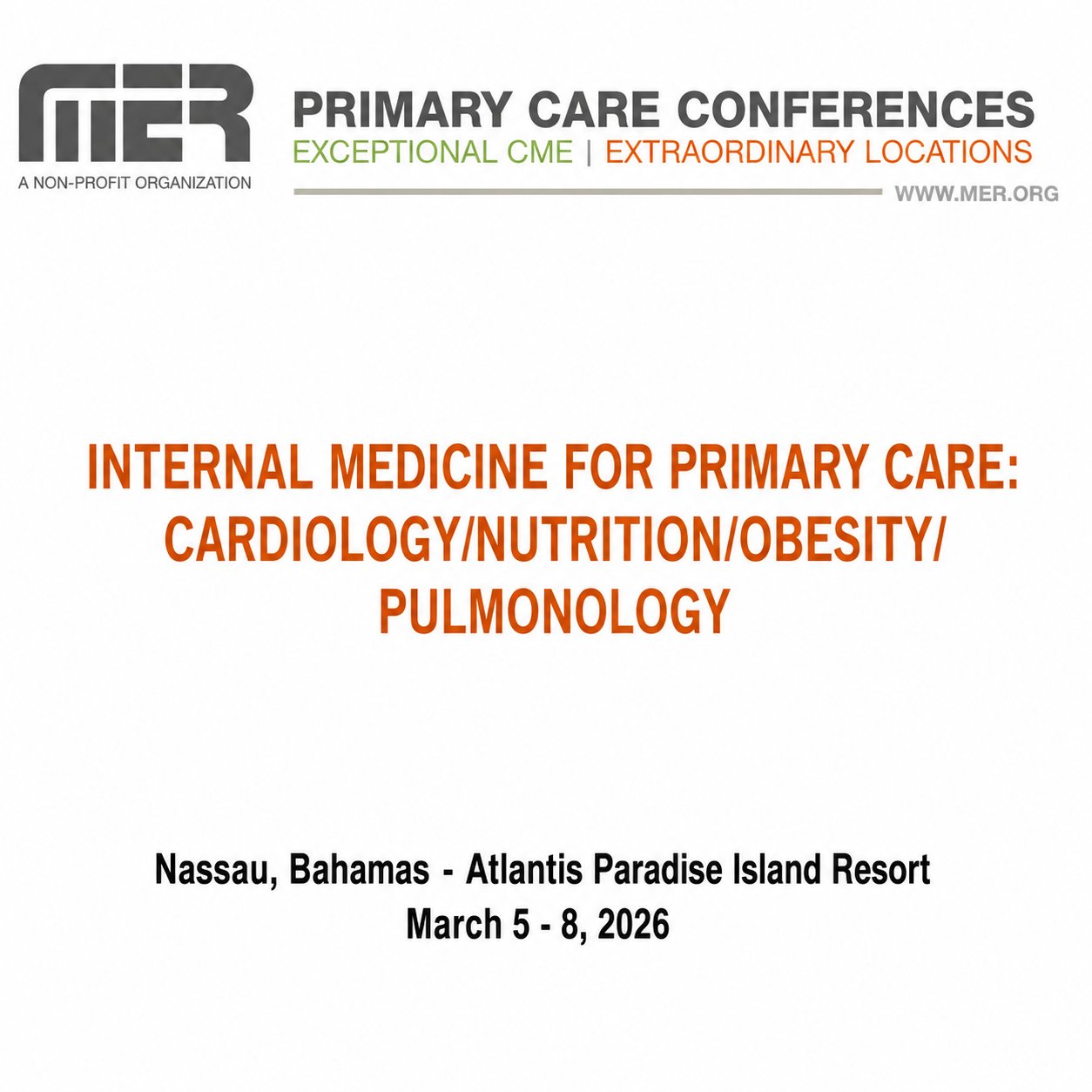
MER Primary Care Conferences Internal Medicine for Primary Care Cardio Nutrition Obesity Pulm Mar 05-08, 2026

Original price was: $995.00.$120.00Current price is: $120.00.
Explore the cardiology, nutrition, obesity medicine, and pulmonology topics in this March 2026 primary care conference program.
Delivery Information: This Product is shared via google drive download link. Please use your correct Gmail address at checkout.
Please note: there are no CME points or certificate associated with this course.
Samples for Courses Can be found here: Free Samples Here!
MER Primary Care Conferences Internal Medicine for Primary Care: Cardiology, Nutrition, Obesity & Pulmonology 2026
Comprehensive Updates in Cardiovascular Health, Nutrition, Obesity Medicine & Pulmonary Care for Primary Care Clinicians
The MER Primary Care Conferences Internal Medicine for Primary Care: Cardiology, Nutrition, Obesity & Pulmonology 2026 course provides a practical, evidence-based review of common cardiovascular, nutritional, metabolic, obesity-related, and respiratory conditions encountered in everyday primary care practice. Held at the Atlantis Paradise Island Resort, Nassau, Bahamas, March 5–8, 2026, this conference delivers current guideline updates and clinically relevant management strategies that can be immediately implemented in outpatient settings.
Designed specifically for primary care providers, the program combines expert lectures and case-based discussions to help clinicians improve patient outcomes across multiple high-impact areas of internal medicine.
Course Overview
Modern primary care physicians frequently manage patients with cardiovascular disease, obesity, nutritional challenges, asthma, COPD, and other chronic medical conditions. This course offers an integrated approach to prevention, diagnosis, and treatment, emphasizing lifestyle interventions alongside evidence-based medical therapies.
Participants will gain practical knowledge on managing hypertension, coronary artery disease, heart failure, obesity, pulmonary disorders, and nutrition-related health concerns while learning strategies to personalize treatment plans and improve long-term patient outcomes.
Learning Objectives
Upon completion of this activity, participants will be able to:
- Describe current diagnostic approaches for patients presenting with acute chest pain.
- Apply evidence-based treatment strategies for hypertension.
- Implement guideline-directed medical therapy for heart failure.
- Utilize lipid management strategies for coronary artery disease prevention.
- Discuss the role of nutrition and dietary interventions in disease prevention and health promotion.
- Develop individualized nutrition plans based on patient-specific needs.
- Apply behavioral and dietary modification strategies to improve health outcomes.
- Explain the pathophysiology and underlying mechanisms contributing to obesity.
- Evaluate non-surgical and surgical treatment options for obesity.
- Counsel patients regarding weight management strategies and bariatric surgery.
- Diagnose and manage asthma using current evidence-based guidelines.
- Develop treatment plans for common respiratory infections.
- Implement modern therapeutic approaches for COPD.
- Evaluate lung nodules and discuss lung cancer screening and management strategies.
Key Topics Covered
Cardiology
Participants review:
- Acute chest pain evaluation
- Hypertension management
- Coronary artery disease prevention
- Hyperlipidemia treatment
- Heart failure management
- Cardiovascular risk reduction
Faculty emphasize current guideline recommendations and practical clinical decision-making.
Nutrition Medicine
Topics include:
- Evidence-based nutrition science
- Popular dietary approaches
- Personalized nutrition planning
- Nutritional requirements throughout life
- Diet modification strategies
- Preventive nutrition counseling
Participants learn how nutrition directly influences chronic disease prevention and management.
Obesity Medicine
Coverage includes:
Obesity Pathophysiology
- Genetics and obesity
- Hormonal regulation
- Metabolic adaptations
- Environmental influences
Medical Weight Management
- Lifestyle interventions
- Pharmacologic therapies
- Behavioral modification
- Long-term weight maintenance
Bariatric Surgery
- Surgical treatment options
- Patient selection criteria
- Benefits and risks
- Postoperative management
The course provides a comprehensive review of contemporary obesity treatment strategies.
Pulmonology
Sessions focus on:
Asthma
- Diagnosis
- Disease monitoring
- Pharmacologic management
- Guideline-based treatment
COPD
- Evaluation and staging
- Maintenance therapy
- Exacerbation management
- Long-term monitoring
Respiratory Infections
- Evidence-based treatment approaches
- Antibiotic stewardship
- Prevention strategies
Lung Nodules & Lung Cancer
- Screening recommendations
- Diagnostic workup
- Risk assessment
- Referral considerations
Educational Features
✔ Evidence-Based Clinical Updates
✔ Guideline-Focused Education
✔ Practical Primary Care Applications
✔ Cardiovascular Risk Reduction Strategies
✔ Nutrition & Lifestyle Medicine
✔ Obesity Management Updates
✔ Pulmonary Disease Management
✔ Case-Based Learning
✔ Immediate Clinical Relevance
Target Audience
This course is ideal for:
- Primary Care Physicians
- Family Medicine Physicians
- Internal Medicine Physicians
- Cardiologists
- Pulmonologists
- Endocrinologists
- Nurse Practitioners
- Physician Assistants
- Residents & Fellows
- Healthcare Professionals Managing Chronic Disease
Why This Course Stands Out
✔ Integrates cardiology, nutrition, obesity medicine, and pulmonology into one practical program
✔ Strong focus on preventive medicine and lifestyle interventions
✔ Covers common conditions encountered daily in primary care
✔ Reviews the latest evidence-based guidelines
✔ Emphasizes personalized patient care
✔ Includes both medical and surgical obesity management
✔ Practical application for outpatient practice
✔ Relevant for clinicians managing complex chronic diseases
Clinical Value
The MER Primary Care Conferences Internal Medicine for Primary Care: Cardiology, Nutrition, Obesity & Pulmonology 2026 course provides a comprehensive review of cardiovascular disease, nutrition science, obesity management, asthma, COPD, respiratory infections, and lung cancer screening. Through evidence-based updates and practical clinical guidance, participants gain valuable tools to improve prevention, diagnosis, treatment, and long-term management of common chronic diseases.
+ Topics:
*Note: these are continuous video recordings during the conference, they include individual lectures mentioned in the Detail section below
- March 5, 2026 (Day 1).mp4
- March 6, 2026 (Day 2).mp4
- March 7, 2026 (Day 3).mp4
- March 8, 2026 (Day 4).mp4
* Detail:
Thursday, March 5, 2026
7:00 am
Check-In and Breakfast
7:30 am – 8:30 am – Cardiology
Acute Coronary Syndromes: The Patient with Acute Chest Pain
Diagnosis and initial evaluation in the primary care setting, urgent care clinic and emergency department; Initial workup, treatment, and follow-up; Diagnosing and treating ST segment elevation and non-ST segment elevation MIs; The role of drug therapy–primary vs adjunctive to PCI; Follow up after acute coronary syndromome
8:30 am – 9:30 am – Cardiology
Hypertension
The 2025 AHA/ACC Hypertension Guidelines; The 2024 ESC Guidelines for hypertension; Approaches to treatment thresholds and goals; Choices for initial and combination therapy; Resistant hypertension; Treating special populations: diabetics, the elderly, patients with renal failure; Risk factors by new pooled equations
9:30 am – 9:40 am
Coffee Break
9:40 am – 10:40 am – Cardiology
Heart Failure
Etiologies and stages of heart failure; ACC/AHA Heart Failure Guidelines; Heart failure with reduced EF (HFrEF) and heart failure with preserved EF (HFpEF); Determining patients for referral using biomarkers, eg NT Pro BNP; Treatment options: ACE inhibitors, ARBs, ARNI, beta blockers, mineralocorticoid receptor antagonists, SGLT2i; The role of devices (ICD and/or CRT) in treatment and antiplatelet drugs; Issues related to the hospitalized patient with acute decompensated heart failure and readmissions
10:40 am – 11:40 am – Nutrition
Myths vs. Science in Nutritional Trends: Approach for the Medical Professional
Discussion of how to scientifically navigate the nutritional maze of popular diets and nutritional trends;
The potential nutrition benefits and pitfalls of various dietary preferences and related patient concerns; Ways nutrition affects healthy lifestyles
11:40 am – 12:40 pm – Nutrition
Nutrition Through the Ages: Prevention and Potential Pitfalls
A working guide for a nutritional and behavioral rubric to understand what is expected (and what may undermine) optimal health from infancy through the elderly; Barriers patients face in implementing and sticking with nutritional strategies
12:40 pm
Friday, March 6, 2026
7:00 am
Arrival and Breakfast
7:30 am – 8:30 am – Nutrition
Medical Nutrition Therapy: A Practical Approach to Diet and Disease
Science-based Nutrition and Behavioral Guide to Treating “The Big” Medical Problems that are taking over your practice; Essential (and proven) strategies to help guide patients’ diet and behaviors in the treatment of diabetes, cardiovascular disease, and GI health; Travel through the google-mess of what patients hear and why they turn to these as resources; The science-based strategies and resources that can be implemented to help patients take rational control of their health
8:30 am – 9:30 am – Nutrition
Cutting Edge Nutrition Innovation: A Personalized Approach
How to critically evaluate nutrition tools that patients can use to promote optimal health; Review the “latest and greatest” nutrition applications and technologies that can be used to greatly improve patients’ nutrition and health pursuits; Creation of personalized health plans based on unique, patientspecific plans, tests, and analyses
9:30 am – 9:40 am
Coffee Break
9:40 am – 10:40 am – Cardiology
Primary Prevention of Cardiometabolic CVD
Definitions; AHA/ACC and other lipid guidelines updates; HDL Cholesterol: The good cholesterol?; Metabolic syndrome and/or obesity; Who needs treatment and how much; The role of lifestyle changes, exercise and cardiac rehabilitation; Drug therapy updates; Risk calculation; Role of pooled equations for risk estimates
10:40 am – 11:40 am – Obesity
Pathophysiology of Obesity
A guide to understanding practice demographics and considerations; The what and why of epigenetics; A practical guide to behavioral and medication management
11:40 am – 12:40 pm – Obesity
Medical Management of Obesity
Overview of obesity as a disease state; Costs to the individual of being obese; Use of appetite suppressant medications and lifestyle modifications
12:40 pm
Session Adjourns
Saturday, March 7, 2026
7:00 am
Arrival and Breakfast
7:30 am – 8:30 am – Obesity
Guiding Patients in the Medical and Surgical Care of Obesity
Differences in treating obesity vs. other medical conditions, treatments, and procedures; Strategies for better engagement and understanding of patient pathways, perspectives, and team partnership
8:30 am – 9:30 am – Obesity
Complications and Considerations of Bariatric Surgery
An overview of risks and effectiveness of bariatric surgery; Overview of potential surgical options; Potential complications; The role of support and behavior modification, nutrition, and the stages of patient management post-surgery
9:30 am – 9:40 am
Coffee Break
9:40 am – 10:40 am – Pulmonology
Asthma
The medical impact of asthma; fundamental role of inflammation, with possible scarring and irreversible loss of lung function; practical points of diagnosis; goal setting management based on levels of severity; risk factors for mortality and treatment in the acute setting; management options for the difficult to control asthmatic patient
10:40 am – 11:40 am – Pulmonology
Controversies in the Treatment of Common Respiratory Infections
Acute and chronic bronchitis; pneumonia (community versus hospital-acquired); role of the Pneumonia Severity Index score in determining indication for hospitalization; cost- effective use of antibiotics; clinical significance of drug resistance; guidelines for management
11:40 am
Session Adjourns
Sunday, March 8, 2026
7:00 am
Arrival and Breakfast
7:30 am – 8:30 am – Pulmonology
COPD
Definition; pathophysiology; early detection and intervention; risk reduction; management update including new modalities (including lung volume reduction surgery) and the role of inhaled corticosteroids and domiciliary oxygen
8:30 am – 9:30 am – Pulmonology
Lung Cancer Screening & Pulmonary Nodules
Appropriate use of the new lung cancer screening recommendations; Fleischner Society guidelines and American College of Chest Physician Lung Cancer guidelines; approach to definitive evaluation and management strategies
9:30 am
Conference Adjourns
Related products
Endocrine and Nutrition

Endocrine and Nutrition

Endocrine and Nutrition
Master Course Carotid and Vertebral Arteries (ABC Vascular) (Videos, Slides & Quizzes)
Endocrine and Nutrition
Harvard Fifty-Ninth Annual Update Obstetrics and Gynecology 2023
Endocrine and Nutrition
Nephrology / Urology
Cardiology

Endocrine and Nutrition
Harvard Testosterone Therapy and Sexual Dysfunction February 2023