
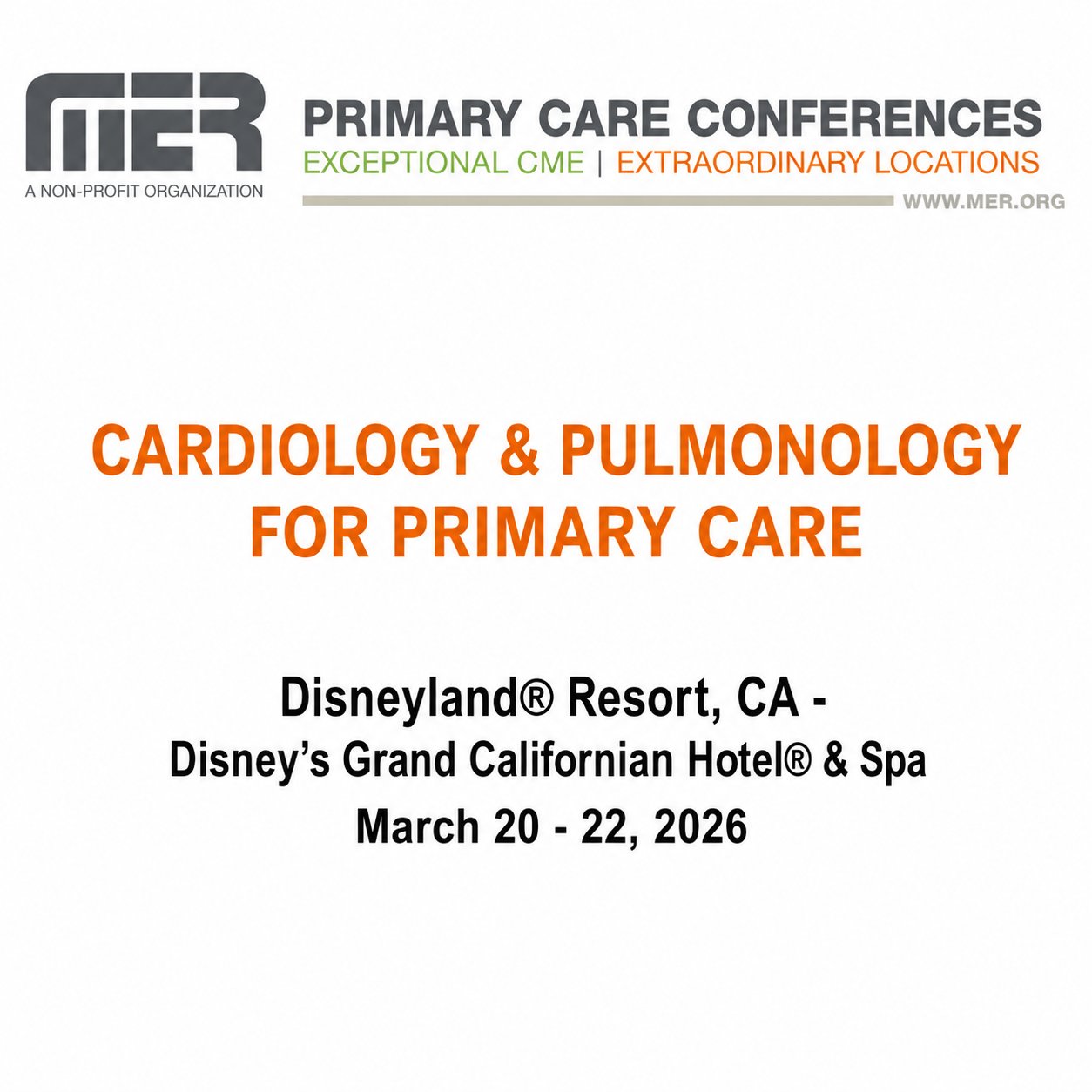
MER Primary Care Conferences Cardiology & Pulmonology for Primary Care Mar 20-22, 2026

Original price was: $1,195.00.$100.00Current price is: $100.00.
MER Cardiology Pulmonology March 2026: a primary care heart review covering CAD, arrhythmias and heart failure alongside respiratory medicine topics such as asthma, COPD and pulmonary nodules. Store-listed conference recordings; confirm the delivered files before ordering.
This Product is shared via google drive download link. Please provide your correct Gmail address when placing the order.
Please note: there are no CME points or certificate associated with this course.
Samples for Courses Can be found here: Free Samples Here!
MER Cardiology Pulmonology March 2026
MER Cardiology Pulmonology March 2026 covers heart and respiratory conditions in primary care. The official program identifies the March 20–22 meeting in California, with Stella Ogake, MD, and Eugene E. Wolfel, MD. This store listing describes conference recordings; the event agenda is a topic reference, not a verified inventory of the delivered files.
Course Details
- Course: Cardiology & Pulmonology for Primary Care 2026
- Provider: Medical Education Resources (MER)
- Course Dates: March 20–22, 2026
- Location: Disney’s Grand Californian Hotel & Spa, Disneyland Resort, California
- Faculty: Stella Ogake, MD & Eugene E. Wolfel, MD
- Store-listed format: Conference Recordings; confirm the supplied file inventory before purchase.
- Target Audience: Primary Care Providers, Cardiologists, Pulmonologists
Program focus
The agenda combines diagnostic assessment, treatment discussions and cardiology cases for office-based clinicians. Use the topic overview below to assess relevance to your learning needs; it does not establish which sessions are included in this purchase.
Key Topics Covered
Coronary Artery Disease (CAD)
Participants review:
- CAD risk assessment
- Diagnostic evaluation
- Stress testing selection
- Imaging strategies
- Prevention and management
Faculty provide practical guidance for identifying and managing patients at risk for coronary disease.
Acute Chest Pain Evaluation
Sessions focus on:
- Differential diagnosis
- Risk stratification
- Diagnostic algorithms
- Emergency referral decisions
- Evidence-based treatment approaches
Clinicians learn to distinguish serious cardiac conditions from non-cardiac causes of chest pain.
Arrhythmias & Atrial Fibrillation
Topics include:
- Recognition of arrhythmias
- Atrial fibrillation management
- Anticoagulation considerations
- Rate and rhythm control
- Long-term monitoring
The course highlights guideline-directed management strategies applicable to primary care.
Heart Failure
Participants learn:
- Heart failure diagnosis
- Guideline-directed medical therapy
- HFrEF management
- HFpEF updates
- Long-term outpatient care
The program discusses heart failure assessment and treatment options.
Hypertension Management
Coverage includes:
- Hypertension guidelines discussed at the meeting
- Blood pressure targets
- Pharmacologic treatment
- Lifestyle interventions
- Cardiovascular risk reduction
Practical recommendations help clinicians optimize blood pressure control.
Lipid Management & Cardiovascular Prevention
Sessions discuss:
- Cholesterol management
- Lipid-lowering therapies
- Primary prevention
- Secondary prevention
- Lifestyle modification strategies
Participants gain updated knowledge regarding cardiovascular prevention.
Asthma Management
Topics include:
- Asthma diagnosis
- Severity classification
- Controller therapies
- Acute exacerbation management
- Long-term monitoring
The course emphasizes evidence-based outpatient asthma care.
Chronic Obstructive Pulmonary Disease (COPD)
Participants review:
- COPD diagnosis
- Pharmacologic therapy
- Inhaler selection
- Exacerbation prevention
- Disease monitoring
The program discusses COPD assessment and management.
Lung Nodules & Lung Cancer
Faculty cover:
- Lung nodule evaluation
- Screening recommendations
- Risk stratification
- Referral pathways
- Early cancer detection
Participants learn practical approaches for managing abnormal pulmonary findings.
Respiratory Infections
Topics include:
- Common respiratory infections
- Diagnostic approaches
- Antibiotic stewardship
- Treatment guidelines
- Prevention strategies
The course provides updates relevant to daily primary care practice.
Purchase and access details
Confirm the exact recording inventory, file types, running time and any accompanying documents with the store before ordering. Publisher registration, an official account, live attendance, supplementary resources and assessment access are not established by the conference agenda. No CME points or certificate are included.
Intended audience
The original meeting is directed toward clinicians working in office-based primary care. This listing is for educational review and is not a substitute for current clinical guidance or patient-specific professional judgment.
Program reference
Event dates, faculty and the broad subject areas were checked against the official MER March 20–22, 2026 final agenda. It describes the original meeting, not the files supplied by this store.
Related products

Critical Care - Emergency medicine
Critical Care - Emergency medicine

USMLE / kaplan and Board Review
Uworld USMLE COMLEX Level 1 Qbank, Updated Jan 2023, System- and Subject-wise (PDF)

Medical Accounts
Internal Medicine

Medical Accounts
Critical Care - Emergency medicine

Critical Care - Emergency medicine