
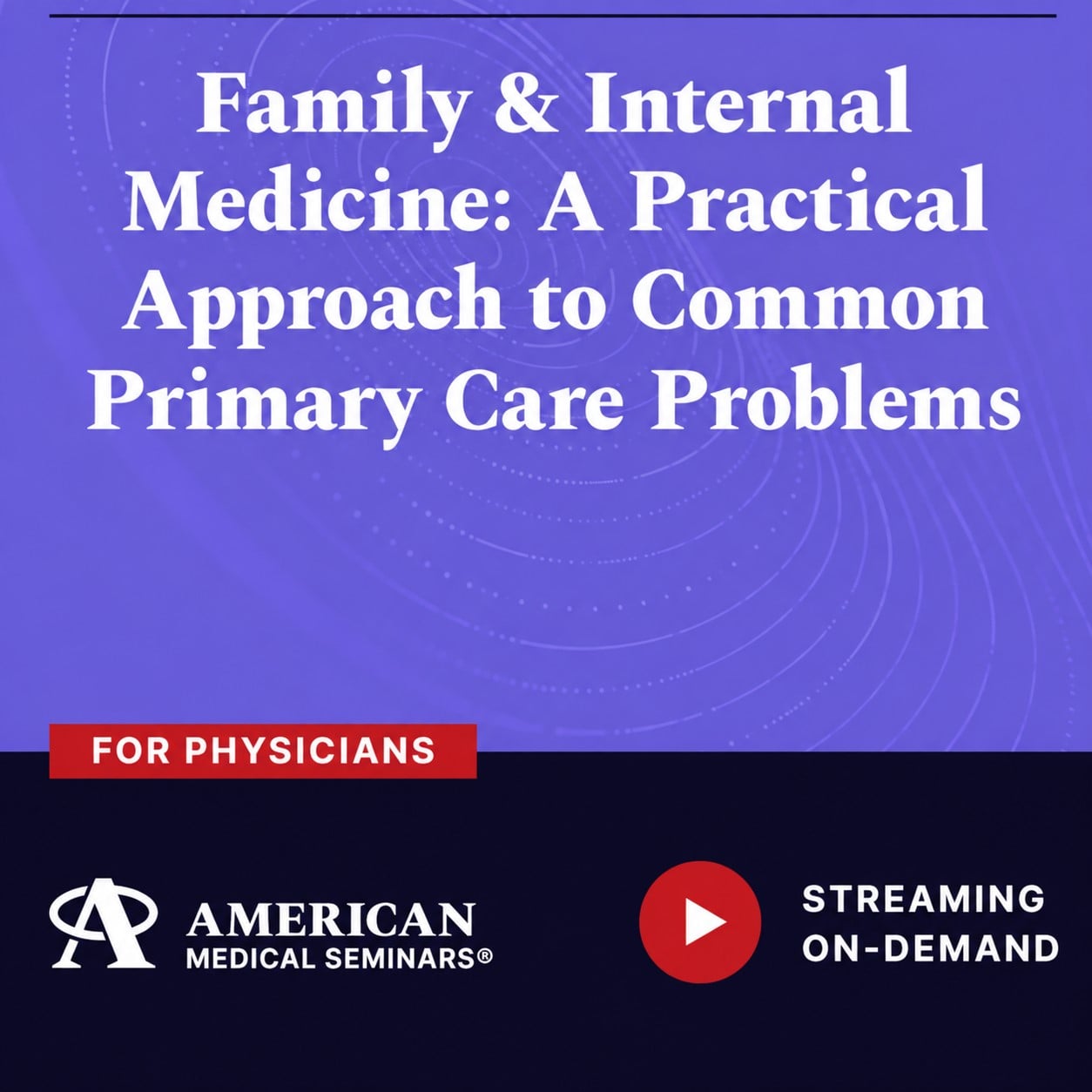
American Medical Seminars Family & Internal Medicine A Practical Approach to Common Primary Care Problems 2024
Original price was: $636.00.$40.00Current price is: $40.00.
This Product is shared via google drive download link, So please share your correct Gmail id while placing the order .Please note that there are no CME points or certificate associated with this course Samples for Courses Can be found here : Free Samples Here!
American Medical Seminars Family & Internal Medicine: A Practical Approach to Common Primary Care Problems 2024
Comprehensive Evidence-Based Updates for Primary Care, Internal Medicine & Urgent Care Practice
The American Medical Seminars Family & Internal Medicine: A Practical Approach to Common Primary Care Problems 2024 course is a comprehensive educational program designed to help clinicians effectively diagnose, manage, and treat the most common medical conditions encountered in primary care, internal medicine, urgent care, and hospital-based settings. Through a practical, evidence-based approach, this multi-day seminar provides current clinical guidelines, diagnostic strategies, and treatment recommendations that can be immediately applied in everyday practice.
Covering cardiovascular disease, pulmonary disorders, endocrinology, neurology, psychiatry, perioperative medicine, chronic disease management, and office emergencies, this program equips healthcare providers with the tools needed to improve patient outcomes across a broad spectrum of clinical scenarios.
Course Overview
Primary care clinicians face increasingly complex patient populations with multiple chronic conditions, psychiatric comorbidities, and acute medical presentations. This course focuses on practical clinical decision-making and evidence-based management strategies for common outpatient and inpatient problems.
The curriculum emphasizes real-world applications, helping participants confidently evaluate patients, implement updated treatment guidelines, manage chronic diseases, and recognize conditions requiring urgent intervention or hospital referral.
Learning Objectives
Upon completion of this course, participants will be able to:
- Apply current guidelines for stroke and transient ischemic attack (TIA) management.
- Assess and manage hypertension and hyperlipidemia using evidence-based strategies.
- Diagnose and treat congestive heart failure and other cardiovascular conditions.
- Perform cardiovascular risk assessment for non-cardiac surgery.
- Improve care transitions and reduce preventable hospital readmissions.
- Evaluate and manage chronic diseases including COPD, diabetes, obesity, anemia, and thyroid disorders.
- Recognize and manage dementia and cognitive impairment.
- Screen for and treat anxiety, depression, and substance use disorders.
- Manage difficult patient encounters and identify healthcare provider burnout.
- Evaluate common office emergencies including syncope, seizures, abdominal pain, and shortness of breath.
- Identify clinical situations requiring emergency department referral or hospitalization.
Key Topics Covered
Cardiovascular Medicine
Participants review:
- Hypertension management
- Hyperlipidemia treatment
- Congestive heart failure
- Stroke prevention
- Transient ischemic attack (TIA)
- Cardiovascular risk reduction
Current guidelines and evidence-based therapies are emphasized throughout the program.
Neurology
Topics include:
- Stroke evaluation
- TIA management
- Dementia diagnosis
- Cognitive decline assessment
- Seizure recognition
- Neurological emergencies
Clinicians learn practical diagnostic and treatment approaches applicable to primary care settings.
Pulmonary Medicine
Coverage includes:
- COPD diagnosis and management
- Dyspnea evaluation
- Respiratory symptom assessment
- Chronic pulmonary disease management
- Outpatient treatment strategies
Participants gain practical approaches to common respiratory complaints.
Endocrinology & Metabolic Disease
Sessions focus on:
- Diabetes management
- Obesity treatment
- Thyroid disorders
- Metabolic syndrome
- Risk factor modification
Updated recommendations for chronic disease management are reviewed.
Hematology
Topics include:
- Anemia evaluation
- Diagnostic workup
- Common hematologic disorders
- Interpretation of laboratory abnormalities
Participants learn efficient approaches to common hematologic presentations.
Perioperative Medicine
Coverage includes:
- Cardiovascular risk assessment
- Preoperative evaluation
- Surgical clearance considerations
- Risk stratification tools
- Postoperative management principles
The course helps clinicians improve perioperative decision-making.
Transitional Care & Readmission Prevention
Participants learn:
- Effective discharge planning
- Care transition strategies
- Medication reconciliation
- Reducing preventable readmissions
- Improving continuity of care
These sessions focus on enhancing patient safety and healthcare quality.
Psychiatry & Behavioral Health
Topics include:
- Anxiety disorders
- Depression
- Substance use disorders
- Difficult patient interactions
- Behavioral health integration
- Physician burnout recognition
Faculty provide practical management tools for commonly encountered psychiatric conditions.
Acute Office Emergencies
Sessions address:
- Syncope
- Seizures
- Shortness of breath
- Acute abdominal pain
- Emergency triage decisions
- Appropriate referral strategies
Participants learn how to recognize potentially life-threatening conditions requiring urgent intervention.
Educational Features
✔ Evidence-Based Clinical Updates
✔ Practical Primary Care Focus
✔ Multi-System Review
✔ Real-World Clinical Scenarios
✔ Guideline-Based Management
✔ Chronic Disease Management Strategies
✔ Office Emergency Recognition
✔ Immediate Clinical Application
Target Audience
This course is ideal for:
- Family Medicine Physicians
- Internal Medicine Physicians
- General Practitioners
- Emergency Medicine Physicians
- Urgent Care Physicians
- Hospitalists
- Nurse Practitioners
- Physician Assistants
- Residents & Fellows
- Primary Care Clinicians
Why This Course Stands Out
✔ Broad coverage of conditions commonly encountered in primary care
✔ Focus on practical diagnosis and management strategies
✔ Evidence-based and guideline-driven content
✔ Addresses both chronic disease management and acute presentations
✔ Includes behavioral health and transitional care topics
✔ Relevant for outpatient, urgent care, and hospital-based clinicians
✔ Designed for immediate implementation in clinical practice
✔ Comprehensive review of everyday medical problems
Clinical Value
The American Medical Seminars Family & Internal Medicine: A Practical Approach to Common Primary Care Problems 2024 course delivers a practical and comprehensive review of modern primary care medicine. Covering cardiovascular disease, diabetes, COPD, obesity, anemia, thyroid disease, dementia, psychiatric disorders, perioperative medicine, and office emergencies, it provides clinicians with evidence-based strategies to improve diagnostic accuracy, treatment decisions, and patient outcomes.
4. Topics
The curriculum covers a highly detailed and robust selection of primary care topics across the 4 days. The detailed topics include:
Cardiovascular & Pulmonary Issues:
-
Evaluation and Treatment of Hypertensive Patients: Identifying new blood pressure categories, employing non-pharmacologic and pharmacologic treatments for compelling indications, and formulating therapeutic goals for different patient populations.
-
Approach to the Management of Chest Pain: Evaluating history, physical exams, and EKG findings. Strategizing the use of cardiac biomarkers for Acute Coronary Syndrome (ACS) and applying recent research guidelines.
-
Diagnosis and Management of Heart Failure: Evaluating symptoms, detecting causes of systolic heart failure, employing standard-of-care therapies, and applying the ACCF/AHA Guidelines (including determining when to refer for device therapy).
-
Cardiac Issues in Peri-Operative Risk Assessment: Maximizing cardiovascular outcomes and managing comorbidities (valvular heart disease, tobacco use, hyperlipidemia) for patients undergoing non-cardiac surgery.
-
Practical Approach to the Patient with Hyperlipidemia: Applying current NCEP guidelines, incorporating new medications, and targeting new cholesterol endpoints.
-
Chronic Obstructive Pulmonary Disease (COPD): Evaluating diagnostic criteria, analyzing the role of smoking, staging COPD, formulating treatment plans, and monitoring therapeutic efficacy.
Neurology & Endocrinology:
-
Approach to the Management of Stroke: Assessing common presentations of stroke/TIA, utilizing initial treatment strategies, risk stratification, and developing secondary prevention plans.
-
Diagnosis and Treatment of Recurrent Headaches: Differentiating symptoms of migraine, tension, and cluster headaches. Comparing initial therapies, prophylactic regimens, supportive lifestyle changes, and pharmacologic options for acute pain.
-
Practical Approach to Thyroid Disease: Assessing the role of screening TSH, managing hypothyroidism/elevated TSH, and utilizing a cost-effective approach to diagnosing thyroid nodules.
-
Practical Approach to the Patient with Diabetes: Reviewing management protocols, determining risk for long-term complications, and applying current therapeutic guidelines.
General Internal Medicine & Geriatrics:
-
Anemia – A Finding, Not Yet a Diagnosis: Distinguishing etiologies for common anemias, constructing diagnostic evaluations, developing therapeutic options, and formulating follow-up assessments.
-
Practical Approach to the Patient with Obesity: Reviewing popular marketed diets, exploring the basic physiology of obesity, understanding the unique needs of obese patients, and managing anti-obesity medications.
-
Practical Approach to the Outpatient with Dementia: Screening for dementia, managing polypharmacy and drug-drug interactions, and developing long-term, cost-effective follow-up and referral processes.
-
Strategies to Address Preventable Hospital Readmissions: Identifying risk factors, utilizing evidence-based stratification tools, and developing proactive transition-of-care strategies.
-
Common Office Emergencies: Evaluating and treating shortness of breath, abdominal pain, syncope, seizures, endocrine crises, and trauma in the primary care office.
Psychiatry & Behavioral Health:
-
Substance Use Disorders: Evaluating risk factors, utilizing screening tools for addiction, reviewing medical and psychiatric consequences, and applying biological and psychosocial treatments.
-
Anxiety Disorders: Reviewing the impact of anxiety and comparing diagnostic criteria for panic disorder, agoraphobia, generalized anxiety disorder, and social anxiety disorder, alongside treatment options.
-
Depression: Reviewing signs and symptoms across the lifespan and considering both pharmacological and non-pharmacological treatment options.
-
Dealing with Difficult Patients: Recognizing why patients and family members may be difficult, implementing response techniques, and evaluating how medical/psychiatric illnesses affect behavior.
-
Provider Wellness: Identifying and defining stress, differentiating and treating PTSD vs. Burnout, and addressing the ongoing effects of COVID-19 on physician well-being.
Related products

Endocrine and Nutrition
Endocrine and Nutrition

Endocrine and Nutrition
Harvard Fifty-Ninth Annual Update Obstetrics and Gynecology 2023

Endocrine and Nutrition
Master Course Carotid and Vertebral Arteries (ABC Vascular) (Videos, Slides & Quizzes)

Endocrine and Nutrition
Endocrine and Nutrition
Cardiology

Endocrine and Nutrition