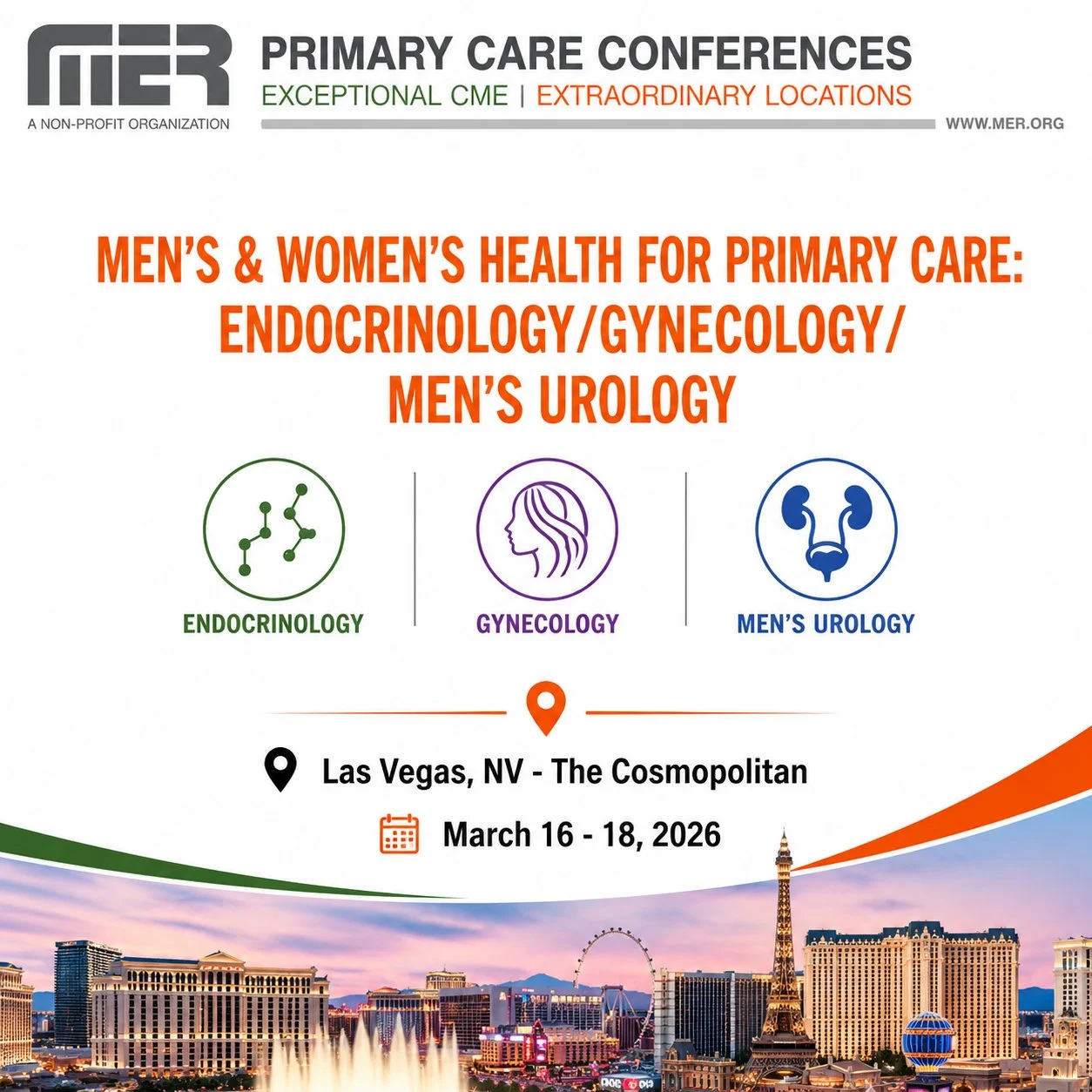
MER Primary Care Conferences Men’s & Women’s Health for Primary Care: Endocrinology, Gynecology & Men’s Urology 2026
Comprehensive Primary Care Updates in Endocrine, Gynecologic, and Men’s Health
MER Primary Care Conferences Men’s & Women’s Health for Primary Care: Endocrinology, Gynecology & Men’s Urology 2026 is a focused continuing medical education program designed to help primary care clinicians confidently diagnose, manage, and treat common endocrine, gynecologic, and urologic conditions encountered in everyday practice.
Held at The Cosmopolitan, Las Vegas, Nevada, this evidence-based conference delivers practical clinical updates that can be immediately incorporated into outpatient and primary care settings. Through expert-led presentations and case-based discussions, participants gain current knowledge on women’s health, men’s sexual health, obesity management, osteoporosis, thyroid disease, pituitary disorders, reproductive health, and urologic conditions.
The program emphasizes real-world clinical decision-making and guideline-driven patient care, helping healthcare providers improve outcomes while navigating evolving recommendations across multiple specialties.
Course Overview
Primary care providers frequently serve as the first point of contact for patients experiencing endocrine, reproductive, and urologic concerns. Managing these conditions effectively requires staying current with changing diagnostic criteria, screening recommendations, therapeutic advances, and patient-centered treatment strategies.
This conference provides a multidisciplinary review of important topics affecting both men and women across the lifespan. Participants learn practical approaches for evaluating abnormal uterine bleeding, menopause, PCOS, obesity, osteoporosis, thyroid dysfunction, male sexual health concerns, sexually transmitted infections, prostate disorders, and genitourinary cancers.
The curriculum is specifically designed to support office-based clinicians seeking concise, clinically relevant updates applicable to everyday patient care.
Key Topics Covered
Women’s Health & Gynecology
Participants review:
- Abnormal uterine bleeding
- Menopausal transition
- Hormone therapy
- Perimenopause management
- Postmenopausal care
- Contraceptive considerations
- Ectopic pregnancy recognition
- Reproductive health screening
- Gynecologic risk assessment
Faculty discuss evidence-based diagnostic and treatment approaches for common gynecologic conditions.
Polycystic Ovary Syndrome (PCOS)
Sessions cover:
- Updated diagnostic criteria
- Adolescent PCOS
- Metabolic complications
- Menstrual irregularities
- Fertility considerations
- Lifestyle interventions
- Pharmacologic management
Participants learn practical strategies for early diagnosis and long-term management.
Men’s Health & Urology
Comprehensive discussions include:
- Male sexual dysfunction
- Erectile dysfunction
- Testosterone deficiency
- Men’s reproductive health
- Prostate disease
- Benign prostatic hyperplasia (BPH)
- Testicular disorders
- Sexual wellness
Experts provide guidance on evaluation, treatment options, and patient counseling.
Sexually Transmitted Infections
Coverage includes:
- STI diagnosis
- Screening recommendations
- Prevention strategies
- Treatment guidelines
- Risk reduction counseling
- Emerging epidemiologic trends
Practical approaches for primary care practice are emphasized.
Prostate and Testicular Cancer
Participants explore:
- Cancer screening recommendations
- Risk assessment
- Early detection strategies
- Diagnostic evaluation
- Referral indications
- Current treatment approaches
Faculty review contemporary controversies and evidence-based recommendations.
Obesity Medicine
Sessions focus on:
- Pathophysiology of obesity
- Weight management strategies
- Lifestyle modification
- Medical therapies
- Emerging obesity treatments
- Bariatric surgery considerations
- Long-term weight maintenance
Participants gain tools for comprehensive obesity management.
Endocrinology Updates
Key endocrine topics include:
Thyroid Disorders
- Hypothyroidism
- Hyperthyroidism
- Thyroid nodules
- Thyroid dysfunction screening
- Diagnostic evaluation
- Treatment strategies
Pituitary Disorders
- Pituitary adenomas
- Hormonal abnormalities
- Diagnostic workup
- Medical management
- Referral considerations
Osteoporosis & Bone Health
Coverage includes:
- Osteoporosis screening
- Fracture prevention
- Bone density interpretation
- Bisphosphonate therapy
- Treatment selection
- Long-term management
- Emerging therapies
Participants review current recommendations for preserving skeletal health.
Learning Objectives
Upon completion of this program, participants will be able to:
- Assess and manage abnormal uterine bleeding using evidence-based approaches.
- Discuss menopause and individualized treatment strategies.
- Recognize clinical presentations suggestive of ectopic pregnancy.
- Apply current diagnostic criteria for polycystic ovary syndrome.
- Evaluate and manage common male sexual health concerns.
- Diagnose and treat sexually transmitted infections in men.
- Differentiate benign prostate disorders from prostate malignancies.
- Discuss screening and management strategies for prostate and testicular cancer.
- Evaluate obesity and implement evidence-based weight management plans.
- Assess risks and benefits of osteoporosis treatments including bisphosphonates.
- Recognize abnormal thyroid function and initiate appropriate management.
- Identify pituitary disorders and determine appropriate treatment pathways.
Educational Features
✔ Evidence-Based Primary Care Updates
✔ Women’s Health and Gynecology Review
✔ Men’s Urology and Sexual Health
✔ Endocrinology Essentials
✔ Obesity Medicine Updates
✔ Osteoporosis Management
✔ Case-Based Clinical Learning
✔ Practical Outpatient Strategies
✔ Guideline-Driven Recommendations
✔ CME-Focused Education
Target Audience
This conference is designed for:
- Primary Care Physicians
- Family Medicine Physicians
- Internal Medicine Physicians
- General Practitioners
- Hospitalists
- Nurse Practitioners
- Physician Assistants
- Women’s Health Providers
- Endocrinology Clinicians
- Healthcare Professionals Interested in Primary Care Updates
Why This Course Matters
Primary care clinicians manage a wide range of endocrine, gynecologic, and urologic conditions that directly impact patient quality of life and long-term health outcomes. MER Men’s & Women’s Health for Primary Care 2026 provides practical, evidence-based education that helps clinicians confidently navigate common and complex clinical scenarios while staying current with evolving guidelines and therapeutic advances.
The program delivers a balanced review of men’s health, women’s health, endocrinology, obesity medicine, osteoporosis, reproductive health, and preventive care—making it a valuable resource for clinicians seeking comprehensive primary care updates.
4. Topics
Gynecology
-
Abnormal Uterine Bleeding: Overview of normal/abnormal menstrual physiology/profile. Menstrual disturbances. Ovulatory and anovulatory uterine bleeding. Other menstrual abnormalities. Diagnosis and appropriate treatment options.
-
Menopause Transition and Hormone Replacement Therapy: Symptoms of menopause, including hot flashes, night sweats, and atrophy. Menopause syndromes, including osteoporosis, breast cancer, cardiac disease, and colon cancer. Estrogen analogs. Counseling patients in options and alternatives to hormone therapy. Designer estrogens; SERMS; HRTs. Discussion of risks and benefits, especially in breast cancer and CHD.
-
Diagnosis and Management of Ectopic Pregnancy and Pregnancy of Unknown Location (PUL): Definition and diagnosis of ectopic pregnancy and PUL. Common presentations. Active and expectant management options. Outcomes. Appropriate counseling.
-
Polycystic Ovary Syndrome (PCOS) Overview for Primary Care: Discussion of the normal balance of hormones (estrogen, progesterone and androgens) in the ovaries. Treatment of cysts and the regulation of menstrual cycles. Acne and hair growth. Treatment options and referral guidelines.
Men’s Urology
-
Androgen Replacement and Sexual Function: Treatment algorithm and safety profiles for the treatment of erectile dysfunction. Testosterone supplementation for the treatment of ED or hypogonadism.
-
Sexually Transmitted Infections in Men: Presenting symptoms, lesions, latencies, diagnostic work-ups and therapies of the common sexually transmitted diseases.
-
Benign Male Genitourinary Conditions: Appropriate primary medical management of lower urinary tract symptoms (LUTS) (also known as BPH) as well as identification of patients with complex or refractory cases that warrant referral. Diagnosis and treatment of epididymitis, testicular pain, prostatitis and other benign findings.
-
Male Malignancies (Prostate & Testicular): Biology and treatment options using current medical technology of prostate cancer. Evaluation and treatment of testicular cancer and long-term ramifications after cure.
Endocrinology
-
Obesity Management: Diagnosis. Etiology. Complications. Use of appetite suppressant medications. Lifestyle modifications. When surgery should be performed.
-
Osteoporosis: Review the epidemiology and pathophysiology of osteoporosis along with interpretation of DEXA scans and FRAX risk assessment. Up-to-date therapeutic options.
-
Disorders of Thyroid Function: Prevalence, diagnosis and treatment options of hypothyroidism and hyperthyroidism.
-
Evaluation and Management of Pituitary Disease: Diagnosis and treatment of pituitary disorders.