
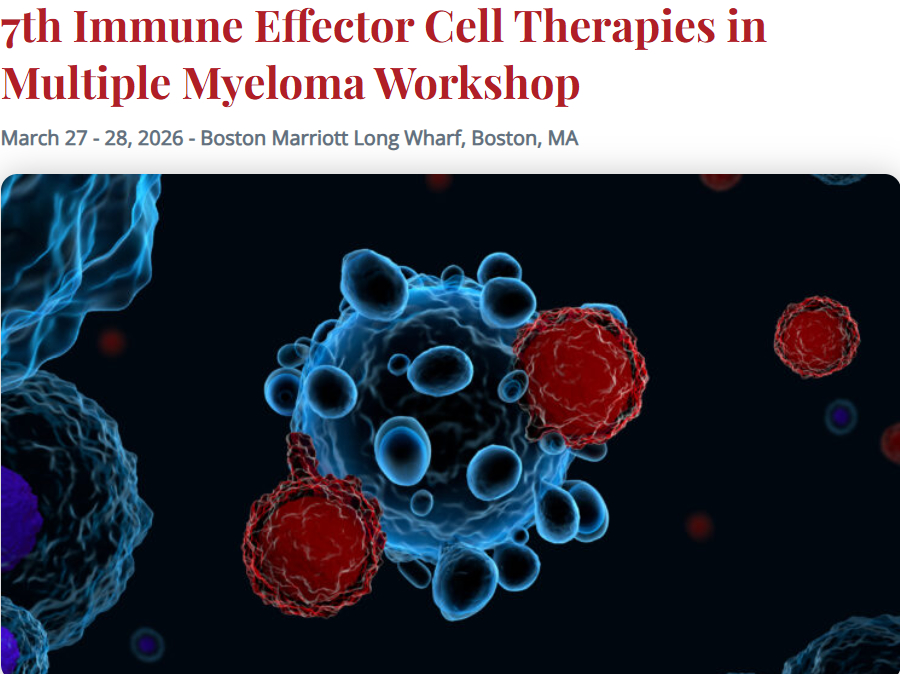
International Myeloma Society 7th Immune Effector Cell Therapies in Multiple Myeloma Workshop 2026
$40.00
This Product is shared via google drive download link, So please share your correct Gmail id while placing the order .Please note that there are no CME points or certificate associated with this course Samples for Courses Can be found here : Free Samples Here!
International Myeloma Society (IMS) 7th Immune Effector Cell Therapies in Multiple Myeloma Workshop 2026 (Videos)
Advanced Updates in CAR T-Cell Therapy, Bispecific & Trispecific Antibodies, BCMA-Targeted Therapies, Cellular Immunotherapy, and Precision Treatment for Multiple Myeloma
Stay at the cutting edge of cellular immunotherapy with the International Myeloma Society (IMS) 7th Immune Effector Cell Therapies in Multiple Myeloma Workshop 2026, an advanced continuing medical education (CME) program dedicated to the rapidly evolving field of immune effector cell therapies for multiple myeloma. This internationally recognized workshop brings together leading hematologists, medical oncologists, immunologists, translational researchers, and clinical scientists to present the latest scientific discoveries, clinical trial updates, real-world evidence, and emerging treatment strategies that are reshaping the management of relapsed and refractory multiple myeloma.
Held March 27–28, 2026, at the Boston Marriott Long Wharf, Boston, Massachusetts, with both live and on-demand access, the workshop delivers comprehensive education on next-generation CAR T-cell therapies, bispecific antibodies, trispecific antibodies, dual-targeted cellular therapies, immune resistance mechanisms, toxicity management, and innovative in vivo immune engineering approaches. Through expert-led presentations, translational research updates, and multidisciplinary scientific discussions, participants gain practical knowledge that can be immediately integrated into clinical practice and research.
Designed to bridge laboratory discoveries with real-world patient care, this workshop provides clinicians with evidence-based guidance for selecting, sequencing, administering, and monitoring advanced immune therapies while optimizing patient outcomes.
Product Details
- Course: 7th Immune Effector Cell Therapies in Multiple Myeloma Workshop 2026
- Provider: International Myeloma Society (IMS)
- Conference Dates: March 27–28, 2026
- Location: Boston Marriott Long Wharf, Boston, Massachusetts, USA
- Format: Videos (Live & On-Demand)
- Language: English
- Educational Level: Advanced
Course Overview
Immune effector cell therapies have transformed the treatment landscape of multiple myeloma, offering durable responses for patients with relapsed and refractory disease. Rapid advances in CAR T-cell therapy, bispecific antibodies, trispecific antibodies, and novel immune-based strategies continue to redefine standards of care while introducing new clinical challenges related to toxicity, resistance, sequencing, and long-term patient management.
The IMS 7th Immune Effector Cell Therapies in Multiple Myeloma Workshop 2026 provides an in-depth review of these rapidly evolving therapies through presentations by internationally recognized experts. Faculty review current clinical trial results, real-world experience, translational research, genomic discoveries, immune microenvironment interactions, and future therapeutic innovations designed to improve efficacy and overcome resistance.
Participants gain practical strategies for integrating advanced immune therapies into routine clinical practice while enhancing multidisciplinary collaboration between academic centers and community oncology programs.
What You’ll Learn
After completing this course, participants will be able to:
- Evaluate current evidence supporting CAR T-cell therapies and bispecific antibodies in multiple myeloma.
- Compare available BCMA-targeted and GPRC5D-targeted treatment options.
- Interpret emerging data on trispecific antibodies and dual-targeted CAR T-cell therapies.
- Recognize and manage toxicities associated with immune effector cell therapies.
- Understand mechanisms of treatment resistance and immune escape.
- Optimize sequencing strategies for cellular immunotherapies.
- Apply translational research findings to precision oncology practice.
- Improve outcomes through individualized immune-based treatment planning.
Comprehensive Topics Covered
CAR T-Cell Therapy
Review the latest developments in CAR T-cell therapy for relapsed and refractory multiple myeloma.
Topics include:
- Ide-cel
- Cilta-cel
- Anito-cel
- GC012F
- CAR T manufacturing
- Patient selection
- Clinical outcomes
- Long-term follow-up
Faculty discuss current evidence, real-world experience, and future directions for cellular therapy.
Bispecific Antibodies
Develop a comprehensive understanding of T-cell engaging therapies that are rapidly becoming integral components of myeloma treatment.
Topics include:
- Teclistamab
- Talquetamab
- Elranatamab
- Linvoseltamab
- Mechanisms of action
- Clinical efficacy
- Treatment sequencing
- Patient monitoring
Trispecific & Next-Generation Immune Therapies
Explore innovative immune strategies currently under investigation.
Topics include:
- Trispecific antibodies
- Dual-targeted CAR T cells
- Combination immunotherapy
- In vivo immune therapies
- Emerging cellular platforms
- Future therapeutic approaches
BCMA & GPRC5D Targeted Therapies
Understand the biology and clinical application of major therapeutic targets in multiple myeloma.
Topics include:
- BCMA biology
- GPRC5D
- Target selection
- Precision medicine
- Biomarker-driven therapy
- Personalized treatment
Toxicity Management
Gain practical guidance for recognizing and managing immune-related adverse events.
Topics include:
- Cytokine Release Syndrome (CRS)
- Immune Effector Cell-Associated Neurotoxicity Syndrome (ICANS)
- Delayed neurotoxicity
- Immune effector cell enterocolitis
- Infection prevention
- Supportive care
- Long-term monitoring
Faculty provide evidence-based recommendations for improving patient safety while maximizing therapeutic benefit.
Resistance Mechanisms
Review the biological mechanisms responsible for treatment resistance and relapse.
Topics include:
- Genomic alterations
- Clonal evolution
- Immune escape
- Tumor microenvironment
- Antigen loss
- Resistance biomarkers
Participants learn strategies for overcoming resistance through novel therapeutic approaches.
Translational Medicine
Bridge laboratory discoveries with clinical implementation.
Topics include:
- Translational research
- Precision oncology
- Biomarker development
- Clinical trials
- Emerging technologies
- Future immunotherapies
Clinical Implementation
Develop practical strategies for integrating immune therapies into everyday oncology practice.
Topics include:
- Treatment sequencing
- Patient selection
- Referral pathways
- Multidisciplinary care
- Real-world clinical practice
- Community oncology integration
Learning Objectives
Upon completion of this educational activity, participants will be able to:
- Evaluate current clinical evidence for CAR T-cell therapies and bispecific antibodies.
- Compare novel immune therapeutic platforms including trispecific antibodies and dual-targeted CAR T cells.
- Recognize and manage toxicities associated with immune effector cell therapies.
- Understand genomic and microenvironmental mechanisms of resistance.
- Apply practical treatment sequencing strategies for modern immune therapies.
- Integrate translational research into evidence-based patient care.
Educational Highlights
- Multiple Myeloma
- CAR T-Cell Therapy
- Cellular Therapy
- BCMA-Targeted Therapy
- GPRC5D
- Bispecific Antibodies
- Trispecific Antibodies
- T-Cell Engagers
- Precision Oncology
- Translational Medicine
- Immunotherapy
- Immune Effector Cell Therapy
- Cytokine Release Syndrome (CRS)
- ICANS
- Neurotoxicity
- Tumor Microenvironment
- Resistance Mechanisms
- Clinical Trials
- Real-World Evidence
- Continuing Medical Education (CME)
Why This Course Stands Out
The International Myeloma Society 7th Immune Effector Cell Therapies in Multiple Myeloma Workshop 2026 represents one of the world’s premier scientific meetings dedicated exclusively to immune therapies for multiple myeloma. Combining internationally recognized experts, cutting-edge translational research, real-world clinical experience, and practical implementation strategies, the program provides an exceptional review of current and future immune-based therapies. Its emphasis on treatment sequencing, toxicity management, resistance biology, and emerging cellular technologies makes it an indispensable educational resource for clinicians and researchers involved in modern myeloma care.
Target Audience
This educational activity is ideal for:
- Hematologists
- Medical Oncologists
- Immunologists
- Hematopathologists
- Clinical Researchers
- Translational Scientists
- Hematology Fellows
- Oncology Fellows
- Cellular Therapy Specialists
- Bone Marrow Transplant Physicians
- Advanced Practice Providers
- Healthcare Professionals involved in the diagnosis and treatment of multiple myeloma
Why Choose This Course?
Whether you specialize in hematology, oncology, immunotherapy, or translational cancer research, the International Myeloma Society 7th Immune Effector Cell Therapies in Multiple Myeloma Workshop 2026 delivers an outstanding evidence-based review of the latest advances in immune-based treatment for multiple myeloma. Featuring internationally recognized faculty, cutting-edge clinical trial updates, practical toxicity management, translational science, and emerging therapeutic innovations, this program equips clinicians with the knowledge needed to confidently implement next-generation immunotherapies and improve outcomes for patients with plasma cell disorders.
Topics
-
SESSION 1: CLINICAL UPDATES ON CART CELLS
-
Ide-cel and Cilta-cel: Latest Updates and Ongoing Trials
-
Latest Real World Data for CAR T Cells
-
Update on Anito-cel and GC012F
-
GPRC5D CAR T Cells: Latest Updates and Ongoing Trials
-
Dual-targeted CAR T Cell Approaches
-
Update on Allogeneic CAR T Cell Approaches
-
-
SESSION 2: CLINICAL UPDATES ON BISPECIFIC ANTIBODIES
-
Teclistamab and Talquetamab for Relapsed MM: Latest Updates and Ongoing Trials
-
Elranatamab and Linvoseltamab for Relapsed MM: Latest Updates and Ongoing Trials
-
Real World Data for Bispecific Antibodies
-
Bispecific Abs for First-line and Maintenance Therapy
-
Etentamig and Cevostamab: Latest Updates and Ongoing Trials
-
-
SESSION 3: NOVEL APPROACHES IN THE CLINIC
-
Trispecific Antibodies for Myeloma
-
Combining Bispecific Abs with CAR T Cells
-
Fixed Duration Bispecific Antibody Therapy
-
Augmenting T Cell Therapies with Proteasome Inhibitors
-
TriPRIL CAR T Cells
-
Bispecific with Anti-CD38 Antibody
-
-
SESSION 4: TOXICITIES OF T CELL ENGAGING THERAPIES
-
Pre-treatment Parameters Predicting CAR T Cell Toxicities
-
Elevated ALC and CAR T Cell Toxicities
-
Managing CAR-T-associated Delayed Neurotoxicity
-
CAR T-related Lymphomas: Clinical and Mechanistic Insights
-
-
SESSION 5: PRACTICAL CONSIDERATIONS FOR IMMUNE THERAPIES
-
Sequencing BCMA-directed Therapies: How to Choose?
-
Optimizing Outpatient Bispecific Ab and CAR T Cell Administration
-
Managing Extramedullary Disease with T cell-redirecting Therapies
-
T Cell Therapies for CNS Myeloma
-
Impact of CHIP on Outcomes after CAR T Cell Therapy
-
-
SESSION 6: UNDERSTANDING RESPONSE AND RESISTANCE TO T CELL THERAPIES
-
Genomic Drivers of Resistance to BCMA-targeted Therapies
-
Mechanisms of Antigen Escape following GPRC5D-targeted Therapies
-
Immune Correlates of Response to BCMA CAR T Cells
-
Microenvironmental Factors Impacting Response/resistance
-
Immune Correlates of Resistance to Bispecific Antibodies
-
-
SESSION 7: STRATEGIES TO IMPROVE IMMUNE EFFECTOR CELL THERAPY, PART 1
-
Evaluating Immune Fitness Across the Stages of MM Progression
-
Targeting S100A8/9 to Enhance T Cell Therapies
-
Overcoming T Cell Exhaustion
-
Modulating the Microbiome to Enhance CAR T Cell Therapy
-
-
SESSION 8: STRATEGIES TO IMPROVE IMMUNE EFFECTOR CELL THERAPY, PART 2
-
Novel T Cell Therapy Targets for Myeloma
-
CAR T Cells Against CD70
-
Targeting Intra-cellular Targets
-
EZH1/2 inhibition to augment cellular therapy
-
Engingeering of First in Class CAR Bugs for Cancer Immunotherapy
-
-
SESSION 9: CHALLENGING CASES IN IMMUNE EFFECTOR CELL THERAPY
-
CAR T Cell Therapy in a Patient with Plasma Cell Leukemia
-
Immune Effector Cell Enterocolitis: A Novel Clonal Lymphoproliferative Disorder?
-
Fatal HLH Following GPRC5D×CD3 Therapy: Lessons from Genetic and Infectious Co-factors
-
-
SESSION 10: IN VIVO APPROACHES
-
Science of In Vivo CAR T Cell Therpay
-
Bedside CAR T Cell Production
-
In Vivo Bispecific Therapy
-
Clinical Results of In Vivo CAR T Cell Therapy
-
Clinical Results of In Vivo CAR T Cell Therapy Part II
-
Related products
Internal Medicine

Anesthesiology & pain medicine

Critical Care - Emergency medicine
Internal Medicine

Critical Care - Emergency medicine

Internal Medicine
Anesthesiology & pain medicine
Internal Medicine