
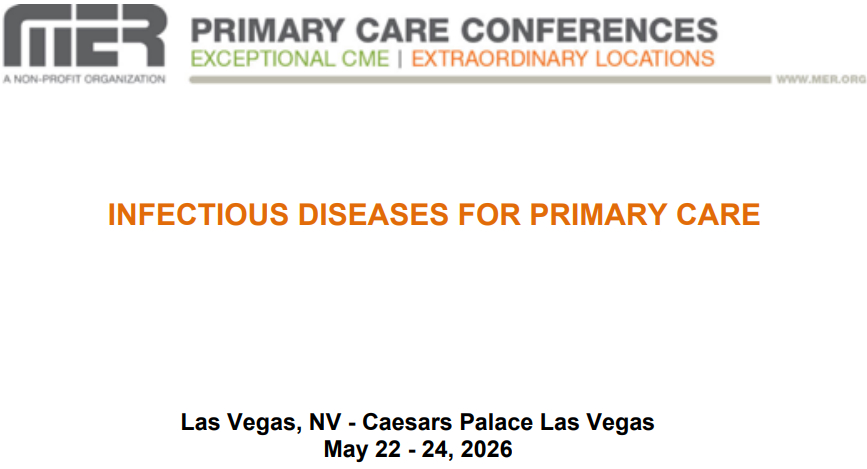
MER Primary Care Conferences Infectious Diseases for Primary Care May 22-24, 2026

$100.00
This Product is shared via google drive download link, So please share your correct Gmail id while placing the order .Please note that there are no CME points or certificate associated with this course Samples for Courses Can be found here : Free Samples Here!
MER Primary Care Conferences – Infectious Diseases for Primary Care 2026 (Videos)
Evidence-Based Infectious Diseases Updates for Primary Care, Antimicrobial Stewardship, Vaccines, Respiratory Infections & Emerging Infectious Diseases
Stay current with the latest developments in infectious diseases through MER Primary Care Conferences – Infectious Diseases for Primary Care 2026, a comprehensive continuing medical education (CME) program designed specifically for primary care clinicians who diagnose and manage infectious diseases in both outpatient and inpatient settings.
Organized by Medical Education Resources (MER), this conference was held May 22–24, 2026, at Caesars Palace, Las Vegas, Nevada. The program delivers practical, evidence-based updates on antimicrobial stewardship, respiratory infections, skin and soft tissue infections, osteomyelitis, central nervous system infections, immunizations, healthcare-associated infections, infections in immunocompromised patients, emerging infectious diseases, gastrointestinal infections, and genitourinary infections.
Through expert-led lectures and clinically focused discussions, participants gain practical diagnostic and therapeutic strategies that can be immediately incorporated into daily primary care practice.
Product Details
- Course: MER Primary Care Conferences – Infectious Diseases for Primary Care 2026
- Organizer: Medical Education Resources (MER)
- Conference Dates: May 22–24, 2026
- Location: Caesars Palace, Las Vegas, Nevada, USA
- Format: Videos
- Language: English
- Educational Level: Intermediate to Advanced
- Learning Format: Expert Lectures, Evidence-Based Reviews, Clinical Case Discussions
Course Overview
Infectious diseases remain among the most common reasons patients seek medical care in primary practice. Clinicians must rapidly recognize potentially life-threatening infections while applying current diagnostic approaches, antimicrobial stewardship principles, vaccination recommendations, and evolving treatment guidelines.
MER Infectious Diseases for Primary Care 2026 provides an up-to-date review of common and emerging infectious diseases encountered in everyday practice. Faculty discuss evidence-based management of respiratory tract infections, skin and soft tissue infections, osteomyelitis, joint infections, central nervous system infections, diarrheal illnesses, genitourinary infections, healthcare-associated infections, and infections affecting immunocompromised patients.
The curriculum emphasizes practical diagnosis, rational antimicrobial use, prevention strategies, and risk-based clinical decision-making to improve patient outcomes while reducing unnecessary antibiotic exposure.
What You’ll Learn
After completing this course, participants will be able to:
- Diagnose and manage common infectious diseases encountered in primary care.
- Apply antimicrobial stewardship principles to optimize antibiotic prescribing.
- Recognize serious infections requiring urgent evaluation or hospitalization.
- Evaluate infections affecting immunocompromised patients.
- Recommend evidence-based immunization strategies based on patient risk factors.
- Identify emerging infectious diseases and zoonotic infections.
- Improve management of respiratory, gastrointestinal, skin, musculoskeletal, CNS, and genitourinary infections.
Comprehensive Topics Covered
Antimicrobial Stewardship
Optimize responsible antibiotic prescribing.
Topics include:
- Antimicrobial stewardship
- Antibiotic selection
- Antibiotic resistance
- Appropriate prescribing
- Culture-guided therapy
- Duration of therapy
- Evidence-based treatment
Faculty review practical strategies for improving antimicrobial use while reducing resistance.
Respiratory Tract Infections
Improve diagnosis and treatment.
Topics include:
- Community-acquired pneumonia
- Upper respiratory infections
- Lower respiratory infections
- Acute bronchitis
- Sinusitis
- Respiratory pathogens
- Evidence-based management
Skin & Soft Tissue Infections (SSTIs)
Recognize common bacterial skin infections.
Topics include:
- Cellulitis
- Abscesses
- Skin infections
- Soft tissue infections
- MRSA
- Streptococcal infections
- Outpatient management
Osteomyelitis & Joint Infections
Strengthen musculoskeletal infection management.
Topics include:
- Osteomyelitis
- Septic arthritis
- Bone infections
- Prosthetic joint infections
- Diagnostic evaluation
- Imaging
- Treatment strategies
Central Nervous System Infections
Recognize neurologic emergencies.
Topics include:
- Meningitis
- Encephalitis
- Brain abscess
- CNS infections
- Neurologic infectious diseases
- Diagnostic evaluation
- Antimicrobial therapy
Infections in Immunocompromised Patients
Manage complex infectious diseases.
Topics include:
- Immunocompromised hosts
- Opportunistic infections
- Immunosuppression
- Transplant infections
- Oncology patients
- Diagnostic approach
- Prevention strategies
Emerging Infectious Diseases
Stay current with evolving threats.
Topics include:
- Emerging infections
- Vaccine-preventable diseases
- Zoonotic diseases
- Animal-associated infections
- Public health
- Global infectious diseases
- Outbreak preparedness
Gastrointestinal Infections
Improve evaluation of infectious diarrhea.
Topics include:
- Infectious diarrhea
- Gastroenteritis
- Enteric pathogens
- Stool testing
- Severity assessment
- Treatment decisions
- Supportive care
Genitourinary Infections
Optimize urinary and genital infection management.
Topics include:
- Urinary tract infections
- Pyelonephritis
- Genitourinary infections
- Complicated infections
- Diagnostic testing
- Antibiotic therapy
- Prevention
Healthcare-Associated Infections
Recognize hospital-related infections.
Topics include:
- Healthcare-associated infections
- Nosocomial infections
- Infection prevention
- Hospital-acquired infections
- Risk assessment
- Patient safety
- Clinical management
Immunizations
Apply current vaccine recommendations.
Topics include:
- Adult immunizations
- Risk-based vaccination
- Vaccine recommendations
- Preventive medicine
- Immunization schedules
- Infectious disease prevention
- Patient counseling
Febrile Patient Evaluation
Develop systematic diagnostic approaches.
Topics include:
- Fever evaluation
- Serious bacterial infections
- Differential diagnosis
- Sepsis recognition
- Outpatient assessment
- Hospital evaluation
- Clinical decision-making
Learning Objectives
Upon completion of this educational activity, participants will be able to:
- Recognize the risk factors, clinical features, and diagnostic evaluation of osteomyelitis and joint infections.
- Diagnose and manage common central nervous system infectious syndromes.
- Apply antimicrobial stewardship principles to optimize antimicrobial therapy.
- Evaluate infections occurring in immunocompromised patients.
- Recognize emerging infectious diseases, including zoonoses and vaccine-preventable illnesses.
- Assess patients with infectious diarrhea and determine appropriate treatment strategies.
- Identify common respiratory pathogens and evidence-based management approaches.
- Recognize patients at increased risk for healthcare-associated infections.
- Diagnose and treat skin and soft tissue infections using current recommendations.
- Recommend appropriate immunizations based on patient-specific risk factors.
- Diagnose and manage genitourinary infections.
- Evaluate febrile patients presenting with potentially life-threatening infectious diseases in both outpatient and inpatient settings.
Educational Highlights
- Infectious Diseases
- Primary Care
- Antimicrobial Stewardship
- Antibiotic Resistance
- Respiratory Infections
- Skin & Soft Tissue Infections (SSTIs)
- Osteomyelitis
- Septic Arthritis
- CNS Infections
- Immunocompromised Hosts
- Emerging Infectious Diseases
- Zoonoses
- Infectious Diarrhea
- Genitourinary Infections
- Healthcare-Associated Infections
- Adult Immunizations
- Fever Evaluation
- Evidence-Based Medicine
- Continuing Medical Education (CME)
Why This Course Stands Out
MER Infectious Diseases for Primary Care 2026 provides a highly practical review of infectious diseases specifically tailored for primary care clinicians. Rather than focusing exclusively on subspecialty infectious disease management, the program emphasizes real-world outpatient diagnosis, evidence-based antimicrobial prescribing, vaccination strategies, recognition of serious infections, and management of common infectious syndromes frequently encountered in everyday clinical practice.
Target Audience
This educational activity is ideal for:
- Primary Care Physicians
- Family Medicine Physicians
- Internal Medicine Physicians
- Infectious Disease Physicians
- Hospitalists
- Emergency Medicine Physicians
- Nurse Practitioners
- Physician Assistants
- Residents
- Fellows
- Healthcare Professionals involved in adult infectious disease management
Why Choose This Course?
Whether you practice family medicine, internal medicine, hospital medicine, or infectious diseases, MER Primary Care Conferences – Infectious Diseases for Primary Care 2026 provides an outstanding evidence-based update on the diagnosis, treatment, and prevention of common infectious diseases. Through expert-led lectures, practical clinical guidance, and current treatment recommendations, participants gain immediately applicable knowledge that enhances patient care, supports antimicrobial stewardship, and improves clinical outcomes.
4. Topics
-
Bone and Joint Infections: Presentation on the most important syndromes and pathogens involved in bone and joint infections – e.g., osteomyelitis, septic arthritis, bursitis, prosthetic joint infections and others – including related diagnostic, therapeutic and prevention pearls.
-
Central Nervous System Infections: Presentation on common CNS infectious disease presentation and syndromes including basic epidemiology, diagnosis and treatment strategies.
-
Antimicrobial Stewardship and Multidrug Resistance: Definition of an antimicrobial stewardship program (ASP); Concepts of the antimicrobial stewardship program; Four goals of antimicrobial stewardship; Most recent additions to the antimicrobial armamentarium.
-
Emerging Infectious Diseases: Novel influenza viruses, resurgence of vaccine-preventable diseases, zoonoses and disease related to animal exposures (including vectors such as mosquitoes that bear west Nile virus and dengue), bioterrorism and food/waterborne illness.
-
Gastrointestinal Infections & Clostridiodes Difficile: Presentation on important enteric pathogens and their recognition, diagnosis and management; special emphasis on clostridiodes difficile colitis and related updates from the ID and infection control literature.
-
Respiratory Tract Infections: Discussion highlighting critical points regarding the diagnosis and management of pneumonia and bronchitis – with a focus on the impact of multidrug resistant pathogens.
-
Healthcare-Associated Infections: Presentation on important pathogens in the healthcare setting and related clinical, epidemiologic and infection control information (please note that the discussion on blood-borne pathogens will NOT suffice for standard hospital CME requirements for BBP training).
-
Infectious Diseases in the Special Host: Case-based interactive discussion involving important infectious disease syndromes in three special hosts: the diabetic patient, the HIV/AIDS patient and the pregnant woman.
-
Skin & Soft Tissue Infections: Presentation on important skin and soft-tissue infections and their prompt recognition, emphasizing evaluation and management strategies.
-
Immunizations: Presentation on key vaccine preventable diseases and their presentations with an emphasis on the latest recommendations including newest schedules, safety and efficacy information.
-
Genitourinary Infections: Presentation on a relevant and clinically practical approach to the patient with genitourinary complaints focusing on the latest guidelines for the range of urinary tract infections and highlights of selected and important sexually-transmitted disease syndromes.
-
Ambulatory Care Infectious Disease Emergencies: Case-based interactive discussion around exemplary cases that addresses key diagnostic and management strategies for potentially emergent outpatient infectious disease challenges.
Related products
Anesthesiology & pain medicine
Critical Care Symposium: Mastering ED Mechanical Ventilation

Internal Medicine

Critical Care - Emergency medicine
Medical Accounts

Medical Accounts

Critical Care - Emergency medicine
ASN Critical Care Nephrology – 2022 Update (On-Demand and Livestream)

Cardiology

Internal Medicine