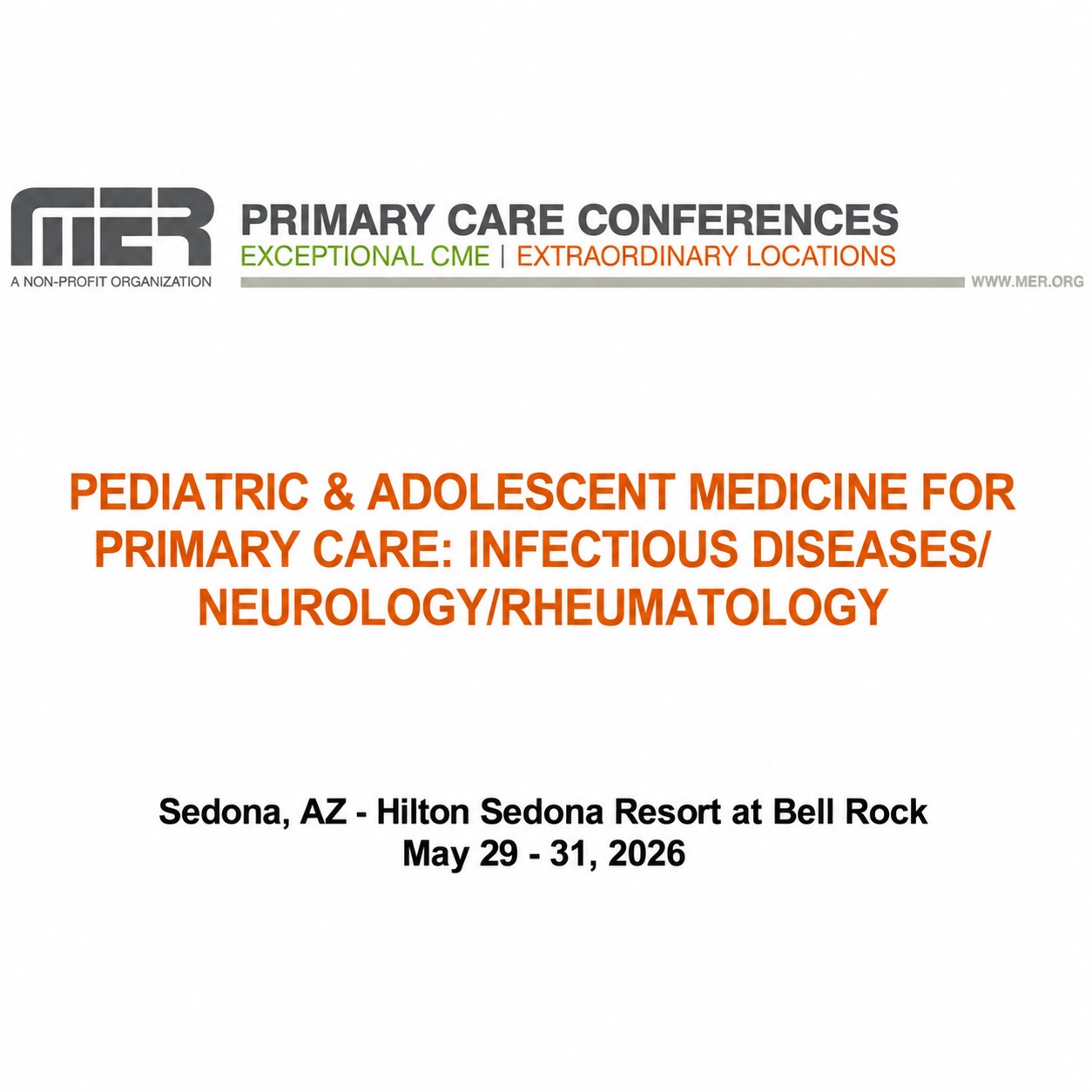
MER Primary Care Conferences Pediatric & Adolescent Medicine for Primary Care ID Neuro Rheum May 29-31, 2026

$100.00
This Product is shared via google drive download link, So please share your correct Gmail id while placing the order .Please note that there are no CME points or certificate associated with this course Samples for Courses Can be found here : Free Samples Here!
MER Primary Care Conferences Pediatric & Adolescent Medicine for Primary Care: Infectious Diseases, Neurology & Rheumatology 2026 (Videos)
Comprehensive Pediatric Primary Care CME | Infectious Diseases, Neurology, Rheumatology & Chronic Pain
Stay current with practical, evidence-based approaches to pediatric and adolescent care through MER Primary Care Conferences – Pediatric & Adolescent Medicine for Primary Care: Infectious Diseases/Neurology/Rheumatology 2026.
Organized by Medical Education Resources (MER), this multidisciplinary continuing medical education program focuses on common and challenging conditions encountered in pediatric and adolescent primary care. The conference was held May 29–31, 2026, at the Hilton Sedona Resort at Bell Rock in Sedona, Arizona.
The program combines clinical updates across pediatric infectious diseases, neurology, and rheumatology, with an emphasis on diagnostic reasoning, treatment selection, medication safety, and practical management strategies applicable to office-based practice.
Product Details
- Course: Pediatric & Adolescent Medicine for Primary Care: Infectious Diseases/Neurology/Rheumatology 2026
- Provider: Medical Education Resources (MER)
- Conference Dates: May 29–31, 2026
- Location: Hilton Sedona Resort at Bell Rock, Sedona, AZ
- Format: Videos
- Language: English
- Educational Focus: Pediatric & Adolescent Primary Care
- Learning Format: Expert Lectures and Clinical Education
Course Overview
Children and adolescents may present with neurological symptoms, infectious syndromes, musculoskeletal complaints, and rheumatologic conditions that require careful evaluation and appropriate treatment.
Pediatric & Adolescent Medicine for Primary Care 2026 provides primary care clinicians with a focused review of important conditions affecting children and adolescents, including pediatric epilepsy, headaches, movement disorders, infectious diseases, Kawasaki disease, juvenile arthritis, connective tissue disorders, and pediatric chronic pain.
The course also addresses emerging challenges such as multidrug-resistant pathogens in pediatric respiratory infections, helping clinicians strengthen their approach to diagnosis, treatment, and medication selection.
What You’ll Learn
Participants will develop practical knowledge in:
- Pediatric weakness and movement disorders
- Pediatric epilepsy and non-epileptic events
- Headaches in children and adolescents
- Kawasaki disease
- Pediatric respiratory infections
- Multidrug-resistant pathogens
- Bite-related infections
- Pediatric infectious disease syndromes
- Juvenile arthritis
- Connective tissue disorders
- Pediatric chronic pain
- Cutaneous manifestations of rheumatic disease
Comprehensive Topics Covered
Pediatric Neurology
Improve evaluation of common neurological presentations.
Topics include:
- Weakness
- Movement disorders
- Pediatric epilepsy
- Non-epileptic events
- Epilepsy diagnostic tools
- Antiepileptic medications
- Pediatric headaches
- Differential diagnosis of headaches
Pediatric Epilepsy
Strengthen diagnostic and treatment decisions.
Topics include:
- Diagnostic tools for pediatric epilepsy
- Differentiating epileptic and non-epileptic events
- Pharmacologic treatment options
- Medication benefits and adverse effects
- Clinical evaluation
Pediatric Infectious Diseases
Develop practical strategies for common pediatric infections.
Topics include:
- Pediatric respiratory infections
- Multidrug-resistant pathogens
- Bite-related infections
- Infectious disease syndromes
- Organ-based infectious conditions
- Diagnosis and treatment
- Antimicrobial considerations
Kawasaki Disease
Recognize important clinical features.
Topics include:
- Signs and symptoms of Kawasaki disease
- Pediatric inflammatory disease
- Clinical recognition
- Diagnostic considerations
- Management principles
Pediatric Rheumatology
Improve recognition and management of rheumatologic disease.
Topics include:
- Juvenile arthritis
- Connective tissue disorders
- Diagnostic principles
- Treatment options
- Rheumatologic manifestations
- Cutaneous signs of rheumatic disease
Pediatric Chronic Pain
Review treatment strategies for chronic pain syndromes.
Topics include:
- Pediatric chronic pain
- Pharmacologic treatment
- Medication benefits
- Medication adverse effects
- Clinical management
Learning Objectives
Upon completion of this educational activity, participants should be better able to:
- Evaluate and treat common pediatric disorders associated with weakness and movement abnormalities.
- Identify diagnostic tools used in pediatric epilepsy and differentiate epileptic from non-epileptic events.
- Compare the benefits and adverse-effect profiles of pharmacologic treatment options for pediatric epilepsy.
- Develop a differential diagnosis for headaches in children and adolescents.
- Recognize the signs and symptoms associated with Kawasaki disease.
- Discuss the impact of multidrug-resistant pathogens on pediatric respiratory tract infections.
- Review bite-related infections and associated syndromes.
- Diagnose and manage important infectious disease syndromes affecting different organ systems.
- Describe diagnostic principles and treatment options for juvenile arthritis.
- Describe diagnostic principles and treatment options for connective tissue disorders.
- Compare the benefits and adverse-effect profiles of pharmacologic treatments for pediatric chronic pain syndromes.
- Recognize cutaneous manifestations associated with rheumatic diseases.
Educational Highlights
- Pediatric Primary Care
- Adolescent Medicine
- Pediatric Neurology
- Pediatric Infectious Diseases
- Pediatric Rheumatology
- Pediatric Epilepsy
- Pediatric Headaches
- Movement Disorders
- Kawasaki Disease
- Pediatric Respiratory Infections
- Multidrug-Resistant Pathogens
- Juvenile Arthritis
- Connective Tissue Disorders
- Pediatric Chronic Pain
- Rheumatologic Skin Manifestations
- Evidence-Based Medicine
- Continuing Medical Education (CME)
Why This Course Stands Out
MER Pediatric & Adolescent Medicine for Primary Care 2026 brings together three important areas of pediatric medicine—infectious diseases, neurology, and rheumatology—in a single clinically focused educational program.
The course is particularly valuable for primary care clinicians who need to recognize neurological, infectious, and rheumatologic presentations early, differentiate conditions with overlapping symptoms, and select appropriate treatment or referral strategies.
Target Audience
This educational activity is ideal for:
- Pediatricians
- Primary Care Physicians
- Internal Medicine Physicians
- Family Medicine Physicians
- Infectious Disease Specialists
- Pediatric Infectious Disease Specialists
- Neurologists
- Pediatric Neurologists
- Rheumatologists
- Pediatric Rheumatologists
- Nurse Practitioners
- Physician Assistants
- Residents
- Fellows
- Healthcare professionals providing pediatric and adolescent primary care
Why Choose This Course?
From pediatric seizures and headaches to infectious syndromes and juvenile arthritis, this program addresses conditions that can present significant diagnostic and therapeutic challenges in primary care.
MER Primary Care Conferences – Pediatric & Adolescent Medicine for Primary Care: Infectious Diseases/Neurology/Rheumatology 2026 provides a practical multidisciplinary update designed to help clinicians recognize important clinical patterns, understand available diagnostic approaches, evaluate treatment options, and provide effective care for children and adolescents.
4. Topics
Friday, May 29, 2026
-
Neurology – Movement Disorders and Weakness in Children: Cerebral palsy (CP); Tics, tremors, chorea/ballismus, dystonia; Sydenham chorea.
-
Neurology – Diagnosis of Pediatric Seizures vs Non-Epileptic Events: Identification and recognition of common seizure types; Differentiation between seizures and pseudoseizures; Diagnostic approaches to seizures and epilepsy.
-
Neurology – Primary Care Approach to Treatment of Pediatric Epilepsy: First line seizure medications; The role of diet; Surgical alternatives; Medical marijuana in the pediatric patient.
-
Infectious Diseases – Avoiding Diagnostic Pitfalls in Pediatrics: Relevant and clinically practical approaches to diagnosing the pediatric patient; discussion will focus on Kawasaki disease, neonatal HSV, complications of sinusitis/otitis and other diagnoses that should not be missed.
-
Infectious Diseases – Respiratory Tract Infections in Children: A case-based interactive discussion highlighting critical points regarding the diagnosis and management of pneumonia, bronchitis, otitis media, and pharyngitis – with a focus on the impact of multidrug resistant pathogens.
Saturday, May 30, 2026
-
Infectious Diseases – Animal Bites & Related Syndromes: Presentation on the common and uncommon syndromes related to animal bites, their clinical presentations, diagnostic and therapeutic management strategies and important clinical pearls related to these potentially life-threatening conditions.
-
Infectious Diseases – Genitourinary Diseases in Children: A discussion of genitourinary diseases commonly seen in pediatric patients, with emphasis on evaluation and management strategies.
-
Neurology – Headaches in Children and Adolescents: Diagnosis of migraines; Tumors; Treatment of increased intracranial pressure.
-
Rheumatology – Juvenile Idiopathic Arthritis (JIA): Risk factors for developing JIA; Diagnostic principles, Clinical presentation and diagnosis including inflammatory markers, liver function tests, ANA testing; Radiographic changes and other imaging modalities; Treatment approaches based on severity of the disease.
-
Rheumatology – Juvenile Lupus and Other Connective Tissue Diseases: Systemic Lupus Erythematosus (SLE) causes, symptoms, diagnosis and treatment as well as principles of self-care; Pediatric mixed connective tissue disease (MCTD) as a separate autoimmune disorder.
Sunday, May 31, 2026
-
Rheumatology – Chronic Pain Syndromes in Children and Adolescents: Diagnosing and understanding the experience of pain in children and adolescents; Recognizing non-physiologic pain and who is at risk; Diagnosis clues needed for an accurate diagnosis and effective communication to patients; Treatment strategies for complex regional pain syndromes (CRPS).
-
Rheumatology – Juvenile Rheumatic Diseases that Manifest in the Skin: Early recognition of cutaneous signs of rheumatic disease; Differential features of psoriasis and psoriatic arthritis; Cutaneous complications of rheumatic diseases and treatments.
Related products
Medical Accounts

Medical Accounts
Critical Care - Emergency medicine

Critical Care - Emergency medicine
Critical Care - Emergency medicine
The Brigham Board Review in Infectious Diseases Brigham and Women’s Hospital Board Review

Family medicine