
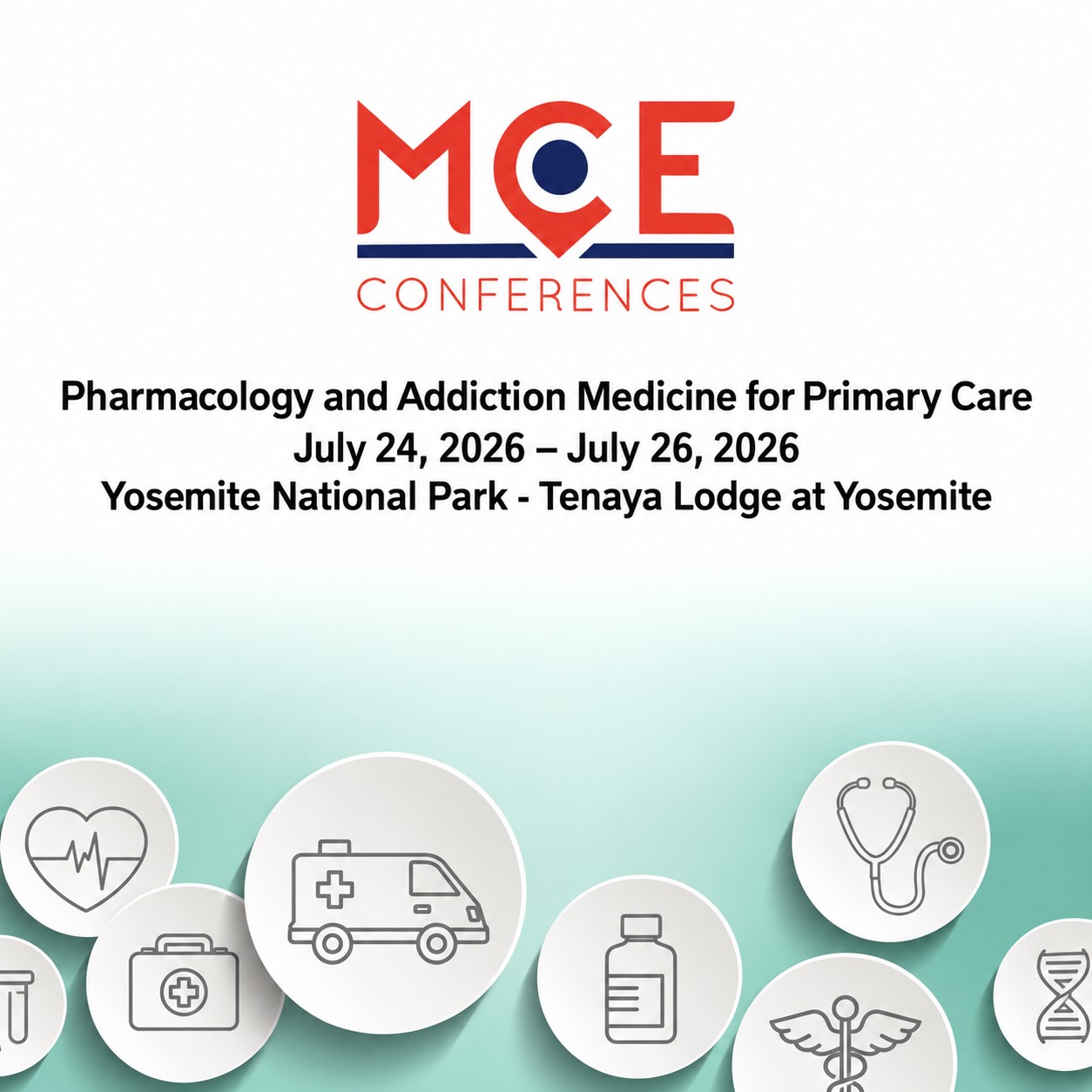
MCE Conferences Pharmacology and Addiction Medicine for Primary Care Jul 24, 2026 – Jul 26, 2026
$135.00
Primary Care Pharmacology and addiction medicine content reviews substance use disorders, chronic pain, metabolic disease, anxiety and depression.
Delivery Information: This Product is shared via google drive download link. Please use your correct Gmail address at checkout.
Please note: there are no CME points or certificate associated with this course.
Samples for Courses Can be found here: Free Samples Here!
MedicalAmboss File Scope: This listing provides only the downloadable files described on this page. Provider registration, live or streaming access, platform features, CME or other credit, certificates, and related subscription benefits are not included unless explicitly stated in the product files section. MedicalAmboss.
Primary Care Pharmacology & Addiction Medicine 2026
Comprehensive Primary Care CME | Pharmacology, Addiction Medicine, Diabetes, Obesity, Opioid Use & Mental Health
Strengthen your clinical knowledge in pharmacology and addiction medicine with MCE Conferences Pharmacology and Addiction Medicine for Primary Care 2026, a comprehensive continuing medical education program designed to provide practical, evidence-based approaches to commonly encountered challenges in primary care.
The conference took place July 24–26, 2026, at Tenaya Lodge at Yosemite. Through dynamic lectures, case-based discussions, and hands-on workshops, the program focuses on improving diagnostic reasoning, medication selection, prescribing practices, addiction treatment, and patient-centered clinical management.
Product Details
- Course: Pharmacology and Addiction Medicine for Primary Care 2026
- Provider: MCE Conferences
- Conference Dates: July 24–26, 2026
- Location: Tenaya Lodge at Yosemite
- Format: Videos
- Language: English
- Educational Level: Intermediate to Advanced
- Learning Format: Expert Lectures, Case-Based Studies & Hands-On Workshops
Course Overview
Primary care clinicians routinely manage patients taking multiple medications while also encountering substance use disorders, chronic pain, diabetes, obesity, anxiety, depression, and other conditions requiring careful pharmacologic decision-making.
Pharmacology and Addiction Medicine for Primary Care 2026 provides a practical review of current pharmacology and addiction medicine, emphasizing evidence-based prescribing, individualized treatment plans, medication safety, and effective management of substance use disorders.
The program addresses addiction diagnosis, commonly misused substances, alcohol and opioid use disorders, buprenorphine treatment, urine drug testing, chronic opioid therapy, diabetes medications, anti-obesity therapies, antidepressants, anxiolytics, and psychiatric pharmacotherapy.
What You’ll Learn
Participants will develop practical skills in:
- Recognizing and diagnosing addiction.
- Discussing unhealthy alcohol and drug use with patients.
- Managing commonly abused substances and behavioral addictions.
- Selecting individualized diabetes and obesity pharmacotherapy.
- Managing Alcohol Use Disorder and alcohol withdrawal.
- Applying evidence-based approaches to chronic opioid therapy.
- Recognizing and treating opioid withdrawal.
- Initiating and managing buprenorphine for Opioid Use Disorder.
- Using buprenorphine in patients with pain and a history of addiction.
- Interpreting urine drug screening results.
- Selecting pharmacologic treatments for anxiety and major depression.
Comprehensive Topics Covered
Addiction Medicine
Build a stronger foundation in the diagnosis and management of addiction.
Topics include:
- Disease model of addiction
- Diagnostic criteria
- Unhealthy alcohol use
- Drug use
- Substance use disorders
- Behavioral addictions
- Adolescent substance use
- Marijuana use
Alcohol Use Disorder
Develop practical strategies for alcohol-related disorders.
Topics include:
- Screening for alcohol misuse
- Alcohol withdrawal
- Alcohol Use Disorder (AUD)
- FDA-approved medications
- Off-label pharmacologic treatments
- Treatment planning
- Patient engagement
Opioid Use Disorder
Improve recognition and treatment of opioid-related conditions.
Topics include:
- Opioid Use Disorder
- Opioid withdrawal
- Medication for Opioid Use Disorder (MOUD)
- Buprenorphine
- Chronic opioid therapy
- Controlled substances
- Treatment and weaning plans
Pharmacology of Diabetes & Obesity
Review contemporary pharmacologic treatment strategies.
Topics include:
- Diabetes medications
- Mechanisms of action
- Contraindications
- Adverse effects
- Glucose-lowering therapies
- Anti-obesity medications
- Individualized treatment
- Cardiovascular risk reduction
- Weight management
- Quality of life
Anxiety & Depression
Optimize psychiatric pharmacotherapy.
Topics include:
- Anxiety disorders
- Major depression
- Anxiolytics
- Antidepressants
- Mechanisms of action
- Adverse effects
- Treatment selection
- Special considerations for older adults
Pain Management
Integrate addiction medicine principles into pain care.
Topics include:
- Chronic pain
- Opioid therapy
- Non-opioid strategies
- Buprenorphine
- Patients with a history of addiction
- Analgesic optimization
- Controlled-substance management
Urine Drug Testing
Improve interpretation of drug screening results.
Topics include:
- Rapid urine drug screening
- Confirmatory testing
- Urine Drug Screens (UDS)
- Interpretation of findings
- Appropriate clinical use
- Treatment monitoring
Learning Objectives
Upon successful completion of this educational activity, participants will be able to:
- Describe the disease model and diagnostic criteria for addiction and effectively engage patients regarding unhealthy alcohol or drug use.
- Identify and treat commonly abused substances and behavioral addictions, including marijuana and substance use among adolescents.
- Review the pharmacology, mechanisms of action, contraindications, and adverse-effect profiles of major diabetes therapies, anxiolytics, and antidepressants.
- Select individualized glucose-lowering therapies and anti-obesity medications according to patient-specific factors, comorbidities, and evidence-based guidelines.
- Prioritize treatment goals beyond glycemic control, including weight management, cardiovascular risk reduction, and quality of life.
- Screen for alcohol misuse, manage alcohol withdrawal, and utilize FDA-approved and off-label medications for Alcohol Use Disorder.
- Apply CDC guidance for chronic opioid therapy, identify problematic opioid use, and develop objective treatment and weaning plans.
- Recognize and manage opioid withdrawal, compare medications approved for Opioid Use Disorder, and safely initiate and manage buprenorphine.
- Optimize analgesia and utilize buprenorphine for pain management in patients with a history of addiction.
- Evaluate rapid versus confirmatory urine drug screening and accurately interpret UDS findings.
- Select appropriate treatment regimens for anxiety and major depression, including considerations for older adults.
Educational Highlights
- Primary Care Pharmacology
- Addiction Medicine
- Substance Use Disorders
- Alcohol Use Disorder
- Opioid Use Disorder
- Buprenorphine
- Medication for Opioid Use Disorder (MOUD)
- Chronic Opioid Therapy
- Pain Management
- Urine Drug Testing
- Diabetes Pharmacotherapy
- Obesity Medicine
- Anti-Obesity Medications
- Anxiety Disorders
- Major Depression
- Antidepressants
- Anxiolytics
- Adolescent Substance Use
- Evidence-Based Prescribing
- Continuing Medical Education (CME)
Why This Course Stands Out
MCE Conferences Pharmacology and Addiction Medicine for Primary Care 2026 combines two highly relevant areas of modern clinical practice: medication management and addiction medicine.
The program is particularly valuable for clinicians who manage patients with multiple comorbidities, chronic pain, substance use disorders, diabetes, obesity, anxiety, or depression. Its practical focus helps clinicians make more informed prescribing decisions while improving recognition and treatment of substance-related disorders.
Target Audience
This educational activity is ideal for:
- Primary Care Physicians
- Family Medicine Physicians
- Internal Medicine Physicians
- Addiction Medicine Specialists
- Psychiatrists
- Endocrinologists
- Pediatricians
- Pain Management Specialists
- Emergency Medicine Physicians
- Nurse Practitioners
- Physician Assistants
- Residents
- Fellows
- Other Healthcare Professionals involved in pharmacology and addiction medicine
Why Choose This Course?
From diabetes and obesity pharmacotherapy to alcohol and opioid use disorders, this program addresses medication and addiction-related challenges frequently encountered in primary care.
MCE Conferences Pharmacology and Addiction Medicine for Primary Care 2026 provides practical, evidence-based education designed to help clinicians improve prescribing decisions, recognize problematic substance use, safely manage controlled medications, and develop individualized treatment strategies.
Topics
Friday, July 24th
-
The Disease of Addiction and Common Substance & Behavioral Addictions: Covering the disease model, diagnostic criteria, patient engagement strategies, and treatment for commonly abused substances/behavioral addictions.
-
Marijuana, Alcohol, and Substance Use in Adolescents: Addressing common questions regarding marijuana, facilitating safe dialogue with youth, and developing patient-centered treatment plans for adolescents.
-
Getting Your Patient’s A1c to Goal: Reviewing pharmacology of major diabetes therapies, comparing advantages/limitations, selecting therapies based on comorbidities, evaluating glycemic control, and applying ADA Standards of Care.
-
Meeting Goals Beyond A1c: Exploring newer/emerging diabetes therapies, prioritizing cardiovascular risk and weight reduction, addressing complex patients/special populations, and implementing strategies to improve medication adherence and glucose monitoring.
Saturday, July 25th
-
Obesity Pharmacotherapy – Evidence-Based Strategies for Clinical Practice: Reviewing the pathophysiology of obesity, mechanisms of FDA-approved anti-obesity medications, identifying candidates for pharmacotherapy, selecting individualized regimens, and integrating with lifestyle interventions.
-
Treatment Options for Depression: Reviewing basic pharmacology of antidepressants (mechanisms, contraindications, side effects), newer antidepressants, and comparing advantages/disadvantages of pharmacologic therapies.
-
Alcohol Screening, Withdrawal, and Alcohol Use Disorder (AUD) Treatment: Screening techniques for alcohol misuse, withdrawal management, and FDA-approved/off-label medications for AUD.
-
Managing Opioid Medications in the Primary Care Setting: Key elements of CDC guidelines for chronic opioid therapy, identifying early signs of problematic use, developing objective treatment plans, and safely weaning patients off controlled substances.
Sunday, July 26th
-
Opioid Withdrawal, Opioid Use Disorder Treatment, and Buprenorphine: Recognizing and managing withdrawal, comparing the three FDA-approved MOUD, and safely initiating/managing buprenorphine.
-
Pain Management in Addiction: Optimizing analgesia in patients on MOUD or with addiction history, and utilizing buprenorphine for pain management.
-
Urine Drug Screen (UDS) Interpretation: Discussing pros and cons of rapid vs. confirmatory testing, and interpreting findings through case examples.
-
Your Cases and Q&A: Interactive review of audience and speaker-provided cases to reinforce concepts.
-
Selecting the Most Optimal Treatment Regimen for Your Patients with Depression: Outlining approaches for major depression, selecting optimal antidepressants based on patient-specific parameters, managing depression in older adults, and applying clinical guidelines.
-
Treatment Options for Anxiety: Reviewing anxiolytic pharmacology (mechanisms, precautions, side-effect profiles) and the pros and cons of various pharmacologic therapies.
Related products
Critical Care - Emergency medicine
International Symposium on Intensive Care & Emergency Medicine ( ISICEM ) 2020
Internal Medicine
Critical Care - Emergency medicine
Critical Care - Emergency medicine
Family medicine

Medical Accounts

Critical Care - Emergency medicine
Critical Care - Emergency medicine