
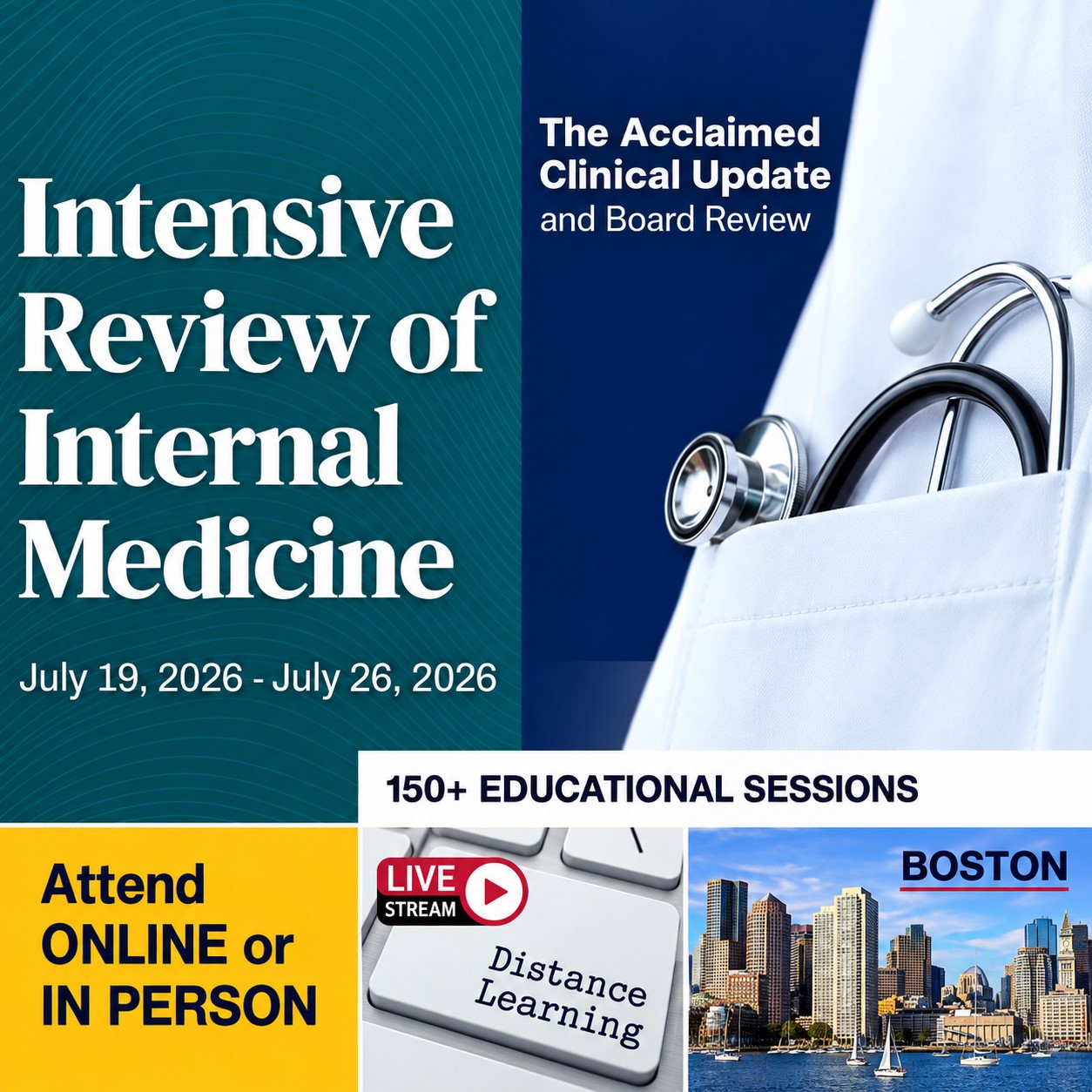
Harvard 49th Annual Intensive Review of Internal Medicine 2026

$170.00
Comprehensive internal medicine review covering major specialties, clinical updates, case discussions, and ABIM-focused preparation.
Delivery Information: This Product is shared via google drive download link. Please use your correct Gmail address at checkout.
Please note: there are no CME points or certificate associated with this course.
Samples for Courses Can be found here: Free Samples Here!
Harvard 49th Annual Intensive Review of Internal Medicine 2026 (Videos)
Comprehensive Internal Medicine Board Review | ABIM Prep, Clinical Updates, Case Discussions & Artificial Intelligence in Medicine
Advance your clinical knowledge with Harvard 49th Annual Intensive Review of Internal Medicine 2026, Harvard Medical School’s official continuing medical education (CME) and board review program; this MedicalAmboss product provides only the listed course files and does not include official registration or CME credit. Recognized as one of the most comprehensive Internal Medicine review courses available, this intensive program combines expert-led lectures, case-based discussions, board preparation sessions, and practical clinical updates across every major subspecialty of Internal Medicine.
Held July 19–26, 2026, the course is designed for clinicians seeking a state-of-the-art review of modern Internal Medicine as well as physicians preparing for ABIM certification or recertification. New for 2026, the program also features dedicated workshops exploring the rapidly expanding role of Artificial Intelligence (AI) in clinical practice, medical education, and healthcare delivery.
Product Details
- Course: Harvard 49th Annual Intensive Review of Internal Medicine 2026
- Provider: Harvard Medical School
- Conference Dates: July 19–26, 2026
- Format: Videos
- Language: English
- Educational Level: Advanced
- Learning Format: Expert Lectures, Case Discussions, Board Review Sessions, Practice Exams, AI Workshops
Course Overview
Internal Medicine continues to evolve rapidly with constant advances in diagnostics, therapeutics, preventive care, and clinical guidelines. Physicians must remain current across multiple specialties while preparing for board examinations and delivering evidence-based patient care.
The Harvard Intensive Review of Internal Medicine 2026 provides an accelerated, comprehensive review covering the full breadth of Internal Medicine. Participants learn practical diagnostic strategies, evidence-based treatment approaches, common clinical pitfalls, screening controversies, and modern patient management through expert presentations from Harvard Medical School faculty.
In addition to comprehensive clinical updates, the curriculum offers structured ABIM board preparation with practice examinations, study guides, board-style questions, and proven test-taking strategies. Four new workshops dedicated to Artificial Intelligence explore its growing impact on physician workflows, clinical reasoning, education, and the future of healthcare.
What You’ll Learn
After completing this course, participants will be able to:
- Apply current evidence-based guidelines across all major Internal Medicine specialties.
- Select appropriate diagnostic tests for common and complex clinical conditions.
- Develop patient-centered treatment strategies that improve clinical outcomes.
- Avoid common diagnostic and therapeutic errors.
- Navigate evolving screening recommendations and clinical controversies.
- Prepare effectively for ABIM certification and recertification examinations.
- Understand emerging applications of Artificial Intelligence in Internal Medicine.
Comprehensive Topics Covered
Cardiovascular Medicine
Strengthen cardiovascular clinical practice.
Topics include:
- Coronary artery disease
- Heart failure
- Arrhythmias
- Hypertension
- Valvular heart disease
- Preventive cardiology
- Evidence-based management
Pulmonary & Critical Care
Improve respiratory and critical care management.
Topics include:
- COPD
- Asthma
- Interstitial lung disease
- Pulmonary embolism
- Critical care
- Mechanical ventilation
- Acute respiratory disorders
Gastroenterology
Enhance digestive disease management.
Topics include:
- Liver disease
- Pancreatic disorders
- Inflammatory bowel disease
- Gastrointestinal bleeding
- Colon cancer screening
- Endoscopy updates
- Clinical gastroenterology
Endocrinology
Update endocrine clinical practice.
Topics include:
- Diabetes mellitus
- Thyroid disorders
- Adrenal disease
- Pituitary disorders
- Osteoporosis
- Calcium disorders
- Obesity medicine
Nephrology
Optimize kidney disease care.
Topics include:
- Acute kidney injury
- Chronic kidney disease
- Electrolyte disorders
- Hypertension
- Glomerular disease
- Dialysis
- Fluid management
Infectious Diseases
Apply current infectious disease guidelines.
Topics include:
- Antimicrobial therapy
- Sepsis
- HIV
- Emerging infections
- Vaccination
- Antibiotic stewardship
- Clinical microbiology
Hematology & Oncology
Review hematologic and oncologic advances.
Topics include:
- Anemia
- Coagulation disorders
- Leukemia
- Lymphoma
- Solid tumors
- Cancer therapeutics
- Precision oncology
Neurology
Strengthen neurological diagnosis.
Topics include:
- Stroke
- Dementia
- Epilepsy
- Parkinson disease
- Headache
- Neuromuscular disorders
- Clinical neurology
Rheumatology & Allergy
Master autoimmune disease management.
Topics include:
- Rheumatoid arthritis
- Lupus
- Vasculitis
- Crystal arthropathies
- Allergy
- Immunology
- Connective tissue diseases
Women’s Health
Provide comprehensive preventive care.
Topics include:
- Preventive medicine
- Women’s health screening
- Hormonal disorders
- Menopause
- Gynecologic medicine
- Health maintenance
- Clinical prevention
Hospital Medicine & General Internal Medicine
Enhance inpatient and outpatient care.
Topics include:
- Diagnostic reasoning
- Clinical decision-making
- Hospital medicine
- Preventive care
- Multimorbidity
- Patient safety
- General Internal Medicine
Dermatology
Recognize common skin disorders.
Topics include:
- Skin lesions
- Rashes
- Skin cancer
- Dermatologic diagnosis
- Office dermatology
- Clinical dermatology
- Referral decisions
Artificial Intelligence in Medicine
Explore the future of Internal Medicine.
Topics include:
- AI for clinician workflow
- Physician-AI collaboration
- Medical education
- Clinical decision support
- AI-powered learning
- Healthcare innovation
- Future clinical practice
ABIM Board Preparation
Prepare with confidence.
Includes:
- Board review sessions
- Practice examinations
- Study guides
- Test-taking strategies
- Board-style questions
- Certification review
- Comprehensive exam preparation
Learning Objectives
Upon completion of this educational activity, participants will be able to:
- Incorporate the latest evidence-based diagnostic and therapeutic advances into Internal Medicine practice.
- Select appropriate diagnostic tests and treatment strategies across major Internal Medicine subspecialties.
- Improve patient outcomes through updated clinical management approaches.
- Avoid common medical errors and recognize important diagnostic pitfalls.
- Navigate current screening recommendations and controversial clinical topics.
- Strengthen preparation for ABIM certification and recertification examinations using structured review sessions, board-style questions, and practice examinations.
- Evaluate emerging Artificial Intelligence applications and their future role in clinical practice, education, and physician workflow.
Educational Highlights
- Internal Medicine
- ABIM Board Review
- Cardiology
- Pulmonology
- Critical Care
- Gastroenterology
- Endocrinology
- Nephrology
- Infectious Diseases
- Hematology
- Oncology
- Rheumatology
- Neurology
- Women’s Health
- Dermatology
- Allergy & Immunology
- Hospital Medicine
- Artificial Intelligence
- Evidence-Based Medicine
- Official CME program context; registration and credit are not included with the MedicalAmboss files
Why This Course Stands Out
Harvard 49th Annual Intensive Review of Internal Medicine 2026 is one of the world’s premier Internal Medicine educational programs, combining comprehensive subspecialty updates with structured ABIM board preparation. Led by distinguished Harvard Medical School faculty, the curriculum integrates practical clinical guidance, evidence-based medicine, challenging case discussions, and innovative Artificial Intelligence workshops to prepare clinicians for both modern practice and board success.
Target Audience
This educational activity is ideal for:
- Internal Medicine Physicians
- Hospitalists
- Primary Care Physicians
- Family Medicine Physicians
- Nurse Practitioners (NPs)
- Physician Assistants (PAs)
- Internal Medicine Residents
- Fellows
- Physicians preparing for ABIM Certification or Recertification
- Healthcare Professionals seeking a comprehensive Internal Medicine update
Why Choose This Course?
Whether you’re preparing for the ABIM board examination, maintaining certification, or seeking an authoritative update across every major discipline of Internal Medicine, Harvard 49th Annual Intensive Review of Internal Medicine 2026 provides one of the most comprehensive educational experiences available. Through expert faculty instruction, case-based learning, board-focused review sessions, and cutting-edge discussions on Artificial Intelligence, participants gain practical knowledge that enhances both examination performance and daily clinical care.
+ Topics:
-
001 – Acute Kidney Injury
-
002 – Revisiting Electrolytes
-
003 – Chronic Kidney Disease
-
004 – Acid-Base Basics
-
005 – Nephrology Q&A
-
006 – Proteinuria, Hematuria, and Glomerular Disease
-
007 – Dialysis and Transplantation
-
008 – Hot Topic in Nephrology – Imagine Stopping Progression of Kidney Disease in Type 2 Diabetes
-
009 – Nephrology Q&A
-
010 – Nephrology Board Review
-
011 – Challenging Case Discussion
-
012 – Hypertension Cases
-
013 – Electrolyte and Acid-Base- Challenging Q&A – Part 1
-
014 – Electrolyte and Acid-Base- Challenging Q&A – Part 2
-
015 – Nephrology- Additional Clinical Pearls & Take-Home Messages
-
016 – Anemia
-
017 – Hypercoagulable States and New Anticoagulants
-
018 – Hematology Q&A
-
019 – Hematology Cases – Common, Complex, Rare
-
020 – Bleeding Disorders
-
021 – Hot Topic in Hematology – Gene therapy in Hemoglobinopathies and Hemophilia
-
022 – Hematology Q&A
-
023 – Board Review in Hematology
-
024 – Leukocytosis and Leukopenia
-
025 – Hematology- Additional Clinical Pearls and Take-Home Messages
-
026 – Chronic Liver Disease and Its Complications
-
027 – Esophageal Disorders
-
028 – Acute and Chronic Diarrhea
-
029 – Gastroenterology Q&A
-
030 – Acute and Chronic Pancreatitis
-
031 – Hot Topic in Gastroenterology – New Treatments for Upper Gastrointestinal Bleeding
-
032 – Gastroenterology Board Review
-
033 – A Challenging Case in Rheumatology
-
034 – Peptic Ulcer Disease
-
035 – Inflammatory Bowel Disease
-
036 – Hepatitis B and C
-
037 – Challenging Gastroenterology Cases
-
038 – GI- Additional Clinical Pearls and Take-Home Messages
-
039 – Hot Topics in Radiation Oncology – Novel Technologies in Precision Oncology – Stereotactic Body Radiation Therapy
-
040 – Prostate, Testicular, and Bladder Cancer
-
041 – Breast Cancer
-
042 – Oncology Q&A
-
043 – Lung Cancer
-
044 – Leukemia and Myelodysplastic Syndrome
-
045 – Oncology – Clinical Pearls
-
046 – Oncology Q&A
-
047 – Board Review in Oncology
-
048 – Multiple Myeloma
-
049 – Lymphoma
-
050 – Gastrointestinal Cancers
-
051 – Oncology- Take-Home Messages
-
052 – AI for Clinician Experience and Beyond
-
053 – Challenges in Venous Thromboembolism Management
-
054 – Heart Failure (Including HFpEF)
-
055 – Prevention of Cardiovascular Disease
-
056 – Cardiovascular Medicine Q&A
-
057 – Atrial Fibrillation and Common Supraventricular Tachycardias
-
058 – Inflammation in CardiovascularDisease – Update for 2026
-
059 – Adult Congenital Heart Disease
-
060 – Cardiovascular Medicine Q&A
-
061 – Board Review in Cardiology
-
062 – Challenging Case Discussion – Challenging Patients in Infectious Disease – A Diagnostic Toolkit for Internal Medicine
-
063 – Acute Coronary Syndromes
-
064 – Update in Valvular Disease
-
065 – Peripheral Artery Disease (Including Carotid and Aortic Disease)
-
066 – Cardiovascular Medicine Q&A
-
067 – Bradycardias, Syncope, and Sudden Death
-
068 – Hot Topic in Cardiology – Evolving Strategies for Diagnosis and Management of Cardiac Amyloidosis
-
069 – Pericardial Disease- Key Concepts
-
070 – Must-Not-Miss ECG Diagnoses Pt.1
-
071 – Must-Not-Miss ECG Diagnoses Pt.2
-
072 – Cardiomyopathies (including HCM, Amyloidosis)
-
073 – Cardiology – Take-Home Messages and Clinical Pearls
-
074 – Escaping the AI Rut – Reimagining Learning, Purpose, and Power in Medicine
-
075 – Diagnosis and Management of Infective Endocarditis
-
076 – Infection in the Immunocompromised Host
-
077 – Adult Immunization
-
078 – Infectious Disease Q&A
-
079 – Pneumonia in Hospitalized Patients
-
080 – Sexually Transmitted Diseases
-
081 – Hot Topic in Infectious Diseases – The Next Pandemic – Are We Prepared..
-
082 – Infectious Disease Q&A
-
083 – Infectious Disease Board Review
-
085 – Challenging Case Discussion Altered Mental Status in ESKD
-
086 – Challenging Infectious Disease Cases
-
087 – Tropical Medicine and Parasitology
-
088 – HIV Disease – An Overview
-
089 – Urinary Tract Infections
-
090 – Tuberculosis for the Non-ID Specialist
-
091 – Infectious Diseases- Additional Clinical Pearls and Take-Home Messages
-
092 – Contraception – An Update
-
093 – Medical Complications of Pregnancy
-
094 – Evaluation of the Patient with Menstrual Irregularities
-
095 – Women’s Health Q&A
-
096 – Clinical Updates and Practical Considerations in Menopause Care
-
097 – Osteoporosis and Metabolic Bone Disease
-
098 – Hot Topic in Women’s Health – New Options and Guidelines for Screening for and Preventing HPV and Cervical CA
-
099 – Women’s Health Q&A
-
100 – Women’s Health Board Review
-
101 – Medication Abortion and the Internist
-
102 – A Trauma-Informed Approach to Intimate Partner Violence
-
103 – Women’s Health – Take-Home Messages and Clinical Pearls
-
104 – The Die Is Cast – Two Competing Views ofthe Future of Physician-AI Collaborationand the Future of the Clinical Mind
-
105 – Pulmonary Hypertension (For the General Internist)
-
106 – Chronic Obstructive Pulmonary Disease
-
107 – Pulmonary Overview
-
108 – Pulmonary Medicine Q&A
-
109 – Asthma
-
110 – Pleural Effusions – A Case-Based Review
-
111 – Interstitial Lung Disease
-
112 – Hot Topic in Pulmonary Medicine – Gene and Stem Cell Therapy in Pulmonary Medicine
-
113 – Pulmonary Medicine Q&A
-
114 – Pulmonary Board Review
-
115 – Challenging Case Discussion
-
116 – Pulmonary Function Testing
-
117 – Sleep Apnea
-
118 – Chest X-Ray Interpretation for the Boards
-
119 – Granulomatous Lung Disease
-
120 – Evaluation of Unexplained Dyspnea
-
121 – Assessment and Management of the Patient with Chronic Cough
-
122 – Cystic Lung Disease
-
123 – Pulmonary Medicine- Additional Clinical Pearls and Take-Home Messages
-
124 – Updates in Stroke Diagnosis and Management
-
125 – Headache
-
126 – Seizure Disorders
-
127 – Neurology Q&A
-
128 – Autonomic Neuropathy
-
129 – Hot Topic in Neurology – Approach to Concussion
-
130 – Neurology Q&A
-
131 – Board Review in Neurology
-
132 – Movement Disorders
-
133 – Multiple Sclerosis
-
134 – AI Is Not Coming for Your Job – An Insider Industry Perspective
-
135 – End of Life – A Framework for Advance Care Planning Conversations
-
136 – Obesity – Focus on Weight Loss Medications
-
137 – General Internal Medicine and Primary Care Q&A
-
138 – Evaluation of Cardiac and Pulmonary Risk in the Preop Patient
-
139 – Treating Opioid Use Disorder
-
140 – Challenging General Internal Medicine Cases
-
141 – Hot Topic in General Internal Medicine – Cannabis in General Medicine
-
142 – General Internal Medicine and Primary Care Q&A
-
143 – General Internal Medicine Board Review
-
144 – Challenging Case Discussion – Message in a Bottle – A 43-yo Woman Presents to the Emergency Room
-
145 – Morning Report- Instructive Cases
-
146 – Workshop- General Internal Medicine Case Studies
-
147 – Update in Geriatrics
-
148 – Hyperlipidemia
-
149 – General Internal Medicine- Additional Clinical Pearls & Take Home Messages
-
150 – Sepsis and Septic Shock
-
151 – Cardiogenic Shock, CHF, and Malignant Arrhythmias
-
152 – Hot Topic in Critical Care – Palliative Care in the ICU
-
153 – Critical Care Q&A
-
154 – Mechanical Circulatory Support Devices
-
155 – Evidence-Based Preventative Therapy in the ICU
-
156 – Popular ICU Topics
-
157 – Respiratory Failure
-
158 – Critical Care Q&A
-
159 – Board Review in Critical Care
-
160 – Mechanical Ventilation- Basics to Advanced Concepts
-
161 – Optimizing the ABCDEF Bundle
-
162 – Best Practices for the Management of Severe COVID-19 Pneumonia
-
163 – Critical Care- Additional Clinical Pearls and Take-Hom Messages
-
164 – 2026 Diabetes Overview
-
165 – Diabetes – Managing Common Complications
-
166 – Overview of Transgender Care
-
167 – Endocrinology Q&A
-
168 – Thyroid Disease
-
169 – Hot Topic in Endocrinology – Advances in Diabetes Technology
-
170 – Calcium Cases
-
171 – Endocrinology Q&A
-
172 – Endocrine Board Review
-
173 – Challenging Case Discussion – A Missed Diagnosis
-
174 – Adrenal Disorders
-
175 – Pituitary Disorders
-
176 – Primary Care for Transgender and Gender Diverse People
-
177 – Testosterone Therapy in Men
-
178 – Endocrinology- Additional Clinical Pearls and Take-Home Messages
-
179 – Approach to Joint Pain
-
180 – Rheumatoid Arthritis – Diagnosis and New Treatment
-
181 – Rheumatology Q&A
-
182 – Vasculitis-GCA-PMR
-
183 – Spondyloarthritis, Including Psoriatic Arthritis
-
184 – Hot Topic in Rheumatology – Cardio-Rheumatology
-
185 – Rheumatology Q&A
-
186 – Rheumatology Board Review
-
187 – Update in Rheumatic Diseases – Scleroderma, Sjögren’s and Myositis
-
188 – Systemic Lupus Erythematosus and the Antiphospholipid Syndrome
-
189 – Osteoporosis
-
190 – Gout and CPPD Disease
-
191 – Rheumatology – Take-Home Messages and Clinical Pearls
-
192 – State of the Art – POCUS
-
193 – Biostatistics Board Review
-
194 – Update in Hospital Medicine
-
195 – Q&A
-
196 – Physician Wellness and Burnout – How to Prevent It
-
197 – On the Emergency Room’s Front Line
-
198 – Setting Your Leadership GPS – 5 Steps to Leading Yourself and Others to Extraordinary Outcomes
-
199 – Board Review Practice – 1
-
200 – Board Review Practice – 2
-
201 – Board Review Practice – 3
-
202 – Board Review Practice – 4
-
203 – Emerging Topics for the Boards – Bringing Health Equity
-
204 – Diagnostic Errors in Medicine
-
205 – Depression Update
-
206 – Dermatology
-
207 – 2026 Allergy and Immunology Overview and Update
Related products

Internal Medicine

Critical Care - Emergency medicine

Internal Medicine

Internal Medicine
Critical Care - Emergency medicine
2022 UPDATES IN THERAPEUTICS: CRITICAL CARE PHARMACY PREPARATORY REVIEW AND RECERTIFICATION COURSE
Critical Care - Emergency medicine
40th ISICEM International Symposium on Intensive Care & Emergency Medicine 2021