
OHI-S Evidence-Based Pharmacotherapy for TMJ Disorders & Orofacial Pain
Evidence-Based Medication Management for TMD, TMJ Disorders & Acute and Chronic Orofacial Pain
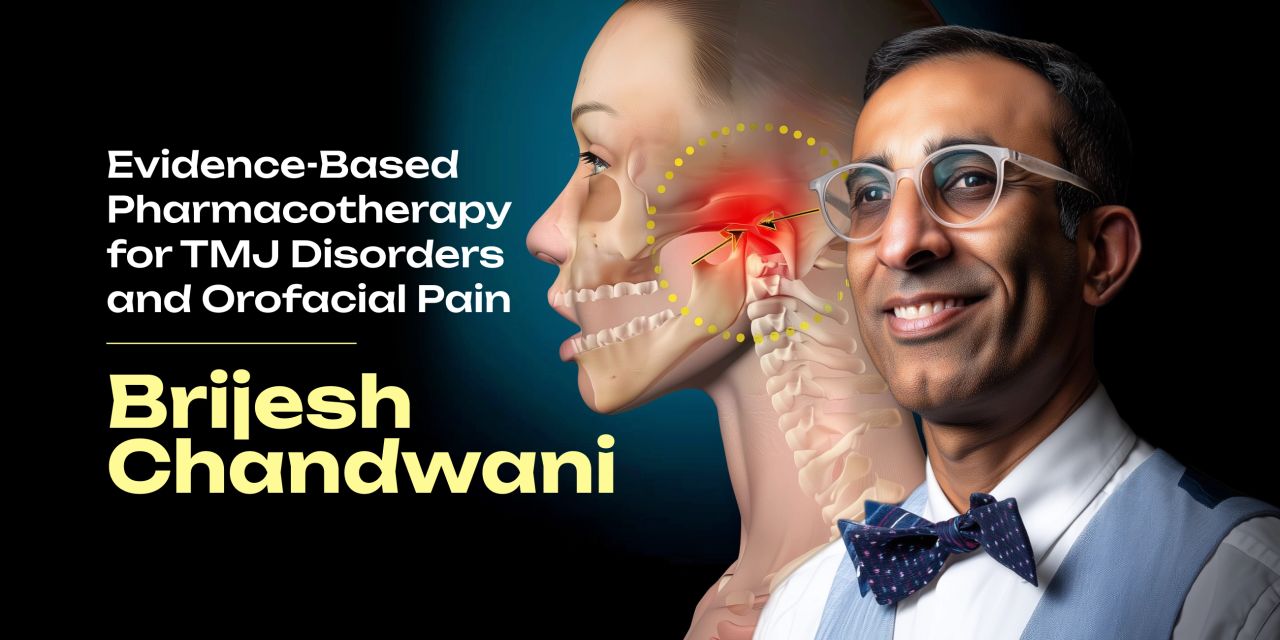
The OHI-S Evidence-Based Pharmacotherapy for TMJ Disorders and Orofacial Pain course is a focused clinical program designed to provide healthcare professionals with a structured approach to the differential diagnosis and pharmacological management of temporomandibular disorders (TMD/TMJ disorders) and acute and chronic orofacial pain.
Presented by Brijesh Chandwani, this concise 3-lesson, 50-minute course integrates diagnostic reasoning with evidence-based pharmacotherapy, helping clinicians understand how different medication classes may be incorporated into short- and long-term pain-management strategies.
The program reviews oral, injectable, and topical pharmacotherapeutic options while addressing NSAIDs, corticosteroids, skeletal muscle relaxants, antidepressants, antiepileptics, antihypertensive medications, prescribing considerations, and medication classes that should generally be avoided or used with particular caution in orofacial pain management.
Course Details
- Provider: OHI-S
- Instructor: Brijesh Chandwani
- Course Duration: 50 Minutes
- Number of Lessons: 3
- Language: English
- Original OHI-S CE Listing: 0.5 CE Credits
- Focus: TMJ Disorders, TMD & Orofacial Pain Pharmacotherapy
- Level: Clinical / Professional
- Format: Dental and Medical Education
Who Should Attend?
This course is designed for dental and healthcare professionals seeking a systematic approach to the diagnosis and pharmacological management of temporomandibular disorders and acute or chronic orofacial pain.
Best For
- Dentists
- General Dentists
- Oral and Maxillofacial Surgeons
- Orofacial Pain Specialists
- TMD / TMJ Clinicians
- Pharmacists
- Primary Care Physicians
- Dental Pain Clinicians
- Healthcare professionals managing craniofacial and musculoskeletal pain
What You Will Learn
The course provides a clinically structured pathway covering:
- Classification of orofacial pain
- Clinical assessment of facial pain
- Differential diagnosis of common orofacial pain conditions
- Evidence-based treatment principles
- TMJ disorder pharmacotherapy
- TMD medication management
- Oral pharmacological treatment
- Injectable therapies
- Topical medications
- NSAID pharmacology
- Corticosteroid use
- Skeletal muscle relaxants
- Headache and pain-abortive medications
- Medication safety considerations
- Pharmacokinetics
- Pharmacodynamics
- Chronic pain pharmacotherapy
- Antidepressants for chronic pain
- Antiepileptic medications
- Antihypertensive medications used in pain-management strategies
- Short-term pain-management strategies
- Long-term pharmacotherapy considerations
Lesson 1: Differential Diagnosis and Treatment of Orofacial Pain
Duration: 12 Minutes
The first lesson establishes the diagnostic foundation required before selecting pharmacological treatment.
Topics include:
- Classification of orofacial pain
- Clinical assessment of patients with facial pain
- Differential diagnosis of common orofacial pain conditions
- Identification of potential pain mechanisms
- Evidence-based diagnostic approaches
- Treatment-selection principles
- Current clinical recommendations
- Treatment guidelines
Accurate differential diagnosis is particularly important because facial pain may arise from multiple dental, musculoskeletal, neurologic, or other clinical sources.
Lesson 2: Pharmacotherapeutics for TMJ Disorders
Duration: 20 Minutes
This lesson focuses specifically on pharmacological management strategies for temporomandibular disorders.
Topics include:
Oral Medications
Review of commonly considered medication classes including:
- NSAIDs
- Corticosteroids
- Muscle relaxants
Injectable Therapies
Review of injectable approaches that may be considered for selected TMJ-related conditions.
Topical Pharmacotherapy
Discussion of:
- Topical medications
- Local pharmacological approaches
- Treatment-selection considerations
Pain & Headache Medications
Review of medications used for acute headache and pain management within appropriate clinical contexts.
NSAIDs in TMJ & Orofacial Pain
The course examines important pharmacological principles associated with NSAID therapy, including:
- Pharmacokinetics
- Pharmacodynamics
- Clinical indications
- Short-term treatment strategies
- Long-term-use considerations
- Limitations
- Patient-specific considerations
- Safe pharmacological decision-making
Medications to Avoid or Use With Particular Caution
The program also discusses medication classes that generally require significant caution or avoidance in routine orofacial pain management, including:
- Opioids
- Benzodiazepines
- Barbiturates
The emphasis is on evidence-based prescribing and appropriate medication selection rather than unnecessary exposure to higher-risk therapies.
Lesson 3: Skeletal Muscle Relaxants & Pharmacotherapy for Chronic Orofacial Pain
Duration: 18 Minutes
The final lesson examines medication strategies for patients with persistent or chronic orofacial pain.
Skeletal Muscle Relaxants
Topics include:
- Pharmacokinetics
- Pharmacodynamics
- Clinical indications
- Appropriate clinical applications
- Patient-selection considerations
Chronic Orofacial Pain Pharmacotherapy
The course reviews several medication classes that may have roles in selected chronic pain conditions.
Antidepressants
Review of antidepressant medications used within chronic-pain management strategies.
Antiepileptic Medications
Discussion of antiepileptic medications and their potential applications in selected chronic and neuropathic pain conditions.
Antihypertensive Medications
Review of selected antihypertensive medications and their clinical applications within certain pain-management strategies.
Short-Term vs. Long-Term Pharmacotherapy
An important component of the course is understanding that acute and chronic pain frequently require different management strategies.
The program examines:
Short-Term Management
- Acute symptom control
- Appropriate medication selection
- Treatment duration
- Response assessment
- Risk-benefit considerations
Long-Term Management
- Chronic pain mechanisms
- Medication selection
- Ongoing reassessment
- Safety considerations
- Treatment limitations
- Multimodal management considerations
Learning Objectives
Upon completion of this course, participants should be better able to:
- Perform a structured differential diagnosis for common orofacial pain conditions.
- Classify acute and chronic orofacial pain presentations.
- Evaluate pharmacotherapeutic options for temporomandibular disorders.
- Understand the roles of oral, injectable, and topical medications in TMJ-related conditions.
- Review the appropriate clinical use of NSAIDs.
- Understand relevant considerations surrounding corticosteroid therapy.
- Evaluate the role of skeletal muscle relaxants in selected patients.
- Understand the pharmacokinetics and pharmacodynamics of commonly used medications.
- Recognize important safety considerations associated with pharmacological treatment.
- Identify medication classes such as opioids, benzodiazepines, and barbiturates that may require avoidance or substantial caution.
- Evaluate pharmacotherapy options for chronic orofacial pain.
- Understand the role of selected antidepressants in chronic pain management.
- Review applications of antiepileptic medications in selected pain conditions.
- Review selected antihypertensive medications used within pain-management strategies.
- Develop appropriate short-term pharmacotherapy strategies.
- Develop longer-term treatment approaches for chronic pain.
- Integrate diagnosis, medication selection, safety, and follow-up into evidence-based clinical decision-making.
Major Clinical Topics
TMJ / TMD
- Temporomandibular Disorders
- TMJ Pain
- TMD Diagnosis
- TMJ Pharmacotherapy
- TMJ Medication Management
Orofacial Pain
- Acute Orofacial Pain
- Chronic Orofacial Pain
- Facial Pain
- Differential Diagnosis
- Chronic Pain Management
Pharmacotherapy
- NSAIDs
- Corticosteroids
- Skeletal Muscle Relaxants
- Injectable Medications
- Topical Medications
- Antidepressants
- Antiepileptics
- Antihypertensive Medications
Clinical Pharmacology
- Pharmacokinetics
- Pharmacodynamics
- Medication Selection
- Safe Prescribing
- Short-Term Pharmacotherapy
- Long-Term Pharmacotherapy
Why This Course Is Valuable
The OHI-S Evidence-Based Pharmacotherapy for TMJ Disorders and Orofacial Pain course goes beyond simply listing medications.
It follows a clinically useful sequence:
Pain Classification → Differential Diagnosis → Medication Selection → Pharmacology → Safety → Short- and Long-Term Management
This approach is valuable because appropriate treatment of TMJ disorders and orofacial pain begins with understanding the underlying pain condition before selecting medication.
For dentists and other healthcare professionals treating patients with TMD, TMJ-related pain, chronic facial pain, or masticatory-system disorders, the course provides a concise review of evidence-based pharmacological decision-making.
4. Short Description
The OHI-S Evidence-Based Pharmacotherapy for TMJ Disorders and Orofacial Pain course by Brijesh Chandwani includes 3 lessons (50 minutes) covering differential diagnosis, TMD/TMJ pharmacotherapy, NSAIDs, corticosteroids, muscle relaxants, medication safety, pharmacokinetics, pharmacodynamics, and pharmacological management of chronic orofacial pain.
Topics
Lesson 1. Differential Diagnosis and Treatment of Orofacial Pain
-
Classification and clinical assessment of orofacial pain
-
Differential diagnosis of common orofacial pain conditions
-
Evidence-based diagnostic and treatment approaches
-
Current clinical recommendations and treatment guidelines
Lesson 2. Pharmacotherapeutics for TMJ Disorders
-
Pharmacological management of TMJ disorders
-
Oral medications: NSAIDs, corticosteroids, and muscle relaxants
-
Injectable therapies for TMJ-related conditions
-
Topical medications and local pharmacological approaches
-
Headache and pain abortive medications
-
Indications, treatment protocols, and clinical considerations
-
Medications to avoid: opioids, benzodiazepines, and barbiturates
-
NSAIDs: pharmacokinetics and pharmacodynamics
-
Clinical application of NSAIDs in short-term treatment strategies
-
Long-term NSAID use: indications, limitations, and clinical considerations
-
Safe and evidence-based pharmacological decision-making
Lesson 3. Skeletal Muscle Relaxants and Pharmacotherapy for Chronic Orofacial Pain
-
Skeletal muscle relaxants: pharmacokinetics and pharmacodynamics
-
Clinical indications and application of muscle relaxants
-
Pharmacotherapeutic strategies for chronic orofacial pain
-
Antidepressants in the management of chronic pain
-
Antiepileptic medications for chronic pain management
-
Antihypertensive medications and their clinical applications