
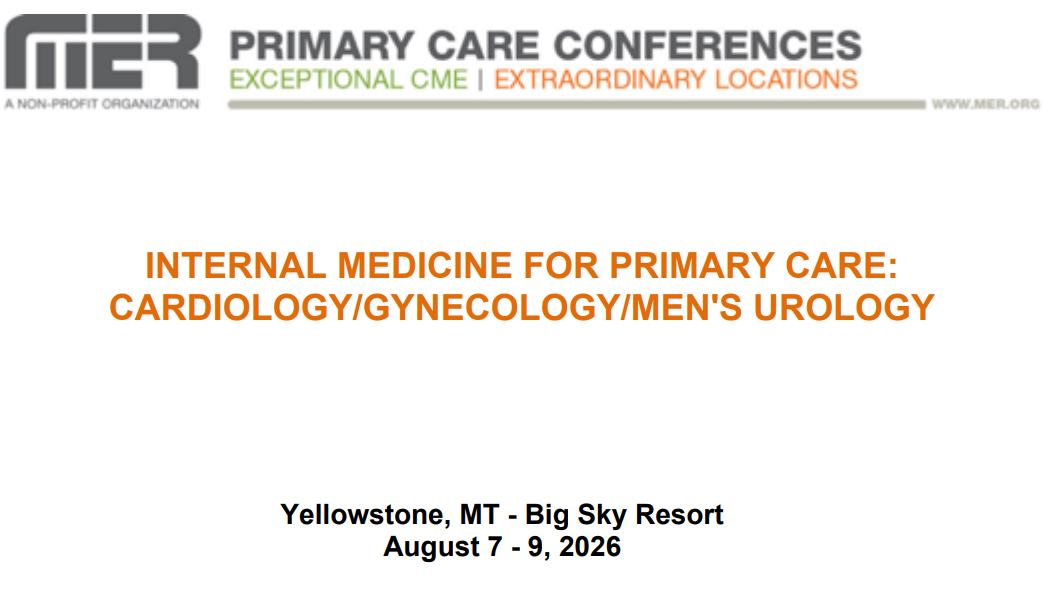
MER Primary Care Conferences Internal Medicine for Primary Care Cardio Gyn Mens Uro Aug 07-09, 2026

$110.00
This Product is shared via google drive download link, So please share your correct Gmail id while placing the order .Please note that there are no CME points or certificate associated with this course Samples for Courses Can be found here : Free Samples Here!
EXPRESS DISCOVER PayPal
MER Primary Care Conferences Internal Medicine for Primary Care Cardio Gyn Mens Uro Aug 07-09, 2026
Cardiology • Gynecology • Men’s Urology • Internal Medicine • Primary Care
August 7–9, 2026 | Big Sky Resort, Yellowstone, Montana
Review practical, evidence-based updates across Cardiology, Gynecology, and Men’s Urology with MER Primary Care Conferences Internal Medicine for Primary Care Cardio Gyn Mens Uro Aug 07-09, 2026.
Organized by Medical Education Resources (MER), the original conference was held August 7–9, 2026, at Big Sky Resort in Yellowstone, Montana. The official MER title is Internal Medicine for Primary Care: Cardio/Gyn/Men’s Uro.
The three-day program was designed for office-based primary care clinicians and other healthcare professionals seeking clinically relevant updates involving:
- Cardiovascular risk prevention
- Coronary artery disease
- Heart failure
- Cardiac arrhythmias
- Atrial fibrillation
- Male sexual health
- Benign male genitourinary conditions
- Prostate cancer
- Testicular cancer
- Annual women’s health visits
- Abnormal uterine bleeding
- Cervical cancer screening
- HPV
- Menopause
- Hormone replacement therapy
The curriculum connects preventive care, diagnostic reasoning, disease management, screening, and case-based clinical decision-making across several high-frequency areas of outpatient medicine.
Course Details
- Course: Internal Medicine for Primary Care: Cardio/Gyn/Men’s Uro
- Provider: Medical Education Resources – MER
- Year: 2026
- Original Conference Dates: August 7–9, 2026
- Duration: 3 Days
- Venue: Big Sky Resort
- Location: Yellowstone, Montana
- Primary Specialty: Internal Medicine / Primary Care
- Subspecialties: Cardiology, Gynecology, Men’s Urology
- Original MER Listing: 12 Credit Hours
- ANCC Pharmacotherapeutic Contact Hours: 5.75
- Primary Audience: Office-Based Primary Care Providers and Other Health Professionals
- Primary Clinical Focus: Evidence-Based Updates in Cardiovascular, Women’s, and Men’s Health
MER’s official conference listing confirms the dates, venue, 12 Credit Hours, and 5.75 ANCC pharmacotherapeutic contact hours.
Who Was the Original Program Designed For?
MER describes the target audience as:
Office-based primary care providers and other health professionals seeking updates in primary care medicine.
The program is particularly relevant for:
- Primary Care Physicians
- Internal Medicine Physicians
- Family Medicine Physicians
- Cardiologists
- Gynecologists
- Urologists
- Nurse Practitioners
- Physician Associates / Physician Assistants
- Clinicians managing cardiovascular risk
- Clinicians providing women’s health care
- Clinicians managing common male urologic conditions
The strongest clinical audience remains:
Primary Care + Internal Medicine
with focused education in:
Cardiology + Gynecology + Men’s Urology
Learning Objectives
Upon completion of this program, participants should be better able to:
- Identify evidence-based tools to determine best practices in incorporating all necessary elements in the annual women’s health visit.
- Assess and manage abnormal uterine bleeding.
- Describe the management of abnormal pap smears and HPV.
- Discuss menopausal transition and the risks/benefits of treatment options.
- Discuss medical management of male sexual health.
- Evaluate and manage sexually-transmitted infections in men.
- Differentiate between benign prostate conditions and prostate cancers.
- Discuss the biology and screening, and treatment options of prostate and testicular cancer.
- Implement lifestyle changes as well as lipid and cholesterol guidelines for the prevention of CAD.
- Describe the work-up, risk assessment and test selection of patients with suspected CAD.
- Implement treatment strategies reflective of recent guidelines and current evidence based medicine for heart failure.
- Utilize case-based learning to develop treatment plans for cardiovascular conditions.
The official MER agenda additionally identifies contemporary arrhythmia and atrial fibrillation diagnosis and treatment among its stated learning objectives.
CARDIOLOGY
The cardiology component focuses on practical cardiovascular issues frequently encountered in primary care.
Major areas include:
- Cardiovascular disease prevention
- Lipid management
- Cardiometabolic risk
- Suspected coronary artery disease
- Cardiovascular testing
- Heart failure
- Arrhythmias
- Atrial fibrillation
The overall cardiovascular pathway can be summarized as:
Identify Risk → Prevent Disease → Evaluate Symptoms → Select Testing → Diagnose → Treat → Refer When Appropriate
Primary Prevention of Cardiometabolic Cardiovascular Disease
Cardiovascular prevention is a major component of the official program.
The curriculum addresses the integration of:
- Lifestyle changes
- Lipid management
- Cholesterol guidelines
- Exercise
- Cardiovascular risk assessment
- Obesity
- Metabolic syndrome
- Pharmacologic therapy
into strategies for reducing coronary artery disease risk.
The objective is to help clinicians translate current cardiovascular prevention principles into practical primary care.
Lipid & Cholesterol Management
A specific learning objective is to:
Implement lifestyle changes as well as lipid and cholesterol guidelines for the prevention of CAD.
Lipid management therefore forms part of a broader preventive strategy rather than being treated as an isolated laboratory target.
The clinical pathway is:
Risk Assessment → Lifestyle → Lipid Evaluation → Treatment → Monitoring
Cardiometabolic Risk
The official agenda connects prevention with:
- Metabolic syndrome
- Obesity
- Cardiovascular risk calculation
- Lifestyle modification
- Exercise
- Medical therapy
These factors are especially relevant to internal medicine and family medicine because cardiovascular prevention often begins years before clinical coronary disease develops.
Suspected Coronary Artery Disease – CAD
The conference includes a dedicated session on the:
Work-up of Patients with Suspected CAD
The objective is to improve clinicians’ ability to assess cardiovascular symptoms and select appropriate diagnostic testing.
Cardiovascular Risk Assessment
Evaluation of suspected coronary artery disease requires integration of:
- Symptoms
- Medical history
- Cardiovascular risk factors
- Clinical examination
- Pretest risk
- Appropriate diagnostic studies
The goal is not simply to order more testing, but to select appropriate testing according to the patient’s clinical risk.
Cardiovascular Test Selection
The official agenda reviews test selection involving modalities such as:
- ECG
- Echocardiography
- Nuclear imaging
- Contemporary cardiac imaging
- CT-based approaches
- Biomarkers
within the assessment of suspected coronary artery disease.
This supports a practical strategy:
Clinical Suspicion → Risk Assessment → Appropriate Test → Interpretation → Management
Coronary Artery Disease in Special Populations
Cardiovascular risk and diagnostic decision-making may differ across different patient groups.
The official program includes consideration of suspected CAD in:
- Women
- Patients with diabetes
- Older adults
reinforcing the need for individualized cardiovascular evaluation.
Heart Failure
Heart failure forms another major cardiology session.
The curriculum includes contemporary concepts involving:
- Heart failure etiology
- Disease staging
- HFrEF
- HFpEF
- Biomarkers
- Pharmacologic therapy
- Device therapy
- Hospitalized heart failure
- Readmission prevention
The course emphasizes treatment strategies reflecting current evidence and guidelines.
HFrEF & HFpEF
The official program addresses both:
- Heart Failure with Reduced Ejection Fraction – HFrEF
- Heart Failure with Preserved Ejection Fraction – HFpEF
These conditions may require different therapeutic and diagnostic considerations.
Guideline-Directed Heart Failure Therapy
The MER agenda includes contemporary medication classes used within evidence-based heart failure management, including therapies such as:
- ACE inhibitors
- ARBs
- ARNI
- Beta blockers
- Mineralocorticoid receptor antagonists
- SGLT2 inhibitors
along with consideration of device-based treatment.
Heart Failure Referral
The course also considers the role of biomarkers and clinical findings when determining whether patients require more specialized cardiovascular evaluation.
This supports collaboration between:
Primary Care ↔ Cardiology
for patients with complex or progressive heart failure.
Cardiac Arrhythmias
The official program includes a dedicated Arrhythmias session.
Important areas include:
- Types of arrhythmias
- Symptoms
- Palpitations
- Atrial fibrillation
- Ventricular arrhythmias
- Risk assessment
- When to treat
- When to refer
- When hospital evaluation is appropriate
Atrial Fibrillation
Atrial fibrillation represents an important component of the arrhythmia curriculum.
The program addresses issues involving:
- Anticoagulation
- Stroke risk assessment
- Rate control
- Rhythm control
- Referral decisions
The primary care challenge is to integrate rhythm management with thromboembolic risk reduction.
Palpitations
Patients frequently present to primary care with palpitations.
The course places evaluation within a structured framework:
Symptoms → History → Rhythm Assessment → Risk → Treatment or Referral
MEN’S UROLOGY
Men’s Urology represents the second major clinical component of this conference.
Topics span:
- Male sexual health
- Erectile dysfunction
- Hypogonadism
- Androgen replacement
- Benign prostate disease
- Lower urinary tract symptoms
- Prostatitis
- Testicular pain
- Prostate cancer
- Testicular cancer
Male Sexual Health
A central learning objective is to:
Discuss medical management of male sexual health.
This is especially relevant for primary care because concerns regarding sexual function may first be presented to an internist or family physician rather than a urologist.
Androgen Replacement & Sexual Function
The first Men’s Urology session is officially titled:
Androgen Replacement and Sexual Function
The session addresses treatment concepts involving:
- Erectile dysfunction
- Treatment algorithms
- Medication safety
- Testosterone supplementation
- Hypogonadism
Erectile Dysfunction
Management of erectile dysfunction may require evaluation of:
- Symptoms
- Cardiovascular risk
- Medication use
- Hormonal factors
- Treatment options
- Contraindications
The topic highlights the intersection between men’s health, cardiovascular medicine, endocrinology, and urology.
Male Hypogonadism
The program incorporates testosterone supplementation within the management of appropriate patients with hypogonadism or sexual dysfunction.
This requires individualized evaluation rather than treatment based on symptoms alone.
Sexually Transmitted Infections in Men
The supplied learning objectives also emphasize the ability to:
Evaluate and manage sexually-transmitted infections in men.
This reinforces the role of primary care clinicians in:
- Sexual history
- Risk assessment
- Appropriate testing
- Treatment
- Counseling
- Prevention
- Follow-up
Prostate Cancer Screening
A dedicated session addresses:
Prostate Cancer Screening and Treatment
The course examines the clinical challenges surrounding:
- Screening
- Potential benefits
- Potential harms
- Patient selection
- Overdiagnosis
- Overtreatment
- Treatment considerations
The official agenda specifically frames prostate cancer screening as an area requiring careful interpretation of sometimes conflicting evidence.
Prostate Cancer Treatment
The men’s urology curriculum extends beyond screening into treatment considerations.
The goal is to help primary care clinicians better understand the disease pathway:
Risk → Screening Discussion → Evaluation → Diagnosis → Treatment → Long-Term Follow-Up
Benign Male Genitourinary Conditions
The official program includes:
Benign Male Genitourinary Conditions
This session addresses common conditions frequently encountered in primary care before urologic referral is required.
Lower Urinary Tract Symptoms – LUTS
The agenda specifically includes management of:
Lower Urinary Tract Symptoms – LUTS
including symptoms associated with benign prostate enlargement.
The clinician must determine which patients are appropriate for initial medical management and which require referral because of complex or refractory disease.
Benign Prostatic Hyperplasia – BPH
BPH is an important cause of lower urinary tract symptoms in men.
The learning objectives emphasize differentiating benign prostate conditions from prostate cancer, helping prevent both unnecessary alarm and delayed evaluation of suspicious disease.
Prostatitis
Prostatitis is included among the benign genitourinary conditions covered in the official agenda.
Epididymitis & Testicular Pain
The same session incorporates:
- Epididymitis
- Testicular pain
- Other benign male genitourinary findings
These presentations require clinicians to distinguish common outpatient problems from conditions requiring urgent urologic or emergency evaluation.
Male Malignancies – Prostate & Testicular
A dedicated session is titled:
Male Malignancies (Prostate & Testicular)
The official agenda addresses contemporary evaluation and treatment concepts involving both prostate and testicular malignancies.
Prostate Cancer
The program reviews:
- Biology
- Screening
- Evaluation
- Treatment options
- Contemporary medical technology
within the context of prostate malignancy.
Testicular Cancer
Testicular malignancy is also addressed, including:
- Evaluation
- Treatment
- Long-term considerations after successful treatment
This makes the session particularly relevant for clinicians involved in longitudinal care after cancer treatment.
GYNECOLOGY & WOMEN’S HEALTH
The gynecology component focuses on several high-frequency aspects of women’s health relevant to primary care.
Major areas include:
- Annual women’s health visit
- Pelvic examination
- Breast examination
- Preventive screening
- Vaccinations
- Health counseling
- Abnormal uterine bleeding
- Cervical cancer screening
- Abnormal Pap smears
- HPV
- Menopause
- Hormone replacement therapy
Annual Exam for Women
The official program includes:
Annual Exam for Women
The session focuses on evidence-based components of the annual women’s health visit.
This directly supports the learning objective to:
Identify evidence-based tools to determine best practices in incorporating all necessary elements in the annual women’s health visit.
Annual Women’s Health Visit
A comprehensive visit may integrate:
- Preventive screening
- Vaccinations
- Health-risk assessment
- Counseling
- Age-related recommendations
- Patient-specific health needs
The focus is on tailoring preventive care rather than performing the same intervention for every patient.
Pelvic Examination
The official curriculum examines the role of routine pelvic examination in asymptomatic, nonpregnant women.
This represents an important area in which primary care recommendations must reflect evolving evidence.
Clinical Breast Examination
The program also considers which patients should be offered a clinical breast examination as part of routine women’s healthcare.
The broader goal is evidence-based preventive decision-making.
Abnormal Uterine Bleeding
A dedicated official session addresses:
Abnormal Uterine Bleeding
The curriculum includes:
- Normal menstrual physiology
- Abnormal menstrual patterns
- Menstrual disturbances
- Ovulatory bleeding
- Anovulatory bleeding
- Other menstrual abnormalities
- Diagnosis
- Treatment options
AUB Evaluation
A structured primary care assessment of abnormal uterine bleeding may include:
- Menstrual history
- Bleeding pattern
- Patient age
- Pregnancy possibility
- Associated symptoms
- Medications
- Clinical examination
- Appropriate investigations
The objective is to determine an appropriate diagnostic and management pathway.
Abnormal Pap Smears & High-Risk HPV
The final day includes:
Abnormal Pap Smears and High Risk HPV
The official agenda addresses contemporary cervical cancer screening, abnormal cervical cytology, HPV testing, and management principles.
Cervical Cancer Screening
The program reviews current recommendations for cervical cancer screening and the management of abnormal cervical cytology.
The clinical pathway can be summarized as:
Screen → Interpret → Assess Risk → Follow Appropriate Algorithm → Monitor or Refer
Abnormal Cervical Cytology
The official agenda references abnormalities including:
- ASC-US
- LSIL
- HSIL
- Atypical glandular cells
within the context of management recommendations and risk-based decision-making.
HPV
Human papillomavirus is central to contemporary cervical cancer prevention.
The course addresses:
- HPV testing
- Appropriate clinical use
- Cervical screening
- Vaccination considerations
- Follow-up
Menopause Transition
Another major official session is:
Menopause Transition and Hormone Replacement Therapy
The program addresses common symptoms and treatment decisions during the menopausal transition.
Menopausal Symptoms
Confirmed areas include:
- Hot flashes
- Night sweats
- Atrophy
as well as broader health considerations associated with the menopausal period.
Hormone Replacement Therapy – HRT
The curriculum discusses:
- Hormone therapy
- Treatment alternatives
- Estrogen-based approaches
- SERMs
- Risks
- Potential benefits
- Patient counseling
The objective is not simply prescribing therapy but helping patients make informed treatment decisions.
Menopause Treatment Decisions
An individualized approach may consider:
- Symptom severity
- Patient preferences
- Potential benefits
- Potential risks
- Comorbidities
- Contraindications
- Nonhormonal alternatives
The clinical framework is:
Assess Symptoms → Evaluate Risk → Discuss Options → Shared Decision-Making → Monitor
Three-Specialty Primary Care Integration
The value of this MER conference comes from integrating three major areas of outpatient medicine into one program:
Cardiology
Cardiovascular Prevention + CAD + Heart Failure + Arrhythmias
Men’s Urology
Sexual Health + Benign GU Disease + Prostate Cancer + Testicular Cancer
Gynecology
Annual Women’s Health + AUB + Pap/HPV + Menopause
This format is particularly relevant to clinicians managing a broad adult primary care population.
Major Topics Covered
- Internal Medicine
- Primary Care
- Cardiology
- Gynecology
- Women’s Health
- Men’s Health
- Men’s Urology
- Cardiovascular Prevention
- Cardiometabolic Risk
- Lipid Management
- Cholesterol Guidelines
- Coronary Artery Disease
- CAD Risk Assessment
- Cardiovascular Testing
- ECG
- Echocardiography
- Cardiac Imaging
- Heart Failure
- HFrEF
- HFpEF
- Guideline-Directed Medical Therapy
- Arrhythmias
- Atrial Fibrillation
- Palpitations
- Anticoagulation
- Male Sexual Health
- Erectile Dysfunction
- Male Hypogonadism
- Testosterone Replacement
- Sexually Transmitted Infections
- Lower Urinary Tract Symptoms
- LUTS
- Benign Prostatic Hyperplasia
- BPH
- Prostatitis
- Epididymitis
- Testicular Pain
- Prostate Cancer
- Prostate Cancer Screening
- Testicular Cancer
- Women’s Preventive Health
- Annual Women’s Health Visit
- Pelvic Examination
- Breast Examination
- Abnormal Uterine Bleeding
- AUB
- Abnormal Pap Smears
- Cervical Cancer Screening
- HPV
- High-Risk HPV
- Menopause
- Menopausal Transition
- Hormone Replacement Therapy
- HRT
- SERMs
- Evidence-Based Primary Care
Who Should Take This Course?
MER Primary Care Conferences Internal Medicine for Primary Care Cardio Gyn Mens Uro Aug 07-09, 2026 is particularly relevant for:
- Primary Care Physicians
- Internal Medicine Physicians
- Family Medicine Physicians
- Cardiologists
- Gynecologists
- Urologists
- Nurse Practitioners
- Physician Associates / Physician Assistants
- Clinicians providing adult preventive care
- Clinicians managing cardiovascular disease
- Clinicians providing women’s healthcare
- Clinicians managing common male urologic conditions
The strongest clinical audience remains:
Primary Care + Internal Medicine
with concentrated updates in:
Cardiology + Gynecology + Men’s Urology
Why This Course Is Useful
MER Internal Medicine for Primary Care: Cardio/Gyn/Men’s Uro 2026 provides an efficient multidisciplinary review of conditions frequently encountered in adult outpatient medicine.
Learners can update their approach to:
Cardiovascular Medicine
- CAD prevention
- Lipid management
- Suspected coronary disease
- Cardiovascular test selection
- Heart failure
- Arrhythmias
- Atrial fibrillation
Men’s Health
- Erectile dysfunction
- Androgen replacement
- Benign prostate disease
- LUTS
- Prostate cancer
- Testicular cancer
Women’s Health
- Annual preventive examination
- Abnormal uterine bleeding
- Cervical cancer screening
- HPV
- Menopause
- Hormone replacement therapy
The overall primary care pathway can be summarized as:
Prevent → Screen → Recognize → Evaluate → Diagnose → Treat → Monitor → Refer When Appropriate
Original MER Credit & Accreditation Information
The official MER conference was designated for:
12 AMA PRA Category 1 Credits™
and:
12 Interprofessional Continuing Education – IPCE Credits
with:
5.75 ANCC Pharmacotherapeutic Contact Hours.
The official program also identifies eligibility pathways including:
- Up to 12 ABIM Part II MOC Points
- Up to 12.00 Live AAFP Prescribed Credits
- 12 AOA Category 2-A Hours
- Up to 12 ACEP Category I Hours
- 12 ANCC Nursing Contact Hours
- 12 AAPA Category 1 CME Credits
- ACPE Continuing Pharmacy Education
MER is jointly accredited by the ACCME, ACPE, and ANCC to provide continuing education for the healthcare team.
These credits apply to eligible participation in the original MER educational activity and completion of the provider’s applicable requirements.
An independently distributed MedicalAmboss package should not automatically be represented as providing:
- MER CME Credit
- AMA PRA Category 1 Credits™
- ABIM MOC Points
- AAFP Credit
- ANCC Contact Hours
- ANCC Pharmacotherapeutic Contact Hours
- AAPA Credit
- ACPE Credit
- ACEP Credit
- Official MER Certificate
- Official MER Account Access
unless official MER participation and credit-claiming eligibility are specifically included with the purchase.
Product Summary
- Product: MER Primary Care Conferences Internal Medicine for Primary Care Cardio Gyn Mens Uro Aug 07-09, 2026
- Official Course: Internal Medicine for Primary Care: Cardio/Gyn/Men’s Uro
- Provider: Medical Education Resources – MER
- Year: 2026
- Conference Dates: August 7–9, 2026
- Duration: 3 Days
- Venue: Big Sky Resort
- Location: Yellowstone, Montana
- Original MER Listing: 12 Credit Hours
- ANCC Pharmacotherapeutic Contact Hours: 5.75
- Primary Specialty: Internal Medicine / Primary Care
- Subspecialties: Cardiology, Gynecology, Men’s Urology
- Primary Audience: Office-Based Primary Care Providers and Other Healthcare Professionals
- Major Areas: CAD Prevention, Heart Failure, Arrhythmias, Male Sexual Health, Prostate & Testicular Disease, Women’s Preventive Care, AUB, HPV, and Menopause
Short Description
MER Primary Care Conferences Internal Medicine for Primary Care Cardio Gyn Mens Uro Aug 07-09, 2026 provides practical, evidence-based updates across Cardiology, Gynecology, and Men’s Urology.
Held August 7–9, 2026, at Big Sky Resort in Yellowstone, Montana, the program covers cardiovascular disease prevention, suspected CAD, heart failure, arrhythmias, male sexual health, benign genitourinary conditions, prostate and testicular cancer, annual women’s health visits, abnormal uterine bleeding, abnormal Pap smears, HPV, menopause, and hormone replacement therapy.
Topics
Friday, August 7, 2026
- Primary Prevention of Cardiometabolic CVD: Cardiovascular risk assessment, lipid guidelines, lifestyle measures, metabolic risk, and preventive treatment.
- Work-up of Patients with Suspected CAD: Risk assessment and appropriate selection of ECG, echocardiographic, nuclear, CT, and other cardiovascular testing.
- Heart Failure: HFrEF, HFpEF, biomarkers, contemporary guideline-directed treatment, device therapy, and management considerations.
- Androgen Replacement and Sexual Function: Erectile dysfunction, treatment options, hypogonadism, and testosterone supplementation.
- Prostate Cancer Screening and Treatment: Screening decisions, potential benefits and harms, overtreatment concerns, and treatment considerations.
Saturday, August 8, 2026
- Benign Male Genitourinary Conditions: LUTS/BPH, epididymitis, testicular pain, prostatitis, initial medical management, and referral decisions.
- Male Malignancies (Prostate & Testicular): Prostate and testicular cancer biology, evaluation, treatment, and longer-term considerations.
- Arrhythmias: Palpitations, atrial fibrillation, anticoagulation, rate versus rhythm management, ventricular arrhythmias, and referral decisions.
- Annual Exam for Women: Preventive screening, vaccinations, counseling, pelvic and breast examination considerations, and evidence-based annual care.
- Abnormal Uterine Bleeding: Menstrual physiology, ovulatory and anovulatory bleeding, diagnostic assessment, and treatment options.
Sunday, August 9, 2026
- Abnormal Pap Smears and High Risk HPV: Cervical cancer screening, abnormal cytology, HPV testing, vaccination considerations, and risk-based follow-up.
- Menopause Transition and Hormone Replacement Therapy: Menopausal symptoms, treatment options, hormone therapy, alternatives, risks, benefits, and patient counseling.
Friday, August 7, 2026
-
Annual Exam for Women (Gynecology): Best practices in offering annual pelvic examinations in asymptomatic non-pregnant women; Determination of who should be offered a clinical breast exam as a routine part of the annual women’s health exam; The principal elements of the annual women’s health visit: screening, vaccinations, evaluation of health risks and needs, counseling; Evidence-based tools to guide components of the annual women’s health visit based on age and health needs.
-
Abnormal Uterine Bleeding (Gynecology): Overview of normal/abnormal menstrual physiology/profile; Menstrual disturbances; Ovulatory and anovulatory uterine bleeding; Other menstrual abnormalities; Diagnosis and appropriate treatment options.
-
Abnormal Pap Smears and High Risk HPV (Gynecology): Current recommendations for cervical cancer screening; Incorporating the ASCCP consensus guidelines for management of cytologic cervical abnormalities (including ASCUS, LGSIL, HGSIL and atypical glandular cells) into your practice; Algorithm for the appropriate use of HPV testing; History of HPV and effectiveness of its use; Recommendations for missed doses; Storage and administration of HPV vaccines.
-
Androgen Replacement and Sexual Function (Men’s Urology): Treatment algorithm and safety profiles for the treatment of erectile dysfunction; testosterone supplementation for the treatment of ED or hypogonadism.
-
Sexually Transmitted Infections in Men (Men’s Urology): Presenting symptoms, lesions, latencies, diagnostic work-ups and therapies of the common sexually transmitted diseases.
Saturday, August 8, 2026
-
Benign Male Genitourinary Conditions (Men’s Urology): Appropriate primary medical management of lower urinary tract symptoms (LUTS) (also known as BPH) as well as identification of patients with complex or refractory cases that warrant referral; diagnosis and treatment of epididymitis, testicular pain, prostatitis and other benign findings.
-
Male Malignancies (Prostate & Testicular) (Men’s Urology): Biology and treatment options using current medical technology of prostate cancer; evaluation and treatment of testicular cancer and long-term ramifications after cure.
-
Menopause Transition and Hormone Replacement Therapy (Gynecology): Symptoms of menopause, including hot flashes, night sweats, and atrophy; Menopause syndromes, including osteoporosis, breast cancer, cardiac disease, and colon cancer; Estrogen analogs; Counseling patients in options and alternatives to hormone therapy; Designer estrogens; SERMs; HRTs; Discussion of risks and benefits, especially in breast cancer and CHD.
-
Primary Prevention of Cardiometabolic CVD (Cardiology): Definitions; AHA/ACC and other lipid guidelines updates; HDL Cholesterol: The good cholesterol?; Metabolic syndrome and/or obesity; Who needs treatment and how much; The role of lifestyle changes, exercise and cardiac rehabilitation; Drug therapy updates; Risk calculation; Role of pooled equations for risk estimates.
-
Work-up of Patients with Suspected CAD (Cardiology): Risk factor evaluation and risk assessment models; 2021 ACC/AHA Chest Pain Guidelines; Test selection including ECG, echo, nuclear and newer imaging modalities (including discussion of appropriate use criteria–AUC); The usefulness of CT scanning; The role of bio markers and EBCT; Suspected CAD in special populations (women, diabetics, the elderly).
Sunday, August 9, 2026
-
Heart Failure (Cardiology): Etiologies and stages of heart failure; ACC/AHA Heart Failure Guidelines; Heart failure with reduced EF (HFrEF) and heart failure with preserved EF (HFpEF); Determining patients for referral using biomarkers, eg NT Pro BNP; Treatment options: ACE inhibitors, ARBs, ARNI, beta blockers, mineralocorticoid receptor antagonists, SGLT2i; The role of devices (ICD and/or CRT) in treatment and antiplatelet drugs; Issues related to the hospitalized patient with acute decompensated heart failure and readmissions.
-
Cardiology Cases (Cardiology): Challenging case presentations in cardiology.
Related products

Critical Care - Emergency medicine

Medical Accounts
Critical Care - Emergency medicine
2022 UPDATES IN THERAPEUTICS: CRITICAL CARE PHARMACY PREPARATORY REVIEW AND RECERTIFICATION COURSE
Internal Medicine

Critical Care - Emergency medicine
ASN Critical Care Nephrology – 2022 Update (On-Demand and Livestream)
Medical Accounts

Anesthesiology & pain medicine

USMLE / kaplan and Board Review
Uworld USMLE COMLEX Level 1 Qbank, Updated Jan 2023, System- and Subject-wise (PDF)
- Anesthesiology & pain medicine
- Books
- Anesthesiology books
- Basic science
- Cardiology books
- Dermatology books
- DENTAL BOOKS
- Endocrine and Nutrition books
- Gastroenterology and Hepatology books
- Hematology / Oncology books
- INTERNAL MEDICINE BOOKS
- Nephrology / urology books
- Neurology / neurosurgery books
- Obstetrics and gynecology books
- ophthalmology / Optometry books
- ORTHOPEDIATRICS BOOKS
- Pathology books
- pediatric books
- plastic surgery books
- Psychiatric books
- PULMONARY BOOKS
- Qbank & Questions
- Radiology books
- Cardiology
- Critical Care – Emergency medicine
- DENTAL
- Dermatology
- Endocrine and Nutrition
- ENT / Otolaryngology
- Family medicine
- General Surgery
- GIT COURSES
- Hematology / Oncology
- Internal Medicine
- Medical Accounts
- Nephrology / Urology
- Neurology / neurosurgery courses
- Obstetrics & Gynecology
- Ophthalmology & Optometry
- Orthopaedic
- Pathology
- Pediatrics
- physiotherapy
- Plastic Surgery
- psychology
- Qbank & Questions
- Radiology
- Respiratory / Pulmonary
- Rheumatology
- Surgery