
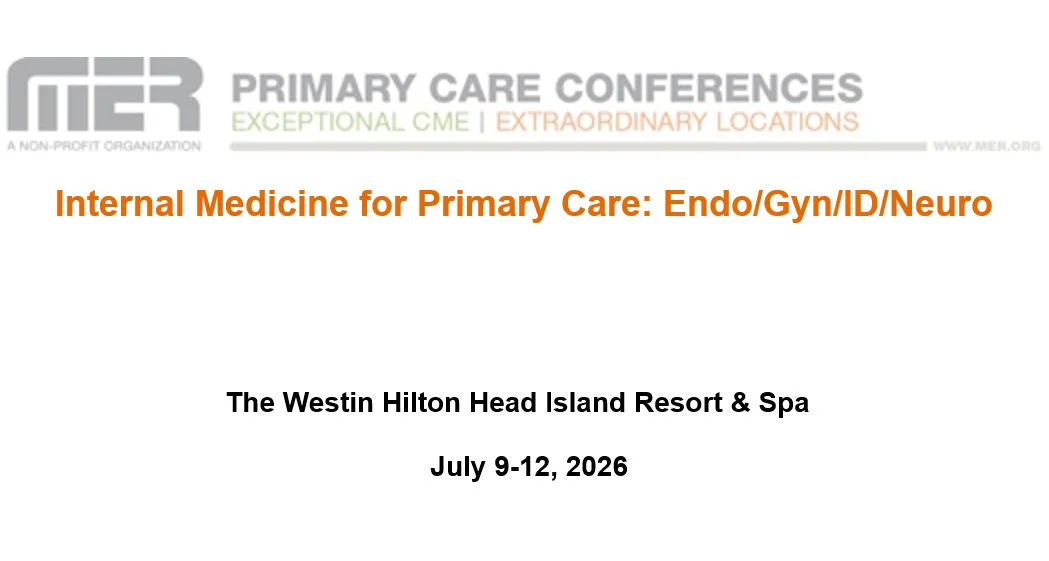
MER Primary Care Conferences Internal Medicine for Primary Care Endo Gyn ID Neuro Jul 09-12, 2026

$130.00
Review endocrinology, gynecology, infectious diseases and neurology through MER’s July 2026 primary care program. Topics include diabetes, thyroid disease, osteoporosis, menopause, contraception, common infections, headaches and cognitive impairment. The original learning objectives and full subject-based lecture outline are preserved below for focused outpatient medicine review.
Delivery Information: This Product is shared via google drive download link. Please use your correct Gmail address at checkout.
Please note: there are no CME points or certificate associated with this course.
Samples for Courses Can be found here: Free Samples Here!
This MER primary care review combines endocrinology, gynecology, infectious diseases and neurology. Diabetes, insulin therapy, osteoporosis and thyroid disorders are considered alongside menopause, abnormal uterine bleeding, cervical screening and contraception. Infection sessions address common syndromes and antimicrobial stewardship, while neurology teaching includes weakness, headaches, cognitive impairment and movement disorders.
The program is associated with the July 9–12, 2026 conference. Its original learning objectives and subject-by-subject lecture outline are retained below for clinicians reviewing problems encountered in outpatient practice. The outline describes the teaching program and does not independently confirm every supplied recording. This purchase concerns study files; provider registration, live participation and platform services are separate.
Learning Objectives
Upon completion of this program, participants should be better able to:
Endocrinology
- Diagnose and tailor treatment strategies for type 1 and type 2 diabetes, including insulin therapy and managing diabetic emergencies.
- Identify the risks and benefits of utilizing bisphosphonates in the treatment of osteoporosis and assess fracture risk.
- Identify abnormal thyroid function and outline evidence-based treatment options for hypo- and hyperthyroidism.
Gynecology
- Discuss the management of menopausal symptoms, including the risks and benefits of hormone replacement therapy.
- Evaluate abnormal uterine bleeding, cervical cancer screening guidelines, and contraceptive options in the primary care setting.
Infectious Diseases
- Review the epidemiology, diagnosis, and management of skin and soft tissue infections (SSTI) and gastrointestinal infections.
- Implement the latest CDC guidelines for the diagnosis and treatment of sexually transmitted infections (STIs).
- List the goals of an antimicrobial stewardship program and apply strategies for appropriate antimicrobial prescribing.
Neurology
- Perform a targeted neurological exam to evaluate patients with weakness, numbness, or sensory complaints.
- Diagnose and manage primary headache syndromes, including acute and prophylactic treatments for migraines.
- Evaluate and manage cognitive impairment, Alzheimer’s disease, and other dementias using current pharmacological and non-pharmacological approaches.
Topics
Endocrinology
-
Type 2 Diabetes Mellitus: Diagnosis and treatment; lessons from the DCCT; managing diabetic emergencies; screening; pre-diabetes.
-
Insulin Therapy for Diabetes: Treating T2DM with insulin; considerations for T1DM.
-
Osteoporosis: Review the epidemiology and pathophysiology of osteoporosis along with interpretation of DEXA scans and FRAX risk assessment; up-to-date therapeutic options.
-
Disorders of Thyroid Function: Prevalence, diagnosis, and treatment options for hypothyroidism and hyperthyroidism.
Gynecology
-
Menopause Update: Symptoms, physiology, and current treatment options including hormone replacement therapy and non-hormonal alternatives.
-
Abnormal Uterine Bleeding: Evaluation, differential diagnosis, and medical and surgical management strategies in the primary care setting.
-
Cervical Cancer Screening: Current ASCCP guidelines, HPV co-testing, and the management of abnormal Pap smears.
-
Contraception: Review of current contraceptive options, including Long-Acting Reversible Contraception (LARC), patient counseling, and prescribing protocols.
Infectious Diseases
-
Skin & Soft Tissue Infections: Presentation on important skin and soft-tissue infections and their prompt recognition, emphasizing evaluation and management strategies.
-
Gastrointestinal Infections & Clostridioides Difficile: Presentation on important enteric pathogens and their recognition, diagnosis, and management; special emphasis on C. diff colitis and related infection control updates.
-
Sexually Transmitted Infections: Update on the latest CDC guidelines for the diagnosis and treatment of common STIs, including syphilis, gonorrhea, and chlamydia.
-
Antimicrobial Stewardship and Multidrug Resistance: Definition of an antimicrobial stewardship program (ASP); concepts and goals of antimicrobial stewardship; updates on the antimicrobial armamentarium.
Neurology
-
Evaluating the Patient with Weakness: Conducting a targeted neurological examination to differentiate central from peripheral causes of weakness.
-
Headaches and Migraines: Diagnosis, classification, and evidence-based acute and prophylactic management of primary headache disorders.
-
Cognitive Impairment and Dementia: Screening tools, diagnostic evaluation, and management of Alzheimer’s disease and other common dementias.
-
Parkinson’s Disease and Movement Disorders: Recognizing cardinal signs, initiating appropriate medical therapy, and understanding the indications for specialist referral.
Related products

Nephrology / Urology

Endocrine and Nutrition
Harvard Testosterone Therapy and Sexual Dysfunction February 2023

Internal Medicine

Endocrine and Nutrition

Endocrine and Nutrition
The Brigham Board Review and Comprehensive Update in Endocrinology 2023

Endocrine and Nutrition

Endocrine and Nutrition
Master Course Carotid and Vertebral Arteries (ABC Vascular) (Videos, Slides & Quizzes)