
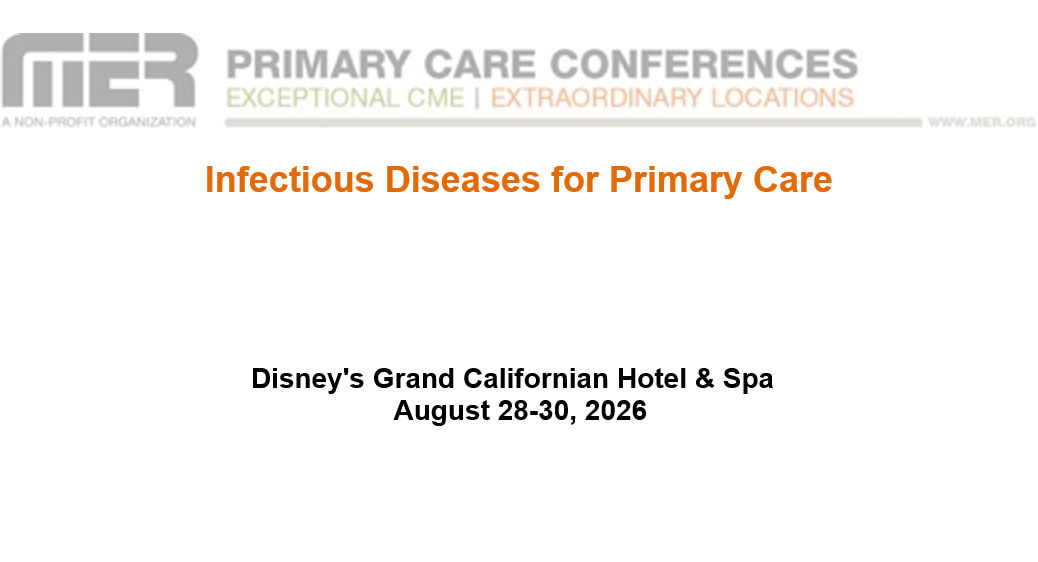
MER Primary Care Conferences Infectious Diseases for Primary Care Aug 28-30, 2026
$100.00
This Product is shared via google drive download link, So please share your correct Gmail id while placing the order .Please note that there are no CME points or certificate associated with this course Samples for Courses Can be found here : Free Samples Here!
MER Primary Care Conferences Infectious Diseases for Primary Care Aug 28-30, 2026
Infectious Diseases • Primary Care • Antimicrobial Stewardship • Adult Immunization • Emerging Infections
Strengthen your practical approach to common infectious diseases with MER Primary Care Conferences Infectious Diseases for Primary Care Aug 28-30, 2026, a focused clinical education program from Medical Education Resources (MER).
The conference was scheduled for August 28–30, 2026, at Disney’s Grand Californian Hotel & Spa, Disneyland® Resort, California, and was designed to provide primary care practitioners with up-to-date, evidence-based information on the diagnosis, treatment, and management of infectious diseases frequently encountered in ambulatory practice.
The program emphasizes pragmatic clinical decision-making, appropriate antimicrobial use, vaccination, prevention, and recognition of both established and emerging infectious diseases.
Course Details
- Course: Infectious Diseases for Primary Care
- Provider: Medical Education Resources – MER
- Year: 2026
- Dates: August 28–30, 2026
- Venue: Disney’s Grand Californian Hotel & Spa
- Location: Disneyland® Resort, California
- Specialty: Infectious Diseases
- Primary Focus: Primary Care / Internal Medicine
- Original Live Activity: 12 Credit Hours
- Pharmacotherapeutic Content: 6.25 ANCC Pharmacotherapeutic Contact Hours
- Language: English
MER officially lists this three-day activity as Infectious Diseases for Primary Care – 12 Credit Hours, with 6.25 ANCC pharmacotherapeutic contact hours.
Course Overview
Infectious diseases remain among the most frequent reasons patients seek care in outpatient and primary care settings.
Primary care clinicians routinely encounter conditions involving:
- Respiratory tract infections
- Urinary tract infections
- Skin and soft tissue infections
- Sexually transmitted infections
- Tick-borne diseases
- Seasonal viral infections
- Gastrointestinal infections
- Clostridioides difficile infection
- Vaccine-preventable diseases
- Emerging infectious diseases
The MER Infectious Diseases for Primary Care 2026 program provides a practical framework for approaching these conditions through:
Clinical Presentation → Diagnostic Evaluation → Treatment Selection → Antimicrobial Stewardship → Prevention → Follow-Up
Particular emphasis is placed on making appropriate treatment decisions while reducing unnecessary antimicrobial exposure and incorporating current preventive recommendations into routine primary care.
Learning Objectives
Upon completion of this program, participants should be better able to:
- Discuss the clinical presentation, diagnosis, and management of common respiratory tract infections.
- Determine appropriate treatment strategies for urinary tract infections while adhering to antimicrobial stewardship principles.
- Evaluate and manage skin and soft tissue infections, including community-acquired MRSA.
- Apply current ACIP adult immunization guidelines effectively in primary care practice.
- Identify and treat common sexually transmitted infections based on the latest CDC guidelines.
- Recognize the clinical features of tick-borne diseases and implement appropriate prophylactic and therapeutic protocols.
- Manage emerging and seasonal viral infections, including COVID-19, influenza, and RSV.
- Evaluate gastrointestinal infections, focusing on the management and prevention of Clostridioides difficile.
Major Topics Covered
Respiratory Tract Infections
Respiratory infections are among the most frequently encountered infectious conditions in primary care.
The program focuses on the:
- Clinical presentation of respiratory infections
- Diagnostic evaluation
- Differentiation of common infectious causes
- Appropriate management
- Selection of antimicrobial therapy when indicated
- Avoidance of unnecessary antibiotic use
The clinical approach can be summarized as:
Symptoms → Clinical Assessment → Determine Likely Etiology → Evaluate Need for Testing → Select Appropriate Management
Antimicrobial Stewardship
Antimicrobial stewardship is a central component of modern infectious disease management.
Appropriate antibiotic prescribing requires clinicians to consider:
- Likelihood of bacterial infection
- Severity of illness
- Local resistance patterns
- Previous antimicrobial exposure
- Patient allergies
- Comorbid disease
- Potential adverse effects
- Appropriate dose and duration
The goal is to balance effective treatment with responsible antimicrobial use.
Urinary Tract Infections
The course reviews appropriate treatment strategies for urinary tract infections (UTIs) while emphasizing antimicrobial stewardship.
Clinical assessment may involve:
- Symptoms
- Patient risk factors
- Previous infection history
- Appropriate diagnostic testing
- Antimicrobial selection
- Resistance considerations
- Treatment response
Management should distinguish situations requiring antimicrobial therapy from those where treatment may not be appropriate.
Skin and Soft Tissue Infections
Skin and soft tissue infections are another common reason for outpatient infectious disease evaluation.
Topics include recognition and management of conditions involving:
- Skin infection
- Soft tissue infection
- Community-acquired MRSA
- Appropriate antimicrobial treatment
- Clinical severity assessment
- Identification of patients who may require escalation of care
Community-Acquired MRSA
Community-acquired methicillin-resistant Staphylococcus aureus (MRSA) is an important consideration in selected skin and soft tissue infections.
Clinical decision-making requires integration of:
Clinical Appearance + Infection Severity + Risk Factors + Local Resistance Patterns + Appropriate Therapy
Recognition of cases potentially involving MRSA can influence antimicrobial selection and subsequent management.
Adult Immunizations
Vaccination is an important component of infectious disease prevention in primary care.
The program reviews the practical application of current ACIP adult immunization guidelines.
Vaccination assessment in primary care may consider:
- Age
- Previous immunization history
- Underlying medical conditions
- Immunocompromising conditions
- Occupational exposure
- Travel
- Risk factors
- Current vaccination recommendations
Integrating vaccine review into routine primary care can help identify missed opportunities for disease prevention.
Sexually Transmitted Infections
The program addresses recognition, diagnosis, and treatment of commonly encountered sexually transmitted infections (STIs) using current CDC guidance.
Important elements of STI care include:
- Appropriate screening
- Recognition of clinical manifestations
- Diagnostic testing
- Treatment
- Patient counseling
- Prevention
- Follow-up when indicated
Tick-Borne Diseases
Tick-borne infections present important diagnostic challenges because their clinical manifestations can overlap with many other illnesses.
The program focuses on recognizing the clinical features of important tick-borne diseases and applying appropriate:
- Diagnostic strategies
- Risk assessment
- Post-exposure considerations
- Prophylactic approaches
- Treatment protocols
Exposure history and geographic context can be particularly important when evaluating suspected tick-borne infection.
Emerging & Seasonal Viral Infections
The course reviews important viral infections encountered in primary care, including:
- COVID-19
- Influenza
- Respiratory syncytial virus – RSV
These infections can produce overlapping respiratory symptoms but may differ in:
- Risk factors
- Diagnostic testing
- Treatment options
- Prevention
- Vaccination strategies
- Management of high-risk patients
COVID-19
COVID-19 remains relevant to outpatient infectious disease practice.
Primary care management may include consideration of:
- Clinical presentation
- Diagnostic testing
- Patient risk factors
- Severity assessment
- Therapeutic eligibility
- Monitoring
- Prevention
Treatment decisions should be individualized according to patient characteristics and current clinical recommendations.
Influenza
Seasonal influenza remains a significant cause of respiratory illness.
The program supports practical decision-making involving:
- Recognition of influenza
- Diagnostic evaluation
- Antiviral treatment considerations
- Identification of high-risk patients
- Prevention
- Vaccination
Respiratory Syncytial Virus – RSV
RSV is an important respiratory pathogen with particular relevance for vulnerable patient populations.
Primary care clinicians should recognize:
- Typical clinical presentations
- Risk factors for severe illness
- Prevention strategies
- Current management considerations
Gastrointestinal Infections
The program also reviews the evaluation and management of gastrointestinal infections.
A practical approach may incorporate:
- Clinical history
- Severity assessment
- Exposure history
- Recent travel
- Recent antibiotic exposure
- Diagnostic testing when appropriate
- Hydration and supportive care
- Targeted antimicrobial treatment when indicated
Clostridioides difficile Infection
Clostridioides difficile is an important cause of infectious diarrhea, particularly in patients with relevant healthcare or antimicrobial exposure.
The course focuses on both:
Management + Prevention
Clinical considerations may include:
- Antibiotic exposure
- Symptoms
- Diagnostic testing
- Disease severity
- Appropriate treatment
- Recurrence
- Infection prevention
Infectious Diseases in Primary Care
Primary care physicians are often the first clinicians to evaluate patients with infectious symptoms.
Presentations may include:
- Fever
- Cough
- Sore throat
- Dysuria
- Skin lesions
- Diarrhea
- Respiratory symptoms
- Tick exposure
- Sexual exposure
- Vaccine-related questions
An effective approach requires determining:
Is Infection Likely? → What Is the Probable Cause? → Is Testing Required? → Is Antimicrobial Therapy Needed? → What Prevention Is Appropriate?
Antibiotic Decision-Making
Not every infectious syndrome requires antibiotics.
Appropriate antimicrobial prescribing involves differentiating:
Likely Viral Disease → Supportive Care
from
Likely Bacterial Disease → Targeted Antimicrobial Therapy When Appropriate
This distinction is central to antimicrobial stewardship and responsible outpatient infectious disease management.
Prevention in Infectious Diseases
Managing infectious diseases involves more than treating established infection.
Preventive strategies discussed within the scope of the program include:
- Vaccination
- Appropriate antimicrobial use
- Risk-factor assessment
- Exposure prevention
- Patient education
- Infection-control principles
- Identification of high-risk patients
Target Audience
This program is targeted to office-based primary care providers and other health professionals seeking updates in primary care medicine.
It is especially relevant for:
- Primary Care Physicians
- Family Medicine Physicians
- Internal Medicine Physicians
- Infectious Disease Specialists
The course may also be relevant to healthcare professionals involved in the diagnosis, treatment, and prevention of infectious diseases in outpatient clinical practice.
Who Should Take This Course?
MER Primary Care Conferences Infectious Diseases for Primary Care Aug 28-30, 2026 is particularly suited to clinicians who regularly evaluate patients with common infectious conditions.
The program is relevant for professionals seeking practical updates in:
- Infectious disease diagnosis
- Outpatient antimicrobial treatment
- Antimicrobial stewardship
- Adult vaccination
- Respiratory infections
- Urinary infections
- Skin infections
- Sexually transmitted infections
- Tick-borne disease
- Viral respiratory infections
- Gastrointestinal infections
Why This Course Is Useful
The strength of MER Infectious Diseases for Primary Care 2026 is its focus on infectious conditions frequently encountered in routine outpatient practice.
The program can help clinicians:
- Improve recognition of common infectious diseases
- Review appropriate diagnostic strategies
- Improve antimicrobial selection
- Apply antimicrobial stewardship principles
- Review adult vaccination recommendations
- Improve management of common STIs
- Recognize tick-borne infections
- Review seasonal and emerging viral infections
- Improve gastrointestinal infection management
- Review prevention and management of Clostridioides difficile infection
The curriculum can be summarized as:
Respiratory Infections → UTIs → Skin Infections → Vaccines → STIs → Tick-Borne Diseases → Viral Infections → Gastrointestinal Infections
Original Conference Accreditation
The official MER conference listing designates the original activity as:
- 12 Credit Hours
- 6.25 ANCC Pharmacotherapeutic Contact Hours
Important CME / Certificate Notice
Official continuing education credit applies to participation through the MER activity and completion of MER’s required official processes.
If the MedicalAmboss product consists only of independently delivered educational files, do not describe the product as including:
- 12 CME Credits
- 6.25 Pharmacotherapeutic Contact Hours
- Official MER Certificate
- Official MER Registration
unless official MER participation and credit-claiming access are actually included.
The safer wording for the MedicalAmboss product page is:
Original MER Live Activity: 12 Credit Hours
Short Description
MER Primary Care Conferences Infectious Diseases for Primary Care Aug 28-30, 2026 provides a practical clinical review of infectious diseases commonly encountered in outpatient and primary care practice.
Topics include respiratory tract infections, urinary tract infections, antimicrobial stewardship, skin and soft tissue infections, community-acquired MRSA, adult immunizations, sexually transmitted infections, tick-borne diseases, COVID-19, influenza, RSV, gastrointestinal infections, and Clostridioides difficile.
Provider: Medical Education Resources – MER
Dates: August 28–30, 2026
Venue: Disney’s Grand Californian Hotel & Spa
Location: Disneyland® Resort, California
Original Live Activity: 12 Credit Hours
Primary Focus: Infectious Diseases for Primary Care
Topics
- Respiratory Tract Infections: Clinical presentation, diagnosis, management, and appropriate antimicrobial decision-making for common respiratory infections.
- Urinary Tract Infections: Appropriate treatment strategies for UTIs with emphasis on antimicrobial stewardship.
- Skin and Soft Tissue Infections: Evaluation and management of common infections, including community-acquired MRSA.
- Adult Immunizations: Application of current ACIP adult immunization guidelines in primary care.
- Sexually Transmitted Infections: Recognition and treatment of commonly encountered STIs based on current CDC guidance.
- Tick-Borne Diseases: Clinical recognition, prophylaxis, diagnostic evaluation, and treatment considerations.
- Emerging and Seasonal Viral Infections: Management of COVID-19, influenza, and RSV in primary care.
- Gastrointestinal Infections: Evaluation and management of gastrointestinal infections with emphasis on the treatment and prevention of Clostridioides difficile.
-
Respiratory Tract Infections: Diagnosis and management of community-acquired pneumonia (CAP), acute bronchitis, rhinosinusitis, and pharyngitis; distinguishing viral from bacterial etiologies; guideline-based antibiotic selection.
-
Urinary Tract Infections: Uncomplicated and complicated UTIs; management of asymptomatic bacteriuria; strategies for recurrent UTIs in women; catheter-associated UTIs; navigating local resistance patterns.
-
Skin and Soft Tissue Infections: Impetigo, cellulitis, erysipelas, and abscesses; outpatient management of community-acquired MRSA; mammalian bite wounds; identifying indications for inpatient admission versus outpatient therapy.
-
Adult Immunizations: Comprehensive review of current ACIP guidelines; updates on pneumococcal, herpes zoster, RSV, COVID-19, and influenza vaccines; practical strategies for overcoming vaccine hesitancy.
-
Sexually Transmitted Infections (STIs): Diagnosis and treatment of syphilis, gonorrhea, chlamydia, and trichomoniasis; updates from the latest CDC STI Treatment Guidelines; utilizing expedited partner therapy.
-
Tick-Borne Diseases: Clinical presentation of Lyme disease, anaplasmosis, babesiosis, and Rocky Mountain spotted fever; understanding geographic distribution; implementing prophylaxis after tick bites and defining treatment protocols.
-
Viral Respiratory Pathogens: Outpatient management and therapeutics for COVID-19, seasonal influenza, and respiratory syncytial virus (RSV); the role and interpretation of rapid point-of-care diagnostics.
-
Gastrointestinal Infections: Clinical evaluation of acute infectious diarrhea; evidence-based management and secondary prevention of Clostridioides difficile (C. diff) infection; addressing common foodborne illnesses.
-
HIV Prevention and Care in Primary Care: Implementation of Pre-exposure prophylaxis (PrEP); protocols for routine HIV screening; the initial clinical evaluation and counseling of the newly diagnosed HIV patient.
-
Viral Hepatitis: Screening protocols, interpretation of serology, and initial management of Hepatitis B and Hepatitis C; evaluating abnormal liver enzymes in the context of infectious etiologies.
Related products

Critical Care - Emergency medicine
Internal Medicine
Critical Care - Emergency medicine

Internal Medicine

Family medicine
Medical Accounts
Critical Care - Emergency medicine