
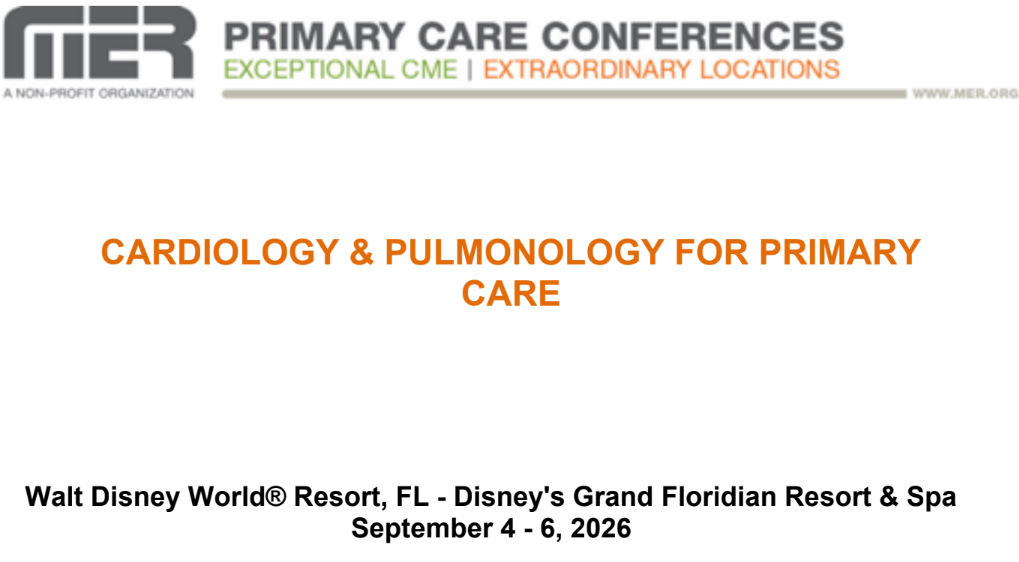
MER Primary Care Conferences Cardiology & Pulmonology for Primary Care Sep 04-06, 2026


$100.00
This Product is shared via google drive download link, So please share your correct Gmail id while placing the order .Please note that there are no CME points or certificate associated with this course Samples for Courses Can be found here : Free Samples Here!
MER Primary Care Conferences Cardiology & Pulmonology for Primary Care Sep 04-06, 2026
Cardiology • Pulmonology • Internal Medicine • Primary Care
September 4–6, 2026 | Walt Disney World® Resort, Florida
Review practical, evidence-based updates in cardiovascular and respiratory medicine with MER Primary Care Conferences Cardiology & Pulmonology for Primary Care Sep 04-06, 2026.
Organized by Medical Education Resources (MER), the original live conference was held September 4–6, 2026, at Disney’s Grand Floridian Resort & Spa, Walt Disney World® Resort, Florida. MER officially lists the program as Cardiology & Pulmonology for Primary Care with 12 Credit Hours and 5.75 ANCC pharmacotherapeutic contact hours.
The program is designed for office-based primary care providers and other healthcare professionals seeking clinically relevant updates across two high-frequency areas of outpatient medicine:
- Cardiology
- Pulmonology
- Cardiovascular Prevention
- Coronary Artery Disease
- Hypertension
- Heart Failure
- Arrhythmias and Atrial Fibrillation
- Acute Chest Pain and Acute Coronary Syndromes
- Asthma
- Respiratory Infections
- Chronic Obstructive Pulmonary Disease – COPD
- Pulmonary Nodules
- Lung Cancer Screening
The September conference’s published learning objectives correspond closely with MER’s broader 2026 Cardiology & Pulmonology for Primary Care curriculum, which provides detailed teaching on suspected CAD, cardiovascular prevention, acute coronary syndromes, heart failure, arrhythmias, asthma, respiratory infections, COPD, and pulmonary nodule/lung cancer evaluation.
Course Details
- Course: Cardiology & Pulmonology for Primary Care
- Provider: Medical Education Resources – MER
- Year: 2026
- Original Conference Dates: September 4–6, 2026
- Duration: 3 Days
- Venue: Disney’s Grand Floridian Resort & Spa
- Location: Walt Disney World® Resort, Florida
- Primary Specialty: Internal Medicine / Primary Care
- Subspecialties: Cardiology and Pulmonology
- Original MER Listing: 12 Credit Hours
- ANCC Pharmacotherapeutic Contact Hours: 5.75
- Primary Audience: Office-Based Primary Care Providers and Other Health Professionals
- Primary Clinical Focus: Evidence-Based Cardiovascular and Pulmonary Updates
The official MER conference page confirms the location, dates, 12-credit format, and 5.75 pharmacotherapeutic contact hours.
Who Was the Original Program Designed For?
MER describes the target audience for its Primary Care Conferences as:
Office-based primary care providers and other health professionals seeking updates in primary care medicine.
This course is particularly relevant for:
- Primary Care Physicians
- Internal Medicine Physicians
- Family Medicine Physicians
- Cardiologists
- Pulmonologists
- Nurse Practitioners
- Physician Associates / Physician Assistants
- Clinicians managing cardiovascular risk
- Clinicians managing chronic respiratory disease
- Healthcare professionals involved in outpatient internal medicine
The strongest clinical audience remains:
Primary Care + Internal Medicine + Cardiology + Pulmonology
Learning Objectives
Upon completion of this program, participants should be better able to:
- Implement lifestyle changes as well as lipid and cholesterol guidelines for the prevention of CAD.
- Explain current concepts in the diagnosis and treatment of hypertension.
- Describe the work-up, risk assessment and test selection of patients with suspected CAD.
- Utilize case-based learning to develop treatment plans for cardiovascular conditions.
- Diagnose and manage patients with asthma.
- Design treatment strategies reflective of current evidence-based medicine for common respiratory infections.
- Describe the current therapeutic management of COPD.
- Discuss diagnosis and screening strategies as well as treatment plans for lung nodules and lung cancer.
- Implement treatment strategies reflective of recent guidelines and current evidence based medicine for heart failure.
- Describe current diagnostic and treatment approaches to arrhythmias and atrial fibrilation.
- Describe current diagnostic approaches and the role of drug therapy to the patient with acute chest pain.
The September event listing independently confirms this learning-objective set for the Walt Disney World conference.
CARDIOLOGY FOR PRIMARY CARE
Cardiovascular disease represents one of the largest components of adult primary care.
The MER cardiology curriculum provides a practical framework for:
- Cardiovascular prevention
- Lipid management
- Hypertension
- Suspected coronary artery disease
- Acute chest pain
- Acute coronary syndromes
- Heart failure
- Arrhythmias
- Atrial fibrillation
- Case-based cardiovascular decision-making
The overall pathway can be summarized as:
Assess Risk → Prevent Disease → Evaluate Symptoms → Select Testing → Diagnose → Treat → Monitor → Refer When Appropriate
Prevention of Coronary Artery Disease – CAD
A major learning objective is to implement:
- Lifestyle interventions
- Lipid guidelines
- Cholesterol guidelines
for the prevention of coronary artery disease.
MER’s 2026 Cardiology & Pulmonology curriculum addresses cardiovascular prevention through risk assessment, lipid management, metabolic risk, exercise, cardiac rehabilitation, lifestyle modification, and pharmacologic therapy.
Lifestyle Modification
Cardiovascular prevention should extend beyond pharmacotherapy.
The MER curriculum incorporates:
- Physical activity
- Exercise
- Weight management
- Metabolic risk
- Cardiac rehabilitation
- Lifestyle modification
into primary and secondary CAD prevention.
The prevention framework is:
Assess Risk → Modify Lifestyle → Treat Lipids → Monitor Risk Factors → Reassess
Lipid & Cholesterol Management
The course reviews contemporary lipid-management concepts relevant to cardiovascular risk reduction.
Topics within MER’s 2026 curriculum include:
- Lipid guideline updates
- Cholesterol management
- HDL considerations
- Metabolic syndrome
- Obesity
- Risk calculation
- Drug therapy
- Determining who requires treatment
Hypertension
Another major learning objective is to:
Explain current concepts in the diagnosis and treatment of hypertension.
MER’s 2026 Cardiology & Pulmonology curriculum addresses:
- Hypertension diagnosis
- Treatment thresholds
- Treatment goals
- Initial therapy
- Combination therapy
- Resistant hypertension
- Special populations
including patients with:
- Diabetes
- Older age
- Renal disease
Resistant Hypertension
Patients whose blood pressure remains uncontrolled despite treatment require a more systematic approach.
Clinical assessment may include:
- Confirmation of blood pressure measurements
- Medication review
- Adherence
- Secondary causes
- Drug combinations
- Comorbid disease
The course places resistant hypertension within a broader evidence-based outpatient management strategy.
Suspected Coronary Artery Disease
The conference includes a major objective to:
Describe the work-up, risk assessment and test selection of patients with suspected CAD.
MER’s 2026 curriculum specifically addresses:
- Risk factor evaluation
- Risk assessment models
- ECG
- Echocardiography
- Nuclear imaging
- Contemporary cardiac imaging
- CT scanning
- Biomarkers
- Special populations
Cardiovascular Risk Assessment
Evaluation begins before testing.
The clinician should integrate:
- Symptoms
- Cardiovascular risk factors
- Medical history
- Age
- Clinical presentation
- Pretest probability
before choosing a diagnostic study.
The diagnostic pathway can be summarized as:
Symptoms → Risk Assessment → Appropriate Test → Interpretation → Treatment / Referral
Cardiovascular Test Selection
The MER curriculum reviews selection among modalities such as:
- ECG
- Echocardiography
- Nuclear imaging
- CT-based imaging
- Other contemporary cardiac imaging techniques
with attention to appropriate-use considerations.
CAD in Special Populations
MER’s published 2026 curriculum specifically considers suspected coronary artery disease in:
- Women
- Patients with diabetes
- Older adults
These populations may require additional attention to presentation, risk assessment, and testing.
Acute Chest Pain
The September learning objectives specifically include:
Describe current diagnostic approaches and the role of drug therapy to the patient with acute chest pain.
MER’s detailed 2026 curriculum includes:
Acute Coronary Syndromes: The Patient with Acute Chest Pain.
Acute Coronary Syndromes – ACS
The MER curriculum covers:
- Initial chest pain evaluation
- Primary care presentation
- Urgent care presentation
- Emergency department presentation
- Initial workup
- Treatment
- Follow-up
- STEMI
- NSTEMI
- Role of drug therapy
- PCI-related considerations
The clinical pathway is:
Recognize Symptoms → Risk Stratify → ECG / Initial Testing → Identify ACS → Initiate Treatment → Escalate Care
STEMI & NSTEMI
The course reviews recognition and management concepts for:
- ST-Segment Elevation Myocardial Infarction – STEMI
- Non-ST-Segment Elevation Myocardial Infarction – NSTEMI
within the broader acute coronary syndrome framework.
Drug Therapy in Acute Coronary Syndromes
The curriculum addresses pharmacologic treatment as:
- Primary therapy in appropriate settings
- Adjunctive treatment to PCI
and includes follow-up after acute coronary syndromes.
Heart Failure
The program includes a specific objective to implement treatment strategies reflecting recent guidelines and current evidence for heart failure.
MER’s published 2026 Cardiology & Pulmonology curriculum includes:
- Heart failure etiologies
- Disease stages
- HFrEF
- HFpEF
- Biomarkers
- Guideline-directed medications
- Device therapy
- Acute decompensated heart failure
- Readmission considerations
HFrEF & HFpEF
The course differentiates:
- Heart Failure with Reduced Ejection Fraction – HFrEF
- Heart Failure with Preserved Ejection Fraction – HFpEF
because treatment strategies and evidence may differ between these phenotypes.
Heart Failure Biomarkers
MER’s curriculum includes the role of biomarkers such as:
NT-proBNP
in determining which patients may require additional evaluation or referral.
Guideline-Directed Heart Failure Therapy
The detailed 2026 curriculum includes contemporary medication classes such as:
- ACE inhibitors
- ARBs
- ARNI
- Beta blockers
- Mineralocorticoid receptor antagonists
- SGLT2 inhibitors
and device-based strategies such as:
- ICD
- CRT
Acute Decompensated Heart Failure
The course also considers patients with:
- Acute decompensated heart failure
- Hospitalization
- Readmission risk
within the broader heart failure continuum.
Arrhythmias
Another September learning objective is to:
Describe current diagnostic and treatment approaches to arrhythmias and atrial fibrilation.
MER’s 2026 cardiology curriculum addresses:
- Types of arrhythmias
- Symptoms
- Palpitations
- Treatment decisions
- Referral
- Hospital admission
- Atrial fibrillation
- Ventricular arrhythmias
Palpitations
Evaluation of palpitations requires clinicians to determine whether symptoms reflect:
- Benign rhythm disturbance
- Atrial fibrillation
- Ventricular arrhythmia
- Other cardiovascular disease
The MER curriculum explicitly includes evaluation of patients presenting with palpitations.
Atrial Fibrillation
The atrial fibrillation curriculum includes:
- Anticoagulation
- Stroke-risk assessment
- Warfarin
- Newer oral anticoagulants
- Rate control
- Rhythm control
The clinical framework can be summarized as:
Confirm AF → Assess Stroke Risk → Assess Bleeding Risk → Anticoagulate When Appropriate → Choose Rate or Rhythm Strategy
Ventricular Arrhythmias
The program also considers when ventricular and other arrhythmias represent serious conditions requiring more urgent management or specialist involvement.
Cardiology Cases
Case-based learning is explicitly included in the conference objectives.
MER’s 2026 curriculum uses Cardiology Cases to review challenging cardiovascular presentations.
Case-based education helps connect:
Presentation → Differential Diagnosis → Testing → Treatment → Follow-Up
rather than teaching cardiovascular diseases only as isolated topics.
PULMONOLOGY FOR PRIMARY CARE
The pulmonary component focuses on four high-frequency clinical areas:
- Asthma
- Common respiratory infections
- COPD
- Lung nodules and lung cancer
These topics are consistently listed across MER’s 2026 pulmonology curriculum.
The overall respiratory pathway can be summarized as:
Symptoms → History & Examination → Pulmonary Testing / Imaging → Diagnosis → Evidence-Based Treatment → Monitoring
Asthma
A major learning objective is to:
Diagnose and manage patients with asthma.
MER’s curriculum addresses:
- Clinical impact of asthma
- Airway inflammation
- Potential irreversible loss of lung function
- Practical diagnosis
- Severity assessment
- Treatment goals
- Risk factors for mortality
- Acute treatment
- Difficult-to-control asthma
Asthma Diagnosis
Accurate diagnosis requires integration of:
- Symptoms
- Trigger patterns
- Clinical history
- Examination
- Pulmonary function where appropriate
The management framework is:
Confirm Diagnosis → Assess Severity / Control → Treat → Educate → Reassess
Airway Inflammation
MER emphasizes the fundamental role of inflammation in asthma and the possibility of airway injury and loss of lung function when disease is poorly controlled.
This reinforces the importance of long-term control rather than management of acute symptoms alone.
Difficult-to-Control Asthma
The curriculum includes management options for patients whose asthma remains difficult to control.
Such patients may require reassessment of:
- Diagnosis
- Adherence
- Inhaler technique
- Triggers
- Comorbidities
- Treatment intensity
- Need for specialty referral
Common Respiratory Infections
The conference includes the objective to:
Design treatment strategies reflective of current evidence-based medicine for common respiratory infections.
MER’s pulmonology curriculum presents this as:
Controversies in the Treatment of Common Respiratory Infections.
Acute & Chronic Bronchitis
The program includes:
- Acute bronchitis
- Chronic bronchitis
within the discussion of respiratory infections.
An important primary care challenge is determining when antibiotics provide benefit and when they do not.
Pneumonia
The detailed curriculum includes both:
- Community-acquired pneumonia
- Hospital-acquired pneumonia
and considers evidence-based approaches to evaluation and treatment.
Pneumonia Severity Index
MER specifically includes the role of the:
Pneumonia Severity Index – PSI
in helping determine whether hospitalization may be appropriate.
This supports risk-based rather than uniform management of pneumonia.
Antibiotic Stewardship
The respiratory-infection curriculum addresses:
- Cost-effective antibiotic use
- Drug resistance
- Guideline-based management
The approach can be summarized as:
Identify Infection → Determine Severity → Determine Likely Etiology → Select Antibiotics When Appropriate → Monitor
COPD
Another central objective is to:
Describe the current therapeutic management of COPD.
MER’s detailed pulmonology curriculum includes:
- COPD definition
- Pathophysiology
- Early detection
- Early intervention
- Risk reduction
- Contemporary management
- Inhaled corticosteroids
- Domiciliary oxygen
- Lung volume reduction surgery
COPD Pathophysiology
Understanding the underlying physiology provides a foundation for appropriate diagnosis and management.
The program connects:
Exposure / Risk → Airflow Limitation → Symptoms → Disease Severity → Treatment
Early Detection & Risk Reduction
MER emphasizes both:
- Early detection
- Early intervention
- Risk reduction
within COPD management.
This is particularly relevant because COPD may remain under-recognized until significant functional impairment develops.
Inhaled Therapy
The curriculum includes discussion of inhaled corticosteroids within contemporary COPD treatment.
Treatment decisions should be individualized rather than assuming that all COPD patients require identical inhaler regimens.
Domiciliary Oxygen
The program also addresses the role of home oxygen therapy in appropriate COPD patients.
Lung Volume Reduction Surgery
MER’s 2026 curriculum includes lung volume reduction surgery among newer or advanced COPD management modalities.
This helps primary care clinicians understand the broader treatment continuum and when specialist evaluation may be appropriate.
Lung Cancer Screening
The conference specifically requires participants to:
Discuss diagnosis and screening strategies as well as treatment plans for lung nodules and lung cancer.
MER’s curriculum addresses appropriate use of contemporary lung cancer screening recommendations.
Pulmonary Nodules
Pulmonary nodules are frequently identified incidentally on imaging.
The MER curriculum includes guidance based on:
- Fleischner Society recommendations
- American College of Chest Physicians lung cancer guidance
- Definitive evaluation strategies
- Management approaches
Fleischner Society Guidelines
The course includes the use of Fleischner Society guidelines in pulmonary nodule management.
Management decisions may depend on:
- Nodule size
- Imaging appearance
- Patient risk
- Smoking history
- Follow-up imaging
- Need for further investigation
Lung Cancer Evaluation
The course connects screening with definitive evaluation and treatment planning.
The clinical pathway can be summarized as:
Identify Risk → Screen → Detect Nodule → Characterize → Determine Follow-Up or Further Evaluation → Refer / Treat
Cardiology & Pulmonology Integration
One major strength of the conference is its integrated approach to symptoms that can arise from either cardiovascular or respiratory disease.
Examples include:
- Chest pain
- Dyspnea
- Exercise intolerance
- Fatigue
- Reduced functional capacity
The clinical challenge is often:
Cardiac Cause? → Pulmonary Cause? → Mixed Disease?
The course therefore helps primary care clinicians connect risk assessment, ECG, cardiovascular testing, pulmonary evaluation, and evidence-based management.
Major Topics Covered
- Primary Care
- Internal Medicine
- Cardiology
- Pulmonology
- Cardiovascular Prevention
- Coronary Artery Disease
- CAD
- Dyslipidemia
- Lipid Management
- Cholesterol Guidelines
- Lifestyle Modification
- Cardiovascular Risk
- Hypertension
- Resistant Hypertension
- Suspected CAD
- Cardiovascular Testing
- ECG
- Echocardiography
- Cardiac Imaging
- CT Imaging
- Acute Chest Pain
- Acute Coronary Syndromes
- ACS
- STEMI
- NSTEMI
- Heart Failure
- HFrEF
- HFpEF
- NT-proBNP
- Guideline-Directed Medical Therapy
- ARNI
- SGLT2 Inhibitors
- ICD
- CRT
- Arrhythmias
- Palpitations
- Atrial Fibrillation
- Anticoagulation
- Rate Control
- Rhythm Control
- Asthma
- Airway Inflammation
- Difficult-to-Control Asthma
- Respiratory Infections
- Acute Bronchitis
- Chronic Bronchitis
- Pneumonia
- Pneumonia Severity Index
- Antibiotic Stewardship
- COPD
- COPD Management
- Inhaled Therapy
- Home Oxygen
- Lung Volume Reduction Surgery
- Pulmonary Nodules
- Lung Cancer
- Lung Cancer Screening
- Fleischner Society Guidelines
- Evidence-Based Medicine
- Case-Based Cardiology
Who Should Take This Course?
MER Primary Care Conferences Cardiology & Pulmonology for Primary Care Sep 04-06, 2026 is particularly relevant for:
- Primary Care Physicians
- Internal Medicine Physicians
- Family Medicine Physicians
- Cardiologists
- Pulmonologists
- Nurse Practitioners
- Physician Associates / Physician Assistants
- Clinicians evaluating chest pain and dyspnea
- Clinicians managing chronic cardiovascular disease
- Clinicians treating asthma and COPD
- Clinicians evaluating pulmonary nodules
- Healthcare professionals involved in adult outpatient medicine
The strongest clinical audience remains:
Primary Care + Internal Medicine + Cardiology + Pulmonology
Why This Course Is Useful
MER Cardiology & Pulmonology for Primary Care Sep 04-06, 2026 combines two specialties that frequently overlap in everyday outpatient practice.
Cardiovascular Prevention
- Lifestyle modification
- Lipid management
- CAD prevention
- Hypertension
Coronary Disease
- Suspected CAD
- Risk assessment
- Diagnostic testing
- Acute chest pain
- ACS
Heart Failure & Rhythm Disorders
- HFrEF
- HFpEF
- Guideline-directed therapy
- Arrhythmias
- Atrial fibrillation
Pulmonary Medicine
- Asthma
- Respiratory infections
- COPD
Thoracic Imaging & Cancer
- Pulmonary nodules
- Lung cancer screening
- Fleischner guidance
- Evaluation strategies
The overall clinical pathway can be summarized as:
Prevent → Recognize Symptoms → Assess Risk → Select Testing → Diagnose → Treat → Monitor → Refer When Appropriate
Original MER Credit & Accreditation Information
The official conference is listed as:
12 Credit Hours
with:
5.75 ANCC Pharmacotherapeutic Contact Hours.
Medical Education Resources is jointly accredited by:
- Accreditation Council for Continuing Medical Education – ACCME
- Accreditation Council for Pharmacy Education – ACPE
- American Nurses Credentialing Center – ANCC
to provide continuing education for the healthcare team. MER’s current accreditation framework includes physician CME, ABIM MOC, nursing, physician associate, and pharmacy credit pathways for eligible live activities.
These credits apply to eligible participation in the original MER educational activity and completion of the provider’s applicable requirements.
An independently distributed MedicalAmboss package should not automatically be represented as providing:
- MER CME Credit
- AMA PRA Category 1 Credits™
- ABIM MOC Points
- ANCC Contact Hours
- ANCC Pharmacotherapeutic Contact Hours
- AAPA Category 1 CME
- ACPE Credit
- Official MER Certificate
- Official MER Account Access
unless official MER participation and credit-claiming eligibility are specifically included with the purchase.
Product Summary
- Product: MER Primary Care Conferences Cardiology & Pulmonology for Primary Care Sep 04-06, 2026
- Official Course: Cardiology & Pulmonology for Primary Care
- Provider: Medical Education Resources – MER
- Year: 2026
- Conference Dates: September 4–6, 2026
- Duration: 3 Days
- Venue: Disney’s Grand Floridian Resort & Spa
- Location: Walt Disney World® Resort, Florida
- Original MER Listing: 12 Credit Hours
- ANCC Pharmacotherapeutic Contact Hours: 5.75
- Primary Specialty: Internal Medicine / Primary Care
- Subspecialties: Cardiology and Pulmonology
- Primary Audience: Office-Based Primary Care Providers and Other Healthcare Professionals
- Major Areas: CAD Prevention, Hypertension, Suspected CAD, Acute Chest Pain, Heart Failure, Arrhythmias, Asthma, Respiratory Infections, COPD, Pulmonary Nodules, and Lung Cancer
Short Description
MER Primary Care Conferences Cardiology & Pulmonology for Primary Care Sep 04-06, 2026 provides practical, evidence-based updates across cardiovascular and respiratory medicine for office-based primary care clinicians.
Held September 4–6, 2026, at Disney’s Grand Floridian Resort & Spa, Walt Disney World® Resort, Florida, the program addresses CAD prevention, hypertension, suspected coronary disease, acute chest pain, heart failure, arrhythmias and atrial fibrillation, asthma, respiratory infections, COPD, pulmonary nodules, and lung cancer screening.
Topics
The September conference page confirms the learning-objective set but does not expose its full agenda text in the currently indexed MER page. The detailed topic descriptions below follow MER’s published 2026 Cardiology & Pulmonology for Primary Care curriculum and match the September conference objectives.
Cardiology
- Primary / Secondary Prevention of CAD: Lifestyle modification; lipid and cholesterol management; cardiovascular risk assessment; metabolic syndrome and obesity; exercise and cardiac rehabilitation; pharmacologic risk reduction.
- Hypertension: Contemporary hypertension concepts; treatment thresholds and goals; initial and combination therapy; resistant hypertension; management in special populations.
- Work-up of Patients with Suspected CAD: Risk-factor evaluation; cardiovascular risk models; ECG, echocardiography, nuclear and newer imaging modalities; CT-based testing; biomarkers; evaluation of women, patients with diabetes, and older adults.
- Acute Coronary Syndromes – The Patient with Acute Chest Pain: Diagnosis and initial evaluation in primary care, urgent care, and emergency settings; initial treatment; STEMI and NSTEMI; drug therapy and PCI-related considerations; follow-up after ACS.
- Heart Failure: Etiologies and stages; HFrEF and HFpEF; biomarkers; guideline-directed medical therapy; ACE inhibitors, ARBs, ARNI, beta blockers, mineralocorticoid receptor antagonists, SGLT2 inhibitors; ICD/CRT considerations; acute decompensated heart failure and readmission.
- Arrhythmias: Types and symptoms; palpitations; treatment versus referral or admission; atrial fibrillation; stroke-risk assessment; anticoagulation; rate versus rhythm control; ventricular arrhythmias.
- Cardiology Cases: Challenging cardiovascular cases used to develop practical diagnosis and treatment plans.
Pulmonology
- Asthma: Clinical impact; inflammatory mechanisms; diagnosis; severity and control; treatment goals; acute management; mortality risk factors; difficult-to-control asthma.
- Controversies in the Treatment of Common Respiratory Infections: Acute and chronic bronchitis; community- and hospital-acquired pneumonia; Pneumonia Severity Index; antibiotic use; antimicrobial resistance; guideline-based treatment.
- COPD: Definition and pathophysiology; early detection; intervention and risk reduction; inhaled therapies; domiciliary oxygen; contemporary treatment strategies; lung volume reduction surgery.
- Lung Cancer Screening & Pulmonary Nodules: Current screening recommendations; Fleischner Society guidance; American College of Chest Physicians lung cancer guidance; pulmonary nodule evaluation; definitive diagnostic and management strategies.
-
Primary Prevention of Cardiometabolic CVD: Definitions; AHA/ACC and other lipid guidelines updates; HDL Cholesterol: The good cholesterol?; Metabolic syndrome and/or obesity; Who needs treatment and how much; The role of lifestyle changes, exercise and cardiac rehabilitation; Drug therapy updates; Risk calculation; Role of pooled equations for risk estimates.
-
Hypertension: The 2025 AHA/ACC Hypertension Guidelines; The 2024 ESC Guidelines for hypertension; Approaches to treatment thresholds and goals; Choices for initial and combination therapy; Resistant hypertension; Treating special populations: diabetics, the elderly, patients with renal failure; Risk factors by new pooled equations.
-
Work-up of Patients with Suspected CAD: Risk factor evaluation and risk assessment models; 2021 ACC/AHA Chest Pain Guidelines; Test selection including ECG, echo, nuclear and newer imaging modalities (including discussion of appropriate use criteria–AUC); The usefulness of CT scanning; The role of bio markers and EBCT; Suspected CAD in special populations (women, diabetics, the elderly).
-
Asthma: The medical impact of asthma; fundamental role of inflammation, with possible scarring and irreversible loss of lung function; practical points of diagnosis; goal setting management based on levels of severity; risk factors for mortality and treatment in the acute setting; management options for the difficult to control asthmatic patient.
-
Controversies in the Treatment of Common Respiratory Infections: Acute and chronic bronchitis; pneumonia (community versus hospital-acquired); role of the Pneumonia Severity Index score in determining indication for hospitalization; cost- effective use of antibiotics; clinical significance of drug resistance; guidelines for management.
-
COPD: Definition; pathophysiology; early detection and intervention; risk reduction; management update including new modalities (including lung volume reduction surgery) and the role of inhaled corticosteroids and domiciliary oxygen.
-
Lung Cancer Screening & Pulmonary Nodules: Appropriate use of the new lung cancer screening recommendations; Fleischner Society guidelines and American College of Chest Physician Lung Cancer guidelines; approach to definitive evaluation and management strategies.
-
Cardiology Cases: Challenging case presentations in cardiology.
-
Heart Failure: Etiologies and stages of heart failure; ACC/AHA Heart Failure Guidelines; Heart failure with reduced EF (HFrEF) and heart failure with preserved EF (HFpEF); Determining patients for referral using biomarkers, eg NT Pro BNP; Treatment options: ACE inhibitors, ARBs, ARNI, beta blockers, mineralocorticoid receptor antagonists, SGLT2i; The role of devices in treatment and antiplatelet drugs; Issues related to the hospitalized patient with acute decompensated heart failure and readmissions.
-
Arrhythmias: Types and symptoms of arrhythmias; Approach to the patient: when to treat, when to refer, when to admit; Evaluation of the patient with palpitations; Atrial fibrilation: the use of anticoagulants indications, CVA risk scores, warfarin vs newer oral anticoagulants, controlling heart rate vs rhythm; Ventricular and other arrhythmias: when are they serious.
-
Acute Coronary Syndromes: The Patient with Acute Chest Pain: Diagnosis and initial evaluation in the primary care setting, urgent care clinic and emergency department; Initial workup, treatment, and follow-up; Diagnosing and treating ST segment elevation and non-ST segment elevation MIs; The role of drug therapy–primary vs adjunctive to PCI; Follow up after acute coronary syndromome.
Related products

Cardiology

Internal Medicine

Internal Medicine

Internal Medicine
Critical Care - Emergency medicine
2022 UPDATES IN THERAPEUTICS: CRITICAL CARE PHARMACY PREPARATORY REVIEW AND RECERTIFICATION COURSE
Medical Accounts
Critical Care - Emergency medicine
Anesthesiology & pain medicine
Critical Care Symposium: Mastering ED Mechanical Ventilation