
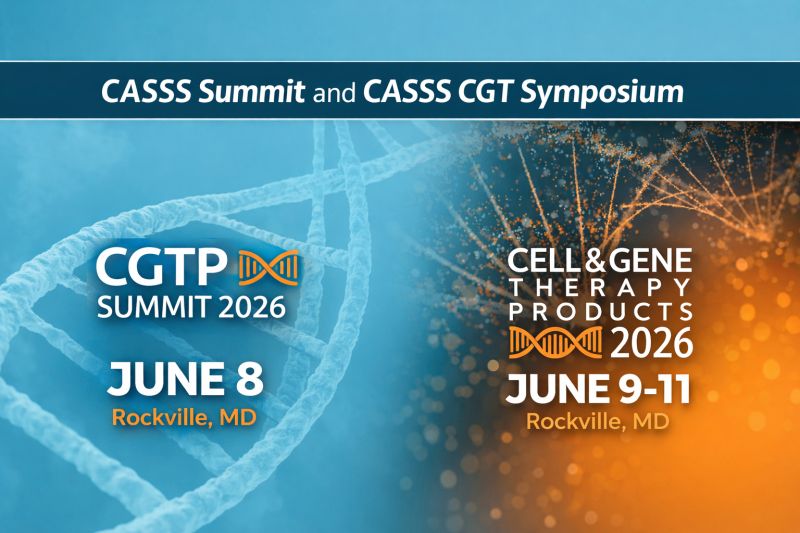
CASSS Sharing Science Solutions CGTP Summit 2026 Cell and Gene Therapy Products Symposium 2026


$45.00
This Product is shared via google drive download link, So please share your correct Gmail id while placing the order .Please note that there are no CME points or certificate associated with this course Samples for Courses Can be found here : Free Samples Here!
CASSS Sharing Science Solutions CGTP Summit 2026 Cell and Gene Therapy Products Symposium 2026
Cell & Gene Therapy • CMC • Gene Editing • mRNA • AAV • Regulatory Science
June 8–11, 2026 | Rockville, Maryland
Explore contemporary Chemistry, Manufacturing, and Controls, analytical development, manufacturing, validation, comparability, specifications, and global regulatory strategy for advanced cell and gene therapies with CASSS Sharing Science Solutions CGTP Summit 2026 Cell and Gene Therapy Products Symposium 2026.
The combined educational program brings together two closely connected CASSS events held at the Bethesda North Marriott Hotel & Conference Center in Rockville, Maryland:
- CGTP Summit 2026 – June 8, 2026
- Cell and Gene Therapy Products Symposium 2026 – June 9–11, 2026
The CGTP Summit was a one-day senior-level program focused specifically on Specifications for Cell and Gene Therapies, while the subsequent 2.5-day CGTP Symposium expanded the discussion across manufacturing, quality, analytical development, CMC strategy, comparability, process validation, gene editing, mRNA technologies, viral vectors, and international regulatory considerations.
The 2026 scientific curriculum addresses advanced modalities and technologies including:
- Cell therapies
- CAR-T and autologous cell therapy programs
- Gene therapies
- CRISPR genome editing
- Next-generation nuclease technologies
- In vivo epigenome editing
- mRNA therapeutics
- AAV vectors
- Lentiviral vectors
- RNA modalities
- Gene-editing components
- Potency assays
- Process validation
- PPQ
- Analytical comparability
- NGS
- Mass photometry
- Artificial intelligence and machine learning
- Global regulatory strategy
CASSS describes the CGTP Symposium as a forum bringing together industry, regulatory, and academic professionals to discuss challenges in the development of diverse and innovative cell and gene therapy products and the regulatory practices surrounding them.
Course Details
- Product: CASSS Sharing Science Solutions CGTP Summit 2026 Cell and Gene Therapy Products Symposium 2026
- Organization: CASSS – Sharing Science Solutions
- Year: 2026
- Overall Dates: June 8–11, 2026
- CGTP Summit: June 8, 2026
- CGTP Symposium: June 9–11, 2026
- Venue: Bethesda North Marriott Hotel & Conference Center
- Location: Rockville, Maryland, USA
- Primary Field: Cell and Gene Therapy
- Primary Scientific Area: CMC / Manufacturing / Quality / Regulatory Science
- Related Areas: Gene Editing, mRNA, AAV, Lentiviral Vectors, Analytical Development, Potency, Specifications
- Educational Formats: Scientific Presentations, Plenary Sessions, Parallel Tracks, Panels, Roundtables, Poster Talks, Networking
- Summit Theme: Specifications for Cell and Gene Therapies
- Symposium Focus: Manufacturing, Quality and Regulatory Considerations
The main Symposium officially consisted of a 2.5-day program featuring plenary and parallel tracks plus roundtable discussions, while the Summit used presentations with extended interactive panel discussions.
Who Was the Original Program Designed For?
The combined program is particularly relevant for:
- CMC Professionals
- Cell Therapy Scientists
- Gene Therapy Scientists
- Analytical Development Scientists
- Process Development Scientists
- Regulatory Affairs Specialists
- Quality Assurance Professionals
- Quality Control Scientists
- Manufacturing Scientists
- Gene Editing Scientists
- mRNA Development Scientists
- Viral Vector Specialists
- AAV Scientists
- Lentiviral Vector Scientists
- Potency Assay Scientists
- Validation Professionals
- Comparability Specialists
- Pharmaceutical Development Scientists
- Advanced Therapy / ATMP Professionals
It is also relevant for:
- Medical Geneticists
- Oncologists
- Immunologists
- Hepatologists
- Clinical Pharmacologists
- Translational Scientists
The strongest professional audience remains:
Cell & Gene Therapy + CMC + Analytical Development + Regulatory Affairs
Learning Objectives
Upon completion of this program, participants should be better able to:
- Navigate CMC considerations and develop accelerated strategies for CRISPR, next-generation technologies, and in vivo epigenome editing.
- Design and execute practical Process Performance Qualification (PPQ) and validation strategies for complex cell and gene therapy programs.
- Establish phase-appropriate specifications and conduct rigorous analytical comparability analyses across multiple process and manufacturing changes.
- Optimize the manufacturing of mRNA and viral vectors while deploying advanced analytical characterizations such as mass photometry and NGS-based methods.
- Understand global regulatory perspectives, ICH harmonization efforts, and strategic roadmaps for driving concurrent US and EU approvals for gene therapies.
These learning areas align closely with the official 2026 CASSS program, which specifically included CRISPR CMC, PPQ, comparability, mRNA manufacturing, AAV characterization, NGS, global submissions, and future ATMP guidance.
CGTP SUMMIT 2026
Specifications for Cell and Gene Therapies
June 8, 2026
The official 2026 Summit theme was:
Specifications for Cell and Gene Therapies
Specification setting for advanced therapy medicinal products remains particularly challenging because CGT development frequently combines:
- Accelerated timelines
- Limited manufacturing history
- Small patient populations
- Intrinsic biological variability
- Rapidly evolving potency methods
- Process changes during development
- Limited batch numbers
CASSS described specification setting for ATMPs as one of the persistent and complex challenges throughout the product-development lifecycle.
Phase-Appropriate Specifications
Specifications for an early clinical program may not necessarily be identical to those appropriate for:
- Late-stage clinical development
- Marketing application
- Commercial manufacturing
The Summit examines how specification strategies can evolve as:
Product Knowledge + Manufacturing Experience + Clinical Information
increase throughout the lifecycle.
A useful framework is:
Early Development → Gather Data → Understand Variability → Refine Control Strategy → Establish Commercial Specifications
Rethinking Specifications for Autologous Therapies
A confirmed Summit presentation was:
Rethinking Specification Setting in Autologous Cell and Gene Therapies: From Variability to Global Alignment
presented by Shilpa Suravajhala, Vertex Pharmaceuticals Incorporated.
Autologous therapies create special specification challenges because the starting biological material itself can vary substantially between patients.
Important considerations include:
- Patient-to-patient variability
- Manufacturing variability
- Potency
- Identity
- Purity
- Safety
- Global regulatory expectations
Regulatory Perspectives on Specifications
A confirmed FDA presentation was:
Regulatory Perspectives on Establishing Specifications for Cell and Gene Therapy Products: From Speculation to Specification
presented by Graeme Price, CBER, FDA.
This places specification development directly within a regulatory framework.
The goal is to support specifications that are:
- Scientifically justified
- Clinically relevant
- Manufacturing-aware
- Appropriate for lifecycle stage
- Capable of ensuring product quality
Evergreen Specification Setting
Another Summit presentation was:
Evergreen Specification Setting Practices
presented by Julia O’Neil, Direxa Consulting.
The concept reinforces that specification strategy should evolve as product and process knowledge accumulate.
Lifecycle-Aligned Specifications
A confirmed presentation was:
Life Cycle-Aligned Specifications: Ensuring Quality and Consistency in Cell and Gene Therapy Development
presented by Tiffany Lucas, ELIQUENT Life Sciences.
The underlying principle is:
Specification Strategy Should Follow Product Maturity
rather than establishing fixed commercial-style limits prematurely in early development.
Rare & Ultra-Rare Disease Programs
Another Summit presentation was:
Between Scylla and Charybdis: Navigating Specification Setting for Rare and Ultra Rare Disease Programs.
Rare-disease CGT programs may have particularly limited:
- Batch numbers
- Patient numbers
- Stability data
- Manufacturing experience
This makes traditional statistical approaches to specification setting difficult.
CELL & GENE THERAPY PRODUCTS SYMPOSIUM 2026
Manufacturing, Quality and Regulatory Considerations
June 9–11, 2026
The main CGTP Symposium brings together industry, regulators, and academics for a 2.5-day program of plenary and parallel scientific tracks plus roundtables.
The 2026 abstract-call topics included:
- Characterization and Quality Expectations for mRNA in Various Applications
- Control Strategies for Gene Editing Across Platforms
- Gene and Epigenome Editing: Mechanisms Driving Early-Phase Therapies
- Innovative Process Performance Qualification Strategies Supporting Accelerated Programs
- Leveraging Prior Knowledge in Early Development of ATMPs
- Navigating Comparability Challenges in Cell and Gene Therapy Development
- Next-Generation RNA Modalities: CMC and Regulatory Strategies for Clinical Translation
GENE EDITING
Gene editing is one of the defining themes of the 2026 program.
The official curriculum includes education involving:
- CRISPR
- Next-generation editing technologies
- Small nucleases
- Gene-editing components
- Off-target characterization
- Epigenome editing
- Regulatory and CMC control
CMC Considerations for CRISPR
A confirmed presentation was:
CMC Considerations for CRISPR and Next-Gen Technologies, Including ElevateBio’s LETI-101 as a Case Study
presented by April Sena, ElevateBio.
Gene-editing CMC programs must address the quality and control of components involved in editing while ensuring manufacturing consistency and appropriate characterization.
Gene Editing Control Strategy
A gene-editing control strategy may need to integrate:
- Editing nuclease
- Guide RNA
- Delivery system
- Starting cellular material
- Edited cell population
- Off-target risk
- Potency
- Product identity
- Process consistency
The overall pathway can be conceptualized as:
Editing Components → Manufacturing Process → Edited Product → Characterization → Functional Activity
Drug Substance vs. Critical Component
AstraZeneca presented:
Navigating the “DS vs. Critical Component” Continuum for Gene Editing Tools: Lessons from Autologous Cell Therapy Program Lifecycle Management
presented by Leakhena Som.
This highlights a fundamental CMC question:
When should a gene-editing tool be controlled as a drug substance, and when should it be managed as a critical manufacturing component?
The answer can influence:
- Specifications
- Release testing
- Supplier strategy
- Manufacturing controls
- Regulatory documentation
Off-Target Assessment
A confirmed presentation was:
Development of an Off-Target Strategy for a Novel Small Nuclease
presented by Maggie Bobbin, Mammoth Biosciences.
Off-target assessment is particularly important for genome-editing technologies because unintended editing can influence:
- Safety
- Product characterization
- Regulatory risk
- Long-term follow-up strategy
Epigenome Editing
One of the most clinically interesting 2026 presentations was:
Developing First-in-Class In Vivo Epigenome Editing for Chronic Hepatitis B: Accelerated CMC Development Strategies
presented by Tyler Goodwin, Tune Therapeutics.
This extends gene therapy beyond permanent DNA sequence editing toward targeted modification of gene regulation.
The session is especially relevant to:
- Medical Geneticists
- Hepatologists
- Gene Therapy Scientists
- CMC Professionals
Chronic Hepatitis B & Epigenome Editing
The presentation illustrates how an emerging therapeutic platform can require accelerated CMC strategies despite limited historical precedent.
The development pathway is:
Novel Editing Modality → Product Understanding → Analytical Strategy → Manufacturing Control → Clinical Translation
PROCESS PERFORMANCE QUALIFICATION – PPQ
Process validation and PPQ represented another major 2026 theme.
Unlike conventional biologics, cell and gene therapy programs may face:
- Small batch numbers
- Rare patient populations
- Variable starting material
- Accelerated clinical programs
- Limited commercial manufacturing history
Traditional validation models may therefore need adaptation.
PPQ Under Pressure
A confirmed presentation was:
PPQ Under Pressure: Designing Practical Validation Strategies for CGT Programs
presented by Javier Cardenas, Eliquent Life Sciences.
The session focuses on designing validation approaches that remain scientifically rigorous while accounting for the practical realities of CGT manufacturing.
PPQ-As-You-Go
Another major presentation was:
PPQ-As-You-Go: Accumulating CMC Validation Evidence in Step with Clinical Data in Rare Genetic Disease Programs
presented by Chris Bell, Prime Medicine.
This concept reflects a staged approach:
Development Data → Manufacturing Evidence → Clinical Experience → Incremental Validation Knowledge
rather than waiting for one isolated validation event.
Holistic PPQ Strategy
The program also included:
Holistic Thinking for PPQ Strategy: Lessons Learned and Future Opportunities
presented by Mary Rodley, Medius Consulting.
A holistic PPQ strategy can integrate:
- Process understanding
- Prior knowledge
- Risk assessment
- Critical parameters
- Product attributes
- Analytical data
- Manufacturing history
Nontraditional Process Validation
CASSS’s official 2026 roundtables included:
Nontraditional Process Validation Approaches
in multiple sessions.
This demonstrates that validation was not limited to formal presentations but was a broader discussion area across the meeting.
COMPARABILITY
Comparability is one of the most important CMC challenges in cell and gene therapy because manufacturing platforms frequently evolve during clinical development.
Changes may include:
- Manufacturing site
- Scale
- Equipment
- Raw materials
- Vector production
- Cell processing
- Analytical methods
- Formulation
The key question is:
Is the product made after the change sufficiently comparable to the product made before the change?
Manufacturing Changes & Comparability
A confirmed FDA presentation was:
Manufacturing Changes and Comparability for Cell and Gene Therapy Products
presented by Andrew Timmons, CBER, FDA.
This provides direct regulatory perspective on how manufacturing evolution should be supported analytically.
Early-Phase vs. Late-Phase Comparability
A dedicated official roundtable was:
Early Phase vs. Late Phase Comparability Analysis After CMC Changes.
The level of evidence needed may differ according to:
- Stage of development
- Nature of the change
- Product understanding
- Clinical experience
- Analytical capability
Non-Traditional Comparability
CASSS also held a roundtable on:
Non-traditional Approaches to Comparability.
This is particularly relevant when conventional comparability packages are difficult because of:
- Small batch availability
- Complex biological variability
- Destructive assays
- Rapid program timelines
Phase-Appropriate Specifications
Official CGTP roundtables included:
Development of Phase Appropriate Specifications
in two separate sessions.
This links directly with the Summit theme and extends specification-setting into the broader Symposium discussions.
mRNA THERAPEUTICS
The 2026 program devotes significant attention to mRNA manufacturing and characterization.
Official abstract themes include:
- Characterization and Quality Expectations for mRNA in Various Applications
- Next-Generation RNA Modalities: CMC and Regulatory Strategies for Clinical Translation
Fed-Batch mRNA Manufacturing
A confirmed presentation was:
Manufacturing of mRNA by Fed-Batch in Vitro Transcription: Optimization of Production Costs, Space-Time Yield, and Product Quality
presented by May Guo, Biomay AG.
The session connects manufacturing productivity with product quality.
Key considerations include:
- IVT efficiency
- Yield
- Manufacturing footprint
- Cost
- RNA quality
Plasmid-Free mRNA Manufacturing
Another presentation was:
Plasmid-Free mRNA Synthesis on a Reusable Solid-Phase IVT Platform
presented by Catherine Teo, Avantor.
This represents an alternative manufacturing approach designed to reduce reliance on traditional plasmid-template processes.
Extreme mRNA Molecules
The program also included:
Adventures in Making Extreme mRNA Molecules
presented by Aaron Larsen, Crystal NAX Inc.
This illustrates the expanding design space of RNA-based therapeutics.
VIRAL VECTOR DEVELOPMENT
Viral vectors remain foundational components of many gene therapy programs.
The curriculum covers:
- AAV
- Lentiviral vectors
- Vector modeling
- Manufacturing
- Characterization
- Host-cell impurities
- Transition to late-stage production
Viral Vector Modeling
A confirmed presentation was:
Modeling Strategies to Accelerate and De-Risk Viral Vector Development
presented by Sandra Aedo, Johnson & Johnson Innovative Medicines.
Model-based development can potentially improve:
- Process understanding
- Experimental efficiency
- Risk assessment
- Scale-up
- Manufacturing decisions
AAV
Adeno-associated virus technology is represented extensively in the 2026 program.
Confirmed areas include:
- AAV capsid population analysis
- Functional characterization
- Host-cell impurity analytics
- Manufacturing strategy
AAV Mass Photometry
A confirmed presentation was:
Development of a GMP-compliant Mass Photometry Platform Method for AAV Capsid Population Analysis
presented by Long Zhang, Sanofi.
Mass photometry provides an emerging analytical approach for characterizing viral-vector capsid populations.
This may help evaluate:
- Empty capsids
- Full capsids
- Intermediate populations
- Product consistency
Functional Characterization of Recombinant AAV
The program also included:
A Quantitative Nuclear Translocation Assay for the Functional Characterization of Recombinant AAV
presented by Prerana Pathak, Biogen.
This demonstrates the move from purely physical characterization toward functional assessment of vector biology.
Host Cell Protein Analytics
Another confirmed presentation was:
Host Cell Protein Analytics and Viral Vector Manufacturing for Cell and Gene Therapies
presented by Alla Zilberman, Cygnus Technologies.
Host-cell impurities must be appropriately monitored and controlled because they can influence:
- Product quality
- Safety
- Manufacturing consistency
Lentiviral Gene Therapy
The program included:
Designing a Modular CMC Platform for Lentiviral Gene Therapies
presented by Diego Castellaro, Fondazione Telethon ETS.
Platform strategies may allow organizations to apply prior knowledge across related products and potentially accelerate development.
Late-Stage Gene Therapy Manufacturing
A confirmed presentation was:
Facilitating the Transition to Late-Stage Gene Therapy Manufacturing
presented by Robert Levendosky, Catalent.
Moving from early clinical manufacturing to later-stage development typically requires increased attention to:
- Scale
- Robustness
- Control strategy
- Validation
- Supply reliability
- Commercial readiness
ANALYTICAL CHARACTERIZATION
CGTP 2026 highlights advanced analytical technologies that can provide deeper characterization of increasingly complex products.
Confirmed techniques include:
- Mass photometry
- NGS
- Functional assays
- Potency methods
- Host-cell protein analytics
NGS-Based Characterization
A confirmed presentation was:
Development of an NGS-Based Method for Characterization of gRNA Sequence Impurities
presented by Athea Vichas, Bristol Myers Squibb.
Next-generation sequencing can provide high-resolution information on sequence-related impurities that may be difficult to characterize using conventional techniques.
Guide RNA Impurities
For CRISPR-based products, guide RNA quality can influence:
- Editing accuracy
- Product consistency
- Off-target risk
- Therapeutic performance
The analytical pathway is:
gRNA Production → Sequence Characterization → Impurity Identification → Quality Control
Potency Assays
The program includes continued discussion of potency strategy and assay evolution.
A confirmed presentation was:
Revamp, Replace, or Revolutionize? Strategic Decisions in Potency Assay Evolution through Research and CMC
presented by Stephanie Whipple, Sanofi.
Potency assays should reflect relevant biological function while remaining sufficiently:
- Robust
- Reproducible
- Quantitative
- Practical for lifecycle use
PRIOR KNOWLEDGE & PLATFORM PROCESSES
Prior knowledge can be particularly valuable in CGT because individual development programs may have limited batches and limited patient numbers.
A confirmed FDA presentation was:
Considerations for Leveraging Prior Knowledge for Cell and Gene Therapy Products
presented by Stella Lee, CBER, FDA.
The meeting also included a roundtable:
How Are We Maximizing The Leveraging Of Prior Knowledge And Platform Processes?
Platform Development
A platform strategy can potentially reuse appropriately justified knowledge across related programs involving:
- Manufacturing processes
- Analytical methods
- Vector systems
- Raw materials
- Control strategies
The goal is:
Learn Once → Apply Scientifically → Avoid Unnecessary Repetition
while still accounting for product-specific differences.
ARTIFICIAL INTELLIGENCE & MACHINE LEARNING
CASSS included a dedicated roundtable:
How Has AI Changed the Way We Work? What Role Will AI and ML Play in Personalized Cell/Gene Therapies?
Potential areas of application may include:
- Process modeling
- Manufacturing optimization
- Analytical-data interpretation
- Personalized therapies
- Quality trending
- Risk prediction
AI and ML remain emerging technologies and require appropriate validation and governance when used in regulated environments.
Manufacturing Bottlenecks
Another repeated official roundtable was:
What are the Most Critical Bottlenecks in CGT Manufacturing, and How Are We Solving Them?
Potential constraints in the field can include:
- Manufacturing capacity
- Raw materials
- Vector supply
- Cost
- Process complexity
- Small-batch production
- Scalability
- Turnaround time
Small-Batch Stability Programs
The Symposium also included:
Unorthodox Approaches to Stability Programs for Small Batch-size Cell and Gene Therapies
in multiple roundtable sessions.
Traditional stability programs may be difficult when products are:
- Patient-specific
- Manufactured in very small numbers
- Rapidly administered
- Limited in available retain samples
Target Product Profiles & QTPPs
Another roundtable topic was:
Target Product Profiles and Quality Target Product Profiles: Product Development with the End in Mind.
This encourages development teams to define desired product performance and quality early rather than addressing commercial requirements only at the end of development.
The pathway is:
Clinical Need → Target Product Profile → Quality Target Product Profile → CQA Strategy → Manufacturing Control
GLOBAL REGULATORY STRATEGY
International regulatory alignment is a major component of CGTP 2026.
Confirmed areas include:
- FDA perspectives
- PMDA perspectives
- Global submissions
- ATMP guidance
- US/EU approval strategy
- One-dossier models
Concurrent US & EU Approvals
A confirmed presentation was:
Driving Concurrent US and EU Approvals for Gene Therapies Using a Reg-CMC Roadmap
presented by Rajiv Gangurde, Parexel International.
Developers seeking concurrent approvals must account for differences and similarities between regulatory systems while trying to avoid unnecessary duplication.
One Dossier Operating Model
AstraZeneca presented:
Advancing Global Submissions Through a One Dossier Operating Model: Concept, Implementation and Early Outcomes
presented by Jen Pappas.
The broader objective is:
One Core Global CMC Package → Region-Specific Adaptation Where Necessary
rather than independently rebuilding submissions for every jurisdiction.
ATMP Regulatory Harmonization
The official program included:
Recommendations With Regard To Future ATMP Related Guidelines – Output From Cell & Gene Therapy Discussion Group (CGTDG)
as well as a presentation on the Cell & Gene Therapy Discussion Group.
These discussions support continued evolution and harmonization of global regulatory expectations.
Japanese Regulatory Perspective
A confirmed presentation was:
Current Status of Regenerative Medical Products in Japan
presented by Yasuhiro Kishioka, PMDA.
This adds an important international regulatory perspective beyond the United States and Europe.
Advanced Therapy Medicinal Products – ATMPs
The program considers broader regulatory-development issues for ATMPs, including:
- Specifications
- Comparability
- Validation
- Manufacturing
- Analytical characterization
- Lifecycle management
The CGTP model emphasizes adapting established biologics concepts where appropriate while creating novel strategies when conventional approaches do not fit these products.
Major Topics Covered
- Cell Therapy
- Gene Therapy
- Cell and Gene Therapy Products
- CGTP
- Advanced Therapy Medicinal Products
- ATMPs
- CAR-T
- Autologous Cell Therapy
- Gene Editing
- Genome Editing
- CRISPR
- Next-Generation Gene Editing
- Epigenome Editing
- In Vivo Gene Editing
- Off-Target Analysis
- Small Nucleases
- Guide RNA
- gRNA Impurities
- CMC
- Chemistry, Manufacturing and Controls
- Specifications
- Phase-Appropriate Specifications
- Patient-Specific Variability
- Product Lifecycle
- Process Validation
- Process Performance Qualification
- PPQ
- PPQ-As-You-Go
- Nontraditional Validation
- Comparability
- Analytical Comparability
- Early-Phase Comparability
- Late-Phase Comparability
- Manufacturing Changes
- Prior Knowledge
- Platform Processes
- mRNA
- RNA Therapeutics
- IVT
- Plasmid-Free mRNA
- Fed-Batch IVT
- Viral Vectors
- AAV
- Recombinant AAV
- Lentiviral Vectors
- Viral Vector Manufacturing
- Viral Vector Modeling
- Mass Photometry
- NGS
- Next-Generation Sequencing
- Host Cell Proteins
- Potency Assays
- Functional Characterization
- Critical Components
- Drug Substance
- Product Characterization
- Quality Target Product Profile
- QTPP
- Artificial Intelligence
- Machine Learning
- Personalized Cell and Gene Therapy
- Manufacturing Bottlenecks
- Stability Programs
- Rare Disease
- Ultra-Rare Disease
- Genetic Disease
- Chronic Hepatitis B
- Global Regulatory Strategy
- FDA
- CBER
- PMDA
- ICH Harmonization
- Global Submissions
- One Dossier
- US/EU Regulatory Strategy
- ATMP Guidance
Who Should Take This Course?
CASSS Sharing Science Solutions CGTP Summit 2026 Cell and Gene Therapy Products Symposium 2026 is particularly relevant for:
- Cell Therapy Scientists
- Gene Therapy Scientists
- CMC Professionals
- Analytical Development Scientists
- Process Development Scientists
- Manufacturing Scientists
- Gene Editing Scientists
- CRISPR Researchers
- mRNA Scientists
- Viral Vector Scientists
- AAV Specialists
- Lentiviral Vector Specialists
- Potency Assay Scientists
- Validation Professionals
- Quality Control Professionals
- Quality Assurance Professionals
- Regulatory Affairs Specialists
- Pharmaceutical Development Scientists
- ATMP Specialists
- Medical Geneticists
- Oncologists
- Immunologists
- Hepatologists
The strongest professional audience remains:
Cell & Gene Therapy + CMC + Analytical Science + Regulatory Affairs
Why This Course Is Useful
The CASSS CGTP Summit and Symposium 2026 provides an unusually concentrated examination of the practical challenges involved in translating sophisticated cell and gene therapy technologies into reproducible, regulated medicines.
Gene Editing
- CRISPR
- Next-generation nucleases
- Epigenome editing
- Off-target strategies
- Gene-editing component control
Manufacturing
- mRNA production
- AAV
- Lentiviral vectors
- Viral-vector modeling
- Late-stage manufacturing
Validation
- PPQ
- PPQ-As-You-Go
- Nontraditional validation
- Accelerated programs
Analytical Science
- Mass photometry
- NGS
- gRNA impurity characterization
- Functional AAV assays
- HCP analytics
Comparability & Specifications
- Phase-appropriate specifications
- Autologous-product variability
- Manufacturing changes
- Early- versus late-phase comparability
Regulatory Strategy
- FDA perspectives
- PMDA updates
- ATMP guidance
- Concurrent US/EU approval
- One Dossier approach
Emerging Technology
- AI
- Machine learning
- Platform processes
- Prior knowledge
The overall development pathway can be summarized as:
Define Product → Design Manufacturing Process → Characterize → Establish Specifications → Validate / PPQ → Demonstrate Comparability → Submit Globally → Manufacture Consistently → Manage Throughout Lifecycle
Product Summary
- Product: CASSS Sharing Science Solutions CGTP Summit 2026 Cell and Gene Therapy Products Symposium 2026
- Organization: CASSS – Sharing Science Solutions
- Year: 2026
- Overall Dates: June 8–11, 2026
- CGTP Summit: June 8, 2026
- CGTP Symposium: June 9–11, 2026
- Venue: Bethesda North Marriott Hotel & Conference Center
- Location: Rockville, Maryland
- Summit Theme: Specifications for Cell and Gene Therapies
- Symposium Focus: Manufacturing, Quality and Regulatory Considerations
- Primary Field: Cell and Gene Therapy
- Related Fields: CMC, Analytical Science, Manufacturing, Regulatory Affairs
- Major Technologies: CRISPR, Epigenome Editing, mRNA, AAV, Lentiviral Vectors, NGS, Mass Photometry
- Major CMC Areas: Specifications, PPQ, Validation, Comparability, Potency, Lifecycle Management
- Primary Audience: CGT Scientists, CMC Professionals, Analytical Scientists, Quality and Regulatory Professionals
- Additional Clinical Audience: Medical Geneticists, Oncologists, Immunologists, Hepatologists
Short Description
CASSS Sharing Science Solutions CGTP Summit 2026 Cell and Gene Therapy Products Symposium 2026 brings together the June 8 CGTP Summit and June 9–11 Cell and Gene Therapy Products Symposium in Rockville, Maryland.
The program covers cell and gene therapy specifications, CRISPR and next-generation editing, in vivo epigenome editing, PPQ and nontraditional process validation, analytical comparability, mRNA manufacturing, AAV and lentiviral vector development, mass photometry, NGS-based characterization, potency assays, global submissions, ATMP guidance, and concurrent US/EU regulatory strategy.
Topics
June 8, 2026 – CGTP Summit
Specifications for Cell and Gene Therapies
Confirmed 2026 presentations include:
- Rethinking Specification Setting in Autologous Cell and Gene Therapies: From Variability to Global Alignment
- Regulatory Perspectives on Establishing Specifications for Cell and Gene Therapy Products: From Speculation to Specification
- Evergreen Specification Setting Practices
- Life Cycle-Aligned Specifications: Ensuring Quality and Consistency in Cell and Gene Therapy Development
- Between Scylla and Charybdis: Navigating Specification Setting for Rare and Ultra Rare Disease Programs
The program combined formal presentations with extended panel discussions about how specifications should evolve from early clinical development through commercialization.
CGTP Symposium 2026 – Confirmed Scientific Presentations
Gene Editing & Advanced Technologies
- CMC Considerations for CRISPR and Next-Gen Technologies, Including ElevateBio’s LETI-101 as a Case Study
- Development of an Off-Target Strategy for a Novel Small Nuclease
- Navigating the “DS vs. Critical Component” Continuum for Gene Editing Tools: Lessons from Autologous Cell Therapy Program Lifecycle Management
- Developing First-in-Class In Vivo Epigenome Editing for Chronic Hepatitis B: Accelerated CMC Development Strategies
Process Validation & PPQ
- PPQ Under Pressure: Designing Practical Validation Strategies for CGT Programs
- PPQ-As-You-Go: Accumulating CMC Validation Evidence in Step with Clinical Data in Rare Genetic Disease Programs
- Holistic Thinking for PPQ Strategy: Lessons Learned and Future Opportunities
- Nontraditional Process Validation Approaches
Comparability & Specifications
- Manufacturing Changes and Comparability for Cell and Gene Therapy Products
- Early Phase vs. Late Phase Comparability Analysis After CMC Changes
- Non-traditional Approaches to Comparability
- Development of Phase Appropriate Specifications
mRNA & RNA Technologies
- Manufacturing of mRNA by Fed-Batch in Vitro Transcription: Optimization of Production Costs, Space-Time Yield, and Product Quality
- Plasmid-Free mRNA Synthesis on a Reusable Solid-Phase IVT Platform
- Adventures in Making Extreme mRNA Molecules
- Characterization and Quality Expectations for mRNA in Various Applications
- Next-Generation RNA Modalities: CMC and Regulatory Strategies for Clinical Translation
AAV & Viral Vectors
- Modeling Strategies to Accelerate and De-Risk Viral Vector Development
- Development of a GMP-compliant Mass Photometry Platform Method for AAV Capsid Population Analysis
- A Quantitative Nuclear Translocation Assay for the Functional Characterization of Recombinant AAV
- Host Cell Protein Analytics and Viral Vector Manufacturing for Cell and Gene Therapies
- Designing a Modular CMC Platform for Lentiviral Gene Therapies
- Facilitating the Transition to Late-Stage Gene Therapy Manufacturing
Advanced Analytics & Potency
- Development of an NGS-Based Method for Characterization of gRNA Sequence Impurities
- Revamp, Replace, or Revolutionize? Strategic Decisions in Potency Assay Evolution through Research and CMC
- Considerations for Leveraging Prior Knowledge for Cell and Gene Therapy Products
Global Regulatory Strategy
- Driving Concurrent US and EU Approvals for Gene Therapies Using a Reg-CMC Roadmap
- Advancing Global Submissions Through a One Dossier Operating Model: Concept, Implementation and Early Outcomes
- Recommendations With Regard To Future ATMP Related Guidelines – Output From Cell & Gene Therapy Discussion Group
- Cell & Gene Therapy Discussion Group
- Current Status of Regenerative Medical Products in Japan
Official Roundtable Topics
- How Has AI Changed the Way We Work? What Role Will AI and ML Play in Personalized Cell/Gene Therapies?
- Cost Drivers in CMC
- Nontraditional Process Validation Approaches
- Development of Phase Appropriate Specifications
- Non-traditional Approaches to Comparability
- Early Phase vs. Late Phase Comparability Analysis After CMC Changes
- How Are We Maximizing the Leveraging of Prior Knowledge and Platform Processes?
- Target Product Profiles and Quality Target Product Profiles: Product Development with the End in Mind
- Unorthodox Approaches to Stability Programs for Small Batch-size Cell and Gene Therapies
- What are the Most Critical Bottlenecks in CGT Manufacturing, and How Are We Solving Them?
Topics
-
A Quantitative Nuclear Translocation Assay for the Functional Characterization of Recombinant AAV
-
Adoption of Synthetic Cell Mimics Enable Accelerated Method Transfer and PPQ
-
Advancing Global Submissions Through a One Dossier Operating Model Concept, Implementation and Early Outcomes
-
Adventures in Making Extreme mRNA Molecules
-
Between Scylla and Charybdis Navigating Specification Setting for Rare and Ultra Rare Disease Programs
-
Breakfast Chat – FDA Pilot Program CDRP
-
CASSS Welcome CGTP 2026 Introduction / CASSS Welcome CGTP Summit 2026 Introduction
-
Cell & Gene Therapy Discussion Group (CGTDG)
-
CGTP 2026 Scientific Program / CGTP 2026 Summary Infographic
-
Closing Remarks and Invitation to CGTP 2027 / Closing Remarks Invitation to CGTP Summit 2027
-
CMC Considerations for CRISPR and Next-Gen Technologies Including ElevateBio’s LETI-101 as a Case Study
-
Considerations for Leveraging Prior Knowledge for Cell and Gene Therapy Products
-
Cost Drivers (in CMC)
-
Current Status of Regenerative Medical Products in Japan
-
Designing a Modular CMC Platform for Lentiviral Gene Therapies
-
Developing First-in-Class In Vivo Epigenome Editing for Chronic Hepatitis B Accelerated CMC Development Strategies
-
Development of a GMP-compliant Mass Photometry Platform Method for AAV Capsid Population Analysis
-
Development of an NGS-Based Method for Characterization of gRNA Sequence Impurities
-
Development of an Off-Target Strategy for a Novel Small Nuclease
-
Development of Phase Appropriate Specifications
-
Driving Concurrent US and EU Approvals for Gene Therapies Using a Reg-CMC Roadmap
-
Early Phase vs. Late Phase Comparability Analysis After CMC Changes
-
Evergreen Specification Setting Practices
-
Facilitating the Transition to Late-Phase Gene Therapy Production Presented by Catalent Inc. / Facilitating the Transition to Late-Stage Gene Therapy Manufacturing
-
From Insight to Specification Defining which Assays to Place on Release vs Characterization in mRNA Therapeutics
-
From Molecule to Function Holistic Control Strategies for CAR T Starting Materials
-
Holistic Thinking for PPQ Strategy Lessons Learned and Future Opportunities
-
Host Cell Protein Analytics and Viral Vector Manufacturing for Cell and Gene Therapies Presented by Cygnus Technologies LLC
-
How Are We Maximizing The Leveraging Of Prior Knowledge And Platform Processes
-
How Has AI Changed the Way We Work What Role Will AI and ML Play in Personalized CellGene Therapies
-
Keynote Presentation – From Innovation to Translation to Patients The Future of Genetically Engineered CAR T Cell Therapies
-
Life CycleAligned Specifications Ensuring Quality and Consistency in Cell and Gene Therapy Development
-
Lunch with the Experts CDMO Insights on Reducing COGM for CGT Products
-
Manufacturing Changes and Comparability for Cell and Gene Therapy Products
-
Manufacturing of mRNA by Fed-Batch in Vitro Transcription Optimization of Production Costs, Space-Time Yield, and Product Quality
-
Modeling Strategies to Accelerate and De-Risk Viral Vector Development
-
Navigating the “DS vs. Critical Component” Continuum for Gene Editing Tools Lessons from Autologous Cell Therapy Program Lifecycle Management
-
Non-traditional Approaches to Comparability
-
Nontraditional Process Validation Approaches
-
Parallel Session 2 Panel Discussion Leveraging Prior Knowledge in Early Development of ATMPs
-
Parallel Session 3 Panel Discussion Characterization and Quality Expectations for mRNA in Various Applications
-
Parallel Session 5 Panel Discussion – Innovative Process Performance Qualification Strategies Supporting Accelerated Programs
-
Parallel Session 6 Panel Discussion – Control Strategies for Gene Editing Across Platforms
-
Plasmid-Free mRNA Synthesis on a Reusable Solid-Phase IVT Platform
-
Plenary Session 1 Panel Discussion – Navigating Comparability Challenges in Cell and Gene Therapy Development
-
Plenary Session 4 Panel Discussion – Gene and Epigenome Editing Mechanisms Driving Early-Phase Therapies
-
Plenary Session 7 – Fireside Chat ICH Harmonization efforts for ATMPs
-
Plenary Session 8 Panel Discussion – Next-Generation RNA Modalities CMC and Regulatory Strategies for Clinical Translation
-
Plenary Session 9 – Global Regulatory Panel
-
Poster Talks Panel Session 1 & 2
-
PPQ Under Pressure Designing Practical Validation Strategies for CGT Programs
-
PPQ-As-You-Go Accumulating CMC Validation Evidence in Step with Clinical Data in Rare Genetic Disease Programs
-
Progressive Analytical Comparability Strategy for an Autologous CAR-T Cell Therapy Product Across Multiple Process Changes and Manufacturing
-
Recommendations With Regard To Future ATMP Related Guidelines Output From Cell & Gene Therapy Discussion Group (CGTDG)
-
Regulatory Perspectives on Establishing Specifications for Cell and Gene Therapy Products From Speculation to Specification
-
Revamp, Replace, or Revolutionize Strategic Decisions in Potency Assay Evolution through Research and CMC
-
RiskBased Analytical Comparability for am AAV Gene Therapy After an Early Manufacturing Site Change
-
Session I Panel Discussion Challenges for ATMP Specifications – Part 1
-
Session II Panel Discussion Challenges for ATMP Specifications – Part 2
-
Session III Considerations When Setting Specifications for Autologous CAR T-cell Products
-
Session IV Global Regulatory Panel on Specifications
-
Target Product Profiles and Quality Target Product Profiles Product Development with the End in Mind
-
Unorthodox Approaches to Stability Programs for Small Batch-size Cell and Gene Therapies
-
What are the Most Critical Bottlenecks in CGT Manufacturing, and How Are We Solving Them
Related products

Internal Medicine

Internal Medicine

Internal Medicine

Medical Accounts

Internal Medicine

Critical Care - Emergency medicine
Anesthesiology & pain medicine
Critical Care Symposium: Mastering ED Mechanical Ventilation
Critical Care - Emergency medicine
2022 UPDATES IN THERAPEUTICS: CRITICAL CARE PHARMACY PREPARATORY REVIEW AND RECERTIFICATION COURSE