
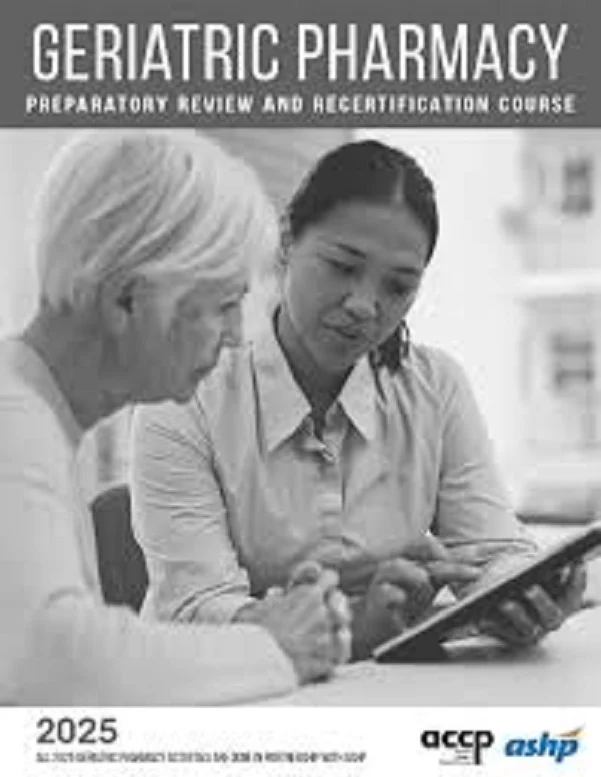
ACCP-ASHP Geriatric Pharmacy Preparatory Review and Recertification Course Online Course, CE 2025 (Videos + Audios + Slides)

Original price was: $715.00.$70.00Current price is: $70.00.
This Product is shared via google drive download link, So please share your correct Gmail id while placing the order .Please note that there are no CME points or certificate associated with this course Samples for Courses Can be found here : Free Samples Here!
ACCP-ASHP Geriatric Pharmacy Preparatory Review and Recertification Course Online Course, CE 2025
Geriatric Pharmacy • BCGP Board Review • Older Adult Pharmacotherapy • Medication Management • Long-Term Care • Skilled Nursing • Palliative Care • Antimicrobial Stewardship • Evidence-Based Medicine
The ACCP/ASHP Geriatric Pharmacy Preparatory Review and Recertification Course 2025 provides a comprehensive, case-based review of geriatric pharmacotherapy for pharmacists preparing for the Board of Pharmacy Specialties (BPS) Geriatric Pharmacy Specialty Certification Examination and for Board Certified Geriatric Pharmacists seeking structured recertification-focused education.
Developed by board-certified pharmacists and clinical experts, the course is structured around the domains, tasks, and knowledge statements represented in the BPS Geriatric Pharmacy content outline and emphasizes application of evidence-based pharmacotherapy to realistic older-adult patient scenarios.
The program examines medication management across multiple geriatric care environments, including inpatient care, family medicine, ambulatory geriatric clinics, skilled nursing facilities, long-term care, assisted living, and hospice/palliative care.
It also addresses major principles of aging, potentially inappropriate medications, geriatric syndromes, transitions of care, evidence-based medicine, research design, healthcare administration, infectious diseases, antimicrobial stewardship, disease prevention, medication safety, and comprehensive geriatric assessment.
Course Details
- Course: ACCP/ASHP Geriatric Pharmacy Preparatory Review and Recertification Course
- Provider: American College of Clinical Pharmacy (ACCP) / American Society of Health-System Pharmacists (ASHP)
- Year: 2025
- Release Date: September 17, 2025
- Format: Online Course
- Primary Focus: Geriatric Pharmacy Board Review and Recertification
- Board Focus: BPS Geriatric Pharmacy Specialty Certification / BCGP
- Official Curriculum: 4 Modules
- Learning Approach: Case-Based
- Language: English
- MedicalAmboss Package: Videos + Audios + Slides
Target Audience
The course is designed primarily for pharmacists preparing for certification or seeking a comprehensive review of contemporary geriatric pharmacotherapy.
It is particularly relevant to:
- Pharmacists preparing for the BPS Geriatric Pharmacy Specialty Certification Examination
- Board Certified Geriatric Pharmacists (BCGPs)
- Clinical Pharmacists
- Geriatric Pharmacists
- Ambulatory Care Pharmacists
- Long-Term Care Pharmacists
- Skilled Nursing Facility Pharmacists
- Hospital Pharmacists
- Consultant Pharmacists
- Primary Care Pharmacists
- Hospice and Palliative Care Pharmacists
- Pharmacists caring for medically complex older adults
- Pharmacy Residents
- Pharmacy Fellows
- Pharmacists seeking a refresher in geriatric disease states and therapeutics
Program Overview
Older adults frequently present with multiple chronic diseases, polypharmacy, altered pharmacokinetics and pharmacodynamics, functional limitations, cognitive concerns, medication adherence issues, and increased susceptibility to adverse drug events.
Effective geriatric pharmacy practice therefore requires much more than disease-specific drug knowledge.
The ACCP/ASHP Geriatric Pharmacy Preparatory Review and Recertification Course 2025 uses complex cases to integrate pharmacotherapy with geriatric assessment, medication appropriateness, patient safety, transitions of care, functional status, caregiver involvement, evidence appraisal, and interdisciplinary care.
The official curriculum consists of four major modules:
- Inpatient and Ambulatory Geriatric Care
- Skilled Nursing, Transitions of Care, and Evidence-Based Medicine
- Long-Term Care, Practice Administration, and Assisted Living
- Principles of Aging, Hospice/Palliative Care, Infectious Diseases, and Antimicrobial Stewardship
The case-based structure allows participants to apply clinical knowledge to realistic older-adult scenarios rather than reviewing pharmacology in isolation.
Official Course Modules
Module 1 – Inpatient to Family Medicine Clinic; Ambulatory Family Medicine Clinic; Ambulatory Geriatric Clinic
This module follows older adults across inpatient and ambulatory care environments and emphasizes clinical assessment, medication selection, monitoring, and continuity of care.
Complex Case: Inpatient to Family Medicine Clinic
Focuses on management of an older adult with multiple chronic and acute conditions.
Major clinical areas include:
- Atrial fibrillation
- Post-myocardial infarction care
- Heart failure
- Hypertension
- Hyperlipidemia
- Peripheral vascular disease
- Insomnia
- Drug-induced urinary retention
- Dry eye disorders
- Clostridioides difficile infection
The case also emphasizes identification of potentially inappropriate medications (PIMs) and drugs that may contribute to common geriatric syndromes such as falls and cognitive impairment.
Complex Case: Ambulatory – Family Medicine Clinic
Examines longitudinal medication management in an older adult followed in family medicine.
Major areas of emphasis include:
- Screening and geriatric assessment
- Chronic disease pharmacotherapy
- Caregiver involvement
- Medication adherence
- Interprofessional care planning
- Continuity of treatment
- Communication during transitions of care
- Financial and reimbursement considerations
- Medication affordability
- Evaluation of care plans as health and functional status change
The case reinforces the pharmacist’s role in coordinating care across multiple providers and healthcare settings.
Complex Case: Ambulatory – Geriatric Clinic
Focuses on comprehensive medication management in a specialized geriatric clinic.
Clinical conditions addressed include:
- Chronic obstructive pulmonary disease
- Osteoarthritis
- Depression
- Urinary tract infection
- Glaucoma
- Herpes zoster
Additional concepts include:
- Screening
- Immunization
- Disease prevention
- Medication reconciliation
- Prescription medications
- Over-the-counter medications
- Complementary and alternative therapies
- Comprehensive geriatric assessment
- Fall risk
- Elder abuse
- Physical and chemical restraints
- Environmental hazards
- Advance directives
- Living wills
- Power of attorney
- Substitute decision-makers
Module 2 – Inpatient-Surgery to Skilled Nursing Facility; Skilled Nursing Care; Statistics, Evidence-Based Medicine, and Research Design
This module concentrates on transitions from acute hospital care to post-acute and skilled nursing environments.
Complex Case: Inpatient-Surgery to Skilled Nursing Facility
Reviews medication and clinical issues encountered when an older adult transitions from inpatient surgical care to a skilled nursing facility.
Major topics include:
- Delirium
- Deep vein thrombosis prophylaxis
- Pneumonia
- Anxiety
- Acute pain management
- Fluid and electrolyte disorders
- Falls
The case highlights the importance of recognizing the continuum of geriatric care and maintaining medication continuity during transitions between healthcare settings.
Complex Case: Skilled Nursing Care
Focuses on medication management and patient-care challenges within skilled nursing environments.
Important areas include:
- Post-acute pharmacotherapy
- Medication reconciliation
- Polypharmacy
- Medication safety
- Chronic disease management
- Functional limitations
- Care coordination
- Interprofessional communication
- Transitions of care
- Patient monitoring
Statistics, Evidence-Based Medicine, and Research Design
Provides the knowledge required to critically interpret medical evidence and apply research findings to geriatric pharmacotherapy.
Topics include:
- Evidence-based medicine
- Clinical literature evaluation
- Research design
- Statistical interpretation
- Clinical significance
- Applying evidence to patient care
- Risk assessment
- Evaluation of treatment outcomes
This section is especially relevant to board examination preparation because clinical evidence and literature interpretation remain important elements of specialty pharmacy practice.
Module 3 – Long-Term Care; Geriatric Practice Administration; Assisted Living
Complex Case: Long-Term Care
Examines medication management and clinical decision-making for older adults residing in long-term care environments.
Areas of focus include:
- Polypharmacy
- Chronic disease management
- Medication appropriateness
- Deprescribing considerations
- Functional impairment
- Cognitive impairment
- Fall prevention
- Medication monitoring
- Caregiver communication
- Interprofessional care
- Long-term medication safety
Geriatric Practice Administration
Reviews administrative and professional issues relevant to geriatric pharmacy services.
Topics include:
- Geriatric pharmacy practice models
- Medication-use systems
- Quality improvement
- Patient safety
- Care coordination
- Regulatory considerations
- Interprofessional practice
- Documentation
- Medication management services
- Healthcare resource utilization
Complex Case: Assisted Living
Explores pharmacotherapy and medication-management issues encountered in assisted living settings.
The case emphasizes balancing independence with medication safety while considering:
- Functional ability
- Cognitive status
- Medication adherence
- Chronic disease management
- Caregiver involvement
- Medication administration
- Fall risk
- Transitions between levels of care
Module 4 – Principles of Aging; Hospice/Palliative Care; Infectious Disease Considerations and Antimicrobial Stewardship
Principles of Aging
Reviews physiologic and clinical changes associated with aging and their impact on pharmacotherapy.
Important concepts include:
- Age-related physiologic changes
- Pharmacokinetic changes
- Pharmacodynamic changes
- Frailty
- Functional status
- Cognitive impairment
- Polypharmacy
- Medication-related risk
- Geriatric syndromes
- Comprehensive geriatric assessment
Understanding these principles is fundamental to selecting, dosing, and monitoring medication therapy in older adults.
Complex Case: Hospice/Palliative Care
Examines medication management for older adults receiving hospice or palliative care.
Major areas include:
- Symptom management
- Pain management
- Goals of care
- Medication deprescribing
- End-of-life pharmacotherapy
- Comfort-focused treatment
- Patient preferences
- Family and caregiver communication
- Advance directives
- Interprofessional palliative care
Infectious Disease Considerations and Antimicrobial Stewardship Principles in Geriatric Patients and Care Settings
Reviews infectious disease management specifically within older-adult populations and geriatric care environments.
Topics include:
- Infectious disease assessment in older adults
- Antimicrobial selection
- Antimicrobial dosing
- Renal function considerations
- Adverse drug effects
- Drug interactions
- Antimicrobial resistance
- Antimicrobial stewardship
- Long-term care infections
- Prevention strategies
- Appropriate antibiotic use
Case-Based Learning Approach
A major feature of the course is its case-based educational structure.
Rather than teaching geriatric pharmacotherapy entirely through isolated disease summaries, the course places therapeutic decisions into realistic clinical settings.
Participants must consider:
- Multiple simultaneous diseases
- Polypharmacy
- Drug-disease interactions
- Drug-drug interactions
- Potentially inappropriate medications
- Organ function
- Cognitive status
- Functional status
- Patient preferences
- Caregiver needs
- Financial considerations
- Transitions of care
- Goals of care
- Monitoring requirements
This approach helps connect board examination knowledge with real-world geriatric pharmacy practice.
Major Topics Covered
- Geriatric Pharmacy
- BCGP Board Review
- Geriatric Pharmacotherapy
- Principles of Aging
- Older Adult Medication Management
- Polypharmacy
- Potentially Inappropriate Medications
- Medication Safety
- Comprehensive Geriatric Assessment
- Frailty
- Falls
- Cognitive Impairment
- Delirium
- Deprescribing
- Transitions of Care
- Ambulatory Geriatric Care
- Family Medicine
- Skilled Nursing
- Skilled Nursing Facilities
- Long-Term Care
- Assisted Living
- Hospice
- Palliative Care
- Geriatric Practice Administration
- Evidence-Based Medicine
- Biostatistics
- Research Design
- Antimicrobial Stewardship
- Geriatric Infectious Diseases
- Cardiovascular Pharmacotherapy
- Atrial Fibrillation
- Heart Failure
- Hypertension
- Hyperlipidemia
- Peripheral Vascular Disease
- Post-Myocardial Infarction Care
- COPD
- Osteoarthritis
- Depression
- Urinary Tract Infection
- Herpes Zoster
- Glaucoma
- C. difficile Infection
- Pneumonia
- Pain Management
- Deep Vein Thrombosis Prophylaxis
- Fluid and Electrolyte Disorders
- Immunization
- Health Promotion
- Disease Prevention
- Medication Adherence
- Caregiver Support
- Advance Directives
- Interprofessional Geriatric Care
Board Certification Preparation
The course is designed to support pharmacists preparing for the BPS Geriatric Pharmacy Specialty Certification Examination.
The educational structure reflects the knowledge domains expected in geriatric pharmacy practice and provides:
- Comprehensive geriatric pharmacotherapy review
- Case-based clinical application
- Practice questions
- Correct-answer review
- Clinical references
- Evidence-based medicine review
- Links between clinical cases and relevant specialty knowledge areas
The course can also serve as a broad refresher for pharmacists who routinely care for older adults.
Official Continuing Education and Recertification
The official 2025 ACCP/ASHP course provides:
- 22 hours of Continuing Pharmacy Education (CPE)
- Up to 22 hours of BCGP recertification credit with the applicable official recertification package
The official course was released on September 17, 2025.
- BCGP Recertification Deadline: September 15, 2026
- ACPE Deadline: September 15, 2028
ACCP and ASHP are accredited providers of continuing pharmacy education, and the organizations are approved by BPS as providers of BCGP recertification activities.
Important: These credits and certification benefits apply to eligible participation through the official ACCP/ASHP course and its assessment process. Access to educational files alone should not be interpreted as including official CPE or BCGP recertification credit.
Course Media
The MedicalAmboss package is supplied in multiple study formats:
- Video lectures
- Audio lectures
- Presentation slides
The multimodal format allows learners to:
- Watch slide-based presentations
- Listen to lectures separately
- Review presentation material
- Revisit clinical cases at their own pace
- Combine audiovisual study with board-review preparation
Why This Course Is Relevant
The ACCP/ASHP Geriatric Pharmacy Preparatory Review and Recertification Course 2025 is particularly relevant because geriatric pharmacotherapy requires clinicians to integrate disease management with the unique physiologic, functional, cognitive, and social characteristics of older adults.
The course is valuable for pharmacists seeking education in:
- BCGP board examination preparation
- Comprehensive geriatric pharmacotherapy
- Polypharmacy management
- Potentially inappropriate medications
- Medication optimization
- Deprescribing
- Falls and geriatric syndromes
- Cardiovascular disease management in older adults
- Ambulatory geriatric care
- Skilled nursing
- Long-term care
- Assisted living
- Hospice and palliative medicine
- Infectious disease management
- Antimicrobial stewardship
- Evidence-based medicine
- Clinical research interpretation
- Care transitions
- Medication safety
- Interprofessional geriatric care
Its care-setting-based organization helps learners understand how medication decisions change as older adults move between hospital, clinic, skilled nursing, long-term care, assisted living, and end-of-life care.
Short Description
ACCP/ASHP Geriatric Pharmacy Preparatory Review and Recertification Course 2025 provides a comprehensive case-based review of geriatric pharmacotherapy for BCGP board preparation and professional review, covering ambulatory care, skilled nursing, long-term care, assisted living, principles of aging, hospice and palliative care, antimicrobial stewardship, evidence-based medicine, polypharmacy, medication safety, and complex disease management in older adults.
The MedicalAmboss package includes Videos + Audios + Slides for flexible self-paced review.
+ Topics:
- 01 Geriatric Pharmacy Board Review – BCGP Certification Preparation, Case-Based Pharmacotherapy, and Clinical Knowledge Assessment
- 02 Inpatient to Family Medicine Transition – Medication Management, Monitoring, and Continuity of Care in Complex Older Adults
- 03 Ambulatory Family Medicine – Chronic Disease Pharmacotherapy, Caregiver Collaboration, Adherence, and Geriatric Care Planning
- 04 Ambulatory Geriatric Clinic – Comprehensive Assessment, Polypharmacy Review, Prevention, Functional Safety, and Medication Optimization
- 05 Cardiovascular Pharmacotherapy in Older Adults – Atrial Fibrillation, Heart Failure, Hypertension, Hyperlipidemia, Post-MI Care, and Vascular Disease
- 06 Potentially Inappropriate Medications – Identifying High-Risk Drugs, Geriatric Syndromes, Falls, and Cognitive Adverse Effects
- 07 Comprehensive Geriatric Assessment – Medication Review, Functional Status, Safety Risk, Caregiver Needs, and Interprofessional Care
- 08 Inpatient Surgery to Skilled Nursing – Delirium, DVT Prevention, Pneumonia, Acute Pain, Fluid Disorders, Falls, and Transitional Care
- 09 Skilled Nursing Pharmacotherapy – Medication Reconciliation, Polypharmacy, Chronic Disease Management, and Post-Acute Monitoring
- 10 Evidence-Based Medicine and Research Design – Statistics, Literature Evaluation, Research Methods, and Application of Clinical Evidence
- 11 Long-Term Care Pharmacy – Medication Appropriateness, Deprescribing, Monitoring, Functional Decline, and Chronic Disease Management
- 12 Geriatric Pharmacy Practice Administration – Quality Improvement, Patient Safety, Medication-Use Systems, and Clinical Pharmacy Services
- 13 Assisted Living Pharmacy Care – Medication Safety, Adherence, Chronic Disease Management, Functional Independence, and Caregiver Support
- 14 Principles of Aging – Pharmacokinetic and Pharmacodynamic Changes, Frailty, Functional Status, Cognition, and Medication Risk
- 15 Hospice and Palliative Care – Symptom Control, Pain Management, Deprescribing, Goals of Care, and End-of-Life Pharmacotherapy
- 16 Geriatric Infectious Diseases – Infection Recognition, Antimicrobial Selection, Dosing, Safety, and Older-Adult Treatment Considerations
- 17 Antimicrobial Stewardship in Older Adults – Appropriate Antibiotic Use, Resistance Prevention, Drug Safety, and Long-Term Care Principles
- 18 Polypharmacy and Medication Optimization – Reviewing Complex Regimens, Drug Interactions, Adverse Effects, and Deprescribing Opportunities
- 19 Falls and Geriatric Syndromes – Medication-Related Fall Risk, Cognitive Impairment, Delirium, and Functional Safety
- 20 Health Promotion and Disease Prevention – Immunization, Screening, Preventive Care, and Evidence-Based Strategies for Older Adults
- 21 Medication Adherence and Caregiver Support – Practical Strategies for Older Adults, Families, and Interprofessional Care Teams
- 22 Advance Care Planning – Advance Directives, Living Wills, Power of Attorney, Goals of Care, and Medication Decision-Making
- 23 Transitions of Care – Medication Reconciliation, Communication, Continuity, and Safety Across Geriatric Care Settings
- 24 Complex Geriatric Pharmacotherapy – Integrating Multimorbidity, Organ Function, Patient Goals, and Medication Monitoring
- 25 BCGP Recertification Review – Case-Based Geriatric Pharmacy Knowledge, Practice Questions, and Specialty Examination Preparation
Related products
Anesthesiology & pain medicine
Critical Care Symposium: Mastering ED Mechanical Ventilation

Medical Accounts
Critical Care - Emergency medicine
2022 UPDATES IN THERAPEUTICS: CRITICAL CARE PHARMACY PREPARATORY REVIEW AND RECERTIFICATION COURSE
Cardiology

Critical Care - Emergency medicine

Internal Medicine
Internal Medicine