
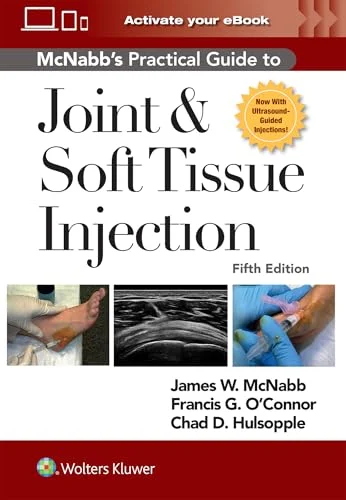
McNabb’s Practical Guide to Joint and Soft Tissue Injection, 5th edition (Videos Only)
Original price was: $149.99.$60.00Current price is: $60.00.
This Product is shared via google drive download link, So please share your correct Gmail id while placing the order .Please note that there are no CME points or certificate associated with this course Samples for Courses Can be found here : Free Samples Here!
McNabb’s Practical Guide to Joint and Soft Tissue Injection, 5th Edition (Videos Only)
McNabb Joint and Soft Tissue Injection Videos | Ultrasound-Guided Injections | Landmark-Guided Injections | Musculoskeletal Injection Techniques | Nerve Blocks | Sports Medicine Procedures
Information
McNabb’s Practical Guide to Joint and Soft Tissue Injection, 5th Edition (Videos Only) provides practical visual instruction for performing a wide range of joint, soft tissue, musculoskeletal, ultrasound-guided, and landmark-guided injection procedures.
The fifth edition of this established procedural reference is authored by James W. McNabb and Francis G. O’Connor, with Chad D. Hulsopple contributing to the procedural content.
Designed for clinicians who perform office-based musculoskeletal procedures, the material combines anatomical orientation with step-by-step technique and emphasizes both traditional landmark-based injections and modern ultrasound-guided approaches.
A major feature of the fifth edition is its expanded multimedia content. The procedural videos demonstrate techniques on real patients and are filmed from the perspective of the operator, helping viewers understand positioning, needle orientation, anatomical landmarks, ultrasound visualization, and procedural workflow.
Product Details
- Title: McNabb’s Practical Guide to Joint and Soft Tissue Injection
- Edition: 5th Edition
- Format Available Here: Videos Only
- Authors: James W. McNabb, Francis G. O’Connor
- Contributing Author: Chad D. Hulsopple
- Publisher: Lippincott Williams & Wilkins / Wolters Kluwer
- Publication Year: 2026
- Specialty: Musculoskeletal Medicine / Sports Medicine / Primary Care
- Focus: Joint and Soft Tissue Injection Procedures
- Language: English
The official multimedia eBook edition was published in July 2026, while the print + multimedia edition was published in August 2026.
Target Audience
This procedural video collection is particularly relevant for:
- Sports Medicine Physicians
- Family Medicine Physicians
- Primary Care Physicians
- Physical Medicine and Rehabilitation Physicians
- Orthopaedic Clinicians
- Rheumatologists
- Emergency Medicine Physicians
- Pain Medicine Physicians
- Physician Assistants
- Nurse Practitioners
- Residents
- Fellows
- Clinicians performing musculoskeletal injections
- Healthcare professionals learning ultrasound-guided procedures
Program Overview
McNabb’s Practical Guide to Joint and Soft Tissue Injection is designed to help clinicians perform common injection procedures safely and effectively using equipment available in a variety of clinical settings.
The fifth edition places landmark-based and ultrasound-guided techniques side by side, enabling clinicians to compare traditional approaches with image-guided methods.
The underlying procedural framework includes:
- Relevant anatomy
- Surface landmarks
- Ultrasound anatomy
- Indications
- Contraindications
- Equipment
- Patient preparation
- Injection technique
- Needle positioning
- Special medical considerations
- Potential complications
- When referral may be appropriate
- Aftercare
- Documentation
The publisher states that current evidence is incorporated throughout the procedural content.
Key Learning Areas
The video material supports practical review of:
- Joint injections
- Soft tissue injections
- Landmark-guided injection techniques
- Ultrasound-guided injection techniques
- Patient positioning
- Anatomical landmark identification
- Ultrasound probe positioning
- Needle visualization
- Procedural orientation
- Musculoskeletal anatomy
- Common nerve blocks
- Headache-related injection procedures
- Procedural safety
- Complication avoidance
- Appropriate patient selection
Major Topics Covered
Landmark-Based Injection Techniques
Traditional landmark-guided injections rely on detailed understanding of surface and deep anatomy.
The videos can reinforce:
- Patient positioning
- Identification of palpable landmarks
- Selection of entry points
- Needle direction
- Depth estimation
- Target localization
- Safe technique
Landmark-based procedures remain important in clinical environments where ultrasound is unavailable or unnecessary.
Ultrasound-Guided Injection Procedures
A major enhancement in the fifth edition is expanded coverage of ultrasound-guided injection techniques.
Ultrasound guidance can help clinicians visualize:
- Joints
- Tendons
- Bursa
- Muscles
- Nerves
- Vessels
- Soft tissue abnormalities
- Needle position
The publisher specifically notes that the fifth edition contains dozens of new videos and images demonstrating ultrasound-guided techniques.
Joint Injections
The material addresses injection techniques involving commonly treated joints.
Important procedural principles include:
- Joint localization
- Anatomical landmarks
- Patient positioning
- Needle trajectory
- Sterile preparation
- Injection technique
- Recognition of complications
Soft Tissue Injections
Soft tissue procedures are an important component of musculoskeletal practice.
Relevant structures may include:
- Bursa
- Tendons
- Tendon sheaths
- Ligament-related structures
- Periarticular soft tissues
- Trigger or focal painful regions
Extra-Axial Musculoskeletal Disorders
The fifth edition covers a broad range of extra-axial musculoskeletal disorders, providing procedural guidance for conditions affecting the extremities and related soft tissues.
Ultrasound Anatomy and Needle Guidance
Effective ultrasound-guided procedures require understanding of both anatomy and imaging.
Important skills include:
- Probe orientation
- Identification of anatomical structures
- Recognition of nerves and vessels
- Needle visualization
- In-plane techniques
- Out-of-plane orientation
- Target confirmation
Corticosteroid Injections
The fifth edition includes updated discussion of corticosteroid use in procedural medicine.
Relevant considerations may include:
- Appropriate indications
- Patient selection
- Expected benefit
- Risks
- Frequency of use
- Tissue-specific precautions
The publisher identifies corticosteroid therapy as one of the substantially updated areas in the fifth edition.
Viscosupplementation
The updated edition includes viscosupplementation among its contemporary injection therapies.
This topic is particularly relevant to clinicians managing selected degenerative joint conditions.
Orthobiologics
Orthobiologics are included among the updated fifth-edition topics.
This emerging area of musculoskeletal medicine involves biologically based treatments intended to influence tissue healing or joint symptoms.
The inclusion of orthobiologics reflects the increasing importance of regenerative and biologic strategies in contemporary musculoskeletal practice.
Advanced and Adjunctive Injection Techniques
The fifth edition also expands its coverage of advanced and adjunctive procedural approaches.
These techniques complement standard injection practice and broaden the clinician’s procedural toolkit.
Common Nerve Blocks
The resource includes instruction relating to common nerve blocks.
Nerve block procedures require detailed knowledge of:
- Nerve anatomy
- Adjacent vascular structures
- Needle trajectory
- Local anesthetic delivery
- Procedural safety
Headache Injection Procedures
Injection techniques used in the treatment of selected headache conditions are included within the scope of the fifth edition.
Selected Skin Disorders
The book also includes injection procedures relevant to selected dermatologic conditions, extending the procedural scope beyond purely musculoskeletal disease.
Procedural Anatomy
Understanding anatomy is central to safe injection practice.
The resource emphasizes:
- Surface landmarks
- Bone anatomy
- Joint anatomy
- Tendons
- Muscles
- Bursa
- Nerves
- Blood vessels
- Ultrasound appearance of relevant structures
Indications and Contraindications
The procedural framework addresses both when an injection may be appropriate and when it should be avoided.
Clinical decision-making may involve:
- Diagnosis
- Expected benefit
- Infection risk
- Bleeding risk
- Medical comorbidities
- Previous treatment
- Local anatomy
- Patient-specific factors
Special Medical Conditions
Procedures may require modification or additional caution in patients with specific medical conditions.
The text incorporates these considerations into its consistent procedural format.
Equipment
Injection procedures require appropriate preparation and equipment selection.
Depending on the procedure, this may include:
- Needles
- Syringes
- Local anesthetics
- Therapeutic agents
- Sterile preparation materials
- Ultrasound equipment
- Probe covers
- Appropriate procedural accessories
Procedural Complications
The guide discusses potential complications and strategies to minimize risk.
Possible procedural issues may include:
- Bleeding
- Infection
- Pain
- Neurovascular injury
- Local tissue injury
- Medication-related complications
- Inaccurate needle placement
A clear understanding of anatomy and technique helps reduce preventable complications.
When to Refer
An important element of procedural medicine is recognizing when a condition exceeds the scope of office-based injection management.
The reference discusses referral considerations as part of its standardized approach to each procedure.
Evidence-Based Injection Practice
The fifth edition reviews current evidence associated with each procedure.
This helps clinicians consider:
- Expected effectiveness
- Appropriate indications
- Treatment alternatives
- Risks
- Patient selection
- Current practice recommendations
Operator-Perspective Procedural Videos
One of the strongest educational features is the use of videos filmed from the operator’s perspective.
This viewpoint can make it easier to understand:
- Patient positioning
- Hand placement
- Probe positioning
- Needle orientation
- Entry point
- Anatomical landmarks
- Sequence of the procedure
The publisher confirms that procedures are demonstrated on real patients and filmed from the operator’s viewpoint.
Landmark-Based vs Ultrasound-Guided Injection
The fifth edition presents these approaches in parallel.
Landmark-Based Guidance
Uses:
- Surface anatomy
- Palpation
- Bony landmarks
- Clinically defined entry points
Ultrasound Guidance
Adds visualization of:
- Target structures
- Soft tissues
- Nerves
- Vessels
- Needle trajectory
Understanding both methods allows clinicians to select an appropriate technique according to the procedure, available equipment, clinical setting, and patient factors.
Authors
James W. McNabb
James W. McNabb is the principal author associated with this long-standing practical reference on joint and soft tissue injection techniques.
Francis G. O’Connor
Francis G. O’Connor is co-author of the fifth edition and contributes clinical expertise relevant to sports and musculoskeletal medicine.
Wolters Kluwer officially lists James W. McNabb and Francis G. O’Connor as the authors of the fifth edition.
Chad D. Hulsopple
Chad D. Hulsopple contributes to the fifth-edition procedural content and is identified by the publisher alongside McNabb and O’Connor in the description of the procedures and techniques.
Why This Video Collection Is Relevant
Injection procedures are inherently visual and technical.
Text can describe where a needle should enter, but procedural video can demonstrate:
- How the patient is positioned
- How landmarks are identified
- How the ultrasound transducer is oriented
- How the needle is introduced
- How the operator adjusts trajectory
- How anatomical structures appear during the procedure
- How the complete workflow proceeds
This is particularly useful for clinicians transitioning from landmark-based injections to ultrasound-guided practice.
Format Included
Videos Only
This MedicalAmboss product contains the video component only associated with McNabb’s Practical Guide to Joint and Soft Tissue Injection, 5th Edition.
The physical textbook, eBook, consent forms, printable aftercare handouts, documentation resources, and other publisher materials are not included unless specifically stated separately.
Short Description
McNabb’s Practical Guide to Joint and Soft Tissue Injection, 5th Edition (Videos Only) provides procedural videos demonstrating landmark-based and ultrasound-guided joint and soft tissue injections, musculoskeletal procedures, nerve blocks, headache injections, and contemporary injection techniques including corticosteroids, viscosupplementation, and orthobiologics.
Related products

Critical Care - Emergency medicine
Critical Care - Emergency medicine
2022 UPDATES IN THERAPEUTICS: CRITICAL CARE PHARMACY PREPARATORY REVIEW AND RECERTIFICATION COURSE
Critical Care - Emergency medicine
40th ISICEM International Symposium on Intensive Care & Emergency Medicine 2021

Internal Medicine

Critical Care - Emergency medicine


Medical Accounts

Critical Care - Emergency medicine