
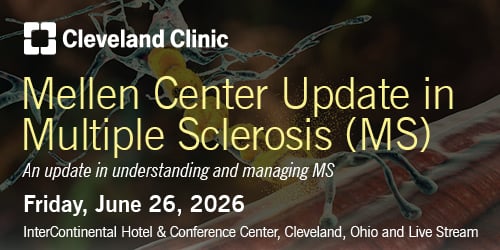
Cleveland Clinic Mellen Center Update in Multiple Sclerosis 2026
$15.00
This Product is shared via google drive download link, So please share your correct Gmail id while placing the order .Please note that there are no CME points or certificate associated with this course Samples for Courses Can be found here : Free Samples Here!
Cleveland Clinic Mellen Center Update in Multiple Sclerosis 2026
Cleveland Clinic Multiple Sclerosis 2026 | Mellen Center MS Update | BTK Inhibitors | MS Disease-Modifying Therapy | Neuroimmunology | NMOSD | Autoimmune Encephalitis | MS Rehabilitation | Artificial Intelligence
Information
Cleveland Clinic Mellen Center Update in Multiple Sclerosis 2026 is the 18th Annual Mellen Center MS Symposium, providing a comprehensive and forward-looking review of major advances in multiple sclerosis, neuroimmunology, disease-modifying therapy, rehabilitation, and interdisciplinary patient care.
Presented by the Cleveland Clinic Mellen Center for Multiple Sclerosis, the symposium brings together leading clinicians and researchers to examine evolving diagnostic and therapeutic strategies for MS and related neuroimmunologic disorders.
The 2026 program places particular emphasis on Bruton’s tyrosine kinase (BTK) inhibitors, mechanisms of MS progression, rehabilitation, hormonal influences on MS, autoimmune encephalitis, neuromyelitis optica spectrum disorder (NMOSD), vaccination, infection risk associated with disease-modifying therapies, artificial intelligence in healthcare, psychological care, fatigue, heat intolerance, spasticity, and mobility.
The educational format combines expert lectures with focused MS Clinical/Research and MS Rehabilitation breakout tracks, allowing participants to explore both disease-modifying treatment and practical approaches to long-term function and quality of life.
Course Details
- Course: Mellen Center Update in Multiple Sclerosis (MS)
- Edition: 18th Annual Symposium
- Provider: Cleveland Clinic
- Center: Mellen Center for Multiple Sclerosis
- Institution: Cleveland Clinic Neurological Institute
- Date: June 26, 2026
- Location: InterContinental Hotel & Conference Center, Cleveland, Ohio
- Original Format: In-Person and Live Stream
- Specialty: Multiple Sclerosis / Neuroimmunology
- CME: Up to 6 AMA PRA Category 1 Credits™
- Nursing Credit: Up to 6 ANCC Contact Hours
- Language: English
The original event was held at the InterContinental Hotel & Conference Center in Cleveland, Ohio, with live-stream access available.
Target Audience
This update is intended for healthcare professionals involved in the diagnosis, treatment, rehabilitation, and long-term care of patients with multiple sclerosis and related neurological disorders.
The program is relevant for:
- Neurologists
- Neuroimmunologists
- Multiple Sclerosis Specialists
- Physical Medicine and Rehabilitation Specialists
- Infectious Disease Specialists
- Geriatricians
- Endocrinologists
- Psychiatrists
- Rheumatologists
- Primary Care Physicians
- Physician Assistants
- Nurse Practitioners
- Registered Nurses
- Physical Therapists
- Occupational Therapists
- Speech-Language Pathologists
- Psychologists
- Rehabilitation Professionals
- Residents and Fellows
- Allied Health Professionals involved in MS care
It is particularly relevant for Neurologists, Neuroimmunologists, Physical Medicine and Rehabilitation Specialists (Physiatrists), Infectious Disease Specialists, Geriatricians, Endocrinologists, Psychiatrists, and Rheumatologists.
Program Overview
The management of multiple sclerosis continues to evolve rapidly as advances in immunology, rehabilitation, therapeutics, and interdisciplinary care change how clinicians approach both inflammatory disease activity and progressive disability.
The Cleveland Clinic Mellen Center Update in MS 2026 examines both established and emerging approaches to:
- Disease-modifying therapy
- BTK inhibition
- Infection risk
- MS progression
- Rehabilitation
- Neuroimmunologic differential diagnosis
- NMOSD
- Autoimmune encephalitis
- Vaccination
- Psychological care
- Fatigue
- Heat intolerance
- Spasticity
- Mobility and wheelchair selection
- Artificial intelligence in healthcare
The symposium emphasizes practical clinical application and interdisciplinary care, with presentations designed to translate recent evidence into real-world management strategies.
Learning Objectives
At the completion of this activity, the participant will be able to:
- Describe updates in the use of multiple sclerosis disease-modifying therapies such as BTK inhibitors and how to manage infection risks.
- Summarize recent updates in the treatment of Neuromyelitis Optica Spectrum Disorder and autoimmune encephalitis.
- Describe the latest approaches and models of rehabilitation for MS patients.
- Describe the mechanisms that contribute to MS disability progression and the influence of hormones on the disease.
- Discuss interdisciplinary strategies for managing fatigue, heat intolerance, and spasticity in MS patients.
- Describe the transformative potential of artificial intelligence in medicine, highlighting its impact on diagnosis, treatment, and patient outcomes.
- Outline the considerations in topics such as wheelchair use, targeted psychological care and vaccinations for patients with MS.
Official Program Topics
Keynote: The Role of BTK Inhibitors in Multiple Sclerosis
Jiwon Oh, MD, PhD
The keynote presentation examines the evolving role of Bruton’s tyrosine kinase inhibitors in multiple sclerosis.
BTK inhibition represents an important area of investigation because of its potential influence on immune mechanisms involved in MS.
The session reviews:
- Scientific rationale for BTK inhibition
- Emerging clinical evidence
- Potential therapeutic implications
- Future positioning of BTK inhibitors within MS management
The official agenda lists this keynote at the opening of the scientific program.
New Developments in Multiple Sclerosis Rehabilitation
Francois Bethoux, MD
This session reviews evolving approaches to MS rehabilitation and functional care, including strategies aimed at improving mobility, independence, endurance, participation, and quality of life.
Practical Approach to Autoimmune Encephalitis
Amy Kunchok, MD and Saira Afzal, MD
This session addresses practical clinical approaches to autoimmune encephalitis, including recognition, differential diagnosis, assessment, and treatment considerations.
Mechanisms of MS Progression
Devon Conway, MD, MS and Amjad Samara, MD
This presentation reviews mechanisms contributing to disability progression in MS and their implications for clinical management and future therapeutic strategies.
Hormonal Aspects of Multiple Sclerosis
Alise Carlson, MD, MSc and Katherine Havard Coiro, MD
This session explores hormonal influences on MS and how endocrine and reproductive factors may interact with disease activity and long-term care.
Breakout Session A: MS Clinical / Research
A Review of Treatment Options for Neuromyelitis Optica Spectrum Disorder
Justin Abbatemarco, MD and Kaitlyn Palmer, MD
This session reviews current treatment strategies for Neuromyelitis Optica Spectrum Disorder (NMOSD), a neuroimmunologic disorder requiring different therapeutic approaches from conventional MS.
Special Populations in Multiple Sclerosis: A Psychological Perspective
Brianne Markley, PhD, Grace Tworek, PsyD and Amy Sullivan, PsyD, ABPP
This presentation examines psychological and behavioral health considerations in special populations living with MS.
Vaccination in Multiple Sclerosis
Brent Sokola, PharmD, MS, BCPS
This session reviews vaccination considerations for patients receiving MS disease-modifying therapies.
An Update on AI in Healthcare and MS
Moein Amin, MD, MS
This presentation examines the expanding role of artificial intelligence in healthcare and its potential applications in MS care.
Bugs and Drugs – Infection Risk with Disease-Modifying Therapy
Robert Fox, MD
This session focuses on infection risk associated with disease-modifying treatment and practical strategies for balancing effective disease control with treatment safety.
Case Studies – Managing Disease-Modifying Therapy in the Setting of Infections
Jennifer Basalla, MSN, AGNP, APRN-CNP; Shauna Gales, PA-C; Jennifer Sedlak, APRN, CNP; Hilary Young, PA-C
This case-based session explores practical decision-making when patients receiving disease-modifying therapies develop infections.
Breakout Session B: MS Rehabilitation
Wheels for Warriors: Wheelchair Considerations for the MS Patient
Alyssa DeCarlo, MS, OTR/L, MSCS, CSRS, LSVT
This session examines practical considerations in wheelchair selection and mobility planning for individuals with MS.
Cognitive Pacing and Fatigue
Danielle Brown, MA, CCC-SLP
This presentation focuses on strategies for managing cognitive fatigue and improving daily functional performance.
The Dentist Model: How to Assess and Develop Plans of Care to Meet the Needs of Neuro-Degenerative Diseases
Kaitlin Sparks, PT, DPT, NCS and Kellie Keim, PT, DPT
This session reviews a structured approach to ongoing rehabilitation assessment and care planning in neurodegenerative disease.
Fatigue, Heat Intolerance, and Spasticity Management in MS from the Interdisciplinary Approach
Alyssa DeCarlo, Danielle Brown, Kellie Keim, and Kaitlin Sparks
This multidisciplinary session addresses three common and clinically important challenges in MS:
- Fatigue
- Heat intolerance
- Spasticity
The focus is on coordinated rehabilitation and symptom-management strategies.
Major Topics Covered
Multiple Sclerosis Disease-Modifying Therapy
The program reviews contemporary disease-modifying therapy with attention to treatment selection, safety, infection risk, and emerging therapeutic strategies.
BTK Inhibitors
BTK inhibitors represent an important emerging class in MS therapeutics and form the centerpiece of the keynote presentation.
MS Progression
The course explores mechanisms that contribute to progressive disability and the clinical challenges associated with long-term disease progression.
Neuroimmunology
The program extends beyond traditional MS care to related immune-mediated neurological disorders, including NMOSD and autoimmune encephalitis.
Neuromyelitis Optica Spectrum Disorder
A dedicated session reviews contemporary treatment approaches for NMOSD.
Autoimmune Encephalitis
The symposium addresses recognition and practical clinical management of autoimmune encephalitis.
Hormones and Multiple Sclerosis
Hormonal influences on MS are reviewed within the context of individualized and lifespan-based care.
Infection Risk in MS
Immunomodulatory and immunosuppressive therapy requires careful assessment of infection risk, monitoring, and preventive strategies.
Vaccination in MS
Vaccination planning is addressed in relation to disease-modifying therapies and altered immune function.
Multiple Sclerosis Rehabilitation
Rehabilitation topics include:
- Mobility
- Fatigue
- Cognitive function
- Wheelchair use
- Spasticity
- Functional independence
- Long-term rehabilitation planning
Psychological Care
Psychological health is addressed as an integral component of comprehensive MS care.
Artificial Intelligence in Multiple Sclerosis
The symposium explores the potential impact of AI on healthcare, clinical decision-making, diagnosis, and patient outcomes.
Interdisciplinary Multiple Sclerosis Care
A central strength of the Mellen Center approach is integration across specialties.
Neurology and Neuroimmunology
Focus on diagnosis, disease-modifying treatment, monitoring, and neuroimmunologic disease.
Physical Medicine and Rehabilitation
Address disability, mobility, function, spasticity, and fatigue.
Infectious Disease and Pharmacy
Support safe immunotherapy use, vaccination planning, and infection-risk management.
Psychology and Psychiatry
Address behavioral health, coping, cognition, and quality of life.
Physical Therapy
Focuses on mobility, balance, endurance, and functional movement.
Occupational Therapy
Supports activities of daily living, energy conservation, adaptive equipment, and wheelchair selection.
Speech-Language Pathology
Addresses cognitive pacing and related functional challenges.
Keynote Faculty
Jiwon Oh, MD, PhD
Medical Director, Barlo Multiple Sclerosis Program
St. Michael’s Hospital / University of Toronto
Dr. Jiwon Oh delivered the keynote presentation The Role of BTK Inhibitors in Multiple Sclerosis. Cleveland Clinic lists her as the official guest faculty for the 2026 symposium.
Symposium Director
Devon Conway, MD, MS
Mellen Center for Multiple Sclerosis – Cleveland Clinic
Dr. Devon Conway served as Symposium Director and participated in the session on Mechanisms of MS Progression.
Selected Faculty
The official faculty included:
- Justin Abbatemarco, MD
- Saira Afzal, MD
- Moein Amin, MD, MS
- Jennifer Basalla, MSN, AGNP, APRN-CNP
- Francois Bethoux, MD
- Danielle Brown, MA, CCC-SLP
- Alise Carlson, MD, MSc
- Alyssa DeCarlo, MS, OTR/L, MSCS, CSRS, LSVT
- Robert Fox, MD
- Shauna Gales, PA-C
- Katherine Havard Coiro, MD
- Kellie Keim, PT, DPT
- Amy Kunchok, MD
- Brianne Markley, PhD
- Kaitlyn Palmer, MD
- Amjad Samara, MD
- Jennifer Sedlak, APRN, CNP
- Brent Sokola, PharmD, MS, BCPS
- Kaitlin Sparks, PT, DPT, NCS
- Amy Sullivan, PsyD, ABPP
- Grace Tworek, PsyD
- Hilary Young, PA-C
Cleveland Clinic confirms these individuals on the official faculty page.
Why This Course Is Relevant
Multiple sclerosis care is becoming increasingly complex as new therapies emerge and clinicians recognize the importance of treating not only inflammatory disease activity but also disability progression, infection risk, cognition, mood, fatigue, mobility, and long-term function.
The Cleveland Clinic Mellen Center Update in Multiple Sclerosis 2026 integrates:
- Emerging MS therapeutics
- BTK inhibitors
- Disease-modifying therapy
- Infection prevention
- Neuroimmunology
- NMOSD
- Autoimmune encephalitis
- MS progression
- Hormonal influences
- Rehabilitation
- Psychological care
- Artificial intelligence
- Functional symptom management
This multidisciplinary structure helps connect advances in MS research with practical everyday clinical decision-making.
CME Information
Cleveland Clinic Center for Continuing Education designates the original live activity for a maximum of:
- 6 AMA PRA Category 1 Credits™
- 6 ANCC Contact Hours
Credit applies only to eligible participation in the original accredited Cleveland Clinic activity and should not be assumed to accompany independently distributed educational recordings or files.
Short Description
Cleveland Clinic Mellen Center Update in Multiple Sclerosis 2026 provides a comprehensive multidisciplinary review of MS and related neuroimmunologic disorders, including BTK inhibitors, disease-modifying therapy, infection risk, NMOSD, autoimmune encephalitis, MS progression, hormonal influences, rehabilitation, vaccination, fatigue, spasticity, psychological care, and artificial intelligence.
.
Topics
-
Choosing First-Line Therapy in AQP4+ NMOSD – Practical Insights on New FDA-Approved Monoclonal Antibodies
-
Men with MS – Strategies for Engagement, Coping, and Quality-of-Life Support
-
Older Adult MS – Interdisciplinary Strategies for Psychosocial Care, DMT Transition, and Goal-Oriented Rehabilitation
-
Multiple Sclerosis and Social Determinants – Practical Tactics to Minimize Loss to Follow Up and Enhance Equity
-
Multiple Sclerosis Vaccination Strategies – Timing, Prioritization, and Live Virus Pitfalls
-
Integrating AI-Driven Insights in Multiple Sclerosis
-
Multiple Sclerosis DMTs – Infection Risk Profiles and Practical Prevention Strategies
-
Multiple Sclerosis Case Studies – Managing Infection Risk with DMTs
-
Multiple Sclerosis Progression – Early Recognition and Monitoring Strategies
-
Multiple Sclerosis Hormone Modulation – Clinical Insights From Puberty to Menopause
-
BTK Inhibitors in Multiple Sclerosis – Integrating Phase 3 Trial Evidence to Address Progressive Disease
-
Multiple Sclerosis Rehabilitation Strategies – Key Takeaways on Tele-Exercise, Cognitive Training, and Fatigue Programs
-
Autoimmune Encephalitis – Practical Strategies for Diagnosis, Antibody Testing, and Treatment Sequencing
-
Multiple Sclerosis Cognitive Fatigue – Evidence-Based Pacing Strategies Every Rehab Clinician Should Know
-
Multiple Sclerosis Wheelchair Evaluation – Best Practices for Proactive Five-Year Coverage Planning
-
Multiple Sclerosis Symptom Triad – Interdisciplinary Strategies for Fatigue, Heat Intolerance, and Spasticity Management
Related products
Neurology / neurosurgery courses

Anesthesiology & pain medicine
Neurology / neurosurgery courses
Neurology / neurosurgery courses
2023 SANS Written Boards Review Course for neurological surgeons
Neurology / neurosurgery courses

Neurology / neurosurgery courses
Neurology / neurosurgery courses
Neurology / neurosurgery courses
Emergency Neurological Life Support -ENLS Live Lecture Series 2021