
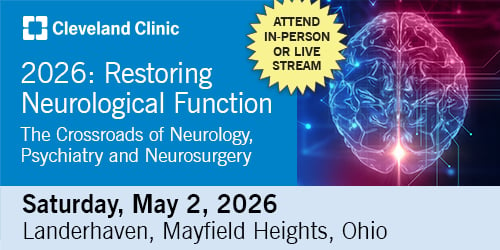
Cleveland Clinic Restoring Neurological Function The Crossroads of Neurology, Psychiatry and Neurosurgery 2026

$20.00
Restoring Neurological Function 2026 reviews movement disorders, headache, sleep neurology, novel therapies and functional neurosurgery.
Delivery Information: This Product is shared via google drive download link. Please use your correct Gmail address at checkout.
Please note: there are no CME points or certificate associated with this course.
Samples for Courses Can be found here: Free Samples Here!
MedicalAmboss File Scope: This listing describes the educational subject matter for reference. Provider registration, live attendance, streaming-platform access, CME or other credit, certificates, memberships, apps, accounts, and publisher-hosted extras are not included unless they are explicitly listed as store files. MedicalAmboss.
Restoring Neurological Function 2026
Cleveland Clinic Neurology 2026 | Movement Disorders | Headache Medicine | Parkinson’s Disease | Functional Neurosurgery | Vestibular Disorders | Sleep Neurology | Neuromodulation | Neuropsychiatry
Information
Cleveland Clinic Restoring Neurological Function: The Crossroads of Neurology, Psychiatry and Neurosurgery 2026 is a multidisciplinary neurological education program focused on contemporary advances in restoring neurological function through the integration of neurology, psychiatry, neurosurgery, rehabilitation, headache medicine, movement disorders, and emerging therapeutic technologies.
Presented by experts from the Cleveland Clinic Neurological Institute, this educational activity reviews and analyzes recent developments in clinical practice and relevant research, with particular emphasis on the treatment and management of movement disorders, headache, chronic pain, vestibular disorders, sleep-related neurological conditions, Parkinson’s disease, and functional neurosurgery.
The program combines practical clinical updates with emerging research, new diagnostic approaches, innovative therapeutics, and advanced technologies designed to improve neurological function and patient outcomes.
Course Details
- Course: Restoring Neurological Function: The Crossroads of Neurology, Psychiatry and Neurosurgery
- Provider: Cleveland Clinic
- Institution: Cleveland Clinic Neurological Institute
- Year: 2026
- Date: May 2, 2026
- Location: Landerhaven, Mayfield Heights, Ohio
- Original Format: In-Person and Live Stream
- Specialties: Neurology, Neurosurgery, Psychiatry, Physical Medicine and Rehabilitation
- Language: English
The official 2026 activity took place at Landerhaven in Mayfield Heights, Ohio and was offered both in person and by live stream.
Target Audience
This educational activity is designed for:
- Neurologists
- Neurosurgeons
- Physiatrists
- Primary Care Physicians
- Psychiatrists
- Internal Medicine Physicians
- Physician Assistants
- Residents
- Fellows
- Nurses
- Nurse Practitioners
- Physical Therapists
- Occupational Therapists
- Allied Health Professionals
It is particularly relevant for:
- Movement Disorder Neurologists
- Headache Specialists
- Functional Neurosurgeons
- Pediatric Neurologists
- Neurotologists and Otolaryngologists
- Sleep Medicine Specialists
- Neurogenetics Specialists
- Neuropsychiatrists
- Physical Medicine and Rehabilitation Specialists (Physiatrists)
The official Cleveland Clinic target audience includes physicians and allied health professionals across neurology, neurosurgery, psychiatry, internal medicine, rehabilitation, nursing, physical therapy, and occupational therapy.
Program Overview
Restoring neurological function increasingly requires collaboration across traditional specialty boundaries.
Neurologists may identify and medically treat movement disorders or headache syndromes, psychiatrists address important behavioral and psychiatric comorbidities, neurosurgeons apply advanced functional procedures and neuromodulation technologies, while rehabilitation specialists work to maximize functional recovery.
This Cleveland Clinic program examines these intersections through focused sessions covering:
- Vestibular assessment
- Post-traumatic headache
- Pediatric headache
- Sleep disorders in neurological practice
- Genetics of movement disorders
- Emerging neurological diagnostics
- Psychiatric manifestations of Parkinson’s disease
- Neurological restoration and rehabilitation
- Emerging Parkinson’s disease therapeutics
- New approaches in headache medicine
- Functional neurosurgery
- Technologies for neurological restoration
Learning Objectives
After completing this educational activity, participants will be able to do the following:
- Summarize the research and therapeutic advances in posttraumatic headache, neurologic implications of sleep disorders, and pediatric headaches.
- Review recent advances in the diagnosis and treatment of vestibular disorders.
- Analyze the clinical implications of current research findings on movement disorders, especially for genetics, diagnostics, and psychiatric comorbidities.
- Describe the recent advances in technologies to restore neurological function and their implications for clinical practice.
- Critically review the clinical trial evidence supporting new and innovative therapeutics for neurologic disorders.
- Summarize the most relevant advances in functional neurosurgery technologies and describe their optimal applications in patient care.
Official Program Topics
Comprehensive Headache Care
Vestibular Battery Testing
Julie Honaker, PhD, AuD
Vestibular disorders can present with dizziness, imbalance, vertigo, visual symptoms, and overlapping neurological complaints.
This session reviews contemporary vestibular testing strategies and the clinical interpretation of vestibular diagnostic studies.
Important areas include:
- Vestibular assessment
- Balance disorders
- Dizziness and vertigo
- Diagnostic testing
- Clinical interpretation
- Differentiation of vestibular and neurological causes
The official Cleveland Clinic agenda lists Vestibular Battery Testing as the opening scientific session.
Post-Traumatic Headache: Mechanisms of Injury and Management
Jena Gustafson, PA-C
Post-traumatic headache is a common neurological consequence of traumatic brain injury and concussion.
This session examines both the mechanisms underlying post-traumatic headache and current approaches to management.
Clinical considerations include:
- Traumatic brain injury
- Concussion
- Headache phenotype
- Injury mechanisms
- Persistent post-traumatic headache
- Symptom assessment
- Therapeutic management
Updates in Pediatric Headache Management
Konstantinos Tourlas, MD
Headache disorders in children and adolescents require age-appropriate diagnosis and management.
This session reviews recent developments in pediatric headache care, including evolving strategies for:
- Migraine
- Recurrent headache
- Diagnostic evaluation
- Acute treatment
- Preventive treatment
- Pediatric-specific management considerations
Sleep Disorders Across Neurology: Implications for Headache and Movement Disorders
Nancy Foldvary-Schaefer, DO, MS
Sleep disorders and neurological disease frequently interact.
Sleep disruption may influence headache severity, movement disorder symptoms, cognition, daytime functioning, and overall quality of life.
This session examines clinically important relationships between:
- Sleep disorders
- Headache
- Migraine
- Parkinson’s disease
- Movement disorders
- Neurological symptoms
- Sleep-related neurological dysfunction
The official program groups these four presentations under Comprehensive Headache Care.
Updates in Movement Disorders
Genetics in Movement Disorders
Saar Anis, MD
Advances in genetic testing are changing the evaluation of many movement disorders.
This session reviews the growing role of genetics in conditions characterized by abnormal movement and examines how genetic information may influence:
- Diagnosis
- Disease classification
- Family counseling
- Prognostic assessment
- Selection of additional testing
- Future precision therapies
Cutting Edge Diagnostics
Hubert Fernandez, MD
Diagnostic technologies in movement disorders continue to evolve.
This presentation explores emerging methods intended to improve the identification and characterization of neurological disease.
Potential clinical implications include earlier diagnosis, better disease classification, improved monitoring, and more individualized treatment strategies.
Psychiatric Co-Morbidities in Parkinson’s Disease
Raghid Charara, MD
Parkinson’s disease involves much more than motor dysfunction.
Psychiatric and behavioral symptoms can substantially affect quality of life, treatment adherence, caregiver burden, and overall disability.
Relevant manifestations may include:
- Depression
- Anxiety
- Psychosis
- Behavioral changes
- Cognitive symptoms
- Impulse-control disorders
- Neuropsychiatric complications of therapy
This session highlights the important intersection between movement disorders and psychiatry.
The official Cleveland Clinic agenda lists genetics, cutting-edge diagnostics, and psychiatric comorbidities of Parkinson’s disease as the three presentations in the Movement Disorders section.
Keynote Address
Restoring Neurological Function
Susan Linder, DPT, PhD
The keynote presentation examines the broader concept of neurological restoration and the expanding role of technologies and rehabilitation strategies in improving neurological function.
Modern neurological restoration may combine:
- Neurorehabilitation
- Neuroplasticity
- Functional recovery
- Technology-assisted therapy
- Neuromodulation
- Patient-specific rehabilitation
- Multidisciplinary neurological care
The focus reflects the central theme of the symposium: moving beyond disease identification toward maximizing meaningful neurological function.
Novel Therapeutics
Transforming Parkinson’s Care: What’s Next for Patients
James Liao, MD
Parkinson’s disease treatment continues to evolve through advances in pharmacologic therapy, device-based treatment, biomarkers, and clinical trials.
This presentation reviews emerging strategies that may influence future patient care.
Key considerations include:
- New therapeutic approaches
- Patient selection
- Treatment sequencing
- Disease progression
- Innovative clinical trials
- Personalized Parkinson’s management
Innovation in Headache Medicine: Expanding the Therapeutic Toolbox
MaryAnn Mays, MD
Headache medicine has undergone substantial therapeutic expansion in recent years.
This session examines new and innovative treatment options and their potential place in clinical practice.
Clinical considerations include:
- Acute headache therapy
- Preventive treatment
- Migraine management
- Patient selection
- Treatment response
- Emerging therapeutics
- Individualized headache care
Functional Neurosurgery Update
Richard Rammo, MD
Functional neurosurgery represents one of the clearest intersections between neurology and neurosurgical technology.
The session reviews recent developments in functional neurosurgery and their application to neurological disease.
Relevant areas include:
- Neuromodulation
- Deep brain stimulation
- Functional neurosurgical technologies
- Patient selection
- Surgical treatment of movement disorders
- Technology-assisted neurological restoration
- Integration of medical and surgical treatment
The official program places these three sessions under Novel Therapeutics, following the keynote presentation.
Major Topics Covered
Headache Medicine
The symposium provides a broad update on headache disorders across multiple clinical settings.
Key themes include:
- Post-traumatic headache
- Pediatric headache
- Migraine
- Sleep-related headache implications
- Emerging headache therapeutics
- Multidisciplinary headache care
Post-Traumatic Headache
Post-traumatic headache can develop following concussion or traumatic brain injury and may persist long after the acute injury.
Understanding the relationship between mechanism of injury, headache phenotype, neurological symptoms, and associated conditions can help clinicians develop more individualized management plans.
Pediatric Headache
Pediatric headache requires careful consideration of age, development, symptoms, neurological findings, and potential secondary causes.
The program reviews recent advances that can support more effective diagnosis and treatment in children and adolescents.
Vestibular Disorders
Vestibular dysfunction can overlap with neurological and headache disorders.
Advanced vestibular testing can help characterize the source of dizziness, vertigo, and imbalance and guide appropriate treatment or referral.
Sleep and Neurological Disease
Sleep disorders can affect many neurological conditions and may worsen:
- Headache
- Fatigue
- Cognition
- Movement symptoms
- Mood
- Daily functioning
Recognizing these interactions is important for comprehensive neurological care.
Movement Disorders
Movement disorders represent a major focus of the program.
The symposium examines the field from several perspectives:
- Genetics
- Diagnostic innovation
- Parkinson’s disease
- Psychiatric comorbidity
- Novel therapy
- Functional neurosurgery
Parkinson’s Disease
Parkinson’s disease is explored as both a motor and neuropsychiatric disorder.
The program integrates neurological and psychiatric perspectives while also examining emerging treatment strategies and surgical technologies.
Neurogenetics
Genetic discoveries are increasingly contributing to the diagnosis and classification of neurological disorders.
For movement disorder specialists, genetic information may become increasingly relevant to:
- Differential diagnosis
- Counseling
- Disease classification
- Research enrollment
- Precision medicine
Neuropsychiatry
The inclusion of psychiatric comorbidities in Parkinson’s disease reflects the broader multidisciplinary philosophy of the course.
Neurological disease may produce important psychiatric and behavioral manifestations requiring collaborative management between neurology and psychiatry.
Neurological Restoration
Restoring neurological function involves more than treating an underlying diagnosis.
The concept includes maximizing:
- Mobility
- Independence
- Participation
- Cognitive and behavioral function
- Functional performance
- Quality of life
This may require combinations of medical therapy, surgical intervention, rehabilitation, assistive technologies, and neuromodulation.
Functional Neurosurgery
Functional neurosurgery uses targeted interventions to modify dysfunctional neural circuits.
It has important clinical applications in movement disorders and other neurological conditions and continues to evolve with advances in:
- Target selection
- Imaging
- Stimulation technologies
- Programming
- Patient selection
- Neuromodulation
Novel Neurological Therapeutics
The symposium critically reviews new and innovative treatments and emphasizes the importance of interpreting clinical trial evidence before integrating emerging interventions into routine practice.
Areas of interest include:
- New Parkinson’s therapies
- Innovative headache treatments
- Device-based treatments
- Functional neurosurgery
- Neuromodulation
- Emerging restorative technologies
Multidisciplinary Neurological Care
The defining feature of this course is its intersection of several disciplines.
Neurology
Provides diagnosis and medical treatment of movement disorders, headache, vestibular problems, sleep-related neurological symptoms, and other neurological conditions.
Neurosurgery
Provides advanced functional procedures and neuromodulation options for appropriately selected patients.
Psychiatry
Addresses psychiatric and behavioral manifestations accompanying neurological disease.
Physical Medicine and Rehabilitation
Focuses on restoration of function, mobility, independence, and participation following neurological impairment.
Sleep Medicine
Evaluates sleep disorders that may influence neurological symptoms and treatment outcomes.
Neurotology and Vestibular Medicine
Provides specialized assessment of dizziness, balance abnormalities, and vestibular dysfunction.
Physical and Occupational Therapy
Support functional recovery and help translate neurological improvement into meaningful daily activity.
Course Co-Directors
MaryAnn Mays, MD
Center for Neurological Restoration, Headache – Cleveland Clinic
Dr. MaryAnn Mays served as a course co-director and moderated the Comprehensive Headache Care section. She also presented the session Innovation in Headache Medicine: Expanding the Therapeutic Toolbox.
Payal Soni, MD
Center for Neurological Restoration, Headache – Cleveland Clinic
Dr. Payal Soni served as a course co-director and moderated the Novel Therapeutics section.
Cleveland Clinic officially lists MaryAnn Mays, MD and Payal Soni, MD as the 2026 course co-directors.
Cleveland Clinic Faculty
The official faculty included:
- Saar Anis, MD — Center for Neurological Restoration
- Raghid Charara, MD — Psychiatry and Psychology
- Hubert Fernandez, MD — Center Director, Center for Neurological Restoration, Movement Disorders
- Nancy Foldvary-Schaefer, DO, MS — Sleep Disorders Center
- Jena Gustafson, PA-C — Center for Neurological Restoration
- Julie Honaker, PhD, AuD — Head and Neck Institute
- James Liao, MD — Center for Neurological Restoration
- Adam Margolius, MD — Center for Neurological Restoration
- Richard Rammo, MD — Center for Neurological Restoration
- Konstantinos Tourlas, MD — Center for Pediatric Neurosciences
The official Cleveland Clinic faculty page confirms these faculty members and their respective specialties.
Planning Committee
The official planning committee included:
- Kristin Baugh, PA-C
- Diandra Hesson, OTR/L
- Julie Majcher, PT, DPT
- Ellen Walter, CNP
Why This Course Is Relevant
Neurological care is increasingly multidisciplinary.
Patients with movement disorders, chronic headache, vestibular dysfunction, sleep disorders, Parkinson’s disease, and complex neurological disability may require expertise from several disciplines rather than a single specialty.
This Cleveland Clinic program is particularly valuable because it connects:
- Neurological diagnosis
- Psychiatric manifestations
- Advanced therapeutics
- Functional neurosurgery
- Neurorehabilitation
- Sleep medicine
- Vestibular medicine
- Emerging neurological technologies
The program therefore provides a practical update for clinicians seeking to understand not only new therapies, but also how multiple specialties can work together to restore neurological function and improve patient-centered outcomes.
Short Description
Cleveland Clinic Restoring Neurological Function: The Crossroads of Neurology, Psychiatry and Neurosurgery 2026 provides a multidisciplinary update on headache medicine, post-traumatic and pediatric headache, vestibular testing, sleep disorders, Parkinson’s disease, movement disorder genetics and diagnostics, neuropsychiatric comorbidities, novel therapeutics, neurological restoration, and functional neurosurgery.
Topics
-
Post-Traumatic Headache – Mechanisms of Injury and Management
-
Updates in Pediatric Headache Management
-
Sleep Disorders Across Neurology – Implications for Headache and Movement Disorders
-
How Can Neuromodulation Improve Functional Outcomes in Neurorehabilitation
-
Navigating Advanced Parkinson Disease Care and Emerging Therapeutic Options
-
Migraine Management – Expanding Therapeutic Options in Headache Medicine
-
How Is Deep Brain Stimulation Evolving in Movement Disorder Care
-
Movement Disorders Genetics – Practical Strategies for Precision Care Teams
-
Movement Disorders Diagnostics – Building a Digital Clinic Model
-
Psychiatric Comorbidities in Parkinson Disease – Recognition and Management
-
Vestibular Testing in Headache and Dizziness – Diagnosing Peripheral Vestibular Disorders
Related products

Neurology / neurosurgery courses
SFNP 2023 – French Congress of Peripheral Neuropathy 2023 ( VIDEOS)
Neurology / neurosurgery courses
Neurology / neurosurgery courses

Pediatrics
Neurology / neurosurgery courses
2023 SANS Written Boards Review Course for neurological surgeons

Neurology / neurosurgery courses
Internal Medicine