
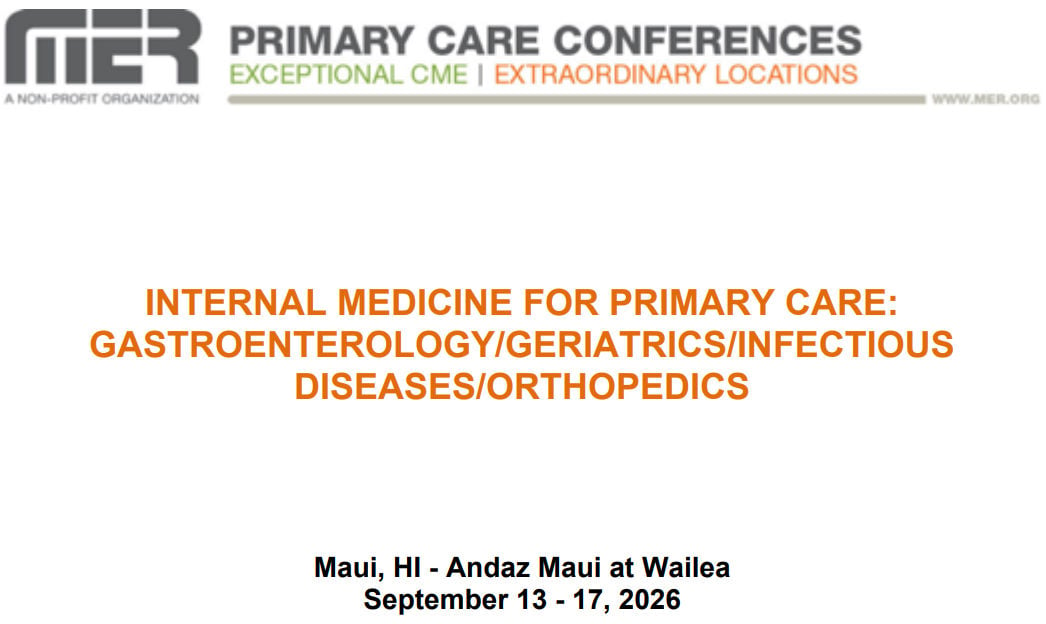
MER Primary Care Conferences Internal Medicine for Primary Care Gastro Geri ID Ortho Sep 13-17, 2026
$130.00
This Product is shared via google drive download link, So please share your correct Gmail id while placing the order .Please note that there are no CME points or certificate associated with this course
MER Primary Care Conferences Internal Medicine for Primary Care Gastro Geri ID Ortho Sep 13-17, 2026
Internal Medicine & Primary Care Conference 2026 | Gastroenterology | Geriatrics | Infectious Diseases | Orthopedics | Evidence-Based Diagnosis, Treatment & Clinical Management
Course Overview
The MER Primary Care Conferences Internal Medicine for Primary Care Gastro Geri ID Ortho Sep 13-17, 2026 is a comprehensive continuing medical education program designed to provide practical, evidence-based updates in internal medicine and primary care across four major medical specialties: Gastroenterology, Geriatrics, Infectious Diseases, and Orthopedics.
Organized by Medical Education Resources (MER), the original five-day conference was held September 13–17, 2026, at the Andaz Maui at Wailea Resort in Maui, Hawaii.
The program focuses on common and clinically important conditions encountered in outpatient and primary care settings, emphasizing accurate diagnosis, evidence-based treatment, preventive medicine, and effective long-term patient management.
Through specialty-focused educational sessions, the curriculum addresses orthopedic injuries and musculoskeletal disorders, comprehensive geriatric assessment, cognitive impairment and dementia, gastrointestinal diseases, infectious syndromes, appropriate antimicrobial treatment, and adult immunization strategies.
The gastroenterology component examines inflammatory bowel disease (IBD), irritable bowel syndrome (IBS), colorectal cancer screening, celiac disease, and liver disease evaluation.
The geriatrics curriculum addresses age-related clinical challenges, including hypertension, cognitive decline, Alzheimer’s disease, urinary incontinence, and behavioral management in dementia.
The infectious diseases component emphasizes skin and soft tissue infections, respiratory tract infections, gastrointestinal infections, genitourinary infections, and risk-based immunization.
The orthopedic sessions review the evaluation and management of common musculoskeletal injuries involving the knee, shoulder, hip, thigh, wrist, hand, fingers, foot, and ankle.
The MER Internal Medicine for Primary Care Gastro/Geri/ID/Ortho 2026 conference is particularly relevant to primary care physicians and other healthcare professionals seeking to strengthen clinical decision-making across multiple areas of adult outpatient medicine.
Course Details
- Course Title: MER Primary Care Conferences Internal Medicine for Primary Care Gastro Geri ID Ortho Sep 13-17, 2026
- Official Conference Name: Internal Medicine for Primary Care: Gastro/Geri/ID/Ortho
- Organizer: Medical Education Resources (MER)
- Conference Dates: September 13–17, 2026
- Duration: Five Days
- Venue: Andaz Maui at Wailea Resort
- Location: Wailea, Maui, Hawaii, USA
- Original Event Format: In-Person Conference
- Primary Specialty: Internal Medicine / Primary Care
- Subspecialties: Gastroenterology, Geriatrics, Infectious Diseases, Orthopedics
- Main Focus: Evidence-Based Primary Care Diagnosis, Treatment, and Disease Management
- Original MER Listing: 20 Credit Hours
- ANCC Pharmacotherapeutic Contact Hours: 8.75
- Target Audience: Office-Based Primary Care Providers and Other Healthcare Professionals
Target Audience
This educational program is targeted to office-based primary care providers and other healthcare professionals seeking updates in primary care medicine.
Recommended Medical Specialties
- Orthopedists
- Geriatricians
- Gastroenterologists
- Infectious Disease Specialists
The program is also relevant to:
- Internal Medicine Physicians
- Family Medicine Physicians
- Primary Care Physicians
- General Practitioners
- Nurse Practitioners
- Physician Assistants / Physician Associates
- Healthcare Professionals Providing Adult Outpatient Care
Program Overview
The MER Internal Medicine for Primary Care Gastro/Geri/ID/Ortho 2026 program integrates four clinically important specialties into a multidisciplinary educational experience.
Gastroenterology
The gastroenterology portion focuses on the evaluation, diagnosis, and management of common gastrointestinal and hepatologic disorders encountered in primary care.
Major areas include inflammatory bowel disease, irritable bowel syndrome, colorectal cancer screening and surveillance, celiac disease, and indications for liver biopsy.
Emphasis is placed on appropriate diagnostic testing, treatment selection, prevention, and referral decisions.
Geriatrics
The geriatrics curriculum addresses the complex medical needs of older adults through comprehensive assessment and evidence-based management of age-related conditions.
Topics include geriatric assessment, hypertension, lower urinary tract symptoms, urinary incontinence, cognitive impairment, Alzheimer’s disease, dementia, and nonpharmacologic approaches to behavioral disturbances.
Infectious Diseases
The infectious diseases component reviews the recognition and management of common infections seen in ambulatory and primary care settings.
The curriculum addresses skin and soft tissue infections, respiratory tract infections, diarrheal illnesses, genitourinary infections, common infectious pathogens, and immunization recommendations based on individual patient risk factors.
Orthopedics
The orthopedic curriculum provides clinically relevant updates on the diagnosis and treatment of common musculoskeletal injuries and disorders.
Areas of focus include knee anatomy and function, hip and thigh disorders, shoulder injuries, wrist and hand conditions, finger injuries, and chronic foot and ankle pain syndromes.
The program supports practical clinical evaluation, differential diagnosis, treatment planning, and appropriate specialist referral.
Learning Objectives
Upon completion of this program, participants should be better able to:
- Describe the anatomy and function of the knee joint.
- Diagnose and treat orthopedic problems in the hip, thigh, knee and shoulder.
- Recognize chronic injuries and pain syndromes to the foot and ankle.
- Diagnose and treat shoulder injuries.
- Diagnose and treat wrist, hand, and finger injuries.
- Utilize a comprehensive geriatric assessment to identify potential issues in the elderly patient.
- Evaluate hypertension in both younger and older adults, differentiate risks and goals of treatment, and recommend appropriate interventions.
- Review common lower urinary tract symptoms (LUTS) that may progress to urinary incontinence, and initiate treatment options.
- Diagnose and treat cognitive impairment, dementias, and Alzheimer’s disease.
- Discuss strategies for the management of difficult behaviors in patients with dementia without the use of psychotropic medications.
- Recognize when to refer a patient for liver biopsy.
- Explain the diagnosis and treatment of IBD.
- Discuss the guidelines for colonoscopic colorectal cancer screening and surveillance.
- Evaluate the efficacy of treatment options for IBS.
- Recommend appropriate testing for the workup of celiac disease.
- Review epidemiology and microbiology of skin and soft tissue infections (SSTI).
- List common causative pathogens for various respiratory tract infections.
- Evaluate the severity of diarrhea and evaluate the need for treatment.
- Diagnose and manage genitourinary infections.
- Recommend appropriate immunizations based on patient specific risk factors.
Program Topics
The following topics are organized by specialty based on the supplied educational objectives. A verified day-by-day agenda and faculty list were not available in the accessible official conference listing.
GASTROENTEROLOGY
Inflammatory Bowel Disease (IBD)
- Diagnosis and clinical evaluation of inflammatory bowel disease
- Differentiation of common inflammatory bowel conditions
- Evidence-based treatment approaches
- Long-term disease management and referral considerations
Irritable Bowel Syndrome (IBS)
- Clinical evaluation of irritable bowel syndrome
- Diagnostic considerations and differential diagnosis
- Evaluation of available treatment options
- Symptom management and follow-up
Colorectal Cancer Screening and Surveillance
- Current colonoscopic colorectal cancer screening recommendations
- Screening considerations for average-risk and higher-risk populations
- Colonoscopy surveillance principles
- Appropriate screening and follow-up decisions
Celiac Disease
- Diagnostic evaluation of suspected celiac disease
- Appropriate laboratory testing
- Indications for additional diagnostic evaluation
- Clinical management considerations
Liver Disease Evaluation and Biopsy Referral
- Evaluation of patients with suspected liver disease
- Clinical indications for specialist assessment
- Recognition of situations requiring liver biopsy
- Appropriate referral considerations
GERIATRICS
Comprehensive Geriatric Assessment
- Assessment of older adults with complex medical needs
- Identification of functional and medical concerns
- Individualized care planning
- Multidisciplinary approaches to geriatric care
Hypertension in Younger and Older Adults
- Clinical evaluation of hypertension
- Age-related cardiovascular risk assessment
- Individualized treatment goals
- Evidence-based therapeutic interventions
Lower Urinary Tract Symptoms and Urinary Incontinence
- Common lower urinary tract symptoms (LUTS)
- Evaluation of urinary symptoms in older adults
- Progression to urinary incontinence
- Appropriate management and treatment options
Alzheimer’s Disease and Other Dementias
- Evaluation of cognitive impairment
- Differentiation of dementia syndromes
- Alzheimer’s disease diagnosis and management
- Clinical assessment and ongoing patient care
Managing Behavioral Problems in Dementia
- Recognition of behavioral disturbances
- Nonpharmacologic behavioral interventions
- Patient-centered dementia management
- Strategies to reduce unnecessary psychotropic medication use
INFECTIOUS DISEASES
Skin and Soft Tissue Infections (SSTI)
- Epidemiology of common skin and soft tissue infections
- Microbiology and causative pathogens
- Clinical recognition and diagnostic considerations
- Infection management principles
Respiratory Tract Infections
- Common respiratory pathogens
- Clinical presentations of respiratory tract infections
- Appropriate diagnostic evaluation
- Management considerations in outpatient practice
Diarrheal Illness and Gastrointestinal Infections
- Clinical assessment of acute diarrhea
- Evaluation of infection severity
- Identification of patients requiring treatment
- Diagnostic and therapeutic considerations
Genitourinary Infections
- Recognition of common genitourinary infections
- Diagnostic evaluation
- Evidence-based management approaches
- Follow-up and recurrence considerations
Adult Immunizations
- Immunization recommendations based on individual risk factors
- Vaccination considerations in primary care
- Preventive strategies for infectious diseases
- Patient-specific immunization planning
ORTHOPEDICS
The Knee: Anatomy, Function, and Common Injuries
- Knee joint anatomy and biomechanics
- Clinical examination of knee disorders
- Common knee injuries and functional problems
- Diagnostic assessment and treatment planning
Hip and Thigh Disorders
- Evaluation of hip and thigh pain
- Common musculoskeletal injuries
- Differential diagnosis of lower-extremity complaints
- Conservative management and specialist referral
The Shoulder: Common Injuries and Clinical Management
- Shoulder anatomy and functional assessment
- Recognition of common shoulder injuries
- Clinical examination and diagnostic considerations
- Treatment and rehabilitation approaches
Wrist, Hand, and Finger Injuries
- Evaluation of wrist and hand disorders
- Recognition of common finger injuries
- Diagnostic and management considerations
- Treatment and referral decisions
Foot and Ankle: Chronic Injuries and Pain Syndromes
- Recognition of common foot and ankle conditions
- Evaluation of chronic pain syndromes
- Differential diagnosis of persistent symptoms
- Appropriate management strategies
Major Topics Covered
Internal Medicine and Primary Care
- Evidence-based adult primary care
- Clinical diagnosis and treatment planning
- Preventive care and chronic disease management
- Multispecialty patient assessment
- Appropriate diagnostic testing and referral
- Patient-centered outpatient medicine
Gastroenterology
- Inflammatory bowel disease (IBD)
- Irritable bowel syndrome (IBS)
- Colorectal cancer screening
- Colonoscopic surveillance
- Celiac disease
- Liver disease assessment
- Liver biopsy referral
Geriatric Medicine
- Comprehensive geriatric assessment
- Hypertension in older adults
- Lower urinary tract symptoms
- Urinary incontinence
- Cognitive impairment
- Alzheimer’s disease
- Other dementias
- Behavioral disturbances in dementia
- Nonpharmacologic dementia care
Infectious Diseases
- Skin and soft tissue infections
- Respiratory tract infections
- Common bacterial and viral pathogens
- Diarrheal illness evaluation
- Gastrointestinal infections
- Genitourinary infections
- Antimicrobial management considerations
- Adult immunizations
- Risk-based infection prevention
Orthopedic Medicine
- Knee anatomy and function
- Knee injuries and disorders
- Hip and thigh injuries
- Shoulder disorders
- Wrist and hand injuries
- Finger injuries
- Chronic foot and ankle pain
- Musculoskeletal clinical assessment
- Orthopedic treatment and referral
Course Organizer and Faculty
Educational Provider
Medical Education Resources (MER)
Medical Education Resources organizes continuing education conferences designed to provide healthcare professionals with clinically relevant updates across medical specialties.
Conference Faculty
The conference features specialty-focused medical education in:
- Gastroenterology
- Geriatrics
- Infectious Diseases
- Orthopedics
Individual faculty names and session assignments have not been independently verified for this specific September 13–17, 2026 conference.
Why This Course Is Relevant
Primary care physicians frequently manage patients presenting with overlapping gastrointestinal, infectious, geriatric, and musculoskeletal conditions.
The MER Primary Care Conferences Internal Medicine for Primary Care Gastro Geri ID Ortho Sep 13-17, 2026 program addresses these common clinical challenges through an integrated, evidence-based educational approach.
The conference is particularly useful for clinicians seeking to improve diagnostic accuracy, optimize treatment selection, strengthen preventive healthcare strategies, and recognize conditions requiring specialist evaluation.
Key Educational Benefits
- Strengthen clinical evaluation and management of common musculoskeletal conditions.
- Review approaches to comprehensive assessment and management of older adults.
- Improve recognition and treatment of cognitive impairment and dementia.
- Explore gastrointestinal conditions commonly encountered in outpatient medicine.
- Review colorectal cancer screening and appropriate diagnostic testing for celiac disease.
- Improve clinical assessment and management of common infectious diseases.
- Strengthen patient-specific vaccination and prevention strategies.
- Support coordinated care across multiple medical specialties.
The program helps clinicians integrate specialty-specific knowledge into everyday primary care practice while emphasizing practical patient management and interdisciplinary care.
Original MER Credit and Accreditation Information
The original conference was listed by Medical Education Resources as offering:
- 20 Credit Hours
- 8.75 ANCC Pharmacotherapeutic Contact Hours
These credits relate to eligible participation in the original educational activity and the provider’s applicable accreditation and completion requirements.
An independently distributed digital course should not automatically be represented as including CME/CE credit, certification, or official MER registration unless such eligibility is specifically provided.
Short Description
MER Primary Care Conferences Internal Medicine for Primary Care Gastro Geri ID Ortho Sep 13-17, 2026 is a five-day multidisciplinary primary care education program covering Gastroenterology, Geriatrics, Infectious Diseases, and Orthopedics, with practical updates in diagnosis, treatment, prevention, and outpatient patient management.
Key Highlights:
- ✅ MER 2026 primary care and internal medicine educational conference.
- ✅ Four major specialties: Gastroenterology, Geriatrics, Infectious Diseases, and Orthopedics.
- ✅ Knee, hip, shoulder, wrist, hand, foot, and ankle disorders.
- ✅ Comprehensive geriatric assessment and hypertension management.
- ✅ Alzheimer’s disease, dementia, and behavioral management.
- ✅ Urinary incontinence and lower urinary tract symptoms.
- ✅ Inflammatory bowel disease, IBS, and celiac disease.
- ✅ Colorectal cancer screening and liver disease evaluation.
- ✅ Skin, respiratory, gastrointestinal, and genitourinary infections.
- ✅ Adult immunizations and patient-specific preventive strategies.
- ✅ Evidence-based primary care diagnosis and treatment approaches.
Topics
Orthopedics:
-
The Knee: Anatomy, Common Injuries, and Exam Techniques: ACL, meniscus, MRI; common sports injuries; osteoarthritis and hyaluronan; bursitis: prepatellar, pesanserine; baker’s cyst; joint injection/X-ray interpretation; pediatrics.
-
Hip and Thigh: Emphasizing the tools, physical diagnostic techniques and basic investigations available to the primary care practitioner, a practical approach to the undifferentiated hip problem will be reviewed. Diagnostic triage, historical clues and physical examination pearls pertaining to hip conditions will be covered, and evidence-based management.
-
Ankle and Foot: This presentation will address a series of common acute and chronic injuries and pain syndromes to the foot and ankle as they would present in the primary care setting. The focus will be on developing a working differential diagnosis based on the historical mechanism of injury and exam findings.
-
The Shoulder: Anatomy, Common Injuries, and Exam Techniques: Rotator cuff syndrome; impingement, frozen shoulder; subacromail bursitis; bicipital tendonitis; A-C joint disease.
-
Wrist, Hand, and Fingers: Carpal tunnel, CMC arthritis thumb, ganglion cyst, trigger finger, de Quervains disease.
Geriatrics:
-
Approach to the Geriatric Patient: The demographics of aging and the physiologic changes in the elderly patient; Medication use in the elderly including changes in age-related pharmacokinetics and pharmacodymamics and medication adherence; Review of risky medications often used in elderly patients.
-
Hypertension in Older Adults: Best evidence for treatment goals for hypertension in diabetics and those with previous stroke; Controversial evidence for the various guidelines for diagnosing and treating hypertension in older adults; Best evidence-based medications for hypertension.
-
Urological Disorders in the Older Adult: Review of two very common conditions seen in the elderly population: benign prostatic hyperplasia (BPH), and urinary incontinence; Pathogenesis, clinical symptoms, recommended evaluation and management options for BPH; Review of the anatomy and mechanism of normal urinary function, causes of incontinence, the evaluation and management.
-
Alzheimer’s & Other Dementias: Review of normal age-related changes in cognitive function as well as disorders of memory and cognition as part of dementing illness; Mental status exams, including their limitations in evaluating memory; Various types of dementia and the importance of an accurate diagnosis; Current treatment options for various kinds of dementia; Potentially reversible dementias; The responsibilities of healthcare providers in managing patients with dementia.
-
Managing Behavior Problems in Dementia Patients: Review of common behavior disorders often seen in patients with dementia; Behavioral techniques which have shown to be effective in managing some of the behavior disorders in patients with Alzheimer’s and other dementias, focusing on the management of these patients without the use of psychotropic medications; Examples of behavior disturbances along with the behavior management technique which was effective in managing the patient with the behavior problem; Review of the potential adverse effects of the psychotropic medications usually used to manage behavior.
Gastroenterology:
-
Metabolic Dysfunction-associated Steatohepatitis (MASH): Definitions; epidemiology and natural history; diagnostic tests; when to refer for liver biopsy; treatments and interventions; and, prognosis and risk for cirrhosis and hepatocellular cancer.
-
Crohn’s Disease: Epidemiology, presentation, complications and management.
-
Colorectal Cancer Screening and Surveillance: Reviews the most recent recommendations for CRC screening in the general population at average risk for CRC.
-
Gastroesophageal Reflux Disease (GERD): This topic will discuss the pathophysiology, clinical manifestations, diagnosis, and management of GERD.
-
Non Infectious Chronic Diarrhea: Evaluation and appropriate treatment options; Indications for referral; Understanding IBS-D, Celiac, bile acid diarrhea, SIBO, and microscopic colitis.
Infectious Diseases:
-
Skin & Soft Tissue Infections: Presentation on important skin and soft-tissue infections and their prompt recognition, emphasizing evaluation and management strategies.
-
Respiratory Tract Infections: Discussion highlighting critical points regarding the diagnosis and management of pneumonia and bronchitis – with a focus on the impact of multidrug resistant pathogens.
-
Gastrointestinal Infections & Clostridiodes Difficile: Presentation on important enteric pathogens and their recognition, diagnosis and management; special emphasis on clostridiodes difficile colitis and related updates from the ID and infection control literature.
-
Genitourinary Infections: Presentation on a relevant and clinically practical approach to the patient with genitourinary complaints focusing on the latest guidelines for the range of urinary tract infections and highlights of selected and important sexually-transmitted disease syndromes.
-
Immunizations: Presentation on key vaccine preventable diseases and their presentations with an emphasis on the latest recommendations including newest schedules, safety and efficacy information.
Related products
Critical Care - Emergency medicine

Pediatrics

Critical Care - Emergency medicine
Medical Accounts

Critical Care - Emergency medicine
Critical Care - Emergency medicine

Medical Accounts
Critical Care - Emergency medicine
International Symposium on Intensive Care & Emergency Medicine ( ISICEM ) 2020