
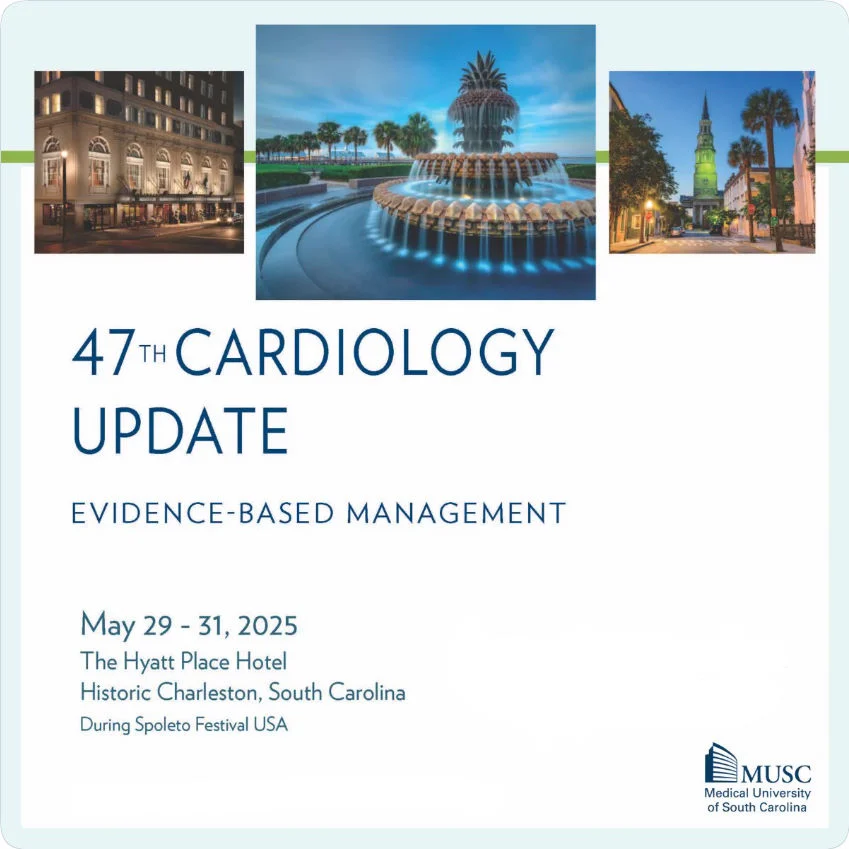
Medical University of South Carolina 47th Cardiology Update 2025
$30.00
Review arrhythmias, heart failure, prevention, and coronary and structural interventions through MUSC’s 47th Cardiology Update. The program includes clinical cases and sessions on HFpEF, cardiac amyloidosis, genetics, imaging, TAVR, and emerging therapies, with practical relevance for cardiovascular specialists and clinicians involved in ongoing cardiac care.
Delivery Information: This Product is shared via google drive download link. Please use your correct Gmail address at checkout.
Please note: there are no CME points or certificate associated with this course.
Samples for Courses Can be found here: Free Samples Here!
MUSC’s 47th Cardiology Update reviews cardiovascular care through clinical lectures, case discussions, and multidisciplinary perspectives. The program covers atrial fibrillation, stroke prevention, ventricular arrhythmias, and device problems, then extends to cardiometabolic risk, preventive imaging, and heart failure. Sessions on HFpEF, amyloidosis, genetics, and emerging therapies sit alongside updates in coronary and structural interventions, including TAVR, tricuspid valve treatment, and renal denervation. The original three-day meeting was designed for cardiologists, internists, primary care physicians, cardiovascular nurses, and physician assistants. Its case-based format connects new evidence with the diagnostic and treatment choices encountered in cardiovascular practice.
Original meeting: May 29–31, 2025, Hyatt Place Hotel, Charleston, South Carolina. Institution: Medical University of South Carolina. Program: 47th Cardiology Update – Evidence-Based Management.
Learning Objectives
At the conclusion of this activity, participants should be able to:
- Formulate evidence-based diagnostic, risk-stratification, and treatment algorithms for complex cardiac rhythm disorders, including atrial fibrillation, stroke prophylaxis, and ventricular arrhythmias.
- Evaluate malfunctions and complications related to cardiac implantable electronic devices (pacemakers and defibrillators) and execute appropriate troubleshooting protocols.
- Apply guideline-directed medical therapy (GDMT) and emerging pharmaceutical options (including GLP-1 receptor agonists and novel lipid-lowering therapies for Lp(a)) across heart failure phenotypes, notably HFpEF and cardiometabolic diseases.
- Recognize, evaluate, and manage non-ischemic and infiltrative cardiomyopathies, including cardiac amyloidosis and fulminant myocarditis.
- Integrate multimodality preventive imaging, cardiac genetics, and artificial intelligence tools to optimize cardiovascular risk assessment and heart failure care pathways.
- Analyze indications, procedural strategies, and patient outcomes for contemporary catheter-based structural and coronary interventions, including TAVR, transcatheter tricuspid interventions, patent foramen ovale (PFO) closure, in-stent restenosis management, and renal denervation.
Course Directors
Michael R. Gold, MD, PhD
Course Director
Michael Assey Professor of Medicine
Division of Cardiology
Medical University of South Carolina
Christopher D. Nielsen, MD
Assistant Course Director
Director, Adult Cardiac Labs
Director, Interventional Fellowship Program
Professor of Cardiology
Selected Faculty
The official MUSC program includes cardiovascular specialists from MUSC and visiting faculty, including:
- Daniel Silverman, MD
- Nicholas Amoroso, MD
- Gregory Jackson, MD
- Jan Basile, MD
- Daniel Steinberg, MD
- Daniel P. Judge, MD, FACC, FHFSA
Faculty expertise represented areas including general cardiology, advanced heart failure, structural heart disease, cardiovascular prevention, and other subspecialty areas of cardiovascular medicine.
Topics
-
The First Pillar of AF Management – Risk Factor Modification with Focus on Obesity
-
Ventricular Arrhythmia Identification & Management
-
Optimizing Stroke Prophylaxis in Atrial Fibrillation Management
-
Cardiac Implantable Devices Gone Wrong – Diagnosis and Management of Malfunctioning Pacemakers and Defibrillators
-
Atrial Fibrillation in 2025 – Pearls for the non-EP
-
Update on Novel Therapies for Treating Elevated Lp(a)
-
HFpEF Is a Metabolic Disease – Evidence and Implications
-
Approach to Liver Disease in the Patient with Cardiometabolic Risk
-
Changing the Paradigm – The Top Recent Trials in Preventive Cardiology and Cardiometabolic Health
-
Update in Preventive Imaging
-
Best Cases of the Year – Dyspnea & Fulminant Myocarditis Cases
-
The Future Is Here – Artificial Intelligence and Imaging in Heart Failure
-
Transforming Heart Failure into Heart Success – Heart Failure Transitions of Care
-
Cardiac Genetics and Genomics
-
Don’t Sleep on It – Heart Failure and Sleep Disordered Breathing
-
Reaching a New Peak – Results of SUMMIT and GLP-1 Agonists in HFpEF
-
Emerging Treatment Strategies and Clinical Trials for Cardiac Amyloidosis
-
Pharmacy Integration into Multidisciplinary Heart Failure Clinics – Optimizing GDMT Despite Real-World Barriers
-
No Longer Limited Options – New and Emerging Treatments for HFpEF
-
Coronary Artery Disease Chest Pain Case Studies Discussion
-
Patent Foramen Ovale Closure – Secondary Stroke Prevention and More
-
Treatment of In-Stent Restenosis
-
Renal Denervation for Treatment of Hypertension
-
TBA Topic
-
New Treatments for Tricuspid Valve Disease
-
Update in TAVR (and Other Valves)
The retained agenda includes a “TBA Topic” entry and describes the original educational program; it does not confirm a recording for every session or interactive audience-response access. Provider registration, live participation, streaming access, MOC credit, certificates, apps, accounts, and post-course platform access are not included with independently supplied study files.
Related products
Cardiology
Medical Accounts
Internal Medicine
Critical Care - Emergency medicine
Critical Care - Emergency medicine
ASN Critical Care Nephrology – 2022 Update (On-Demand and Livestream)
Medical Accounts
Critical Care - Emergency medicine
2022 UPDATES IN THERAPEUTICS: CRITICAL CARE PHARMACY PREPARATORY REVIEW AND RECERTIFICATION COURSE
Critical Care - Emergency medicine