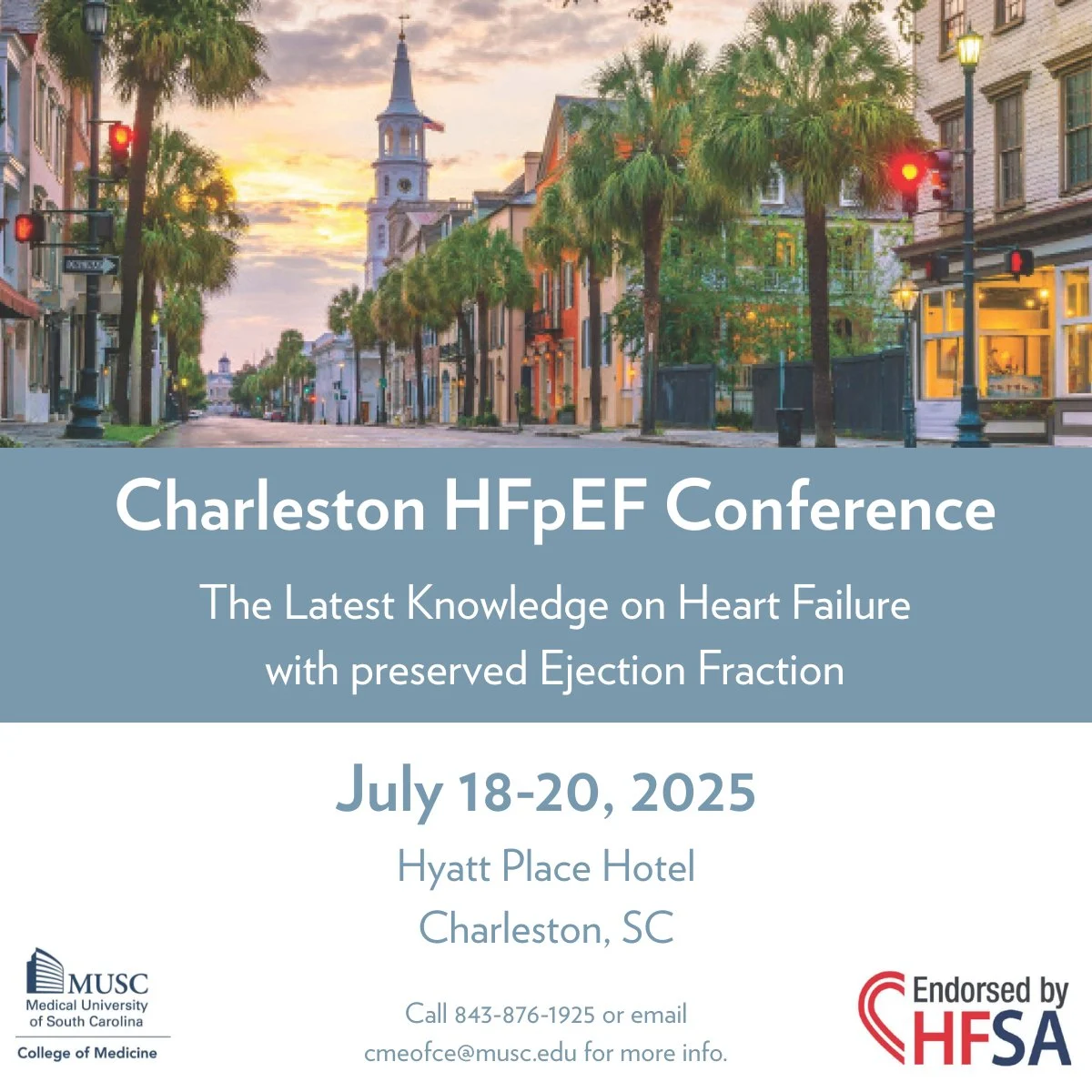
Medical University of South Carolina Charleston HFpEF Conference 2025
$30.00
A focused 2025 heart-failure program covering HFpEF diagnosis, phenotyping, cardiometabolic therapy, amyloidosis, pulmonary hypertension and monitoring.
Delivery Information: This Product is shared via google drive download link. Please use your correct Gmail address at checkout.
Please note: there are no CME points or certificate associated with this course.
Samples for Courses Can be found here: Free Samples Here!
MedicalAmboss File Scope: This listing summarizes the official educational program for reference. Provider registration, live participation, streaming access, CME or MOC credit, certificates, apps, accounts, and post-course access are not represented as included unless they are explicitly present in the listed store files. MedicalAmboss.
-
Medical University of South Carolina Charleston HFpEF Conference 2025
Medical University of South Carolina Charleston HFpEF Conference 2025 is a focused cardiovascular education program dedicated to the latest advances in the diagnosis, phenotyping, treatment, and multidisciplinary management of Heart Failure with Preserved Ejection Fraction (HFpEF).
The conference addresses one of the most challenging and rapidly evolving areas of heart failure medicine, with emphasis on contemporary pharmacologic therapies, obesity and cardiometabolic disease, cardiac amyloidosis, pulmonary hypertension, remote hemodynamic monitoring, device therapies, and individualized approaches to HFpEF care.
+ Target Audience
The program is intended for healthcare professionals involved in the evaluation and management of heart failure and cardiovascular disease, including:
- Cardiovascular Specialists
- Heart Failure Specialists
- Practicing Cardiologists
- Advanced Heart Failure Specialists
- Cardiovascular Advanced Practice Providers
- Nurse Practitioners
- Physician Assistants
- Internists
- Family Physicians
- Pharmacists
- Cardiovascular Nurses
- Critical Care Nurses
- Cardiology Fellows and Trainees
- Healthcare Professionals with an interest in HFpEF
+ Information
Heart Failure with Preserved Ejection Fraction (HFpEF) represents a major and increasingly common form of heart failure.
HFpEF can be more difficult to diagnose than Heart Failure with Reduced Ejection Fraction (HFrEF), particularly because symptoms and signs are often nonspecific and commonly used diagnostic tools—including physical examination, echocardiography, and natriuretic peptide measurements—may require careful interpretation in this heterogeneous patient population.
The Charleston HFpEF Conference 2025, organized through the Medical University of South Carolina, focuses specifically on contemporary clinical challenges in HFpEF diagnosis and management.
The program examines new pharmacologic therapies, obesity and metabolic disease, diuretic strategies, sodium and fluid management, cardiac amyloidosis, pulmonary hypertension, hypertrophic cardiomyopathy, iron deficiency, remote monitoring, device-based therapies, advanced heart failure management, and emerging HFpEF research.
The official MUSC program was held July 18–20, 2025, in Charleston, South Carolina.
Course Details
- Course: Charleston HFpEF Conference
- Institution: Medical University of South Carolina (MUSC)
- Year: 2025
- Dates: July 18–20, 2025
- Location: Charleston, South Carolina
- Venue: Hyatt Place Hotel
- Primary Focus: Heart Failure with Preserved Ejection Fraction
- Specialty: Cardiology / Heart Failure
- Educational Focus: Contemporary Diagnosis and Management of HFpEF
Program Overview
The Charleston HFpEF Conference provides a concentrated review of the evolving science and clinical management of Heart Failure with Preserved Ejection Fraction.
HFpEF is a heterogeneous syndrome associated with multiple interacting cardiovascular and systemic abnormalities. Effective management increasingly requires consideration of:
- Volume status
- Diuretic therapy
- Obesity
- Cardiometabolic disease
- Atrial and ventricular dysfunction
- Pulmonary hypertension
- Cardiac amyloidosis
- Hypertrophic cardiomyopathy
- Iron deficiency
- Renal dysfunction
- Multimorbidity
- Polypharmacy
- Hemodynamic monitoring
- Advanced heart failure therapies
The 2025 program brings these areas together through clinically focused discussions designed to help clinicians translate emerging HFpEF evidence into patient-specific treatment strategies.
Learning Objectives
At the completion of this conference, participants should be able to:
- Review the latest evidence on the optimal choices of diuretics in heart failure.
- Discuss new approaches to giving advice about sodium and fluid restriction in patients with heart failure.
- Effectively prescribe medications for weight management in patients with HFpEF.
- Engage in shared decision making with patients about the value of newer treatments.
- Discuss the mechanisms of diastolic dysfunction in patients with HFpEF.
- Design and implement a HF clinic for follow-up of recently hospitalized HF patients.
Official Program Topics
The published 2025 MUSC agenda includes major sessions addressing the following areas:
HFpEF Pathophysiology and Phenotyping
- Central Role of Fibrosis in HFpEF
- Fibrosis as a Potential Therapeutic Target
- HFpEF Phenotyping
- Clinical Relevance of HFpEF Phenotypes
- Mechanisms of Diastolic Dysfunction
- Personalized HFpEF Management
Challenging HFpEF Management
- Challenging HFpEF Cases
- Management When Guideline-Directed Therapy Is Insufficient
- Individualized Treatment Decisions
- Complex Multimorbidity
- Shared Decision-Making
- Emerging Treatment Strategies
Obesity and Cardiometabolic HFpEF
- HFpEF as a Metabolic Disease
- Obesity and HFpEF
- Weight Management
- Pharmacologic Weight Management
- GLP-1 Receptor Agonists
- Cardiometabolic Heart Failure
- Metabolic Drivers of HFpEF
The official agenda includes a dedicated session on HFpEF as a metabolic disease and contemporary weight-management therapies.
SGLT2 Inhibitors and GLP-1 Agonists
- SGLT2 Inhibitors in HFpEF
- GLP-1 Receptor Agonists
- Mechanisms of Cardiovascular Benefit
- Obesity-Related HFpEF
- Cardiometabolic Treatment
- Patient Selection
- Contemporary Pharmacologic Management
The 2025 agenda specifically includes discussion of how SGLT2 inhibitors and GLP-1 agonists work in HFpEF.
Mineralocorticoid Receptor Antagonists
- MRAs in HFpEF
- Contemporary Evidence
- Patient Selection
- Clinical Outcomes
- Medical Therapy Optimization
- Emerging Role of Mineralocorticoid Receptor Antagonism
Diuretic Therapy and Volume Management
- Diuretic Selection
- Loop Diuretics
- Diuretic Resistance
- Congestion Management
- Sodium Restriction
- Fluid Restriction
- Volume Assessment
- Optimization of Outpatient Heart Failure Therapy
Remote Monitoring in HFpEF
- Remote Heart Failure Monitoring
- Hemodynamic Monitoring
- Pressure-Based Monitoring
- Volume-Based Monitoring
- Biomarkers
- Implementation of Remote Monitoring
- Digital Heart Failure Management
The conference agenda included a dedicated session examining remote monitoring, pressure versus volume assessment, biomarkers, and hemodynamic monitoring in HFpEF.
Device Therapies in HFpEF
- Emerging HFpEF Device Therapies
- Patient Selection
- Hemodynamic Devices
- Interventional HFpEF Therapies
- Device-Based Management
- Future HFpEF Technologies
The Saturday program included a session specifically addressing the emerging role of device therapies in HFpEF.
Cardiac Amyloidosis
- Transthyretin Cardiac Amyloidosis
- ATTR Cardiomyopathy
- Contemporary Diagnostic Strategies
- Disease Recognition
- Treatment of Cardiac Amyloidosis
- Amyloidosis in the HFpEF Population
The program includes a dedicated update on contemporary diagnosis and treatment of transthyretin cardiac amyloidosis.
Pulmonary Hypertension and HFpEF
- Pulmonary Hypertension
- Pulmonary versus Cardiac Dyspnea
- HFpEF and Pulmonary Vascular Disease
- Comorbid Pulmonary Disease
- Diagnostic Challenges
- Hemodynamic Assessment
- Multidisciplinary Management
Hypertrophic Cardiomyopathy
- Hypertrophic Cardiomyopathy
- Contemporary Diagnosis
- Treatment Strategies
- Differentiating HCM from HFpEF
- Diastolic Dysfunction
- Phenotype Recognition
The official program describes hypertrophic cardiomyopathy as the “original HFpEF” in a dedicated diagnostic and treatment session.
Iron Deficiency in Heart Failure
- Iron Deficiency
- Evaluation of Iron Status
- Heart Failure and Iron Deficiency
- Clinical Consequences
- Treatment Strategies
- Patient Selection
Polypharmacy in HFpEF
- Polypharmacy
- Medication Burden
- Drug Interactions
- Clinical Toxicity
- Financial Toxicity
- Medication Optimization
- Deprescribing Considerations
Advanced Heart Failure
- Advanced HFpEF
- Refractory Heart Failure
- Heart Transplantation
- Patient Selection
- Advanced Therapies
- Referral to Advanced Heart Failure Programs
The 2025 program also addressed the question of heart transplantation for selected patients with HFpEF.
Major Topics
- Heart Failure with Preserved Ejection Fraction
- HFpEF
- Diastolic Dysfunction
- HFpEF Diagnosis
- HFpEF Phenotyping
- Heart Failure Pharmacotherapy
- Diuretics
- Volume Management
- Sodium Restriction
- Fluid Restriction
- SGLT2 Inhibitors
- GLP-1 Receptor Agonists
- Mineralocorticoid Receptor Antagonists
- Obesity and Heart Failure
- Cardiometabolic Disease
- Cardiac Amyloidosis
- Transthyretin Amyloidosis
- Hypertrophic Cardiomyopathy
- Pulmonary Hypertension
- Iron Deficiency
- Remote Hemodynamic Monitoring
- Device Therapy
- Polypharmacy
- Advanced Heart Failure
- Heart Transplantation
- Heart Failure Clinics
- Multidisciplinary Heart Failure Care
Conference Director
Sheldon Litwin, MD, FACC, FAHA, FASE, FSCCT
Conference Director
Professor of Medicine, Cardiology and Radiology
Director of Echocardiography
Medical University of South CarolinaThe official MUSC conference materials identify Dr. Sheldon Litwin as Conference Director.
Selected 2025 Faculty and Sessions
The published agenda includes presentations from specialists such as:
- Michael Zile, MD — Fibrosis in HFpEF
- Daniel Silverman, MD — Challenging HFpEF Cases
- Andrew Sauer, MD — Remote Monitoring in HFpEF
- Vishal Rao, MD — HFpEF Phenotyping
- Gregory Lewis, MD — Iron Deficiency in Heart Failure
- Nosheen Reza, MD — Hypertrophic Cardiomyopathy
- Parag Goyal, MD, MSc — Polypharmacy in HFpEF
- Tom Cascino, MD, MSc — Pulmonary Hypertension and Comorbidities
- Michele Esposito, MD — Device Therapies in HFpEF
- Ryan Tedford, MD — Top HFpEF Papers
- Jeffrey Teuteberg, MD — Heart Transplantation and HFpEF
- Sheldon Litwin, MD — HFpEF as a Metabolic Disease
- Monica Mukherjee, MD, MPH — Autoimmune Disease and HFpEF
- Muthiah Vaduganathan, MD — MRAs in HFpEF
- Hanna Gaggin, MD, MPH — Transthyretin Cardiac Amyloidosis
- Yogesh Reddy, MBBS — SGLT2 Inhibitors and GLP-1 Agonists in HFpEF
These faculty and session topics are listed in the published 2025 MUSC agenda.
Target Audience
This course is intended for:
- Cardiovascular Specialists
- Heart Failure Specialists
- Practicing Cardiologists
- Cardiovascular Advanced Practice Providers (NP or PA)
- Internists
- Family Physicians
- Pharmacists
- Cardiovascular Nurses
- Critical Care Nurses
- Other professionals involved in heart failure management
Why This Course Is Relevant
HFpEF now represents a major portion of the clinical heart failure population and remains challenging because patients frequently have multiple interacting cardiovascular, metabolic, renal, pulmonary, and systemic abnormalities.
The Medical University of South Carolina Charleston HFpEF Conference 2025 provides a focused review of these challenges while highlighting rapidly evolving therapies and diagnostic strategies.
The program is particularly relevant for clinicians seeking updates in SGLT2 inhibitors, GLP-1 receptor agonists, obesity-associated HFpEF, MRAs, cardiac amyloidosis, pulmonary hypertension, remote hemodynamic monitoring, HFpEF device therapies, diuretic management, and advanced heart failure care.
Its specialized focus makes it valuable for cardiologists and heart failure clinicians who want more detailed HFpEF education than is typically available within broader general cardiology programs.
Short Description
Medical University of South Carolina Charleston HFpEF Conference 2025 provides an advanced clinical update on Heart Failure with Preserved Ejection Fraction, including HFpEF diagnosis and phenotyping, diuretics, SGLT2 inhibitors, GLP-1 agonists, obesity, MRAs, cardiac amyloidosis, pulmonary hypertension, remote monitoring, device therapies, and advanced heart failure management.
- + Topics:
-
Reaching a New Peak – Results of SUMMIT and GLP-1 Agonists in HFpEF
-
No Longer Limited Options – New and Emerging Treatments for HFpEF
-
Key Issues Surrounding Remote Monitoring in HFpEF in 2025 – Implementation, Pressure vs. Volume, Biomarkers vs. Hemodynamics
-
Phenotyping Heart Failure with Preserved Ejection Fraction – How Do We Make It Clinically Relevant
-
Etiology, Evaluation and Management of Iron Deficiency in Heart Failure
-
The Original HFpEF Contemporary Approach to Diagnosis and Treatment of Hypertrophic Cardiomyopathy (tập tin Word)
-
The Perils and Pearls of Polypharmacy in HFpEF – Clinical and Financial Toxicity
-
Is it Cardiac, Pulmonary, or Both The Challenge of Diagnosing and Treating PH with Comorbidities
-
The Emerging Role of Device Therapies for HFpEF
-
Top HFpEF Paper of the Year
-
Should We Transplant Patients with HFpEF
-
HFpEF is a Metabolic Disease – Changing Treatment Paradigms
-
From Inflammation to Dysfunction – Autoimmune Disease as a Substrate for HFpEF
-
Mortimer, We’re Back – The Re-Emergence of MRA’s in HFpEF
-
The Latest in Diagnosis and Treatment of Transthyretin Cardiac Amyloidosis – Stopping the Epidemic
-
How Do SGLT2 Inhibitors and GLP1 Agonists Really Work in Patients with HFpEF
-
Pearls Learned from Running an APP Lead Heart Failure Clinic
-
Artificial Intelligence for the Diagnosis and Management of HFpEF
-
Post-PE Syndrome – HFpEF Mimicker – How to Distinguish and Treat
-
Cardiac MRI for HFpEF; Can We Help
-
Update on Optimizing Diuretic Therapy in Patients with HFpEF
-
Defining HFpEF – Is the Wedge Still the Cutting Edge
-
-Omic Precision Medicine for HFpEF
-
Management of HFpEF In Patients with Advanced Kidney Disease and End-Stage Renal Disease
-
Panel Discussion – How Do We Continue & Speed Up The Current Progress That Has Been Made In The Treatment Of HFpEF Over
-
Related products


Cardiology

Critical Care - Emergency medicine

Internal Medicine
Harvard Updates in General Internal Medicine for Specialists 2022