
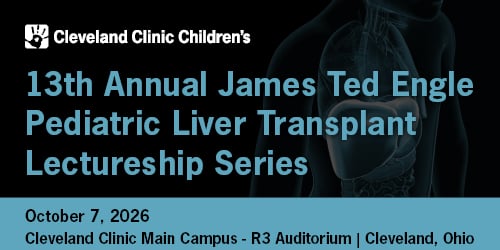
Cleveland Clinic 13th Annual James Ted Engle Pediatric liver Transplant Lectureship Series 2026

$10.00
This Product is shared via google drive download link, So please share your correct Gmail id while placing the order .Please note that there are no CME points or certificate associated with this course Samples for Courses Can be found here : Free Samples Here!
Cleveland Clinic 13th Annual James Ted Engle Pediatric liver Transplant Lectureship Series 2026
Cleveland Clinic 13th Annual James Ted Engle Pediatric liver Transplant Lectureship Series 2026 is a specialized educational program focused on pediatric hepatology, pediatric liver transplantation, and the evaluation and management of portal hypertension in children.
The Annual Ted Engle Pediatric Liver Transplant Lectureship Series brings together thought leaders in pediatric liver disease and transplantation to present new and emerging concepts related to the care of children who may require or undergo liver transplantation.
The 2026 symposium places particular emphasis on pediatric portal hypertension, combining medical, interventional radiologic, and surgical perspectives to provide a multidisciplinary approach to this complex clinical problem.
Course Details
Course: Cleveland Clinic 13th Annual James Ted Engle Pediatric liver Transplant Lectureship Series 2026
Provider: Cleveland Clinic Children’s
Focus: Pediatric Hepatology, Pediatric Liver Transplantation, Portal Hypertension, Interventional Radiology, Surgical Management, and Multidisciplinary Liver Care
Key Theme: Evaluation and management of pediatric portal hypertension
Target Audience
This educational program is designed for clinicians, researchers, and multidisciplinary healthcare professionals involved in pediatric liver disease and transplantation.
It is especially relevant for:
- Pediatric Hepatologists
- Pediatric Gastroenterologists
- Transplant Surgeons
- Pediatricians
- Pediatric Intensivists
- Interventional Radiologists
- Diagnostic Radiologists
- Pathologists
- Nurse Practitioners
- Physician Associates
- Pharmacists
- Transplant Coordinators
- Researchers and Scientists
- Pediatric Gastroenterology Fellows
- Hepatology Fellows
- Transplant Surgery Fellows
- Residents involved in pediatric liver disease care
Program Overview
The Annual Ted Engle Pediatric Liver Transplant Lectureship Series is intended for investigators and clinicians at all stages of their careers who study and practice pediatric hepatology.
The 2026 program focuses on the evaluation and management of pediatric portal hypertension, an important complication of both cirrhotic and non-cirrhotic liver disease.
The lectureship provides complementary perspectives on:
- Medical evaluation
- Diagnostic assessment
- Interventional radiologic techniques
- Surgical management
- Complication prevention
- Pediatric liver transplantation
- Multidisciplinary care
- Long-term management of advanced liver disease
This structure allows participants to better understand how medical, radiologic, and surgical approaches can be integrated when caring for children with portal hypertension.
Pediatric Portal Hypertension
Portal hypertension in children may result from cirrhotic or non-cirrhotic liver disease and can lead to significant complications.
The program reviews practical approaches to:
- Recognizing pediatric portal hypertension
- Distinguishing cirrhotic from non-cirrhotic causes
- Evaluating disease severity
- Identifying complications
- Selecting appropriate diagnostic studies
- Determining when intervention is needed
- Coordinating multidisciplinary management
- Considering surgical and transplant-related options
Medical Evaluation
Medical evaluation is a key component of pediatric portal hypertension management.
The program addresses:
- Clinical presentation
- Diagnostic assessment
- Disease severity evaluation
- Complication recognition
- Medical management strategies
- Long-term monitoring
- Referral for interventional or surgical management when appropriate
This approach helps clinicians establish an organized pathway for assessing children with portal hypertensive disease.
Interventional Radiology
Interventional radiology plays an important role in the assessment and treatment of advanced pediatric portal hypertension.
Participants will review:
- Interventional radiographic techniques
- Diagnostic applications
- Therapeutic applications
- Appropriate patient selection
- Expected outcomes
- Role of image-guided procedures in complex portal hypertension
These sessions help clinicians understand how interventional radiologic approaches can complement medical and surgical care.
Surgical Management
Surgical treatment may be necessary in selected children with advanced portal hypertension.
The lectureship examines:
- Rationale for surgical intervention
- Surgical techniques
- Prevention of complications
- Patient selection
- Clinical outcomes
- Relationship between surgery and liver transplantation
Participants will gain insight into how surgical strategies can be used to mitigate complications associated with pediatric portal hypertension.
Keynote Speaker
The keynote speaker is Kyle Soltys, M.D., of the University of Pittsburgh Medical Center.
His presentation focuses on the surgeon’s approach to mitigating complications of portal hypertension in children.
This keynote provides a surgical perspective on advanced pediatric portal hypertensive disease and the role of operative intervention in selected patients.
Additional Faculty
Additional presentations include:
- Sameer Gadani, M.D. – Cleveland Clinic Children’s
Focus: Interventional radiologic evaluation and management of pediatric portal hypertension. - Kaddakal Radhakrishnan, M.D. – Cleveland Clinic Children’s
Focus: Medical evaluation of pediatric portal hypertension.
Together, these presentations provide medical, interventional, and surgical perspectives on the management of children with portal hypertension.
Pediatric Liver Transplantation
The lectureship addresses portal hypertension within the broader context of pediatric liver transplantation.
Important considerations include:
- Identification of children who may require transplantation
- Evaluation of advanced liver disease
- Management of portal hypertension
- Prevention of major complications
- Surgical planning
- Perioperative care
- Multidisciplinary transplant management
- Long-term follow-up
The course emphasizes how effective portal hypertension management can influence broader treatment and transplant decision-making.
Multidisciplinary Care
Children with advanced liver disease often require coordination among multiple specialties.
The program highlights collaboration between:
- Pediatric Hepatology
- Pediatric Gastroenterology
- Transplant Surgery
- Interventional Radiology
- Diagnostic Radiology
- Pediatric Critical Care
- Pathology
- Nursing
- Pharmacy
- Transplant Coordination
This multidisciplinary approach supports comprehensive evaluation and individualized treatment planning.
What Participants Gain
Participants can strengthen their understanding of:
- Diagnosis of pediatric portal hypertension
- Cirrhotic and non-cirrhotic portal hypertension
- Medical management strategies
- Interventional radiologic techniques
- Surgical management options
- Pediatric liver transplantation
- Perioperative management
- Multidisciplinary care
- Long-term transplant outcomes
- Graft survival
- Rejection
- Immunosuppression strategies
- Nutrition and psychosocial support
- Family-centered care
- Emerging scientific advances
- Regenerative medicine
- Immunology
- Translational research
- Case-based clinical decision-making
- Evolving pediatric liver transplant guidelines
Learning Objectives
Upon completion of this program, participants should be better able to:
- Describe the diagnosis and management of children with cirrhotic or non-cirrhotic portal hypertension.
- Describe interventional radiographic techniques and outcomes for assessing and treating advanced portal hypertension in children.
- Describe the rationale, techniques, and outcomes for surgically managing pediatric portal hypertension.
Who Should Participate
The Cleveland Clinic 13th Annual James Ted Engle Pediatric liver Transplant Lectureship Series 2026 is particularly appropriate for professionals who care for children with advanced liver disease or transplantation needs.
It is especially useful for:
- Pediatric Hepatologists
- Pediatric Gastroenterologists
- Pediatric Liver Transplant Surgeons
- Pediatricians
- Pediatric Intensivists
- Interventional Radiologists
- Radiologists
- Pathologists
- Advanced Practice Providers
- Pharmacists
- Transplant Coordinators
- Researchers
- Fellows and Residents in pediatric hepatology, gastroenterology, and transplant surgery
Why This Course Is Relevant
Pediatric portal hypertension requires a coordinated approach involving accurate diagnosis, careful assessment of disease severity, prevention of complications, and timely use of medical, interventional, or surgical therapies.
Children with advanced liver disease may ultimately require transplantation, making early and appropriate management of portal hypertension especially important.
Cleveland Clinic 13th Annual James Ted Engle Pediatric liver Transplant Lectureship Series 2026 provides a focused review of these issues from medical, radiologic, and surgical perspectives, helping clinicians strengthen decision-making and multidisciplinary care in pediatric hepatology and transplantation.
Short Description
<div style=”background:#eef8ff;border:1px solid #b9def5;border-radius:6px;padding:12px 15px;line-height:1.5;”> <strong>Cleveland Clinic 13th Annual James Ted Engle Pediatric liver Transplant Lectureship Series 2026</strong> provides focused education in pediatric portal hypertension and liver transplantation, covering cirrhotic and non-cirrhotic disease, medical evaluation, interventional radiology, surgical management, and multidisciplinary pediatric liver care. </div>
+ Topics:
October 7, 2026 All times in Eastern Time |
|
|
1:00
|
Introduction |
|
1:10
|
Case Presentation (Briona Thompson, MD) |
|
1:40
|
Speaker (Kadakkal Radhakrishnan, MD) |
|
2:25
|
Speaker (Sameer Gadani, MD) |
|
3:10
|
Break |
|
3:30
|
Keynote Speaker (Kyle Soltys, MD) |
|
4:30
|
Q&A/Closing Remarks |
|
4:45
|
Adjourn |
Related products


Critical Care - Emergency medicine
Critical Care - Emergency medicine
Medical Accounts