
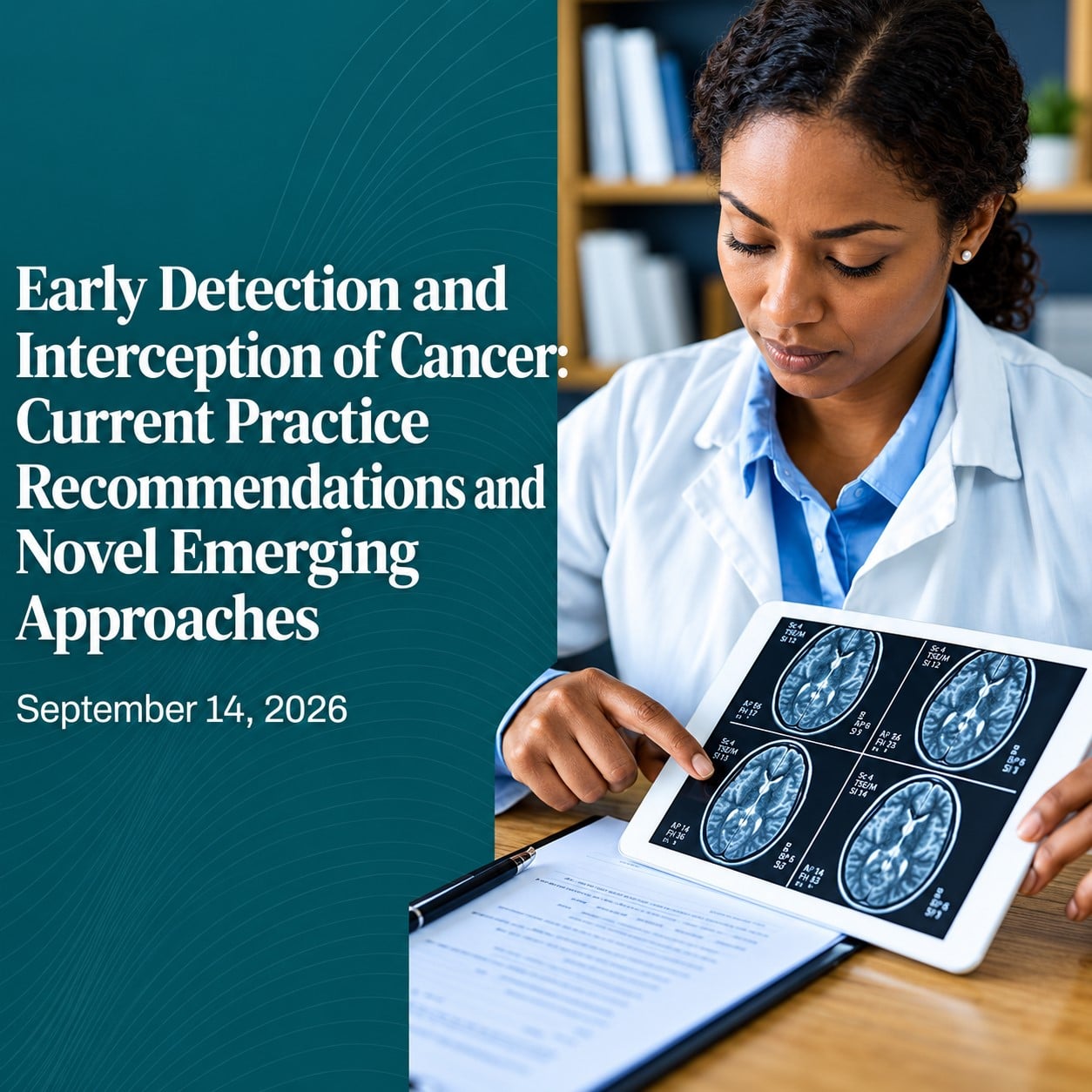
Harvard Early Detection and Interception of Cancer Current Practice Recommendations and Novel Emerging Approaches 2026
$50.00
This Product is shared via google drive download link, So please share your correct Gmail id while placing the order .Please note that there are no CME points or certificate associated with this course Samples for Courses Can be found here : Free Samples Here!
Harvard Early Detection and Interception of Cancer Current Practice Recommendations and Novel Emerging Approaches 2026
Harvard Early Detection and Interception of Cancer 2026 | Cancer Screening Guidelines, Hereditary Cancer Risk, Precancerous Lesions, Multi-Cancer Early Detection, Genetic Testing & Cancer Prevention
The Harvard Early Detection and Interception of Cancer Current Practice Recommendations and Novel Emerging Approaches 2026 course provides a comprehensive, evidence-based educational update on cancer screening, early diagnosis, inherited cancer predisposition, precancerous conditions, and emerging technologies for detecting malignancies before they become clinically advanced.
Developed by faculty from Harvard Medical School teaching hospitals and offered by Dana-Farber Cancer Institute, this multidisciplinary program brings together experts in oncology, genetics, primary care, gastroenterology, dermatology, hematology, gynecologic oncology, pulmonology, radiology, and cancer prevention.
Held on September 14, 2026, the course examines current screening recommendations, management of individuals at increased cancer risk, recognition of premalignant disorders, and appropriate referral pathways for complex patients.
The Harvard Early Detection and Interception of Cancer 2026 curriculum emphasizes the integration of established screening guidelines with emerging approaches such as multi-cancer early detection tests, whole-body imaging, inherited cancer risk assessment, and risk-based surveillance.
The educational program addresses important clinical questions involving hereditary cancer syndromes, breast cancer precursors, gynecologic malignancies, skin cancers, clonal hematopoiesis, myelodysplastic syndromes, monoclonal gammopathies, gastrointestinal precursor lesions, lung cancer, genitourinary cancers, and novel cancer detection technologies.
Through specialty-focused presentations, expert discussions, and multidisciplinary perspectives, the program aims to improve clinicians’ ability to identify individuals at risk, select appropriate screening strategies, and coordinate timely specialty evaluation.
Course Details
- Course: Harvard Early Detection and Interception of Cancer Current Practice Recommendations and Novel Emerging Approaches 2026
- Official Program: Early Detection and Interception of Cancer: Current Practice Recommendations and Novel Emerging Approaches
- Academic Institution: Harvard Medical School
- Offered By: Dana-Farber Cancer Institute
- Date: September 14, 2026
- Location: Boston, Massachusetts, USA
- Venue: Joseph B. Martin Conference Center, 77 Avenue Louis Pasteur, Boston, MA
- Official Format: In-Person and Live Online
- Duration: One Day
- Primary Specialty: Oncology
- Additional Focus: Cancer Prevention, Primary Care, Medical Genetics, Hematology, Gastroenterology, Gynecologic Oncology, Dermatology, Urology, Pulmonology, and Diagnostic Radiology
- Language: English
- Course Directors: Sapna Syngal, MD, MPH, and Elizabeth (Betsy) O’Donnell, MD
- Official AMA CME: Up to 5.25 AMA PRA Category 1 Credits™
- ANCC Nursing Credit: Up to 5.25 Contact Hours
- AAPA CME: Up to 5.25 Category 1 Credits
- ABIM MOC: Up to 5.25 Points
The credit amounts above apply to eligible participants in the original Harvard educational activity and do not accompany separately distributed MedicalAmboss files.
Target Audience
The course is designed for healthcare professionals involved in cancer prevention, screening, early diagnosis, management of inherited cancer risk, and evaluation of premalignant conditions.
The target audience includes:
- Primary Care Physicians
- Internal Medicine Physicians
- Family Medicine Physicians
- Medical Oncologists
- Surgical Oncologists
- Gynecologic Oncologists
- Medical Geneticists
- Genetic Counselors
- Hematologists
- Dermatologists
- Gastroenterologists
- Urologists
- Pulmonologists
- Diagnostic Radiologists
- Obstetricians and Gynecologists
- Physician Assistants
- Nurse Practitioners
- Registered Nurses
- Advanced Practice Providers
- Medical Residents and Fellows
- Other Healthcare Professionals Involved in Cancer Screening and Prevention
The program is especially relevant to clinicians seeking practical updates on current cancer screening recommendations, hereditary risk assessment, management of precursor lesions, and evolving diagnostic technologies.
Program Overview
Cancer prevention and early detection are essential components of contemporary clinical medicine.
Although established screening programs have improved the identification of several malignancies, significant challenges remain in identifying high-risk populations, selecting appropriate surveillance strategies, and incorporating emerging technologies into clinical practice.
The Harvard Early Detection and Interception of Cancer 2026 course addresses these challenges through a multidisciplinary review of screening recommendations, inherited cancer susceptibility, organ-specific cancer prevention, and innovations in early detection.
The program covers:
- Current Cancer Screening Guidelines
- Risk-Based Cancer Screening
- Hereditary Cancer Predisposition
- Germline Genetic Testing
- Genetic Counseling
- PREMM Plus Risk Prediction
- Management of High-Risk Individuals
- Ductal Carcinoma in Situ
- Breast Cancer Precursors
- Gynecologic Cancer Screening
- Dermatologic Cancer Detection
- Clonal Hematopoiesis
- Myelodysplastic Syndrome
- Monoclonal Gammopathy of Undetermined Significance
- Smoldering Multiple Myeloma
- Prostate Cancer Screening
- Gastrointestinal Premalignant Lesions
- Lung Cancer Screening
- Genitourinary Cancer Detection
- Community-Based Screening Implementation
- Multi-Cancer Early Detection Tests
- Whole-Body Imaging
- Emerging Cancer Detection Technologies
- Appropriate Referral Pathways
The educational structure combines clinical updates, expert perspectives, interactive questions and answers, and discussions about the future of cancer interception.
Learning Objectives
After completing the original educational program, participants should be better able to:
- Identify and implement current cancer screening guidelines, with emphasis on early detection and intervention for individuals at increased cancer risk, and formulate appropriate management recommendations.
- Identify premalignant conditions requiring specialized care and establish appropriate referral pathways for patients needing advanced evaluation, surveillance, or intervention.
- Evaluate emerging cancer detection technologies and consider their potential clinical applications, benefits, limitations, and implications for early diagnosis.
These are the program’s three principal learning objectives.
Additional educational themes addressed by the published agenda include hereditary cancer risk assessment, management of organ-specific precursor lesions, hematologic cancer interception, community screening, and new diagnostic approaches.
Official Program Topics
Monday, September 14, 2026
All session times are Eastern Time.
Opening Session
Welcome and Kick Off
8:30 AM – 8:45 AM
Faculty:
- Sapna Syngal, MD, MPH
- Elizabeth (Betsy) O’Donnell, MD
The introductory session establishes the course’s clinical focus on early detection, cancer interception, risk stratification, and integration of established and emerging screening approaches.
Primary Care and Cancer Risk Assessment
Advancing Early Detection and Interception from the Perspective of the Primary Care Physician
8:45 AM – 9:05 AM
Faculty: Elizabeth Housman, MD
This presentation examines the role of primary care clinicians in identifying individuals who may benefit from cancer screening, genetic evaluation, and specialized prevention services.
Important considerations include:
- Cancer Prevention in Primary Care
- Current Screening Recommendations
- Risk Assessment
- Screening Eligibility
- Patient Counseling
- Shared Decision-Making
- Identification of High-Risk Populations
- Referral to Specialized Cancer Prevention Programs
- Coordination of Long-Term Screening
Primary care physicians play a central role in translating evidence-based screening recommendations into clinical practice.
Genetics 101: Genetic Testing for Inherited Cancer Predisposition in Your Practice
9:15 AM – 9:30 AM
Faculty: Karina Franca, LGC
Reviews fundamental concepts of genetic testing for inherited cancer susceptibility.
Important topics include:
- Hereditary Cancer Syndromes
- Germline Genetic Testing
- Family Cancer History
- Genetic Risk Assessment
- Genetic Counseling
- Indications for Testing
- Interpretation of Genetic Results
- Variants of Uncertain Significance
- Referral to Cancer Genetics Specialists
The presentation focuses on integrating genetic evaluation into routine clinical care when appropriate.
Management of Hereditary Cancer Predisposition in Your Practice
9:30 AM – 9:45 AM
Faculty: Huma Rana, MD, MPH
Examines clinical management strategies for patients with inherited cancer susceptibility.
Important considerations include:
- High-Risk Cancer Surveillance
- Hereditary Cancer Predisposition
- Risk-Based Screening
- Genetic Counseling
- Family Risk Assessment
- Preventive Interventions
- Multidisciplinary Management
- Referral to Specialized Programs
- Individualized Surveillance Planning
The PREMM plus Model / An Easy Way to Identify At Risk Individuals in Your Practice
9:45 AM – 10:00 AM
Faculty: Sapna Syngal, MD, MPH
Introduces the PREMM Plus model as a clinical approach to identifying individuals who may have inherited cancer predisposition.
Important concepts include:
- Cancer Risk Prediction Models
- Hereditary Cancer Risk
- Family History
- Risk Stratification
- Genetic Evaluation
- Identification of At-Risk Individuals
- Clinical Decision Support
- Referral for Genetic Counseling
The session highlights the potential role of structured risk prediction tools in improving hereditary cancer identification.
Breast and Gynecologic Cancer Prevention
Management of DCIS (Ductal Carcinoma in Situ) and Other Breast Cancer Precursors
10:00 AM – 10:15 AM
Faculty: Emily Gatof, MD
Reviews the diagnosis and management of ductal carcinoma in situ and other breast lesions associated with increased cancer risk.
Relevant clinical considerations include:
- Ductal Carcinoma in Situ
- Breast Cancer Precursors
- Breast Imaging
- Histopathological Evaluation
- Risk Stratification
- Surveillance Strategies
- Treatment Considerations
- Multidisciplinary Breast Care
- Risk-Based Management
Screening and Early Detection of Gynecologic Malignancies
10:15 AM – 10:30 AM
Faculty: Colleen Feltmate, MD
Examines screening and early detection approaches for gynecologic malignancies.
Topics of clinical relevance include:
- Cervical Cancer Screening
- Gynecologic Cancer Risk Assessment
- Ovarian Cancer Risk
- Endometrial Cancer Warning Signs
- Hereditary Predisposition
- High-Risk Patient Evaluation
- Appropriate Referral
- Prevention and Surveillance Strategies
The presentation supports recognition of important gynecologic cancer risks and the appropriate use of established screening practices.
Questions and Answers
10:30 AM – 10:45 AM
Faculty:
- Karina Franca
- Huma Rana
- Sapna Syngal
- Emily Gatof
- Colleen Feltmate
Faculty discussion addressing genetic risk, inherited cancer predisposition, breast cancer precursors, and gynecologic cancer prevention.
Dermatology and Hematologic Cancer Interception
Screening and Early Detection of Dermatologic Malignancies
11:00 AM – 11:15 AM
Faculty: Vinod Nambudiri, MD, MBA
Reviews clinical approaches to recognizing skin cancers and identifying patients requiring dermatologic assessment.
Important considerations include:
- Skin Cancer Screening
- Melanoma
- Non-Melanoma Skin Cancer
- Suspicious Skin Lesions
- Clinical Risk Factors
- Skin Examination
- Early Recognition
- Appropriate Biopsy or Referral
- High-Risk Patient Surveillance
Unexplained Cytopenia – When to Consider Clonal Hematopoiesis and Myelodysplastic Syndrome (MDS)
11:15 AM – 11:30 AM
Faculty: Lachelle Weeks, MD, PhD
Examines the evaluation of unexplained blood cell abnormalities and the potential significance of clonal hematopoiesis.
Topics include:
- Unexplained Cytopenias
- Clonal Hematopoiesis
- Myelodysplastic Syndrome
- Hematologic Risk Assessment
- Clinical Evaluation
- Diagnostic Investigations
- Recognition of Possible Precursor Disorders
- Hematology Referral
- Longitudinal Monitoring
Intercepting Monoclonal Gammopathy of Undetermined Significance (MGUS) and Smoldering Myeloma
11:30 AM – 11:45 AM
Faculty: Irene Ghobrial, MD
Reviews precursor conditions associated with multiple myeloma and developments in early disease recognition and interception.
Important topics include:
- Monoclonal Gammopathy of Undetermined Significance
- Smoldering Multiple Myeloma
- Plasma Cell Disorders
- Risk of Disease Progression
- Clinical Surveillance
- Risk Stratification
- Emerging Interception Strategies
- Hematologic Cancer Prevention Research
Questions and Answers
11:45 AM – 12:00 PM
Faculty:
- Lachelle Weeks
- Irene Ghobrial
- Vinod Nambudiri
Discussion focused on dermatologic cancer detection and hematologic precursor conditions.
Organ-Specific Cancer Screening
Screening and Early Detection of Prostate Cancer
12:45 PM – 1:00 PM
Faculty: Michael Serzan, MD
Examines contemporary considerations in prostate cancer screening and early diagnosis.
Important topics include:
- Prostate Cancer Risk Assessment
- Prostate-Specific Antigen Testing
- Screening Eligibility
- Shared Decision-Making
- Potential Screening Benefits and Harms
- High-Risk Populations
- Diagnostic Follow-Up
- Urology Referral
Approach to the Management of Gastrointestinal Precursor Cancer Lesions
1:00 PM – 1:20 PM
Faculty: Nicolette J Rodriguez, MD, MPH
Reviews clinical considerations for gastrointestinal premalignant disorders and precursor lesions.
Relevant areas include:
- Gastrointestinal Cancer Prevention
- Premalignant GI Lesions
- Barrett’s Esophagus
- Pancreatic Cystic Lesions
- Colorectal Neoplasia Precursors
- Risk-Based Surveillance
- Endoscopic Assessment
- Specialized Referral
- Prevention and Interception Strategies
Screening and Early Detection of Lung Cancer
1:20 PM – 1:40 PM
Faculty: Anuradha Ramaswamy, MD
Examines approaches to lung cancer screening and early detection in appropriate patient populations.
Topics include:
- Lung Cancer Screening
- Low-Dose Computed Tomography
- Screening Eligibility
- Tobacco Exposure
- Risk Assessment
- Pulmonary Nodules
- Screening Follow-Up
- Benefits and Limitations
- Referral for Further Evaluation
Screening and Early Detection of Genitourinary Cancers
1:40 PM – 2:00 PM
Faculty: Bicky Thapa, MD, MS, FACP
Reviews clinical considerations for identifying malignancies affecting the genitourinary system.
Relevant areas include:
- Genitourinary Cancer Risk Assessment
- Bladder Cancer
- Kidney Cancer
- Urinary Tract Malignancies
- High-Risk Populations
- Clinical Warning Signs
- Diagnostic Evaluation
- Appropriate Specialty Referral
- Emerging Detection Approaches
Questions and Answers
2:00 PM – 2:15 PM
Faculty discussion on organ-specific screening, gastrointestinal precursor lesions, lung cancer detection, and genitourinary malignancies.
Emerging Screening Technologies and Implementation
Implementation of Cervical Cancer Screening and Early Detection in the Community
2:30 PM – 2:45 PM
Faculty: Kayoll Gyan, PhD, RN
Reviews implementation of cervical cancer screening and early detection at the community level.
Important considerations include:
- Cervical Cancer Prevention
- Community Screening Programs
- Screening Participation
- Access to Preventive Services
- Patient Education
- Screening Follow-Up
- Healthcare Delivery Challenges
- Screening Implementation Strategies
- Health Equity
Multi-Cancer Early Detection Tests – Ready for Prime Time?
2:45 PM – 3:00 PM
Faculty: Elizabeth (Betsy) O’Donnell, MD
Examines emerging multi-cancer early detection technologies and the clinical questions surrounding their use.
Important areas include:
- Multi-Cancer Early Detection
- Blood-Based Cancer Detection
- Emerging Biomarker Technologies
- Clinical Validation
- Test Accuracy
- False-Positive Results
- False-Negative Results
- Diagnostic Follow-Up
- Clinical Utility
- Potential Benefits and Limitations
- Integration Into Existing Screening Programs
The presentation examines whether emerging multi-cancer detection tests are ready for routine clinical implementation.
Whole Body Imaging for Screening and Early Detection of Cancer – Promises and Pitfalls
3:00 PM – 3:15 PM
Faculty: Michael Rosenthal, MD, PhD
Reviews opportunities and limitations of whole-body imaging as a cancer screening strategy.
Relevant concepts include:
- Whole-Body Imaging
- Cancer Detection Technologies
- Screening in Asymptomatic Individuals
- Imaging Sensitivity and Specificity
- Incidental Findings
- False-Positive Results
- Overdiagnosis
- Additional Diagnostic Testing
- Potential Harms
- Clinical Appropriateness
The session emphasizes critical evaluation of imaging technologies before widespread adoption for screening.
Panel Discussion: Looking to the Future of Early Detection and Interception
3:15 PM – 3:30 PM
Faculty:
- Elizabeth (Betsy) O’Donnell, MD
- Sapna Syngal, MD, MPH
- Michael Rosenthal, MD, PhD
- Kayoll Gyan, PhD, RN
This multidisciplinary panel addresses future directions in cancer screening, detection technologies, prevention strategies, and implementation.
Major themes include:
- Future Cancer Screening Strategies
- Personalized Risk Assessment
- Emerging Diagnostic Technologies
- Multi-Cancer Early Detection
- Integration Into Clinical Practice
- Health Equity
- Research Priorities
- Multidisciplinary Care
Major Topics Covered
- Harvard Early Detection and Interception of Cancer 2026
- Cancer Prevention
- Cancer Screening Guidelines
- Early Cancer Detection
- Cancer Interception
- Hereditary Cancer Syndromes
- Genetic Testing
- Genetic Counseling
- Germline Cancer Predisposition
- Cancer Risk Stratification
- PREMM Plus Model
- High-Risk Cancer Surveillance
- Breast Cancer Precursors
- Ductal Carcinoma in Situ
- Gynecologic Cancer Screening
- Cervical Cancer Prevention
- Dermatologic Malignancies
- Melanoma Detection
- Clonal Hematopoiesis
- Myelodysplastic Syndrome
- Unexplained Cytopenias
- MGUS
- Smoldering Multiple Myeloma
- Plasma Cell Precursors
- Prostate Cancer Screening
- Gastrointestinal Premalignant Lesions
- Barrett’s Esophagus
- Pancreatic Cystic Lesions
- Colorectal Cancer Prevention
- Lung Cancer Screening
- Low-Dose CT
- Genitourinary Cancer Detection
- Bladder Cancer
- Kidney Cancer
- Community Screening
- Multi-Cancer Early Detection Tests
- Liquid Biopsy
- Blood-Based Cancer Detection
- Whole-Body Imaging
- Cancer Biomarkers
- False-Positive Screening Results
- Overdiagnosis
- Personalized Cancer Screening
- Referral Pathways
- Multidisciplinary Cancer Prevention
Hereditary Cancer Risk and Genetic Testing
Inherited cancer predisposition is an important consideration when assessing patients with significant personal or family cancer histories.
The curriculum examines the identification of individuals who may benefit from genetic evaluation and specialized surveillance.
Important areas include:
- Hereditary Cancer Syndromes
- Germline Testing
- Genetic Risk Models
- Family History Assessment
- Genetic Counseling
- Personalized Screening
- Preventive Interventions
- Specialized Cancer Prevention Referral
The inclusion of the PREMM Plus model highlights the role of structured risk assessment in identifying potentially high-risk individuals.
Cancer Precursor Lesions and Interception
Cancer interception focuses on recognizing and managing conditions that may precede invasive malignancy.
The program addresses important premalignant and precursor disorders, including:
- Ductal Carcinoma in Situ
- Gastrointestinal Precursor Lesions
- Clonal Hematopoiesis
- Myelodysplastic Syndrome
- MGUS
- Smoldering Multiple Myeloma
These conditions present different levels of malignant potential and require individualized evaluation, surveillance, or management.
The curriculum emphasizes the importance of understanding progression risk and determining appropriate referral pathways.
Organ-Specific Cancer Screening
Cancer screening recommendations vary according to cancer type, individual risk, age, clinical history, and the effectiveness of available screening methods.
The course addresses screening considerations involving:
- Breast Cancer
- Gynecologic Malignancies
- Cervical Cancer
- Dermatologic Malignancies
- Prostate Cancer
- Gastrointestinal Cancer
- Lung Cancer
- Genitourinary Malignancies
These sessions help healthcare professionals understand the clinical considerations associated with established screening approaches and early diagnostic evaluation.
Multi-Cancer Early Detection Technologies
Multi-cancer early detection technologies represent an emerging area of cancer screening research.
Some approaches aim to identify signals associated with more than one malignancy using a single test.
The program examines:
- Blood-Based Detection
- Emerging Biomarkers
- Potential Clinical Applications
- Screening Accuracy
- False-Positive Results
- False-Negative Results
- Additional Diagnostic Evaluation
- Clinical Utility
- Limitations of Emerging Technologies
- Integration With Existing Screening Guidelines
Such tests remain an evolving area of clinical research and should not automatically be considered replacements for established cancer screening programs.
Whole-Body Imaging and Cancer Screening
Whole-body imaging has attracted attention as a possible approach to detecting malignancies before symptoms develop.
However, its role in screening asymptomatic populations requires careful assessment.
Important considerations include:
- Imaging Performance
- Incidental Findings
- False-Positive Results
- Overdiagnosis
- Unnecessary Follow-Up Investigations
- Patient Anxiety
- Cost and Resource Utilization
- Evidence of Clinical Benefit
- Appropriate Patient Selection
The educational discussion encourages critical appraisal of screening technologies and their potential benefits and harms.
Cancer Screening in Primary Care
Primary care physicians play an essential role in implementing preventive cancer screening and recognizing patients who may require individualized evaluation.
Their responsibilities may include:
- Reviewing Screening Eligibility
- Identifying High-Risk Individuals
- Assessing Family History
- Discussing Screening Benefits and Harms
- Coordinating Genetic Referrals
- Evaluating Abnormal Screening Results
- Referring Patients With Premalignant Conditions
- Supporting Screening Adherence
- Coordinating Long-Term Surveillance
The course emphasizes practical approaches to translating current recommendations into everyday clinical practice.
Course Leadership
Sapna Syngal, MD, MPH
- Director, Centers for Early Detection and Interception, Solid Tumors, Dana-Farber Cancer Institute
- Director of Research, Division of Cancer Genetics and Prevention, Dana-Farber Cancer Institute
- Professor of Medicine, Harvard Medical School
Elizabeth (Betsy) O’Donnell, MD
- Director, Multi-Cancer Early Detection Clinic, Dana-Farber Cancer Institute
- Associate Professor of Medicine, Harvard Medical School
The course includes additional faculty specializing in medical oncology, hematology, medical genetics, gynecologic oncology, dermatology, gastroenterology, pulmonology, genitourinary oncology, radiology, and community cancer prevention.
Continuing Medical Education
Harvard Medical School designates the original live educational activity for a maximum of:
- 5.25 AMA PRA Category 1 Credits™
- 5.25 ANCC Contact Hours
- 5.25 AAPA Category 1 CME Credits
- 5.25 ABIM MOC Points
The course is offered through Harvard Medical School’s continuing education framework.
Important CME Notice
The credit amounts listed above apply to eligible participants in the official Harvard activity who fulfill the provider’s educational and evaluation requirements.
Purchasing separately distributed educational materials from MedicalAmboss does not itself provide:
- Harvard Medical School CME Credits
- ABIM MOC Points
- Official Certificates
- Harvard Course Registration
- Live Course Attendance
- Publisher Streaming Access
- Harvard Continuing Education Account Access
- Publisher-Hosted Extras
Why This Course Is Relevant
The Harvard Early Detection and Interception of Cancer Current Practice Recommendations and Novel Emerging Approaches 2026 course brings together established screening recommendations, inherited cancer risk assessment, management of premalignant conditions, and emerging diagnostic technologies.
Healthcare professionals increasingly encounter patients seeking individualized cancer screening, genetic testing, advanced imaging, and new blood-based cancer detection methods.
The course explores both clinical opportunities and important limitations of these approaches.
Its multidisciplinary curriculum is particularly relevant to primary care clinicians, medical oncologists, geneticists, hematologists, gastroenterologists, dermatologists, gynecologic oncologists, urologists, pulmonologists, and diagnostic radiologists.
The program provides an educational framework for understanding cancer prevention, improving early recognition of high-risk conditions, and evaluating emerging approaches to cancer detection and interception.
Official Program Reference and MedicalAmboss Purchase Scope
Official Harvard Medical School Program:
https://learn.hms.harvard.edu/programs/early-detection-and-interception-cancer
Harvard Continuing Education Course Information:
https://cmecatalog.hms.harvard.edu/early-detection-and-interception-cancer
The official course information describes the original educational program and its scheduled topics, faculty, and accreditation.
It does not establish the exact inventory of digital files available in a separately distributed MedicalAmboss product.
MedicalAmboss File Scope: This listing describes the educational subject matter for reference. Provider registration, live attendance, streaming-platform access, CME or other credit, certificates, memberships, apps, accounts, and publisher-hosted extras are not included unless explicitly listed as store files.
Short Description
<div style=”border:2px solid #1677b8;border-radius:10px;padding:16px;background:#f7fbfe;”>
Harvard Early Detection and Interception of Cancer 2026 provides a comprehensive educational review of current cancer screening guidelines, hereditary cancer risk assessment, genetic testing, premalignant conditions, organ-specific screening, and emerging technologies for early cancer detection.
The September 14, 2026 course features Harvard-affiliated experts discussing cancer prevention, early diagnosis, management of high-risk populations, multi-cancer early detection tests, and whole-body imaging.
Topics
- Welcome and Kick Off
- Advancing Early Detection and Interception from the Perspective of the Primary Care Physician
- Q&A: Perspective of the Primary Care Physician
- Genetics 101: Genetic Testing for Inherited Cancer Predisposition in Your Practice
- Management of Hereditary Cancer Predisposition in Your Practice
- The PREMM plus Model / An Easy Way to Identify At Risk Individuals in Your Practice
- Management of DCIS (Ductal Carcinoma in Situ) and Other Breast Cancer Precursors
- Screening and Early Detection of Gynecologic Malignancies
- Q&A: Genetics, Breast Precursors, and Gynecologic Malignancies
- Screening and Early Detection of Dermatologic Malignancies
- Unexplained Cytopenia – When to Consider Clonal Hematopoiesis and Myelodysplastic Syndrome (MDS)
- Intercepting Monoclonal Gammopathy of Undetermined Significance (MGUS) and Smoldering Myeloma
- Q&A: Cytopenia, MDS, MGUS, and Dermatologic Malignancies
- Screening and Early Detection of Prostate Cancer
- Approach to the Management of Gastrointestinal Precursor Cancer Lesions
- Screening and Early Detection of Lung Cancer
- Screening and Early Detection of Genitourinary Cancers
- Q&A: GI Precursor Lesions, Lung Cancer, and Genitourinary Cancers
- Implementation of Cervical Cancer Screening and Early Detection in the Community
- Multi-Cancer Early Detection Tests – Ready for Prime Time?
- Whole Body Imaging for Screening and Early Detection of Cancer – Promises and Pitfalls
- Panel Discussion: Looking to the Future of Early Detection and Interception
- Networking Reception
Related products

Critical Care - Emergency medicine
Critical Care - Emergency medicine
Critical Care - Emergency medicine
Medical Accounts
Critical Care - Emergency medicine
40th ISICEM International Symposium on Intensive Care & Emergency Medicine 2021
Critical Care - Emergency medicine
International Symposium on Intensive Care & Emergency Medicine ( ISICEM ) 2020
Medical Accounts