
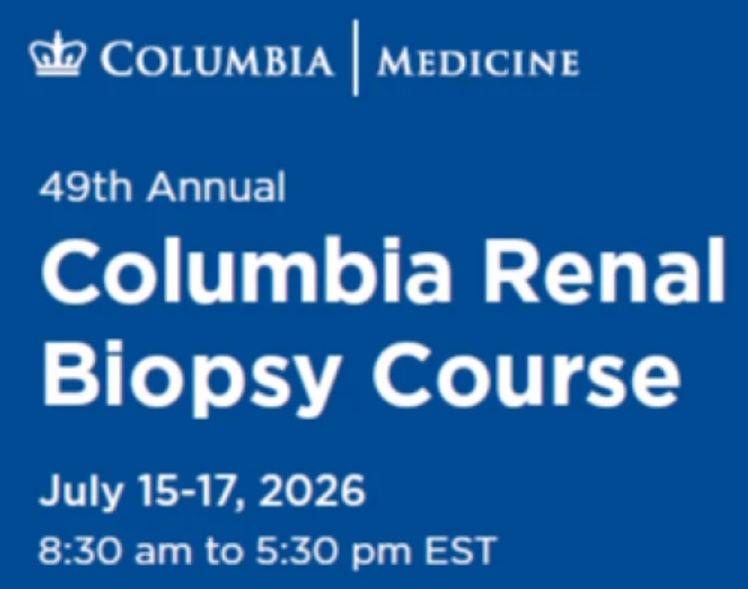
Columbia University Renal Biopsy Course 2026

$100.00
Columbia University Renal Biopsy Course 2026 is the 49th annual educational program organized by Columbia University Vagelos College of Physicians and Surgeons, providing an intensive review of renal biopsy interpretation, diagnostic nephropathology, glomerular diseases, and contemporary clinical nephrology.
Led by Glen S. Markowitz, MD, and an experienced course leadership team, the program covers minimal change disease, FSGS, membranous nephropathy, IgA nephropathy, lupus nephritis, C3 glomerulopathy, APOL1-mediated kidney disease, complement-targeting therapies, renal transplant pathology, diabetic kidney disease, renal amyloidosis, onconephrology, interstitial nephritis, and thrombotic microangiopathy. Through specialist-led lectures and interactive renal biopsy case discussions, the course emphasizes clinicopathologic correlation, diagnostic accuracy, and individualized kidney disease management.
EXPRESS DISCOVER PayPal
Columbia University Renal Biopsy Course 2026
49th Annual Renal Biopsy Course | Renal Pathology | Glomerular Diseases | Diagnostic Nephropathology | Clinical Nephrology | Kidney Disease Management
Target Audience
Nephrologists, Renal Pathologists, Anatomic and Clinical Pathologists, Glomerular Disease Specialists, Transplant Nephrologists, Transplant Pathologists, Pediatric Nephrologists, Internists, Hospitalists, Rheumatologists, Hematologists, Medical Oncologists, Onconephrologists, Endocrinologists, Diabetologists, Medical Geneticists, Obstetricians and Gynecologists (OB-GYNs), Maternal-Fetal Medicine Specialists, Obstetric Medicine Specialists, Infectious Disease Specialists, Allergists and Immunologists, and Medical Toxicologists.
This course is specifically designed for practicing nephrologists, renal pathologists, residents, fellows, and trainees seeking to strengthen their expertise in renal biopsy interpretation, clinicopathologic correlation, and the diagnosis and management of common and complex medical kidney diseases.
Information
Columbia University Renal Biopsy Course 2026 is the 49th annual edition of the renowned educational program, The Columbia Renal Biopsy Course – Renal Biopsy in Medical Diseases of the Kidneys, organized by the Columbia University Vagelos College of Physicians and Surgeons.
Held from July 15–17, 2026, at Columbia University Irving Medical Center in New York, this intensive three-day educational program focuses on the integration of renal pathology, clinical nephrology, diagnostic microscopy, molecular genetics, and contemporary therapeutic strategies for medical diseases of the kidneys.
The course provides a comprehensive review of kidney disorders affecting the glomeruli, renal tubules, interstitium, and renal vasculature. Through authoritative specialist-led lectures and interactive renal biopsy case discussions, participants explore the relationship between histopathological findings, clinical presentations, disease mechanisms, and treatment decisions.
The curriculum covers fundamental and advanced aspects of glomerular diseases, including minimal change disease (MCD), focal segmental glomerulosclerosis (FSGS), membranous nephropathy, membranoproliferative glomerulonephritis (MPGN), C3 glomerulopathy, IgA nephropathy, crescentic glomerulonephritis, ANCA-associated vasculitis, anti-glomerular basement membrane disease, infection-related glomerulonephritis, and lupus nephritis.
Particular emphasis is placed on the diagnostic integration of light microscopy, immunofluorescence, and electron microscopy, enabling participants to develop a more comprehensive understanding of renal biopsy findings and their clinical significance.
The program also explores advances in genetic testing, hereditary nephropathies, APOL1-mediated kidney disease (AMKD), complement-mediated glomerular disorders, and emerging complement-targeting therapies.
Additional clinical areas include diabetic kidney disease, renal transplant pathology, pregnancy in patients with glomerular disease, dysproteinemic renal disorders, renal amyloidosis, onconephrology, drug-induced nephrotoxicity, acute interstitial nephritis, and thrombotic microangiopathy.
By combining diagnostic renal pathology with contemporary clinical nephrology, the course provides a multidisciplinary educational framework for improving diagnostic accuracy, patient risk assessment, individualized treatment planning, and the longitudinal management of complex kidney diseases.
Course Details
- Course Title: Columbia University Renal Biopsy Course 2026
- Official Program Title: The Columbia Renal Biopsy Course – 49th Annual (Renal Biopsy in Medical Diseases of the Kidneys)
- Organizer: Columbia University Vagelos College of Physicians and Surgeons
- Course Director: Glen S. Markowitz, MD
- Course Dates: July 15–17, 2026
- Course Year: 2026
- Edition: 49th Annual
- Venue: Columbia University Irving Medical Center (Faculty Club)
- Location: New York, NY, USA
- Original Conference Format: Hybrid Conference
- Duration: Three Days
- Primary Specialty: Nephrology
- Secondary Specialty: Renal Pathology
- Language: English
Learning Objectives
Upon completion of this activity, participants will be better able to:
- Correlate light microscopic, immunofluorescence, and electron microscopic renal biopsy findings with clinical presentations across glomerular, tubulointerstitial, vascular, dysproteinemic, and transplant kidney diseases.
- Identify the role of complement in the pathophysiology of glomerular diseases and determine how novel complement-targeting therapies fit into modern treatment algorithms.
- Enhance diagnostic suspicion for genetically mediated forms of glomerular and hereditary kidney diseases—including APOL1-mediated kidney disease (AMKD)—and facilitate timely integration of renal biopsy findings with genetic testing.
- Assess which patients would benefit from initial or repeat renal biopsies in the longitudinal management and immune surveillance of glomerular and autoimmune renal diseases.
- Apply updated 2026 clinical guidelines and individualized therapeutic strategies for minimal change disease (MCD), focal segmental glomerulosclerosis (FSGS), membranous nephropathy, IgA nephropathy, lupus nephritis, diabetic kidney disease, interstitial nephritis, thrombotic microangiopathy, and drug-induced nephrotoxicity.
Faculty
Course Director
- Glen S. Markowitz, MD
Course Co-Directors
- Vivette D. D’Agati, MD
- Gerald B. Appel, MD
- Pietro Canetta, MD
- Jai Radhakrishnan, MD, MS
- Andrew S. Bomback, MD, MPH
The course combines specialist-led educational lectures with interactive clinicopathologic discussions, emphasizing the relationship between renal biopsy findings, disease pathogenesis, clinical diagnosis, and therapeutic management.
Topics – Curriculum Overview
Renal Biopsy Interpretation and Diagnostic Nephropathology
- Light microscopic evaluation of renal biopsies.
- Immunofluorescence findings in medical renal diseases.
- Electron microscopic evaluation of kidney tissue.
- Clinicopathologic correlation in renal disease.
- Diagnostic assessment of glomerular, tubular, interstitial, and vascular kidney disorders.
- Clinical indications for initial and repeat renal biopsies.
- Renal biopsy in longitudinal disease management and immune surveillance.
- Interactive renal biopsy case discussions.
Nephrotic Syndrome and Glomerular Diseases
- Minimal Change Disease (MCD).
- Focal Segmental Glomerulosclerosis (FSGS).
- Membranous Nephropathy.
- Diagnostic and therapeutic approaches to nephrotic syndrome.
- Correlation of renal biopsy findings with clinical manifestations.
- Individualized therapeutic strategies for glomerular diseases.
Nephritic Syndrome and Immune-Mediated Glomerulonephritis
- Membranoproliferative Glomerulonephritis (MPGN).
- C3 Glomerulopathy.
- Crescentic Glomerulonephritis.
- ANCA-Associated Glomerulonephritis and Vasculitis.
- Anti-Glomerular Basement Membrane (Anti-GBM) Disease.
- IgA Nephropathy.
- IgA Vasculitis.
- Infection-Related Glomerulonephritis.
- Lupus Nephritis.
- Clinicopathologic assessment of nephritic syndromes.
- Autoimmune kidney disease management and surveillance.
Complement-Mediated Kidney Diseases
- Role of complement in glomerular disease pathophysiology.
- Complement-mediated mechanisms of renal injury.
- Diagnostic assessment of complement-associated glomerular disorders.
- Emerging complement-targeting therapies.
- Integration of complement-directed treatment into modern therapeutic algorithms.
Genetic and Hereditary Kidney Diseases
- Genetic testing in glomerular diseases.
- Hereditary nephropathies.
- Genetically mediated forms of kidney disease.
- APOL1-Mediated Kidney Disease (AMKD).
- Integration of renal biopsy findings with genetic testing.
- Recognition of clinical and pathological findings associated with inherited kidney disorders.
Diabetic Kidney Disease
- Renal biopsy findings in diabetic kidney disease.
- Clinicopathologic assessment of diabetic nephropathy.
- Individualized therapeutic strategies for diabetic kidney disease.
- Integration of renal pathology with clinical disease management.
Renal Transplant Pathology
- Diagnostic evaluation of renal transplant biopsies.
- Clinicopathologic correlation in transplant kidney diseases.
- Renal biopsy findings in transplant-related renal disorders.
- Application of renal pathology to clinical transplant nephrology.
Pregnancy and Glomerular Diseases
- Pregnancy in patients with glomerular disease.
- Clinical considerations in pregnancy-associated kidney disease.
- Integration of nephrological assessment and renal pathology in maternal kidney disease.
Dysproteinemic Renal Diseases and Amyloidosis
- Dysproteinemic renal disorders.
- Renal amyloidosis.
- Clinicopathologic assessment of protein-associated kidney diseases.
- Diagnostic integration of renal biopsy findings and clinical presentations.
Onconephrology and Drug-Induced Nephrotoxicity
- Onconephrology.
- Drug-induced nephrotoxicity.
- Diagnostic assessment of medication-associated kidney injury.
- Individualized therapeutic strategies for drug-induced renal disease.
Tubulointerstitial and Renal Vascular Diseases
- Acute Interstitial Nephritis.
- Tubulointerstitial Kidney Diseases.
- Thrombotic Microangiopathy (TMA).
- Medical diseases affecting the renal vasculature.
- Clinicopathologic correlation in tubulointerstitial and vascular renal disorders.
- Contemporary diagnostic and therapeutic management strategies.
Key Features
- The 49th annual Columbia University Renal Biopsy Course.
- Intensive three-day specialist-level renal pathology education.
- Comprehensive review of common and complex medical kidney diseases.
- Advanced renal biopsy interpretation and clinicopathologic correlation.
- Integration of light microscopy, immunofluorescence, and electron microscopy.
- Comprehensive coverage of nephrotic and nephritic syndromes.
- Clinical updates on glomerulonephritis and lupus nephritis.
- Emerging complement-targeting therapeutic strategies.
- Genetic testing and APOL1-mediated kidney disease.
- Diabetic kidney disease and renal transplant pathology.
- Dysproteinemic kidney diseases and renal amyloidosis.
- Pregnancy-related considerations in glomerular disease.
- Onconephrology and drug-induced nephrotoxicity.
- Acute interstitial nephritis and thrombotic microangiopathy.
- Interactive renal biopsy case discussions.
- Individualized diagnostic and therapeutic approaches to complex renal disorders.
Why Choose Columbia University Renal Biopsy Course 2026?
The Columbia University Renal Biopsy Course 2026 offers a comprehensive educational approach to understanding the complex relationship between renal histopathology and clinical kidney disease.
Its multidisciplinary curriculum brings together nephrology, renal pathology, immunology, genetics, transplantation, and contemporary therapeutics, making it particularly valuable for healthcare professionals involved in the diagnosis and management of glomerular and medical renal diseases.
The emphasis on clinicopathologic correlation and interactive renal biopsy cases supports the development of diagnostic reasoning skills while reinforcing the clinical significance of microscopic findings.
Participants can strengthen their understanding of established renal disease mechanisms while exploring developments in genetic testing, complement-mediated diseases, and targeted therapeutic strategies relevant to contemporary nephrology practice.
Frequently Asked Questions
Who should study Columbia University Renal Biopsy Course 2026?
The course is primarily designed for nephrologists, renal pathologists, transplant nephrologists, pathology specialists, and fellows interested in medical renal diseases and renal biopsy interpretation.
Does the course cover advanced glomerular diseases?
Yes. The curriculum includes minimal change disease, FSGS, membranous nephropathy, MPGN, C3 glomerulopathy, IgA nephropathy, crescentic glomerulonephritis, ANCA-associated disease, anti-GBM disease, and lupus nephritis.
Does the course include renal biopsy microscopy?
Yes. The educational objectives emphasize the integration of light microscopy, immunofluorescence, and electron microscopy with clinical presentations across different forms of kidney disease.
Are genetic kidney diseases covered?
Yes. The course addresses hereditary nephropathies, genetic testing, genetically mediated glomerular diseases, and APOL1-mediated kidney disease.
Does the program discuss emerging complement-targeting therapies?
Yes. The curriculum explores the role of complement in glomerular disease pathophysiology and the integration of novel complement-targeting therapies into contemporary treatment approaches.
Does the course cover renal transplant pathology?
Yes. Renal transplant pathology and the clinical interpretation of transplant biopsy findings are included in the educational curriculum.
Are onconephrology and renal amyloidosis included?
Yes. The course addresses onconephrology, drug-induced nephrotoxicity, dysproteinemic renal diseases, and renal amyloidosis, alongside other complex medical kidney disorders.
Who organizes this renal biopsy course?
The course is organized by Columbia University Vagelos College of Physicians and Surgeons and directed by Glen S. Markowitz, MD, alongside five course co-directors.
Topics
Day 1 — Wednesday, July 15, 2026
-
Pre-Conference / Companion Lecture | Crescentic Glomerulonephritis, ANCA & Anti-GBM Disease — J. Charles Jennette, MD
-
8:30 AM | Welcome and Opening Remarks — Course Director: Glen S. Markowitz, MD
-
8:40 AM | Histophysiology of the Glomerulus — Vivette D. D’Agati, MD
-
9:30 AM | Minimal Change Disease (MCD) and Focal Segmental Glomerulosclerosis (FSGS) — Agnes B. Fogo, MD
-
10:40 AM | Treatment of MCD and FSGS: Individualizing Therapy in 2026 — Gerald B. Appel, MD
-
11:20 AM | Membranous Nephropathy (MN): Pathology — Glen S. Markowitz, MD
-
11:50 AM | Membranous Nephropathy: New Antigens and New Insights — Sanjeev Sethi, MD, PhD
-
12:20 PM | Working Lunch – Renal Biopsy: Clinical Cases
-
1:40 PM | Treatment and Immune Surveillance in MN — Laurence H. Beck, Jr., MD, PhD
-
2:20 PM | Membranoproliferative GN and C3 Glomerulopathy: Pathology — Miroslav Sekulic, MD
-
3:30 PM | Management of C3 Glomerulopathy and Immune Complex MPGN — Andrew S. Bomback, MD, MPH
-
4:10 PM | Pathology of Diabetic Kidney Disease — Charles E. Alpers, MD
-
4:50 PM | Treatment and Prevention of Diabetic Kidney Disease — Maya Rao, MD
Day 2 — Thursday, July 16, 2026
-
8:30 AM | Overview: Crescentic Glomerulonephritis — Glen S. Markowitz, MD
-
8:45 AM | Treatment of Crescentic Glomerulonephritis — Ronald J. Falk, MD
-
10:00 AM | Pathology of IgA Nephropathy and IgA Vasculitis — M. Barry Stokes, MD
-
10:40 AM | Treatment of IgA Nephropathy and IgA Vasculitis — Pietro Canetta, MD
-
11:20 AM | Infection-Related Glomerulonephritis — Leal C. Herlitz, MD
-
12:00 PM | Working Lunch – Renal Biopsy: Clinical Cases
-
1:00 PM | Introduction to Conrad L. Pirani Lecture — Ali Gharavi, MD
-
1:10 PM | CONRAD L. PIRANI LECTURE: The Journey Into Genetic Discovery in IgA Nephropathy — Krzysztof Kiryluk, MD, MS
-
2:00 PM | Renal Transplant Pathology Part 1: Immunologic Rejection — Robert B. Colvin, MD
-
3:10 PM | Renal Transplant Pathology Part 2: Drug Toxicity, Viral Infections, and Recurrent and De Novo Glomerular Diseases — Ibrahim Batal, MD
-
3:50 PM | Hereditary Nephropathies — Agnes B. Fogo, MD
-
4:30 PM | Apolipoprotein-L1 Mediated Kidney Disease (AMKD) — Jai Radhakrishnan, MD, MS
-
5:00 PM | Pregnancy in Glomerular Disease — Michelle A. Hladunewich, MD, MSc
Day 3 — Friday, July 17, 2026
-
8:00 AM | Dysproteinemic Renal Disease — Dominick Santoriello, MD
-
8:40 AM | Renal Amyloidosis, Fibrillary Glomerulonephritis, and Monoclonal Immunoglobulin Crystalline Nephropathies — Samih H. Nasr, MD
-
9:20 AM | Onconephrology: Clinical Aspects of Drug Toxicity — Meghan E. Sise, MD, MS
-
10:30 AM | Acute Interstitial Nephritis — Satoru Kudose, MD
-
11:00 AM | Treatment of Interstitial Nephritis — Jai Radhakrishnan, MD, MS
-
11:20 AM | Integrating the Renal Biopsy with Genetic Testing — Dominick Santoriello, MD
-
11:50 AM | Renal Biopsy and Genetics: Clinical Cases — Dominick Santoriello, MD & Hila Milo Rasouly, PhD
-
1:00 PM | Lupus Nephritis: The Pathologist’s Perspective — Vivette D. D’Agati, MD
-
1:40 PM | Lupus Nephritis in 2026: New Guidelines, New Treatments, and New Challenges — Gerald B. Appel, MD
-
2:40 PM | Treatment and Pathology of Thrombotic Microangiopathy — Jai Radhakrishnan, MD, MS & M. Barry Stokes, MD
-
3:30 PM | The Pathology of Nephrotoxicity — Glen S. Markowitz, MD
Related products
Internal Medicine
Anesthesiology & pain medicine
Critical Care Symposium: Mastering ED Mechanical Ventilation
Anesthesiology & pain medicine

Internal Medicine

Critical Care - Emergency medicine


Anesthesiology & pain medicine

Internal Medicine
Medical Accounts