
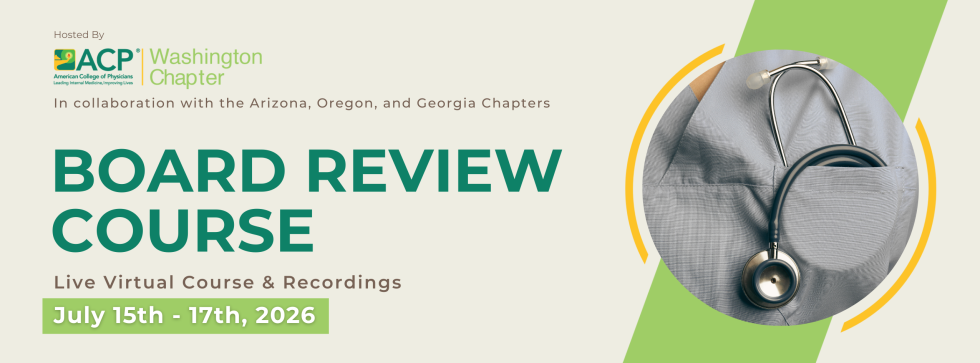
ACP Washington Chapter Board Review Course 2026
$55.00
This Product is shared via google drive download link, So please share your correct Gmail id while placing the order .Please note that there are no CME points or certificate associated with this course Samples for Courses Can be found here : Free Samples Here!
ACP Washington Chapter Internal Medicine Board Review Course 2026
3-Day Internal Medicine Board Review + Additional Pre-Recorded Sessions | Videos
Prepare for the Internal Medicine Board Certification Examination with the ACP Washington Chapter Internal Medicine Board Review Course 2026, a comprehensive board-focused educational program sponsored by the Washington Chapter of the American College of Physicians (ACP).
The 2026 program was held July 15–17, 2026 and provides a concentrated review of high-yield internal medicine through expert lectures, clinical cases, problem-solving sessions, and numerous audience-response questions.
The course was founded by Doug Paauw, MD, MACP and Joyce Wipf, MD, MACP, and is currently directed by Rachel Safran, MD, FACP and Ananth Shenoy, MD, FACP.
It is designed primarily for recent internal medicine residency graduates preparing for board certification, while also serving as a broad clinical update for practicing internists, hospitalists, primary care physicians, and physicians across internal medicine subspecialties.
Package Includes
- Recorded Video Lectures
- Main 3-Day Internal Medicine Board Review
- Additional Pre-Recorded Sessions
- Board-Focused Clinical Cases
- Audience-Response Teaching
- High-Yield Internal Medicine Updates
- Digital Delivery via Google Drive
Important
CME points and certificates are not included with the MedicalAmboss digital product.
Course Information
- Course: 2026 Internal Medicine Board Review Preparation Course
- Sponsor: Washington Chapter of the American College of Physicians – ACP
- Year: 2026
- Dates: July 15–17, 2026
- Duration: 3 Days + Additional Pre-Recorded Sessions
- Format Included: Videos
- Delivery: Google Drive
- Specialty: Internal Medicine
- Primary Purpose: Internal Medicine Board Certification Preparation
- Language: English
- CME / Certificate: Not Included with the MedicalAmboss product
Course Leadership
Founders
- Doug Paauw, MD, MACP
- Joyce Wipf, MD, MACP
Course Directors
- Rachel Safran, MD, FACP
- Ananth Shenoy, MD, FACP
The program combines broad internal medicine review with a highly interactive educational style designed to help learners identify knowledge gaps and reinforce practical clinical reasoning.
Course Overview
Internal medicine board preparation requires knowledge across a wide range of specialties.
Candidates must be able to evaluate and manage clinical problems involving:
- Critical care
- Cardiovascular medicine
- Geriatrics
- Hepatology
- Neurology
- Rheumatology
- Women’s health
- Hematology
- Oncology
- Hospital medicine
- Hypertension
- Lipid disorders
- Medical ethics
- Endocrinology
- Gastroenterology
- Infectious diseases
- Preventive medicine
- Nephrology
- Pulmonology
- Ophthalmology
The ACP Washington Chapter Board Review Course 2026 brings these subjects together in a structured, exam-focused format.
Interactive Board Review Format
A major strength of the course is the use of audience-response questions throughout the program.
This allows learners to:
- Test their knowledge
- Practice clinical reasoning
- Identify weak topics
- Compare possible answers
- Review high-yield concepts
- Reinforce diagnosis and management
- Practice board-style decision-making
Rather than simply listening to lectures, participants are encouraged to actively engage with clinical scenarios.
Learning Objectives
After completing the program, learners should be better able to:
- Prepare comprehensively for the Internal Medicine Board Certification Examination.
- Review high-yield internal medicine concepts across major subspecialties.
- Self-assess medical knowledge through interactive questions.
- Identify areas requiring additional study.
- Improve clinical problem-solving skills.
- Reinforce patient-care decision-making.
- Apply evidence-based updates to everyday clinical scenarios.
- Improve differential diagnosis.
- Select appropriate diagnostic testing.
- Recognize important treatment principles.
- Review preventive medicine recommendations.
- Apply internal medicine knowledge more effectively in clinical practice.
Complete Course Topics
July 15, 2026
Critical Care Medicine
A focused review of acute and potentially life-threatening medical conditions encountered in inpatient and critical care practice.
Important concepts may involve:
- Hemodynamic instability
- Shock
- Respiratory failure
- Sepsis
- Acute organ dysfunction
- Emergency diagnostic decisions
- Critical care management
Geriatrics for the Boards
Reviews high-yield clinical issues encountered in older adults.
Important considerations may include:
- Polypharmacy
- Cognitive impairment
- Functional decline
- Frailty
- Falls
- Medication safety
- Preventive care
- Multimorbidity
Hepatology and Biliary Diseases for the Boards
A board-focused review of hepatobiliary disorders.
Relevant areas may include:
- Abnormal liver tests
- Viral hepatitis
- Chronic liver disease
- Cirrhosis
- Portal hypertension
- Biliary disorders
- Complications of liver disease
Neurology
Reviews common and important neurologic disorders encountered in internal medicine.
Potential areas include:
- Stroke
- Headache
- Seizures
- Neuropathy
- Weakness
- Cognitive disorders
- Neurologic emergencies
Rheumatology
High-yield rheumatologic conditions can include:
- Rheumatoid arthritis
- Lupus
- Vasculitis
- Crystal arthritis
- Polymyalgia rheumatica
- Giant cell arteritis
- Other autoimmune diseases
Women’s Health
Reviews important women’s health topics relevant to internists and primary care clinicians.
July 16, 2026
Cardiology Board Review Cases
Case-based cardiology review helps learners integrate:
Symptoms → Examination → ECG / Testing → Diagnosis → Treatment
This format is particularly useful for board preparation because it emphasizes clinical application rather than isolated facts.
Cardiology – Ischemic Heart Disease
Reviews clinically important aspects of:
- Coronary artery disease
- Stable ischemic heart disease
- Acute coronary syndromes
- Risk assessment
- Diagnostic testing
- Medical therapy
- Prevention
Common Symptoms, a Few Rare Conditions
A clinical problem-solving session focused on recognizing when common symptoms may represent less common but important diagnoses.
Hematologic Malignancies
Provides a board-focused review of major hematologic cancers and their clinical presentations.
Potential topics may involve:
- Leukemia
- Lymphoma
- Plasma-cell disorders
- Diagnostic clues
- Initial evaluation
- Important complications
Hospital Medicine Pearls
A practical collection of high-yield inpatient medicine concepts.
This is particularly useful for:
- Hospitalists
- Residents
- Internists
- Physicians preparing for board-style inpatient scenarios
Hypertension and Hyperlipidemia
Reviews two of the most common cardiovascular risk factors managed in internal medicine.
Topics may include:
- Blood pressure diagnosis
- Treatment
- Resistant hypertension
- Lipid management
- Cardiovascular risk reduction
- Primary prevention
- Secondary prevention
Medical Ethics
Reviews ethical principles and clinical decision-making relevant to internal medicine practice and board examinations.
Solid Tumors and Paraneoplastic Syndromes
Provides a high-yield oncology review including common solid malignancies and systemic manifestations associated with cancer.
Valvular Heart Disease
Reviews clinically important valvular disorders, potentially including:
- Aortic stenosis
- Aortic regurgitation
- Mitral stenosis
- Mitral regurgitation
- Clinical examination
- Echocardiographic assessment
- Treatment decisions
July 17, 2026
Breast Cancer
A focused review of breast cancer concepts relevant to internists and board candidates.
Dermatology
Reviews dermatologic findings commonly encountered in internal medicine.
Skin findings may also provide important clues to systemic disease.
Diabetes
Covers high-yield diabetes concepts relevant to board examination and clinical practice.
Potential areas include:
- Type 1 diabetes
- Type 2 diabetes
- Glycemic management
- Acute complications
- Chronic complications
- Cardiovascular risk
- Renal risk
Diabetes Cases
Case-based diabetes review allows learners to apply treatment principles to realistic clinical scenarios.
EKGs
Electrocardiogram interpretation is a major practical skill for internists.
High-yield patterns may involve:
- Ischemia
- Infarction
- Atrial arrhythmias
- Ventricular arrhythmias
- Conduction disorders
- Electrolyte abnormalities
Gastroenterology Cases
Uses clinical cases to reinforce diagnosis and management of gastrointestinal disorders.
Infectious Disease Pearls
Reviews important infectious disease concepts relevant to internal medicine practice.
Topics may include:
- Common bacterial infections
- Viral infections
- HIV
- Pneumonia
- Endocarditis
- Antimicrobial therapy
- Vaccination
- Opportunistic infections
Preventative Health
Preventive medicine remains an important component of both clinical internal medicine and board examinations.
Potential areas include:
- Cancer screening
- Cardiovascular prevention
- Vaccination
- Osteoporosis screening
- Lifestyle counseling
- Age-appropriate preventive care
UTI and STI Cases
Case-based review of:
- Urinary tract infections
- Sexually transmitted infections
- Diagnostic testing
- Appropriate antimicrobial therapy
- Clinical management
Additional Pre-Recorded Lectures
The 2026 package also contains additional pre-recorded educational sessions.
Acid-Base and Electrolytes
A systematic approach to acid-base disorders is essential for internal medicine.
A useful framework is:
Determine pH → Identify Primary Disorder → Assess Compensation → Calculate Anion Gap → Identify Mixed Disorders
The session also reviews clinically important electrolyte abnormalities.
Acute Kidney Injury
A structured AKI differential can be organized as:
Prerenal → Intrinsic Renal → Postrenal
Clinical evaluation often incorporates:
- Volume status
- Medication history
- Urinalysis
- Urine sediment
- Laboratory data
- Imaging when appropriate
Asthma and COPD
Reviews two of the most common obstructive pulmonary diseases.
Topics may include:
- Diagnosis
- Spirometry
- Inhaled therapy
- Exacerbations
- Long-term management
- Smoking cessation
- Preventive care
Diarrhea
Provides a practical framework for evaluating acute and chronic diarrhea.
Drug Interactions and Side Effects
Medication-related questions are highly relevant to both board examinations and daily clinical practice.
This session helps reinforce:
- Common adverse drug reactions
- Drug-drug interactions
- Medication contraindications
- Patient-specific risk
Gonadal Disorders
Reviews endocrine disorders affecting gonadal function.
Ophthalmology I – 2026 Updates: The Anterior Eye
Provides clinically relevant ophthalmology updates for internists.
Ophthalmology II – 2026 Updates
Continues the ophthalmology review with additional board-relevant eye conditions.
Thyroid Disorders
Reviews common thyroid conditions including:
- Hypothyroidism
- Hyperthyroidism
- Thyroid-function testing
- Thyroid nodules
- Thyroiditis
- Treatment principles
Major Areas Covered
- Internal Medicine
- Board Review
- Critical Care
- Geriatrics
- Hepatology
- Biliary Disease
- Neurology
- Rheumatology
- Women’s Health
- Cardiology
- Ischemic Heart Disease
- Valvular Heart Disease
- Hematology
- Hematologic Malignancies
- Oncology
- Solid Tumors
- Paraneoplastic Syndromes
- Hospital Medicine
- Hypertension
- Hyperlipidemia
- Medical Ethics
- Breast Cancer
- Dermatology
- Diabetes
- EKG Interpretation
- Gastroenterology
- Infectious Diseases
- Preventive Medicine
- UTI
- STI
- Acid-Base Disorders
- Electrolytes
- Acute Kidney Injury
- Asthma
- COPD
- Drug Interactions
- Gonadal Disorders
- Ophthalmology
- Thyroid Disorders
Internal Medicine Board Preparation
A successful board review requires more than memorizing lists.
Candidates frequently need to determine:
What Is the Diagnosis?
What Is the Best Next Test?
What Is the Most Appropriate Treatment?
What Should Be Done Next?
This course’s use of clinical cases and interactive questions is well suited to developing that type of reasoning.
Board-Style Clinical Problem Solving
A practical approach to exam questions is:
Identify the Clinical Problem → Recognize the Key Clue → Build the Differential → Eliminate Distractors → Choose the Best Next Step
Common errors can include:
- Ordering unnecessary testing
- Choosing an invasive test too early
- Treating before confirming a diagnosis
- Missing emergency features
- Ignoring contraindications
- Selecting a possible answer rather than the best answer
Repeated clinical case practice can improve these skills.
Recorded Video Review
The inclusion of recorded sessions makes it possible to revisit difficult subjects after the live program.
Video review can be especially helpful for:
- Repeating challenging topics
- Pausing difficult explanations
- Reviewing clinical cases
- Revisiting ECG discussions
- Building a personalized revision schedule
- Final exam preparation
Who Should Take This Course?
The ACP Washington Chapter Board Review Course 2026 is especially relevant for:
- Recent Internal Medicine Residency Graduates
- Internal Medicine Board Candidates
- Internal Medicine Physicians
- Internists
- Hospitalists
- Primary Care Physicians
- Family Medicine Physicians
It may also be valuable for clinicians working in:
- Critical Care
- Geriatrics
- Hepatology
- Neurology
- Rheumatology
- Cardiology
- Hematology
- Oncology
- Dermatology
- Endocrinology
- Gastroenterology
- Infectious Diseases
- Nephrology
- Pulmonology
- Ophthalmology
Why This Course Is Useful
The major advantage of this program is its broad coverage of internal medicine within a concentrated review format.
The learning pathway can be summarized as:
High-Yield Review → Interactive Questions → Clinical Cases → Self-Assessment → Identify Weaknesses → Review Recordings
The course can help learners:
- Review major internal medicine specialties
- Identify knowledge gaps
- Practice clinical reasoning
- Reinforce board-style decision-making
- Review diagnosis and treatment
- Refresh preventive care
- Improve ECG interpretation
- Review acid-base and electrolyte disorders
- Update hospital medicine knowledge
- Prepare more systematically for board certification
Product / Delivery Information
- Product: ACP Washington Chapter Board Review Course 2026
- Sponsor: Washington Chapter of the American College of Physicians
- Directors: Rachel Safran, MD, FACP and Ananth Shenoy, MD, FACP
- Founders: Doug Paauw, MD, MACP and Joyce Wipf, MD, MACP
- Dates: July 15–17, 2026
- Main Course: 3 Days
- Additional Content: Pre-Recorded Lectures
- Format: Videos
- Delivery: Google Drive
- Specialty: Internal Medicine
- CME Points: Not Included
- Certificate: Not Included
4. Short Description
ACP Washington Chapter Internal Medicine Board Review Course 2026 is a comprehensive 3-day internal medicine board-preparation program with additional pre-recorded video sessions.
The curriculum includes critical care, geriatrics, hepatology, neurology, rheumatology, cardiology, hematologic malignancies, oncology, hospital medicine, hypertension, hyperlipidemia, diabetes, EKGs, gastroenterology, infectious diseases, preventive health, nephrology, pulmonology, ophthalmology, thyroid disorders, acid-base disorders, electrolytes, AKI, and more.
Topics
July 15th
-
Critical Care Medicine
-
Geriatrics for the Boards
-
Hepatology and Biliary Diseases for the Boards
-
Neurology
-
Rheumatology
-
Women’s Health
July 16th
-
Cardiology Board Review Cases
-
Cardiology Ischemic Heart Disease
-
Common Symptoms, a Few Rare Conditions
-
Hematologic Malignancies
-
Hospital Medicine Pearls
-
Hypertension and Hyperlipidemia
-
Medical Ethics
-
Solid Tumors and Paraneoplastic Syndromes
-
Valvular Heart Disease
July 17th
-
Breast Cancer
-
Dermatology
-
Diabetes (and Diabetes Cases)
-
EKGs
-
Gastroenterology Cases
-
Infectious Disease Pearls
-
Preventative Health
-
UTI and STI Cases
Pre-Recordings
-
Acid Base and Electrolytes
-
Acute Kidney Injury
-
Asthma and COPD
-
Diarrhea
-
Drug interactions and side effects
-
Gonadal Disorders
-
Ophthalmology I (2026 Updates) The Anterior Eye
-
Ophthalmology II (2026 Updates)
-
Thyroid Disorders
Related products

Critical Care - Emergency medicine
Internal Medicine

Critical Care - Emergency medicine

Internal Medicine

Critical Care - Emergency medicine
Critical Care - Emergency medicine
2022 UPDATES IN THERAPEUTICS: CRITICAL CARE PHARMACY PREPARATORY REVIEW AND RECERTIFICATION COURSE

Internal Medicine

Medical Accounts