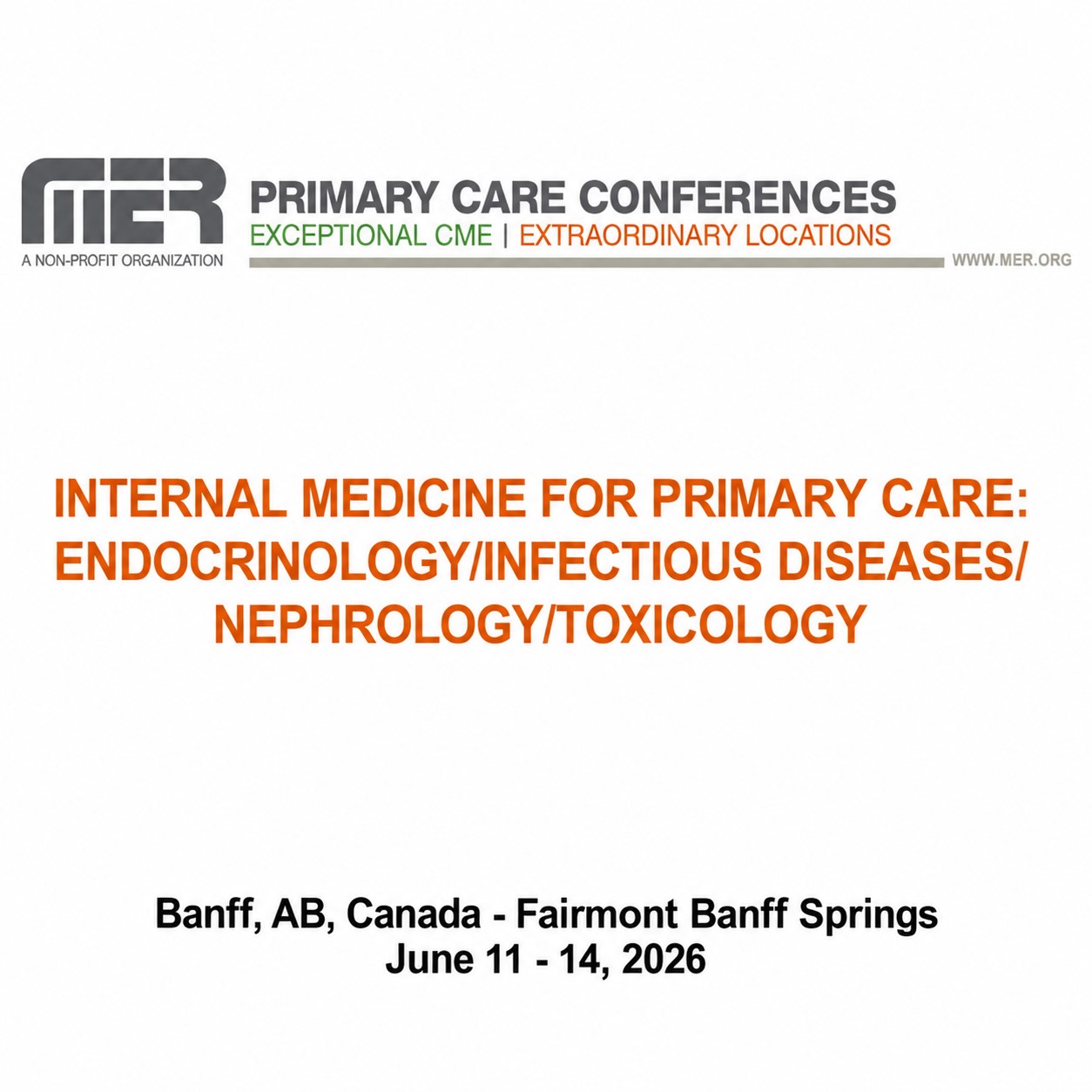
MER Primary Care Conferences Internal Medicine for Primary Care Endo ID Nephro Tox Jun 11-14, 2026

$120.00
This Product is shared via google drive download link, So please share your correct Gmail id while placing the order .Please note that there are no CME points or certificate associated with this course Samples for Courses Can be found here : Free Samples Here!
MER Internal Medicine for Primary Care: Endo/ID/Nephro/Tox 2026
Endocrinology • Infectious Diseases • Nephrology • Toxicology | June 11–14, 2026
Update your knowledge across four important areas of adult medicine with MER Internal Medicine for Primary Care: Endo/ID/Nephro/Tox 2026, a multidisciplinary primary care conference organized by Medical Education Resources (MER).
The original conference was held June 11–14, 2026, at The Fairmont Banff Springs in Banff, Alberta, Canada.
This four-day program integrates practical updates in:
- Endocrinology
- Infectious Diseases
- Nephrology
- Toxicology
- Internal Medicine
- Primary Care
Major topics include thyroid disease, thyroid nodules and cancer, pituitary disorders, adrenal disease, skin and soft-tissue infections, respiratory infections, C. difficile, antimicrobial stewardship, multidrug resistance, toxidromes, cocaine and heroin toxicity, synthetic drugs, CKD, SGLT2 inhibitors, glomerulonephritis, diabetic kidney disease, electrolytes, and acid-base disorders.
The course is especially relevant for clinicians who want practical, evidence-based updates that can be applied to everyday outpatient and inpatient medical practice.
Course Details
- Course: Internal Medicine for Primary Care: Endo/ID/Nephro/Tox
- Provider: Medical Education Resources – MER
- Year: 2026
- Dates: June 11–14, 2026
- Duration: 4 Days
- Venue: The Fairmont Banff Springs
- Location: Banff, Alberta, Canada
- Primary Specialty: Internal Medicine / Primary Care
- Specialties: Endocrinology / Infectious Diseases / Nephrology / Toxicology
- Original Live Activity: 16 Credit Hours
- Original Pharmacotherapeutic Content: 7.50 ANCC Pharmacotherapeutic Contact Hours
- Language: English
- Digital Delivery: Google Drive
- CME / Certificate with MedicalAmboss Product: Not Included
Course Overview
Primary care clinicians routinely encounter patients whose problems cross several subspecialties.
A single practice may include patients presenting with:
- Abnormal thyroid tests
- Thyroid nodules
- Pituitary abnormalities
- Adrenal disease
- Skin infections
- Pneumonia
- Bronchitis
- Infectious diarrhea
- C. difficile infection
- Drug-resistant infections
- Medication or recreational drug toxicity
- Chronic kidney disease
- Diabetic kidney disease
- Hematuria
- Glomerulonephritis
- Sodium disorders
- Potassium disorders
- Acid-base abnormalities
The MER Internal Medicine for Primary Care: Endo/ID/Nephro/Tox 2026 curriculum brings these problems together in a clinically focused format.
The overall learning pathway can be summarized as:
Recognition → Differential Diagnosis → Appropriate Testing → Evidence-Based Treatment → Follow-Up / Referral
Learning Objectives
Upon completion of the original educational program, participants should be better able to:
- Identify the risks associated with abnormal thyroid function.
- Diagnose and manage hypothyroidism and hyperthyroidism.
- Evaluate thyroid nodules using appropriate clinical assessment, ultrasound, and cytology.
- Review diagnostic and treatment approaches to thyroid cancer.
- Describe treatment options for pituitary disorders.
- Develop management strategies for adrenal hyperfunction and hypofunction.
- Recognize endocrine causes of hypertension.
- Review the epidemiology and microbiology of skin and soft-tissue infections.
- Identify common pathogens responsible for respiratory tract infections.
- Improve diagnosis and management of pneumonia and bronchitis.
- Assess infectious diarrhea and determine when treatment is appropriate.
- Review Clostridioides difficile infection.
- Understand the goals of antimicrobial stewardship.
- Apply antimicrobial stewardship principles to clinical care.
- Review multidrug-resistant pathogens.
- Recognize the classic five toxidromes.
- Develop an organized approach to the poisoned patient.
- Recognize manifestations of cocaine and heroin intoxication.
- Understand emerging and nonregulated substances of abuse.
- Review synthetic cannabinoids and synthetic cathinones.
- Apply evidence-based guidance regarding SGLT2 inhibitors in CKD.
- Recognize and evaluate glomerulonephritis.
- Review contemporary treatment of selected glomerular diseases.
- Improve detection and management of diabetic kidney disease.
- Review the diagnosis and management of sodium, potassium, bicarbonate, and acid-base abnormalities.
Complete Course Curriculum
Day 1 – Thursday, June 11, 2026
Endocrinology – Disorders of Thyroid Function
This session reviews the prevalence, diagnosis, and management of:
- Hypothyroidism
- Hyperthyroidism
- Abnormal thyroid-function tests
Hypothyroidism
Evaluation of suspected hypothyroidism requires interpretation of laboratory results within the patient’s clinical context.
Important considerations include:
- TSH
- Thyroid hormone levels
- Symptoms
- Medication history
- Age
- Pregnancy status where relevant
- Pituitary disease
- Other systemic illnesses
Treatment should be individualized rather than based solely on one laboratory value.
Hyperthyroidism
Hyperthyroidism can affect multiple organ systems.
Potential manifestations include:
- Palpitations
- Arrhythmias
- Weight loss
- Tremor
- Heat intolerance
- Bone loss
- Neuropsychiatric symptoms
- Cardiovascular complications
Recognizing abnormal thyroid function is therefore important beyond endocrinology alone.
Endocrinology – Thyroid Nodules and Cancer
This lecture reviews diagnosis and management of thyroid nodules and thyroid malignancy.
Important elements may include:
- Clinical history
- Physical examination
- Thyroid ultrasound
- Nodule characteristics
- Risk assessment
- Fine-needle aspiration
- Cytology
- Follow-up
- Cancer evaluation
Thyroid Ultrasound & Cytology
A structured approach can be summarized as:
Thyroid Nodule Detected → Ultrasound Risk Assessment → Determine Need for FNA → Cytology → Surveillance or Treatment
Not every thyroid nodule requires biopsy.
The goal is to identify clinically important lesions while avoiding unnecessary procedures in low-risk nodules.
Endocrinology – Evaluation and Management of Pituitary Disease
Pituitary disorders can produce either:
- Hormone excess
- Hormone deficiency
- Mass effect
- Secondary endocrine dysfunction
Evaluation may require integration of:
Symptoms + Hormonal Testing + Imaging + Clinical Context
Pituitary Disorders in Primary Care
Primary care clinicians may be the first to recognize clues such as:
- Unexplained endocrine abnormalities
- Menstrual or gonadal dysfunction
- Adrenal abnormalities
- Thyroid abnormalities
- Headache
- Visual symptoms
- Unexpected hormone levels
Recognizing when pituitary disease is possible helps guide appropriate endocrinology referral.
Infectious Diseases – Skin & Soft Tissue Infections
This session focuses on important skin and soft-tissue infections (SSTIs) and their prompt recognition.
Topics include:
- Clinical presentation
- Microbiology
- Severity assessment
- Diagnostic evaluation
- Antibiotic selection
- Management
Skin & Soft-Tissue Infection Management
Important clinical decisions include:
Purulent or Nonpurulent? → Mild or Severe? → Need for Drainage? → Need for Antibiotics? → Risk of Resistant Organisms?
Correct classification can help prevent both undertreatment and unnecessary broad-spectrum antibiotic use.
Infectious Diseases – Respiratory Tract Infections
This session reviews clinically important aspects of:
- Pneumonia
- Bronchitis
- Respiratory pathogens
- Multidrug resistance
- Diagnosis
- Antimicrobial management
Respiratory Infection Decision-Making
Primary care clinicians must distinguish:
- Viral respiratory illness
- Acute bronchitis
- Community-acquired pneumonia
- Higher-risk bacterial infection
- Patients requiring hospital evaluation
The course also addresses the growing impact of multidrug-resistant pathogens.
Day 2 – Friday, June 12, 2026
Infectious Diseases – Gastrointestinal Infections & Clostridioides difficile
This session reviews major enteric infections with particular emphasis on C. difficile infection.
Topics include:
- Infectious diarrhea
- Enteric pathogens
- Diagnostic evaluation
- Severity assessment
- Treatment decisions
- C. difficile colitis
- Infection-control considerations
Evaluating Infectious Diarrhea
A practical clinical approach includes:
Severity → Dehydration → Travel / Exposure → Antibiotic History → Immune Status → Diagnostic Testing → Treatment
Not every patient with diarrhea requires antimicrobial therapy.
Clostridioides difficile Infection
C. difficile is particularly important in patients with:
- Recent antibiotic exposure
- Recent healthcare exposure
- Previous C. difficile infection
- Older age
- Significant comorbidity
Appropriate diagnosis requires correlation between symptoms and testing rather than laboratory results alone.
Infectious Diseases – Antimicrobial Stewardship and Multidrug Resistance
This lecture reviews the purpose and structure of an Antimicrobial Stewardship Program (ASP).
Important concepts include:
- Appropriate antimicrobial selection
- Correct dose
- Correct duration
- De-escalation
- Culture-directed therapy
- Prevention of resistance
- Reduction of unnecessary antimicrobial exposure
- New antimicrobial options
Goals of Antimicrobial Stewardship
A practical framework includes:
Right Drug → Right Patient → Right Dose → Right Route → Right Duration
Effective stewardship aims to improve patient care while reducing:
- Antimicrobial resistance
- Medication toxicity
- C. difficile
- Unnecessary costs
- Inappropriate antibiotic use
Endocrinology – Adrenal Disorders in Primary Care
This session reviews:
- Adrenal hyperfunction
- Adrenal hypofunction
- Endocrine hypertension
Adrenal Hyperfunction
Adrenal hormone excess may produce multiple clinical syndromes.
Primary care clinicians should recognize when symptoms or laboratory abnormalities warrant a more targeted endocrine evaluation.
Adrenal Hypofunction
Adrenal insufficiency can range from chronic nonspecific illness to life-threatening adrenal crisis.
Recognition may depend on:
- Symptoms
- Blood pressure
- Electrolyte abnormalities
- Hormonal testing
- Medication exposure
- History of glucocorticoid use
Endocrine Hypertension
Secondary endocrine causes should be considered in selected patients with unusual or difficult-to-control hypertension.
Important clues may include:
- Resistant hypertension
- Early-onset hypertension
- Electrolyte abnormalities
- Episodic symptoms
- Adrenal findings
Toxicology – An Office-Based Toxicology Overview
This lecture provides a structured approach to evaluating a potentially poisoned patient.
Topics include:
- Toxicology history
- Physical examination
- Initial stabilization
- Poison-control consultation
- Common toxic exposures
- Classic toxidromes
The Classic Five Toxidromes
The course reviews:
- Cholinergic
- Anticholinergic
- Opiate / Opioid
- Sedative-Hypnotic
- Sympathomimetic
Recognizing a toxidrome can help narrow the possible exposure even when the exact substance is unknown.
Approach to the Poisoned Patient
A practical framework is:
Stabilize → History → Physical Examination → Recognize Toxidrome → Targeted Testing → Supportive / Specific Treatment
The initial priority remains clinical stabilization rather than identifying every ingested substance.
Toxicology – Cocaine and Heroin Abuse from an ER Provider’s Perspective
This session reviews acute cocaine and heroin intoxication and complications relevant to emergency and primary care medicine.
Cocaine-Related Complications
Potential acute problems include:
- Chest pain
- Hypertensive emergency
- Arrhythmias
- Aortic dissection
- Pneumonitis
- Neurologic complications
- Pregnancy-related complications
Heroin & Opioid Toxicity
Important concepts include:
- Acute opioid intoxication
- Respiratory depression
- Adulterants
- Chronic opioid complications
- Harm associated with contaminated illicit products
- Emergency management considerations
Day 3 – Saturday, June 13, 2026
Toxicology – The Danger of “Legal Highs” in Adolescents and Adults
This session addresses substances that may be easily accessible yet capable of producing clinically important intoxication.
Examples discussed include:
- Inhalants
- Dextromethorphan
- Salvia divinorum
- Kratom
- Morning glory / LSA
- Jimsonweed
The lecture reviews:
- Mechanisms of action
- Signs and symptoms
- Toxicity
- Management
Emerging Substances of Abuse
One challenge in toxicology is that new substances can emerge faster than traditional regulatory systems or clinical guidelines.
Clinicians should recognize that products marketed as:
- Legal
- Herbal
- Natural
- Research chemicals
may still produce significant toxicity.
Toxicology – Primary Care Update on Synthetic Drugs
This lecture reviews synthetic substances designed to mimic established recreational drugs.
Topics include:
- Synthetic cannabinoids
- K2
- Spice
- Synthetic stimulants
- Bath salts
- Flakka
- Synthetic hallucinogens
- Molly
- Benzofury
Synthetic Cannabinoids & Cathinones
Synthetic drugs can have unpredictable effects because:
- Chemical composition varies
- Dose may be uncertain
- Product labeling may be inaccurate
- Potency can differ substantially
- Multiple substances may be present
Treatment therefore often depends on recognition of the clinical syndrome and supportive management.
Nephrology – Should All Patients with CKD Be on SGLT2 Inhibitors?
This session reviews the growing role of SGLT2 inhibitors in chronic kidney disease.
The class has become important because kidney and cardiovascular benefits can extend beyond glucose lowering.
SGLT2 Inhibitors & CKD
Important clinical considerations include:
- CKD diagnosis
- Diabetes status
- Kidney protection
- Cardiovascular protection
- Renin-angiotensin system therapy
- Evidence-based indications
- Patient selection
- Safety
- Monitoring
The lecture addresses evidence-based and goal-directed use of SGLT2 inhibitors in patients with CKD.
Nephrology – Glomerulonephritis 101
Glomerulonephritis can be difficult to recognize and may lead to progressive kidney disease.
The case-based session reviews:
- When to suspect glomerulonephritis
- Hematuria
- Proteinuria
- Kidney dysfunction
- Differential diagnosis
- Glomerular disease patterns
- IgA nephropathy
- Treatment advances
Recognizing Glomerular Disease
Clinical clues can include:
- Hematuria
- Proteinuria
- Hypertension
- Reduced kidney function
- Active urinary sediment
- Systemic manifestations
The objective is to distinguish glomerular disease from other common causes of CKD.
IgA Nephropathy
The official curriculum uses IgA nephropathy as an example of differentiating glomerulonephritides and reviews contemporary therapeutic options.
This is particularly useful because the treatment landscape for IgA nephropathy has evolved considerably.
Day 4 – Sunday, June 14, 2026
Nephrology – Managing Diabetic Kidney Disease: New Insights and Therapies
Diabetic kidney disease remains a major cause of chronic kidney disease and kidney failure.
The session reviews:
- Detection
- Diagnosis
- Risk assessment
- Disease progression
- Treatment
- Recent clinical trials
- Kidney-protective therapy
Modern Diabetic Kidney Disease Treatment
Management increasingly extends beyond glucose control.
A contemporary strategy may incorporate, when clinically appropriate:
- Blood pressure management
- Renin-angiotensin system blockade
- SGLT2 inhibitors
- Nonsteroidal mineralocorticoid receptor antagonists
- GLP-1 receptor agonists
- Cardiovascular risk reduction
The exact treatment should be individualized according to the patient’s clinical situation.
Nephrology – Primary Care Primer on Electrolytes
The final session provides a case-based review of common electrolyte and acid-base abnormalities.
The principal electrolytes emphasized include:
- Sodium
- Potassium
- Bicarbonate
Sodium Disorders
Abnormal serum sodium may result from multiple mechanisms involving:
- Water balance
- Volume status
- Medications
- Kidney disease
- Endocrine disorders
Safe correction requires understanding both the cause and duration of the abnormality.
Potassium Disorders
Both:
- Hypokalemia
- Hyperkalemia
can have important cardiovascular and neuromuscular consequences.
Medication review and renal function are particularly important in the evaluation.
Acid-Base Disorders
A structured acid-base approach may involve:
pH → Primary Disorder → Expected Compensation → Anion Gap → Mixed Disorders
These principles are relevant to both primary care and hospital medicine.
Major Endocrinology Topics
- Hypothyroidism
- Hyperthyroidism
- Thyroid Function Testing
- Thyroid Nodules
- Thyroid Ultrasound
- Thyroid Cytology
- Thyroid Cancer
- Pituitary Disease
- Adrenal Disorders
- Adrenal Hyperfunction
- Adrenal Hypofunction
- Endocrine Hypertension
Major Infectious Disease Topics
- Skin and Soft-Tissue Infections
- SSTI
- Respiratory Tract Infections
- Pneumonia
- Bronchitis
- Multidrug-Resistant Pathogens
- Gastrointestinal Infections
- Infectious Diarrhea
- Clostridioides difficile
- C. difficile
- Antimicrobial Stewardship
- Antibiotic Resistance
- New Antimicrobials
Major Toxicology Topics
- Medical Toxicology
- Poisoned Patient
- Toxidromes
- Cholinergic Toxidrome
- Anticholinergic Toxidrome
- Opioid Toxidrome
- Sedative-Hypnotic Toxidrome
- Sympathomimetic Toxidrome
- Cocaine Toxicity
- Heroin Toxicity
- Opioid Toxicity
- Inhalant Abuse
- Dextromethorphan
- Kratom
- Salvia
- Synthetic Cannabinoids
- K2 / Spice
- Synthetic Cathinones
- Bath Salts
- Flakka
Major Nephrology Topics
- Chronic Kidney Disease
- CKD
- SGLT2 Inhibitors
- Kidney Protection
- Glomerulonephritis
- Hematuria
- Proteinuria
- IgA Nephropathy
- Diabetic Kidney Disease
- GLP-1 Receptor Agonists
- Nonsteroidal Mineralocorticoid Receptor Antagonists
- Sodium Disorders
- Potassium Disorders
- Bicarbonate Disorders
- Electrolyte Imbalances
- Acid-Base Disorders
Cross-Specialty Clinical Learning
One of the strengths of this MER conference is that its four specialty areas frequently overlap.
For example:
Endocrinology + Nephrology
- Diabetes
- Diabetic kidney disease
- SGLT2 inhibitors
- Endocrine hypertension
- Electrolyte abnormalities
Infectious Diseases + Nephrology
- Antibiotic selection
- Medication dosing
- CKD
- Drug toxicity
Toxicology + Cardiology / Emergency Medicine
- Cocaine-induced chest pain
- Hypertensive emergencies
- Sympathomimetic toxicity
Infectious Diseases + Primary Care
- SSTIs
- Pneumonia
- Diarrhea
- C. difficile
- Antibiotic stewardship
This makes the course particularly relevant to clinicians managing complex adult patients rather than isolated specialty conditions.
Who Should Take This Course?
The original program is targeted to office-based primary care providers and other healthcare professionals seeking updates in adult medicine.
It is particularly relevant for:
- Internists
- Primary Care Physicians
- Family Medicine Physicians
- Endocrinologists
- Infectious Disease Specialists
- Nephrologists
- Toxicologists
- Hospitalists
- Emergency Medicine Physicians
- General Practitioners
- Residents
- Fellows
- Nurse Practitioners
- Physician Assistants / Associates
- Pharmacists
- Other clinicians involved in adult patient care
Why This Course Is Useful
MER Internal Medicine for Primary Care: Endo/ID/Nephro/Tox 2026 combines four areas of medicine that are highly relevant to daily clinical practice.
The course can help learners:
- Improve thyroid-function interpretation
- Evaluate thyroid nodules more systematically
- Review pituitary and adrenal disorders
- Improve treatment of common infections
- Strengthen antibiotic stewardship
- Review C. difficile
- Recognize toxicologic syndromes
- Improve assessment of recreational drug intoxication
- Understand emerging synthetic drugs
- Apply SGLT2 evidence in CKD
- Recognize glomerulonephritis
- Update diabetic kidney disease management
- Improve electrolyte interpretation
- Review acid-base abnormalities
The overall curriculum progresses through:
Endocrinology → Infectious Diseases → Toxicology → Nephrology
while maintaining a practical primary-care perspective.
Original Conference Accreditation
The original MER live activity was designated for a maximum of:
- 16 AMA PRA Category 1 Credits™
- 16 IPCE Credits
- Up to 16 ABIM MOC Points for eligible participants completing official requirements
- 16 AAFP Prescribed Credits
- 16 AOA Category 2-A Hours
- Up to 16 ACEP Category I Hours
- 7.50 ANCC Pharmacotherapeutic Contact Hours
Important CME / Certificate Notice
These credits relate to participation in the official MER activity and completion of MER’s applicable participation and evaluation requirements.
The MedicalAmboss product page states that its independently delivered digital product does not include CME points or a certificate.
Therefore, do not advertise the MedicalAmboss files as:
- 16 CME Credits Included
- 16 ABIM MOC Points Included
- 16 AAFP Credits Included
- 7.50 Pharmacology Hours Included
- Official MER Certificate Included
The safest wording is:
Original MER Live Activity: 16 Credit Hours
and separately:
CME / Certificate Not Included with the MedicalAmboss Digital Product
Product / Delivery Information
- Product: MER Internal Medicine for Primary Care: Endo/ID/Nephro/Tox 2026
- Provider: Medical Education Resources – MER
- Year: 2026
- Original Conference: June 11–14, 2026
- Venue: The Fairmont Banff Springs
- Location: Banff, Alberta, Canada
- Specialties: Endocrinology / Infectious Diseases / Nephrology / Toxicology
- Original Live Activity: 16 Credit Hours
- Delivery: Google Drive
- CME Points: Not Included
- Certificate: Not Included
4. Short Description
MER Internal Medicine for Primary Care: Endo/ID/Nephro/Tox 2026 provides a comprehensive four-day clinical update covering endocrinology, infectious diseases, nephrology, and toxicology.
Topics include hypothyroidism, hyperthyroidism, thyroid nodules and cancer, pituitary and adrenal disorders, SSTIs, pneumonia, C. difficile, antimicrobial stewardship, five classic toxidromes, cocaine and heroin toxicity, synthetic drugs, SGLT2 inhibitors in CKD, glomerulonephritis, IgA nephropathy, diabetic kidney disease, electrolytes, and acid-base disorders.
4. Topics
Thursday, June 11, 2026
-
Endocrinology – Disorders of Thyroid Function: Prevalence, diagnosis and treatment options of hypothyroidism and hyperthyroidism.
-
Endocrinology – Thyroid Nodules and Cancer: Diagnosis and treatment.
-
Endocrinology – Evaluation and Management of Pituitary Disease: Diagnosis and treatment of pituitary disorders.
-
Infectious Diseases – Skin & Soft Tissue Infections: Presentation on important skin and soft-tissue infections and their prompt recognition, emphasizing evaluation and management strategies.
-
Infectious Diseases – Respiratory Tract Infections: Discussion highlighting critical points regarding the diagnosis and management of pneumonia and bronchitis – with a focus on the impact of multidrug resistant pathogens.
Friday, June 12, 2026
-
Infectious Diseases – Gastrointestinal Infections & Clostridiodes Difficile: Presentation on important enteric pathogens and their recognition, diagnosis and management; special emphasis on clostridiodes difficile colitis and related updates from the ID and infection control literature.
-
Infectious Diseases – Antimicrobial Stewardship and Multidrug Resistance: Definition of an antimicrobial stewardship program (ASP); Concepts of the antimicrobial stewardship program; Four goals of antimicrobial stewardship; Most recent additions to the antimicrobial armamentarium.
-
Endocrinology – Adrenal Disorders in Primary Care: Evaluation and management of adrenal hyper and hypofunction; Endocrine hypertension.
-
Toxicology – An Office-Based Toxicology Overview: Introduction to the workup of the toxic patient; Obtaining an adequate history and physical exam prior to calling poison control; Review of the classic five toxidromes including: cholinergic, anticholinergic, opiate, hypnosedative, and sympathomimetic; The more common toxic ingestions seen in the ED.
-
Toxicology – Cocaine and Heroin Abuse from an ER Provider’s Perspective: The basics of cocaine and heroin intoxication in the acute care setting; The mechanisms of action and signs and symptoms of acute intoxication; The acute phenomena of cocaine induced chest pain, hypertensive emergency, aortic dissection, pneumonitis and placental abruption; Review of the history of heroin abuse in the US, the cutting agents and adulterants being added to heroin and some of the more esoteric sequelae of chronic opiate abuse.
Saturday, June 13, 2026
-
Toxicology – The Danger of “Legal Highs” in Both Adolescents and Adults: Inhalant abuse and legal highs and drugs of abuse not yet scheduled by the DEA; Intoxicating inhalants that are ubiquitous in many households and easily accessed by adolescents; Dextromethorphan abuse and the unique psychoactive plants salvia divinorum, kratom, morning glory (LSA) and Jimsonweed; Mechanisms of action, signs and symptoms of intoxication and treatment.
-
Toxicology – Primary Care Update on Synthetic Drugs: History of synthetic drugs of abuse in the US and EU; Synthetic drugs that mimic the effects of marijuana, stimulants, opiates, and hallucinogens; Synthetic cannabinoids (K2-Spice), novel stimulants (Bath Salts, Flakka), and novel hallucinogens (Molly, Benzofury).
-
Nephrology – Should All Patients with CKD be on SGLT2 Inhibitors?: Sodium-glucose transporter 2 inhibitors (SGLT2i) represent a major advance in the treatment of patients with diabetes in kidney disease when added onto renin-angiotensin system blocking drugs. Increasing evidence indicates that this class of drugs provides both kidney and cardiovascular benefits to patients with chronic kidney disease, regardless of diabetes status. Primary care providers need to know which patients should be prescribed these drugs as they clearly not only reduce morbidity but also mortality in CKD patients with or without diabetes. This lecture will provide the most up to date use of SGLT2i in patients with CKD, including evidence-based guidelines/goal directed medical therapy.
-
Nephrology – Glomerulonephritis 101: Glomerulonephritis is an important cause of chronic progressive kidney disease and can be difficult to detect and diagnose. This case based lecture will provide primary care providers with the knowledge and tools on when to suspect glomerulonephritis, how to differentiate from other causes of kidney disease. IgA nephrology, the most common cause of glomerulonephritis, will be discussed as an example of differentiating glomerulonephritides and participants will learn about the mechanisms of action and how to prescribe three FDA approved treatments for patients with this particular glomerular disease.
Sunday, June 14, 2026
-
Nephrology – Managing Diabetic Kidney Disease: New Insights and Therapies: Chronic kidney disease attributed to diabetes is the leading cause of kidney failure globally. The disease is incurable and kidney disease once established typically progresses and is associated with excessive morbidity and mortality. This presentation will provide up to date information on how to detect, diagnose and manage chronic kidney disease and review recently completed and ongoing clinical trials designed to improve kidney outcomes. The lecture will also discuss when and how to use non-steroidal mineralocorticoid receptor antagonists and Glucagon-like peptide-1 (GLP-1) agonists in clinical practice.
-
Nephrology – Primary Care Primer on Electrolytes: Electrolyte and acid-base disorders are common findings in clinical practice. They can arise from genetic and acquired diseases and can be associated with commonly prescribed medications. This case-based lecture focuses on the disturbances in and interactions between serum sodium, potassium, and bicarbonate. It reviews the pathophysiology, diagnosis and management of these common imbalances.
Related products
Endocrine and Nutrition
Endocrine and Nutrition
Internal Medicine
Harvard Updates in General Internal Medicine for Specialists 2022
Internal Medicine

Endocrine and Nutrition
Harvard Fifty-Ninth Annual Update Obstetrics and Gynecology 2023