
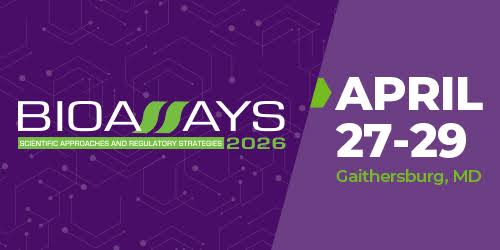
CASSS Sharing Science Solutions Bioassays 2026
$30.00
CASSS Bioassays 2026 reviews biological assay development, validation, potency testing and analytical considerations for biopharmaceutical products.
Delivery Information: This Product is shared via google drive download link. Please use your correct Gmail address at checkout.
Please note: there are no CME points or certificate associated with this course.
Samples for Courses Can be found here: Free Samples Here!
MedicalAmboss File Scope: This listing describes the educational subject matter for reference. Provider registration, live attendance, streaming-platform access, CME or other credit, certificates, memberships, apps, accounts, and publisher-hosted extras are not included unless they are explicitly listed as store files. MedicalAmboss.
CASSS Bioassays 2026: Development, Validation and Potency Testing
Bioassays • Potency Assays • Regulatory Science • ADCs • Vaccines • Data Science
April 27–29, 2026 | Gaithersburg, Maryland
Explore current scientific approaches, regulatory expectations, analytical strategies, and emerging technologies shaping modern bioassay development with CASSS Sharing Science Solutions Bioassays 2026.
Officially presented as Bioassays 2026: Scientific Approaches and Regulatory Strategies, the overall CASSS educational program took place April 27–29, 2026, at the Gaithersburg Marriott Washingtonian Center in Gaithersburg, Maryland. The dedicated Pre-Conference Bioassays Short Course was held on April 27, followed by the main Bioassays Symposium on April 28–29, 2026.
The program brought together scientists, regulators, analytical experts, and biopharmaceutical professionals to examine the development, deployment, standardization, transfer, lifecycle management, and regulatory control of bioassays used across increasingly complex therapeutic modalities.
Major themes included:
- Cell-based potency assays
- Late-stage relative potency assays
- Critical reagent management
- Platform binding assays
- High-valency vaccines
- T-cell activation reporter gene assays
- Antibody-drug conjugates – ADCs
- ICH Q14 and ICH Q2 implementation
- USP <1220>
- Method comparability
- Bioassay transfer
- Product characterization
- Artificial intelligence
- Alternative in vitro assays
- Data engineering
- Bioassay lifecycle control
The official 2026 meeting drew 124 attendees, including 53 first-time attendees, representing 58 companies and 14 countries.
Course Details
- Program: Bioassays 2026: Scientific Approaches and Regulatory Strategies
- Organization: CASSS – Sharing Science Solutions
- Year: 2026
- Overall Program Dates: April 27–29, 2026
- Pre-Conference Short Course: April 27, 2026
- Main Symposium: April 28–29, 2026
- Venue: Gaithersburg Marriott Washingtonian Center
- Location: Gaithersburg, Maryland, United States
- Primary Field: Biopharmaceutical Analytical Science
- Primary Focus: Bioassay Development, Potency Testing, Lifecycle Management, and Regulatory Strategy
- Related Areas: Vaccines, Monoclonal Antibodies, ADCs, T-Cell Engagers, Cell & Gene Therapy
- Educational Formats: Short Course, Scientific Presentations, Panel Discussions, Roundtables, Posters, Technical Seminars
- Primary Audience: Bioassay Scientists, Analytical Scientists, Regulatory Professionals, and Biopharmaceutical Development Professionals
CASSS describes Bioassays as a leading forum for discussing current perspectives, strategies, lessons learned, technologies, and method standardization, with particular attention to both technical and regulatory details.
Who Was the Original Program Designed For?
The symposium was designed for professionals involved in the scientific, technical, regulatory, and quality aspects of bioassays.
It is particularly relevant for:
- Bioassay Scientists
- Analytical Scientists
- Cell-Based Assay Scientists
- Potency Assay Scientists
- Biopharmaceutical Development Scientists
- Quality Control Specialists
- CMC Professionals
- Regulatory Scientists
- Regulatory Affairs Professionals
- Vaccine Development Scientists
- ADC Development Scientists
- Cell and Gene Therapy Scientists
- Data Scientists supporting bioassays
It is also relevant for:
- Immunologists
- Pharmacologists
- Oncologists
- Infectious Disease Specialists
The strongest scientific audience remains:
Bioassay Science + Biopharmaceutical Development + Potency Testing + Regulatory Science
Learning Objectives
Upon completion of this program, participants should be better able to:
- Design and implement robust cell-based and late-stage relative potency assays tailored for commercial projects.
- Navigate the technical and regulatory challenges of developing potency assays for complex, high-valency vaccines.
- Apply recent regulatory guidance by understanding practical considerations for the implementation of updated ICH Q14, ICH Q2, and USP standards.
- Manage variability and navigate critical reagent challenges in cell-based potency assays using statistical frameworks and lifecycle control.
- Evaluate CMC regulatory considerations and analytical comparability strategies for complex modalities, including Antibody-Drug Conjugates (ADCs).
- Explore emerging technologies, including in vitro alternative assays and the application of Artificial Intelligence (AI) in bioassays.
PRE-CONFERENCE BIOASSAYS SHORT COURSE
April 27, 2026
CASSS held a dedicated pre-conference short course one day before the main symposium.
The official Short Course focused on practical bioassay method development, with particular emphasis on potency assays. CASSS notes that this course required separate registration from the main symposium.
The day was divided into two major components:
Part I
Introduction to Bioassay Development: CMC Strategy and Practical Application
Part II
Practical Applications for Method Design and Performance
Introduction to Bioassay Development
The morning Short Course provided practical instruction in bioassay method development and the unique role of potency assays within the CMC control strategy.
Confirmed therapeutic modalities included:
- Monoclonal antibodies
- Antibody-drug conjugates
- Fusion proteins
- T-cell engagers
- Vaccines
- Cell and gene therapy products
The curriculum connected:
Biological Mechanism → Potency Strategy → Method Development → CMC Control → Lifecycle Management
Bioassay Lifecycle Management
The Short Course treated bioassay development as a lifecycle rather than a one-time validation exercise.
Important stages include:
- Early method development
- Method optimization
- Deployment
- Product development
- Validation
- Transfer
- QC implementation
- Lifecycle monitoring
The second half used collaborative case studies focused on current problems in bioassay development, deployment, and lifecycle management.
Practical Method Design
The afternoon Short Course was designed for both novice and experienced attendees and used collaborative case studies to translate bioassay theory into practical method-design decisions.
The approach can be summarized as:
Understand Biology → Select Assay → Design Method → Characterize Performance → Optimize → Deploy
NUTS AND BOLTS OF BIOASSAYS
The first major scientific session of the symposium was:
Session I – Nuts and Bolts of Bioassays
This session focused on core bioassay development challenges, including:
- Late-stage relative potency assays
- Critical reagent management
- Platform binding assays
- Cell-based potency assays
Late-Stage Relative Potency Assays
A confirmed presentation was:
Nutty About Potency: Bolting Down a Robust Late-Stage Relative Potency Assay
presented by Erika Farmer, AstraZeneca.
Late-stage potency methods must balance:
- Biological relevance
- Precision
- Robustness
- Reproducibility
- Commercial readiness
- Regulatory suitability
The scientific pathway can be summarized as:
Assay Development → Performance Characterization → Robustness → Commercial Control
Critical Reagent Management
Another presentation was:
Better Lifecycle Quality—Powered by Reagent Management
presented by Yukina Umemoto, Chugai Pharmaceutical.
CASSS’s post-meeting summary also highlighted critical reagent considerations such as:
- Sourcing
- Lot-to-lot variability
- Qualification
- Stability
as important elements in reliable bioassay performance.
Critical Reagents in Cell-Based Assays
Cell-based potency assays may depend on materials such as:
- Cell lines
- Ligands
- Antibodies
- Standards
- Reference preparations
- Biological reagents
Changes in these reagents can influence assay behavior throughout the product lifecycle.
The management pathway is:
Source → Qualify → Monitor → Trend → Replace or Bridge When Necessary
Platform Binding Assays
The program included:
PlugandPlay Potency: Platform Binding Assay Strategies for Rapid Method Development
presented by Sarah Owen, Pfizer.
Platform methods may help organizations reuse well-characterized analytical approaches across related products while still accounting for product-specific biology.
Cell-Based Potency Assays
Another Session I presentation was:
Advancing Cell-Based Potency Assays: Strategies and Challenges in Developing a Robust Functional Assay for Monoclonal Antibody
presented by Arkadi Manukyan, Sanofi.
Cell-based potency assays aim to connect therapeutic activity with a measurable biological response.
The ideal approach links:
Drug → Target / Receptor → Cellular Response → Quantitative Readout
Designing Robust Cell-Based Potency Assays
The Tuesday Lunch and Learn also focused on:
Designing Robust Cell-Based Potency Assays: Strategic Frameworks and Emerging Biological Readouts
presented by Catalent Pharma Solutions.
This reinforces cell-based potency as one of the central scientific themes of Bioassays 2026.
METHOD COMPARABILITY
A dedicated roundtable addressed:
Method Comparability Considerations
in both Roundtable Session 1 and Roundtable Session 2.
Comparability becomes important when:
- Analytical methods change
- Equipment changes
- Reagents change
- Laboratories change
- Platforms evolve
- Product development progresses
The objective is to understand whether method changes preserve scientifically meaningful continuity.
Updated ICH Q14, ICH Q2 & USP <1220>
One of the most important regulatory roundtables was:
Platform Methods: Practical Considerations for the Implementation of Updated ICH Q14, ICH Q2, and USP <1220>
The topic was discussed during both roundtable sessions.
This directly connects bioassay development with contemporary analytical procedure guidance.
Major implementation considerations include:
- Analytical procedure development
- Method understanding
- Risk assessment
- Lifecycle concepts
- Performance characteristics
- Method control
- Regulatory documentation
ICH Q14
ICH Q14 focuses on analytical procedure development.
Within a bioassay environment, its principles can influence how teams structure:
- Method development
- Scientific understanding
- Risk assessment
- Control strategies
- Lifecycle changes
ICH Q2
Updated ICH Q2 considerations are relevant to analytical procedure validation and performance characteristics.
The CASSS roundtable focused specifically on the practical implementation of the updated guidance alongside Q14 and USP <1220>.
USP <1220>
USP <1220> – The Analytical Procedure Lifecycle aligns analytical procedure development, qualification, validation, and ongoing management within a lifecycle framework.
Its inclusion demonstrates the increasing emphasis on:
Development → Validation → Continued Performance Verification
rather than treating validation as the final stage of a method.
BIOASSAY TRANSFER
Another repeated roundtable was:
Learnings From Bioassay Transfers
Bioassay transfer can be particularly challenging because assay performance may depend on:
- Operator technique
- Reagents
- Cell culture
- Equipment
- Environmental conditions
- Data processing
- Reference standards
Successful transfer therefore requires more than simply transferring an SOP.
Product Characterization & Potency Assays
A further roundtable focused on:
Product Characterization and Role of Your Potency Assays
Potency assays must be interpreted within the broader context of product understanding.
The relationship can be summarized as:
Structure → Product Attributes → Biological Function → Potency Assay
Artificial Intelligence in Bioassays
Artificial intelligence was represented through:
Brainstorming on Applications of AI
in both roundtable sessions.
Potential bioassay applications discussed within the broader field may involve:
- Data analysis
- Pattern detection
- Trending
- Assay monitoring
- Automation
- Data mining
- Performance prediction
CASSS’s 2026 summary emphasized that bioassay teams increasingly need to manage, mine, track, and trend data to detect signals and deviations in assay performance.
HIGH-VALENCY VACCINE POTENCY
Session II included:
Challenges and Strategies for Potency Assay Development in High-Valency Vaccines
presented by Milica Grozdanovic, Merck & Co.
High-valency vaccines create unique assay complexity because several antigens or components may contribute to the final biological product.
Potential scientific challenges include:
- Multiple analytes
- Multiple biological activities
- Product complexity
- Assay throughput
- Individual component potency
- Regulatory control strategy
Vaccine Potency Strategy
The assay-development challenge can be represented as:
Complex Vaccine Composition → Appropriate Biological Readout → Component Control → Robust Potency Strategy
This requires balancing scientific relevance with practical release testing.
T-Cell Activation Reporter Gene Assays
Session II also included:
Advancing Drug Development: Utilizing T-cell Activation Reporter Gene Assays for Potency Monitoring from the Pre-Clinical to the Commercial Stages
presented by Felix Feng, AstraZeneca.
This demonstrates how a bioassay platform can potentially evolve across:
Preclinical Development → Clinical Development → Commercialization
Reporter Gene Assays
Reporter gene systems can provide functional biological readouts that may support:
- Mechanism-of-action assessment
- Potency monitoring
- Method scalability
- QC applications
The program examines their role within longer-term potency strategies.
Managing Cell-Based Assay Variability
Another important Session II presentation was:
Managing Variability in Cell-Based Potency Assays: Science, Statistics, and Lifecycle Control
presented by Ravish Patel, Nirma University.
Cell-based methods can exhibit greater biological variability than many physicochemical assays.
Managing this variability requires understanding:
- Biological sources of variation
- Analytical variability
- Statistical behavior
- Assay controls
- Longitudinal performance
- Lifecycle trends
Statistics in Potency Assays
The session emphasizes combining:
Biological Understanding + Statistical Frameworks + Lifecycle Monitoring
rather than relying on a single numerical acceptance criterion.
ANTIBODY-DRUG CONJUGATES – ADCs
Wednesday opened with a full scientific session on:
Antibody Drug Conjugates
ADCs are analytically complex because they combine:
- Antibody targeting
- Linker chemistry
- Cytotoxic payload
- Conjugation characteristics
- Biological activity
This makes potency strategy and structure-function understanding particularly important.
ADC Potency Strategy & Structure-Function
A confirmed presentation was:
ADC Potency Strategy and Structure-Function Studies
presented by Ganesh Shankarling, Bristol Myers Squibb.
This topic links analytical characterization with biological potency.
The scientific pathway is:
Molecular Structure → Product Attributes → Cellular Function → Potency
Novel ADC Potency Strategy
The program also included:
Developing a Potency Strategy for a Novel Antibody-drug Conjugate
presented by Swayam Prabha, Genentech / Roche.
The need for product-specific strategies becomes particularly important when therapeutic mechanisms are complex or involve multiple functional steps.
CMC Regulatory Considerations for ADCs
An FDA presentation addressed:
CMC Regulatory Considerations for Antibody-Drug Conjugates (ADCs) – From the Biologics Perspective
presented by Lei Zhang, CDER, FDA.
This directly connects ADC assay strategy to regulatory considerations involving:
- Product characterization
- Biological activity
- Potency
- Control strategy
- CMC expectations
FDA Regulatory Perspective
The 2026 speaker resources include presentations from CDER, FDA, including both Lei Zhang and Nailing Zhang, demonstrating the symposium’s continued emphasis on the interface between scientific assay development and regulatory expectations.
Alternative In Vitro Potency Assays
Session IV, Innovations in Bioassays, included:
In Vitro Alternative Assays to Cell-Based Potency Assays: Regulatory Considerations for Biologics
presented by Nailing Zhang, FDA CDER.
This session examines the regulatory considerations surrounding alternatives to traditional cell-based potency assays.
Cell-Based vs. Alternative Assays
Selection between assay approaches may depend on:
- Mechanism of action
- Biological relevance
- Precision
- Reproducibility
- Robustness
- QC suitability
- Regulatory justification
The objective is not simply to replace cell-based assays, but to determine whether an alternative appropriately measures the relevant product function.
Critical Reagent Challenges
The Innovations session also included:
Navigating Critical Reagent Challenges in Cell-Based Potency Assays: Case Studies on Variability and Solutions
presented by Bhoomi Patel, BioAgilytix Labs.
This reinforces the importance of reagent control throughout the bioassay lifecycle.
Reagent Variability
Potential sources of critical-reagent variability include:
- Lot changes
- Source changes
- Stability
- Storage
- Qualification
- Biological drift
CASSS’s meeting summary specifically highlighted sourcing, lot-to-lot variability, qualification, and stability as key critical reagent considerations.
Half-Life Extension of Biotherapeutics
The Innovations session also included:
Considerations and Analytical Control Strategies for Half-life Extension of Biotherapeutics
presented by Zhijie (Jey) Cheng, Merck & Co.
This extends the analytical discussion beyond conventional potency testing toward control strategies for modified biotherapeutic products.
DATA SCIENCE IN BIOASSAYS
The final scientific session was:
Session V – Data Science in Bioassays
The inclusion of a dedicated data-science session demonstrates the increasing role of:
- Data architecture
- Data trending
- Statistical evaluation
- Knowledge management
- Assay-performance monitoring
in modern bioassay programs.
Potency Assay Data as a Knowledge Resource
A presentation asked:
Potency Assay Generated Data – Is It a Minefield or a Knowledge Bank and Are They Useable
presented by Jan Amstrup, Novo Nordisk.
The question reflects a broader shift toward treating historical bioassay data as a potential source of scientific knowledge.
Potency Assay Data Engineering
Another presentation was:
Potency Assay Data Engineering
presented by Ryan Spooner, Amgen.
Data engineering can support:
- Structured data capture
- Longitudinal analysis
- Trend monitoring
- Data integration
- Assay-performance evaluation
Antibody-RNA Conjugates
The final session included:
Investigating the Source of Non-Parallelism in Forced Degraded Antibody-RNA Conjugates
presented by Alexa Mealy, Eli Lilly and Company.
This brings a newer complex modality into the broader discussion of assay behavior and relative potency analysis.
Non-Parallelism
Non-parallelism can complicate relative potency assessment.
Investigation may require examining:
- Product degradation
- Assay behavior
- Dose-response relationships
- Matrix effects
- Biological differences
The inclusion of this topic highlights the importance of understanding the underlying causes of unusual assay performance rather than treating them as purely statistical failures.
Career Development for Young Scientists
The second Wednesday roundtable added:
How Can We Enable Career Development for Young Scientists?
CASSS also awarded its 2026 Bioassays Next-Generation Investigator Award to Marshall Davis of Pfizer, whose work includes potency assay development, gene editing, cell-line engineering, cell-based assays, and binding assays for ADC release testing.
Bioassay Knowledge Sharing
CASSS’s 2026 post-meeting summary emphasizes several broader themes:
- Knowledge sharing
- Interaction between bioassay and discovery teams
- Development of technically strong scientific teams
- Critical reagent control
- Data management
- Early detection of assay-performance signals
These themes reinforce the idea that successful bioassay programs depend on both analytical technology and organizational scientific capability.
Major Topics Covered
- Bioassays
- Bioassay Development
- Potency Assays
- Relative Potency
- Late-Stage Potency Assays
- Cell-Based Potency Assays
- Functional Bioassays
- Binding Assays
- Critical Reagents
- Reagent Lifecycle Management
- Platform Methods
- ICH Q14
- ICH Q2
- USP <1220>
- Analytical Procedure Lifecycle
- Method Comparability
- Bioassay Transfers
- Product Characterization
- Artificial Intelligence
- AI in Bioassays
- High-Valency Vaccines
- Vaccine Potency
- T-Cell Activation
- Reporter Gene Assays
- Cell-Based Assay Variability
- Statistical Analysis
- Lifecycle Control
- Multispecific Antibodies
- Antibody-Drug Conjugates
- ADCs
- ADC Potency
- Structure-Function Studies
- CMC Regulatory Science
- FDA Regulatory Considerations
- Alternative In Vitro Assays
- Critical Reagent Variability
- Half-Life Extension
- Biotherapeutics
- Data Science
- Potency Assay Data
- Data Engineering
- Antibody-RNA Conjugates
- Non-Parallelism
- Monoclonal Antibodies
- Fusion Proteins
- T-Cell Engagers
- Cell and Gene Therapy
- QC
- Commercialization
- Analytical Control Strategies
- Bioassay Lifecycle Management
Who Should Take This Course?
CASSS Sharing Science Solutions Bioassays 2026 is particularly relevant for:
- Bioassay Scientists
- Potency Assay Scientists
- Analytical Scientists
- Biopharmaceutical Development Scientists
- Cell-Based Assay Scientists
- Vaccine Scientists
- ADC Development Scientists
- Quality Control Specialists
- CMC Professionals
- Regulatory Professionals
- Data Scientists supporting analytical development
- Cell and Gene Therapy Scientists
- Immunologists
- Pharmacologists
- Oncologists
- Infectious Disease Specialists
The strongest scientific audience remains:
Bioassay Science + Potency Testing + Biopharmaceutical Development + Regulatory Science
Why This Course Is Useful
CASSS Sharing Science Solutions Bioassays 2026 connects practical bioassay method development with modern regulatory expectations and increasingly complex biopharmaceutical products.
Bioassay Foundations
- Relative potency assays
- Cell-based assays
- Binding assays
- Critical reagent management
Regulatory & Lifecycle Strategy
- ICH Q14
- ICH Q2
- USP <1220>
- Method comparability
- Bioassay transfer
- Lifecycle control
Complex Therapeutics
- Vaccines
- Multispecific antibodies
- ADCs
- Antibody-RNA conjugates
- Cell and gene therapies
Emerging Technology
- Alternative in vitro assays
- AI
- Reporter gene systems
- Data science
Quality & Commercialization
- Reagent control
- Product characterization
- QC strategy
- Commercial potency testing
- Data trending
The overall scientific pathway can be summarized as:
Understand Biology → Design Method → Establish Potency → Characterize Variability → Validate & Transfer → Implement in QC → Monitor Data → Manage Throughout Lifecycle
Product Summary
- Product: CASSS Sharing Science Solutions Bioassays 2026
- Official Program: Bioassays 2026: Scientific Approaches and Regulatory Strategies
- Organization: CASSS – Sharing Science Solutions
- Year: 2026
- Overall Dates: April 27–29, 2026
- Pre-Conference Short Course: April 27, 2026
- Main Symposium: April 28–29, 2026
- Venue: Gaithersburg Marriott Washingtonian Center
- Location: Gaithersburg, Maryland
- Attendance: 124
- Companies Represented: 58
- Countries Represented: 14
- Primary Field: Biopharmaceutical Analytical Science
- Primary Focus: Bioassay Development and Regulatory Strategy
- Major Areas: Potency Assays, Vaccines, ADCs, ICH Q14/Q2, USP <1220>, Critical Reagents, Alternative Assays, Data Science, AI
- Primary Audience: Bioassay Scientists, Analytical Scientists, QC/CMC Professionals, and Regulatory Scientists
- Additional Audience: Immunologists, Pharmacologists, Oncologists, and Infectious Disease Specialists
Short Description
CASSS Sharing Science Solutions Bioassays 2026 is a leading biopharmaceutical science symposium focused on contemporary bioassay development, potency assessment, regulatory strategy, lifecycle management, and emerging analytical technologies.
Held April 27–29, 2026, in Gaithersburg, Maryland, the program covers cell-based and relative potency assays, critical reagents, high-valency vaccines, multispecific antibodies, ADCs, ICH Q14 and Q2, USP <1220>, method comparability, bioassay transfer, alternative in vitro assays, AI, data engineering, and bioassay lifecycle control.
Topics
Monday, April 27, 2026 – Pre-Conference Short Course
- Short Course Part I – Introduction to Bioassay Development: CMC Strategy and Practical Application
- Bioassay method development
- Potency assays
- Bioassays within CMC control strategy
- Monoclonal antibodies
- Antibody-drug conjugates
- Fusion proteins
- T-cell engagers
- Vaccines
- Cell and gene therapy
- Method lifecycle management
- Short Course Part II – Practical Applications for Method Design and Performance
- Interactive bioassay case studies
- Method design
- Deployment
- Lifecycle management
- Current bioassay-development challenges
Tuesday, April 28, 2026
- CASSS Welcome and Introductory Comments
- Joint Keynote Presentation – Hindsight is 20/20: 50 Years of Combined Bioassay Experiences
- Session I – Nuts and Bolts of Bioassays
- Nutty About Potency: Bolting Down a Robust Late-Stage Relative Potency Assay
- Better Lifecycle Quality—Powered by Reagent Management
- PlugandPlay Potency: Platform Binding Assay Strategies for Rapid Method Development
- Advancing Cell-Based Potency Assays: Strategies and Challenges in Developing a Robust Functional Assay for Monoclonal Antibody
- Session I Panel Discussion
- Lunch and Learn – Designing Robust Cell-Based Potency Assays: Strategic Frameworks and Emerging Biological Readouts
- Poster Session
- Roundtable Session 1
- Method Comparability Considerations
- Platform Methods: Practical Considerations for the Implementation of Updated ICH Q14, ICH Q2, and USP <1220>
- Learnings From Bioassay Transfers
- Product Characterization and Role of Your Potency Assays
- Brainstorming on Applications of AI
- Session II – Bioassay Strategies for Multi-Specific Antibodies
- Challenges and Strategies for Potency Assay Development in High-Valency Vaccines
- Advancing Drug Development: Utilizing T-cell Activation Reporter Gene Assays for Potency Monitoring from the Pre-Clinical to the Commercial Stages
- Managing Variability in Cell-Based Potency Assays: Science, Statistics, and Lifecycle Control
- Session II Panel Discussion
- Exhibitor Reception
Wednesday, April 29, 2026
- Session III – Antibody Drug Conjugates
- ADC Potency Strategy and Structure-Function Studies
- Developing a Potency Strategy for a Novel Antibody-drug Conjugate
- CMC Regulatory Considerations for Antibody-Drug Conjugates (ADCs) – From the Biologics Perspective
- Session III Panel Discussion
- Roundtable Session 2
- Method Comparability Considerations
- Platform Methods: Practical Considerations for the Implementation of Updated ICH Q14, ICH Q2, and USP <1220>
- Learnings From Bioassay Transfers
- Product Characterization and Role of Your Potency Assays
- Brainstorming on Applications of AI
- How Can We Enable Career Development for Young Scientists?
- Vendor Showcase
- Session IV – Innovations in Bioassays
- In Vitro Alternative Assays to Cell-Based Potency Assays: Regulatory Considerations for Biologics
- Navigating Critical Reagent Challenges in Cell-Based Potency Assays: Case Studies on Variability and Solutions
- Considerations and Analytical Control Strategies for Half-life Extension of Biotherapeutics
- Session IV Panel Discussion
- Poster Session
- Session V – Data Science in Bioassays
- Potency Assay Generated Data – Is It a Minefield or a Knowledge Bank and Are They Useable
- Potency Assay Data Engineering
- Investigating the Source of Non-Parallelism in Forced Degraded Antibody-RNA Conjugates
- Session V Panel Discussion
- Closing Remarks and Invitation to Bioassays 2027
-
Advancing Drug Development Utilizing T-cell Activation Reporter Gene Assays for Potency Monitoring from the Pre-Clinical to the Commercial S
-
CASSS Welcome and Introductory Comments
-
Challenges and Strategies for Potency Assay Development in High-Valency Vaccines
-
Closing Remarks and Invitation to Bioassays 2027
-
CMC Regulatory Considerations for Antibody-Drug Conjugates ADCs From the Biologics Perspective
-
In Vitro Alternative Assays to Cell-Based Potency Assays Regulatory Considerations for Biologics
-
Joint Keynote Presentation – Hindsight is 2020 50 Years of Combined Bioassay Experiences
-
Lunch and Learn Designing Robust Cell-Based Potency Assays Strategic Frameworks and Emerging Biological Readouts Presented by Catalent Pharm
-
Lunch and Learn Vendor Showcase
-
Managing Variability in Cell-Based Potency Assays Science Statistics and Lifecycle Control
-
Navigating Critical Reagent Challenges in Cell-Based Potency Assays Case Studies on Variability and Solutions
-
Nutty About Potency Bolting Down a Robust Late-Stage Relative Potency Assay
-
Potency Assay Generated Data – Is It a Minefield or a Knowledge Bank and Are They Useable
-
Roundtable Session 1 – Table 1 – Method Comparability Considerations
-
Roundtable Session 1 – Table 2 – Platform Methods- Practical Considerations for the Implementation of Updated ICH Q14, ICH Q2, and USP
-
Roundtable Session 1 – Table 3 – Learnings from Bioassay Transfers
-
Roundtable Session 1 – Table 5 – Brainstorming on Applications of AI for Bioassays
-
Roundtable Session 2 – Table 1 – Method Comparability Considerations
-
Roundtable Session 2 – Table 2 – Platform Methods- Practical Considerations for the Implementation of Updated ICH Q14, ICH Q2, and USP
-
Roundtable Session 2 – Table 3 – Learnings from Bioassay Transfers
-
Roundtable Session 2 – Table 4 – Product Characterization and Role of Your Potency Assays
-
Roundtable Session 2 – Table 5 – Brainstorming on Applications of AI for Bioassays
-
Roundtable Session 2 – Table 6 – How Can We Enable Career Development for Young Scientists
-
Session I, II, III, IV, and V Panel Discussions
Related products

USMLE / kaplan and Board Review
Uworld USMLE COMLEX Level 1 Qbank, Updated Jan 2023, System- and Subject-wise (PDF)
Critical Care - Emergency medicine
2022 UPDATES IN THERAPEUTICS: CRITICAL CARE PHARMACY PREPARATORY REVIEW AND RECERTIFICATION COURSE

Critical Care - Emergency medicine
ASN Critical Care Nephrology – 2022 Update (On-Demand and Livestream)

Internal Medicine

Critical Care - Emergency medicine
Anesthesiology & pain medicine
Critical Care Symposium: Mastering ED Mechanical Ventilation
Internal Medicine
Anesthesiology & pain medicine