
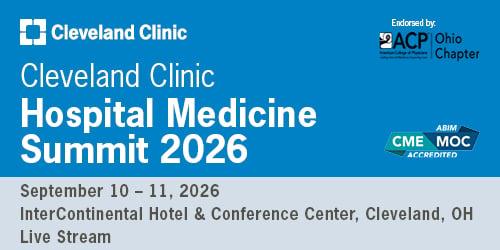
Cleveland Clinic Hospital Medicine 2026
$75.00
Cleveland Clinic Hospital Medicine 2026 reviews inpatient care, clinical reasoning, perioperative medicine and high-value practice.
Delivery Information: This Product is shared via google drive download link. Please use your correct Gmail address at checkout.
Please note: there are no CME points or certificate associated with this course.
Samples for Courses Can be found here: Free Samples Here!
MedicalAmboss File Scope: This listing describes the educational subject matter for reference. Provider registration, live attendance, streaming-platform access, CME or other credit, certificates, memberships, apps, accounts, and publisher-hosted extras are not included unless they are explicitly listed as store files. MedicalAmboss.
Cleveland Clinic Hospital Medicine 2026
Cleveland Clinic Hospital Medicine Summit 2026 | Inpatient Medicine, Cardiology, Hematology/Oncology, Endocrinology, Gastroenterology, Pulmonary Medicine & Clinical Reasoning
The Cleveland Clinic Hospital Medicine 2026 program provides a comprehensive, evidence-based update for healthcare professionals involved in the care of hospitalized patients.
Held as the Cleveland Clinic Hospital Medicine Summit 2026, this two-day educational program brings together expert Cleveland Clinic faculty to review both common and complex inpatient conditions across cardiology, hematology/oncology, endocrinology, gastroenterology, pulmonary medicine, perioperative care, clinical reasoning, high-value care, and meaningful updates in hospital medicine.
The program emphasizes practical application of current evidence and clinical guidelines, with focused discussions on inpatient decision-making, diagnostic strategy, treatment selection, resource utilization, and multidisciplinary patient care.
Interactive panel discussions and case-based sessions help translate new evidence into everyday hospital medicine practice.
Course Details
- Course: Cleveland Clinic Hospital Medicine 2026
- Official Event: Cleveland Clinic Hospital Medicine Summit 2026
- Provider: Cleveland Clinic Center for Continuing Education
- Dates: September 10–11, 2026
- Location: InterContinental Hotel & Conference Center, Cleveland, Ohio
- Format: In-Person + Live Stream
- Primary Specialty: Hospital Medicine
- Additional Focus: Internal Medicine, Critical Care, Cardiology, Pulmonology, Endocrinology, Gastroenterology and Hematology/Oncology
- Official AMA CME: Up to 15.0 AMA PRA Category 1 Credits™
- ABIM MOC: Up to 15.0 points
- AAFP Credit: Up to 15.0 Live AAFP Prescribed Credits
- Faculty Presentations: Available as PDF through the official activity
- Post-Course Recordings: Official participants receive non-CME presentation recordings
Cleveland Clinic confirms that both in-person and live-stream registrants receive access to faculty presentations in PDF format and post-course recordings, with the recordings designated as non-CME.
Target Audience
The course is intended for healthcare professionals involved in inpatient and hospital-based medicine, including:
- Hospitalists
- Internal Medicine Physicians
- Critical Care Physicians
- Family Medicine Physicians
- Primary Care Physicians
- Physician Assistants
- Nurse Practitioners
- Nurses
- Fellows
- Residents
- Advanced Practice Providers
- Hospital-Based Clinicians
- Healthcare Professionals involved in inpatient care
It is especially useful for clinicians seeking a current review of common inpatient problems and evidence-based management strategies.
Program Overview
Hospital medicine requires clinicians to manage a wide range of acute and complex conditions while making efficient, evidence-based decisions.
The Cleveland Clinic Hospital Medicine Summit 2026 addresses this challenge through focused specialty sessions and practical inpatient teaching.
The program covers:
- Acute cardiovascular problems
- Hematologic and oncologic emergencies
- Inpatient endocrine disorders
- Gastrointestinal disease
- Pulmonary conditions
- Perioperative medication management
- Intravenous access
- Blood-product utilization
- Clinical reasoning
- High-value care
- Guideline updates
- Meaningful new hospital medicine literature
- Artificial intelligence in inpatient medicine
The structure combines didactic presentations, expert panels, Q&A discussions, and case-based reasoning.
Learning Objectives
After completing this course, participants should be able to:
- Apply evidence-based hospital medicine strategies to evaluate and manage common inpatient cardiovascular presentations by optimizing the initial management of new-onset atrial fibrillation, distinguishing which patients with acute coronary syndrome rule-out presentations warrant additional diagnostic workup, and using clinical, hemodynamic, and volume-assessment data to guide treatment decisions in heart failure cases with challenging hemodynamics.
- Utilize a high-value, evidence-based approach to common inpatient hematologic and oncologic problems by evaluating anemia in hospitalized patients efficiently and appropriately, recognizing and initiating timely management of oncologic emergencies, and developing a systematic differential diagnosis and initial workup for new-onset thrombocytopenia in the hospital.
- Integrate a practical, evidence-based approach to common inpatient endocrine disorders by selecting appropriate investigations and management strategies for thyroid disease, recognizing and treating adrenal disorders in hospitalized patients, and evaluating calcium and phosphorus abnormalities to guide timely diagnosis and targeted therapy.
- Develop an evidence-based approach to inpatient gastroenterology challenges by evaluating abnormal liver tests and using current best practices to guide the diagnosis, risk stratification, and management of acute pancreatitis.
- Develop an evidence-based approach to common inpatient pulmonary conditions by evaluating and managing COPD exacerbations, assessing pleural effusions and related pleural syndromes, and recognizing pulmonary hypertension to guide appropriate diagnostic evaluation and treatment.
- Review and analyze newer literature affecting hospital medicine practice, including perioperative medication management, intravenous access, blood-product utilization, and other meaningful updates in inpatient care.
Official Program Topics
Day 1 – Thursday, September 10, 2026
Session I – Cardiology
Inpatient Management of New Onset Atrial Fibrillation
Mohamed Kanj, MD
Reviews the initial inpatient evaluation and management of newly diagnosed atrial fibrillation.
Important considerations include:
- Hemodynamic stability
- Rate versus rhythm control
- Anticoagulation
- Underlying precipitants
- Inpatient monitoring
- Discharge planning
ACS Rule Outs: Who Gets Further Workup?
Gautum Shah, MD
Examines which hospitalized patients presenting with possible acute coronary syndrome require additional cardiovascular investigation after initial evaluation.
The session focuses on balancing appropriate diagnostic testing with high-value care.
Approach to Heart Failure Cases With Challenging Hemodynamics
Andrew Higgins, MD
Reviews difficult inpatient heart failure scenarios in which clinical findings, volume assessment, and hemodynamic data must be integrated to guide treatment.
Cardiology Panel Discussion / Q&A
Faculty discussion addressing practical cardiovascular questions arising in hospital medicine.
Keynote Address
Opportunities and Risks of Artificial Intelligence in the Inpatient Space
Romil Chadha, MD, MBA, MPH, SFHM, FACP
Explores how artificial intelligence may influence hospital medicine.
Relevant considerations include:
- Clinical decision support
- Workflow
- Documentation
- Predictive analytics
- Patient safety
- Bias
- Clinical responsibility
- Appropriate use of AI tools
The keynote reflects the growing importance of artificial intelligence in inpatient clinical practice.
Session II – Hematology/Oncology
High Value Approach to Anemia in the Hospitalized Patient
Jessica Donato, MD
Provides a systematic approach to evaluating anemia while avoiding unnecessary testing.
The session emphasizes:
- Hemoglobin trends
- Acute versus chronic anemia
- Blood loss
- Hemolysis
- Nutritional deficiencies
- Bone marrow disease
- Appropriate diagnostic testing
Recognition and Initial Management of Oncological Emergencies
Christopher Wee, MD
Reviews urgent oncologic conditions requiring rapid diagnosis and initial treatment.
Potential areas include:
- Tumor lysis syndrome
- Hypercalcemia
- Spinal cord compression
- Febrile neutropenia
- Superior vena cava syndrome
- Other acute cancer-related emergencies
Approach to New Onset Thrombocytopenia in the Hospital
Bethany Bannow, MD
Provides a structured differential diagnosis and initial workup for thrombocytopenia developing during hospitalization.
Hematology/Oncology Panel Discussion / Q&A
Faculty discussion focused on difficult inpatient hematologic and oncologic cases.
Mega Case Reasoning Panel
Moderator: Kunjam Modha, MD
Faculty:
- Megan McGervey, MD
- Aidan Neustadtl, MD
- Kanza Qaiser, MD
This session uses complex clinical cases to demonstrate diagnostic reasoning and multidisciplinary decision-making in hospital medicine.
Session III – Endocrinology
Adrenal Disorders – Approach and Management in the Hospitalized Patient
Ricardo Correa, MD
Reviews recognition and inpatient treatment of clinically important adrenal disorders.
Thyroid Disorders – Inpatient Investigations/Management
Mario Skugor, MD
Addresses appropriate evaluation and treatment of thyroid abnormalities encountered during hospitalization.
Important considerations include:
- Interpretation of thyroid tests during acute illness
- Hyperthyroidism
- Hypothyroidism
- Severe thyroid disease
- Appropriate diagnostic testing
Calcium and Phosphorus Disorders
Leila Khan, MD
Reviews inpatient assessment of disturbances involving:
- Hypercalcemia
- Hypocalcemia
- Hyperphosphatemia
- Hypophosphatemia
- Parathyroid-related disorders
- Renal and metabolic causes
Day 2 – Friday, September 11, 2026
Session IV – Gastroenterology
Transaminitis Approach
Talal Adhami, MD
Provides a structured approach to abnormal aminotransferases in hospitalized patients.
Clinical evaluation may include:
- Hepatocellular injury
- Medication-related liver injury
- Viral disease
- Ischemic injury
- Biliary disease
- Alcohol-related disease
- Appropriate laboratory and imaging evaluation
Evidence-Based Management of Acute Pancreatitis
Arjun Chatterjee, MD
Reviews current best practices in acute pancreatitis.
Important areas include:
- Diagnosis
- Severity assessment
- Fluid management
- Nutrition
- Analgesia
- Etiologic evaluation
- Identification of complications
Session V – Hospital Medicine Potpourri
Perioperative Med Management
Christopher Whinney, MD
Reviews practical decisions regarding medications before and after surgery.
This may include management of:
- Antihypertensive medications
- Anticoagulants
- Diabetes medications
- Cardiovascular drugs
- Other chronic therapies
Intravenous Access for the Hospitalist – A Safe, Minimalist Approach
Mohammad Mohmand, MD
Examines practical approaches to intravenous access while emphasizing safety and avoidance of unnecessary procedures.
High Value Approach to Blood Products
Moises Auron, MD
Reviews appropriate use of blood products in hospitalized patients.
The session emphasizes:
- Transfusion thresholds
- Clinical indications
- Avoidance of unnecessary transfusion
- Risks of blood products
- Patient-specific decision-making
Session VI – Things We Do for No Reason
Things We Do for No Reason and Guideline Update
Faculty:
- Naveen Gopal, MD
- Chris Heinrich, PA-C
- Christina Maley, APRN
- Kunjam Modha, MD
- Jennifer Solivas-Maluyao, MD
This session examines common hospital practices that may provide little value, lack supporting evidence, or deserve reconsideration based on current guidelines.
The aim is to promote safer, more efficient, and higher-value inpatient care.
Session VII – Pulmonary Medicine
COPD Exacerbation
Angela Wang, MD
Reviews evidence-based inpatient management of acute exacerbations of chronic obstructive pulmonary disease.
Topics include:
- Initial assessment
- Bronchodilator therapy
- Corticosteroids
- Antibiotics
- Oxygen
- Ventilatory support
- Discharge planning
Pleural Effusion and Syndromes
Sangita Goel, MD
Provides a structured approach to pleural effusion and related pleural disorders.
Important issues include:
- Transudate versus exudate
- Thoracentesis
- Infection
- Malignancy
- Pleural imaging
- Diagnostic strategy
Pulmonary Hypertension
Pradhab Kirupaharan, DO
Reviews recognition and appropriate diagnostic evaluation of pulmonary hypertension in hospitalized patients.
Session VIII – Meaningful Updates in Hospital Medicine
Meaningful Updates in Hospital Medicine
Faculty:
- Jonathan Lafond, MD
- Ryan Kennedy, CNP
- Priya Malik, MD
- Nisha Pandit, DO
- Hassan Shaheen, MD
- Mike Stricker, PA
This concluding session reviews recent literature and clinical developments with practical relevance to the hospital medicine care team.
The focus is on identifying evidence that may meaningfully change inpatient practice.
Clinical Reasoning
Clinical reasoning is a major theme throughout the program.
Hospitalists frequently manage patients with:
- Multiple simultaneous diagnoses
- Nonspecific symptoms
- Conflicting laboratory results
- Multiple comorbidities
- Polypharmacy
- Rapidly changing clinical status
Case-based reasoning helps clinicians decide:
- Which findings are most important
- Which diagnosis is most likely
- Which dangerous diagnoses must be excluded
- Which tests are necessary
- Which treatments should be started immediately
- Which interventions can safely be avoided
The Mega Case Reasoning Panel specifically addresses these complex decision-making processes.
High-Value Hospital Medicine
The summit repeatedly emphasizes high-value care.
High-value hospital medicine seeks to improve patient outcomes while reducing unnecessary:
- Testing
- Procedures
- Imaging
- Transfusions
- Medications
- Length of stay
- Costs
Sessions on anemia, blood products, ACS rule-out, intravenous access, and Things We Do for No Reason directly support this approach.
Artificial Intelligence in Hospital Medicine
Artificial intelligence is increasingly being incorporated into inpatient healthcare.
Potential applications include:
- Clinical documentation
- Risk prediction
- Decision support
- Patient deterioration detection
- Resource allocation
- Workflow automation
The keynote also highlights the risks that must accompany these opportunities, including reliability, bias, oversight, and appropriate human clinical judgment.
Perioperative Medicine
Hospitalists frequently participate in perioperative care.
Important responsibilities may include:
- Medication management
- Cardiovascular risk assessment
- Diabetes management
- Anticoagulation decisions
- Fluid management
- Postoperative medical complications
The summit includes a dedicated session on Perioperative Med Management.
Major Topics Covered
- Hospital Medicine
- Inpatient Medicine
- Internal Medicine
- New-Onset Atrial Fibrillation
- Acute Coronary Syndrome
- ACS Rule-Out
- Heart Failure
- Hemodynamics
- Artificial Intelligence in Hospital Medicine
- Anemia
- Thrombocytopenia
- Oncology Emergencies
- Adrenal Disorders
- Thyroid Disorders
- Calcium Disorders
- Phosphorus Disorders
- Transaminitis
- Acute Pancreatitis
- COPD Exacerbation
- Pleural Effusion
- Pulmonary Hypertension
- Clinical Reasoning
- Perioperative Medicine
- Medication Management
- Intravenous Access
- Blood Products
- Transfusion Medicine
- High-Value Care
- Things We Do for No Reason
- Hospital Guidelines
- Hospital Medicine Literature Updates
- Multidisciplinary Inpatient Care
- Quality Improvement
Course Leadership
The official program is led by:
- Moises Auron, MD
- Mohammad Mohmand, MD
- Christopher Whinney, MD
These faculty members also participate throughout the program as moderators and lecturers.
Continuing Medical Education
The Cleveland Clinic Foundation Center for Continuing Education designates the live activity for a maximum of:
- 15.0 AMA PRA Category 1 Credits™
- 15.0 ABIM MOC points
- 15.0 Live AAFP Prescribed credits
Cleveland Clinic Center for Continuing Education is jointly accredited by ACCME, ACPE, and ANCC to provide continuing education for the healthcare team.
Important CME Notice
The credit amounts above apply to participation in the official Cleveland Clinic live or live-stream activity under Cleveland Clinic’s completion and evaluation requirements.
Cleveland Clinic states that post-course presentation recordings are provided to official attendees as non-CME recordings.
Therefore, purchasing separately distributed recordings or educational files from MedicalAmboss does not itself provide Cleveland Clinic CME or ABIM MOC credit.
Why This Course Is Relevant
Hospitalists must make high-volume clinical decisions across multiple specialties every day.
A single hospital service may include patients with:
- Arrhythmias
- Heart failure
- Anemia
- Thrombocytopenia
- Cancer emergencies
- Endocrine abnormalities
- Liver-test abnormalities
- Pancreatitis
- COPD
- Pleural disease
- Pulmonary hypertension
- Perioperative medication issues
The Cleveland Clinic Hospital Medicine 2026 program addresses these conditions from a practical inpatient perspective.
Its combination of specialty updates, clinical reasoning, evidence review, high-value medicine, Q&A panels, and guideline updates makes it particularly relevant for professionals responsible for hospitalized adults.
Short Description
<div style=”border:2px solid #1677b8;border-radius:10px;padding:16px;background:#f7fbfe;”>
Cleveland Clinic Hospital Medicine 2026 provides an evidence-based update in inpatient medicine covering new-onset atrial fibrillation, ACS evaluation, heart failure, anemia, thrombocytopenia, oncology emergencies, adrenal and thyroid disorders, calcium and phosphorus abnormalities, acute pancreatitis, transaminitis, COPD, pleural effusion, pulmonary hypertension, perioperative medication management, blood products, clinical reasoning, AI and high-value hospital care.
+ Topics:
Thursday, September 10, 2026
|
|
|
7:15 am
|
Registration, Breakfast, & Exhibits |
|
7:55 am
|
Welcome Moises Auron, MD Mohammad Mohmand, MD Christopher Whinney, MD |
Session I – Cardiology
|
|
|
8:00 am
|
Inpatient management of new onset atrial fibrillation Mohamed Kanj, MD |
|
8:30 am
|
ACS rule outs: Who gets further workup? Gautum Shah, MD |
|
9:00 am
|
Approach to heart failure cases with challenging hemodynamics Andrew Higgins, MD |
|
9:30 am
|
Panel Discussion/Q&A Session faculty |
|
9:50 am
|
Break and Visit Exhibits |
|
10:10 am
|
Keynote Address – Opportunities and Risks of Artificial Intelligence in the inpatient space Romil Chadha, MD, MBA, MPH, SFHM, FACP |
Session II – Hematology/Oncology
|
|
|
11:00 am
|
High value approach to anemia in the hospitalized patient Jessica Donato, MD |
|
11:30 am
|
Recognition and initial management of oncological emergencies Christopher Wee, MD |
|
12:00 pm
|
Approach to new onset thrombocytopenia in the hospital Bethany Bannow, MD |
|
12:30 pm
|
Panel Discussion/Q&A Session faculty |
|
12:50 pm
|
Lunch (on ow and Visit Exhibits |
|
1:50 pm
|
Mega case reasoning panel Moderator: Kunjam Modha, MD Megan McGervey, MD Aidan Neustadtl, MD Kanza Qaiser, MD |
Session III – Endocrinology
|
|
|
2:50 pm
|
Adrenal disorders – approach and management in the hospitalized patient Ricardo Correa, MD |
|
3:20 pm
|
Thyroid disorders – inpatient investigations/management Mario Skugor, MD |
|
3:50 pm
|
Calcium and phosphorus disorders Leila Khan, MD |
|
4:20 pm
|
Panel Discussion/Q&A Session faculty |
|
4:40 pm
|
Adjourn |
Friday, September 11, 2026
|
|
|
7:15 am
|
Registration, Breakfast, & Exhibits |
|
7:55 am
|
Welcome & Intros Moises Auron, MD Mohammad Mohmand, MD Christopher Whinney, MD |
Session IV – Gastroenterology
|
|
|
8:00 am
|
Transaminitis Approach Talal Adhami, MD |
|
8:30 am
|
Evidence based management of acute pancreatitis Arjun Chatterjee, MD |
|
9:00 am
|
Panel Discussion/Q&A Session faculty |
|
9:20 am
|
Break and Exhibits |
Session V – Hospital Medicine Potpourri
|
|
|
9:40 am
|
Perioperative med management Christopher Whinney, MD |
|
10:10 am
|
Intravenous Access for the Hospitalist – A safe, minimalist approach Mohammad Mohmand, MD |
|
10:40 am
|
High value approach to blood products Moises Auron, MD |
|
11:10 am
|
Panel Discussion/Q&A Session faculty |
|
11:30 am
|
Lunch (on own) and Exhibits |
Session VI – Things We Do for No Reason
|
|
|
12:30 pm
|
Things We Do for No Reason and Guideline Update Naveen Gopal, MD Chris Heinrich, PA-C Christina Maley, APRN Kunjam Modha, MD Jennifer Solivas-Maluyao, MD |
Session VII – Pulmonary
|
|
|
1:30 pm
|
COPD exacerbation Angela Wang, MD |
|
2:00 pm
|
Pleural effusion and syndromes Sangita Goel, MD |
|
2:30 pm
|
Pulmonary hypertension Pradhab Kirupaharan, DO |
|
3:00 pm
|
Panel Discussion/Q&A Session faculty |
|
3:20 pm
|
Break and Exhibits |
Session VIII – Meaningful Updates in Hospital Medicine
|
|
|
3:30 pm
|
Meaningful Updates in Hospital Medicine Jonathan Lafond, MD Ryan Kennedy, CNP Priya Malik, MD Nisha Pandit, DO Hassan Shaheen, MD Mike Stricker, PA |
|
4:30 pm
|
Panel Discussion/Q&A Session Faculty |
|
4:50 pm
|
Adjourn |
Related products
Critical Care - Emergency medicine

Internal Medicine

Internal Medicine
Critical Care - Emergency medicine
40th ISICEM International Symposium on Intensive Care & Emergency Medicine 2021

Critical Care - Emergency medicine
Critical Care - Emergency medicine
2022 UPDATES IN THERAPEUTICS: CRITICAL CARE PHARMACY PREPARATORY REVIEW AND RECERTIFICATION COURSE

Critical Care - Emergency medicine