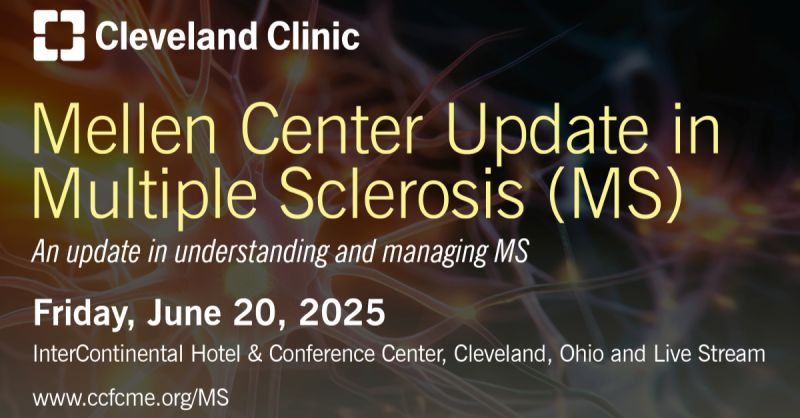
Cleveland Clinic Mellen Center Update in Multiple Sclerosis 2025
Comprehensive Updates in Multiple Sclerosis Diagnosis, McDonald Criteria 2024, PIRA, Biomarkers, BTK Inhibitors, Neuroimaging, and Neurorestoration
Cleveland Clinic Mellen Center Update in Multiple Sclerosis 2025 is the flagship annual educational conference from the internationally recognized Mellen Center for Multiple Sclerosis Treatment and Research at Cleveland Clinic. This comprehensive program provides clinicians with the latest evidence-based advances in the diagnosis, monitoring, treatment, and long-term management of Multiple Sclerosis (MS), with special emphasis on the landmark 2024 revisions to the McDonald Diagnostic Criteria and emerging concepts that are reshaping modern MS care.
The course addresses critical developments in disease classification, biomarkers, neuroimaging, progression mechanisms, rehabilitation, wellness interventions, and next-generation therapies. Through expert-led presentations, clinical updates, and interactive discussions, participants gain practical tools for improving diagnostic accuracy, optimizing treatment decisions, and enhancing outcomes for patients living with multiple sclerosis.
Course Overview
Multiple Sclerosis management continues to evolve rapidly as new diagnostic criteria, imaging biomarkers, disease-modifying therapies, and neurorestorative approaches emerge. The 2025 Mellen Center Update focuses on helping clinicians integrate these advances into clinical practice while addressing the growing recognition that disease progression may occur independently of relapses and conventional MRI findings.
A major focus of the conference is the implementation of the 2024 McDonald Criteria, representing the first major revision of MS diagnostic guidelines in nearly a decade. Faculty members involved in the development of these criteria provide direct insight into their clinical implications and practical application.
Participants also explore the expanding understanding of Smoldering MS, Progression Independent of Relapse Activity (PIRA), advanced biomarkers, neuroprotection, rehabilitation, and emerging therapeutic targets designed to slow disability progression.
Included Content
- 15 Video Lectures
- 15 Audio Recordings
- 15 Subtitle Files (.vtt)
- 1 Course PDF
Total Size: 6.21 GB
Course Date: June 20, 2025
Format: Hybrid (In-Person & Virtual)
Host Institution: Cleveland Clinic Mellen Center for MS Treatment and Research
Comprehensive Curriculum
2024 McDonald Criteria Updates
A central component of the course focuses on:
- Revisions to MS diagnostic criteria
- Earlier diagnosis of multiple sclerosis
- Diagnostic sensitivity improvements
- Clinical implementation strategies
- Differential diagnosis considerations
- Diagnostic challenges and pitfalls
Participants gain a detailed understanding of how the revised criteria impact patient evaluation and management.
Optic Nerve Involvement in Diagnosis
Sessions review:
- Optic neuritis evaluation
- Optic nerve imaging
- Diagnostic significance
- Integration into diagnostic criteria
- Clinical assessment techniques
- Visual pathway involvement
Faculty discuss how optic nerve findings contribute to earlier and more accurate diagnosis.
Radiologically Isolated Syndrome (RIS)
Topics include:
- Definition and diagnostic criteria
- Risk of conversion to MS
- Monitoring strategies
- Imaging surveillance
- Early intervention considerations
- Clinical management recommendations
Participants learn how RIS is incorporated into modern diagnostic frameworks.
Progression Independent of Relapse Activity (PIRA)
Extensive coverage includes:
- Understanding disease progression
- Mechanisms of disability accumulation
- Identifying PIRA in practice
- Clinical monitoring approaches
- Treatment implications
- Long-term outcome assessment
Special emphasis is placed on recognizing progression despite stable MRI findings and absence of clinical relapses.
Smoldering Multiple Sclerosis
The course explores:
- Chronic disease activity
- Silent progression
- Underlying neurodegeneration
- Biomarker identification
- Advanced imaging findings
- Emerging therapeutic targets
Participants gain insight into one of the most important evolving concepts in MS research.
Biomarkers in Multiple Sclerosis
Comprehensive reviews cover:
Serum Neurofilament Light Chain (sNfL)
- Biomarker physiology
- Disease activity monitoring
- Prognostic value
- Clinical applications
- Treatment response assessment
Advanced Biomarker Integration
- Precision medicine approaches
- Risk stratification
- Longitudinal monitoring
- Personalized treatment planning
Advanced Neuroimaging
Participants review:
Central Vein Sign
- MRI identification
- Diagnostic utility
- Differentiation from MS mimics
- Clinical interpretation
Modern MRI Techniques
- Disease monitoring
- Lesion characterization
- Progression assessment
- Imaging biomarkers
Advanced neuroimaging tools are discussed as important components of contemporary MS diagnosis and management.
Emerging Disease-Modifying Therapies
Extensive updates include:
BTK Inhibitors (Bruton’s Tyrosine Kinase Inhibitors)
- Mechanisms of action
- Microglial targeting
- Progressive MS applications
- Clinical trial results
- Safety considerations
- Future therapeutic potential
Faculty review the growing role of BTK inhibitors in managing progressive disease.
Treatment Strategy Debates
Interactive discussions address:
Induction Therapy
- Early high-efficacy treatment
- Benefits and risks
- Long-term outcomes
Escalation Therapy
- Stepwise treatment intensification
- Patient selection
- Comparative effectiveness
Participants evaluate competing approaches to disease-modifying therapy selection.
Neurorestoration and Rehabilitation
Specialized sessions cover:
- Functional recovery strategies
- Neuroplasticity principles
- Mobility preservation
- Cognitive rehabilitation
- Physical therapy integration
- Long-term disability management
Evidence-based rehabilitation techniques are emphasized throughout.
Exercise and Lifestyle Medicine
Topics include:
High-Intensity Aerobic Exercise
- Neuroprotective effects
- Symptom improvement
- Functional outcomes
- Exercise prescription
Wellness Strategies
- Sleep optimization
- Stress reduction
- Physical activity recommendations
- Lifestyle modification
The course highlights the growing role of lifestyle interventions as disease-modifying strategies.
Intermittent Fasting and Nutrition
Participants explore:
- Metabolic effects
- Neuroprotective mechanisms
- Emerging research
- Clinical implementation considerations
Nutrition is discussed as part of a comprehensive wellness-focused approach to MS management.
Psychological and Cognitive Health
Coverage includes:
- Cognitive impairment in MS
- Depression and anxiety
- Neuropsychological assessment
- Behavioral interventions
- Quality of life optimization
Faculty discuss multidisciplinary approaches to supporting cognitive and emotional health.
Learning Objectives
Upon completion of this activity, participants will be able to:
- Apply the 2024 McDonald Criteria in clinical practice.
- Incorporate optic nerve involvement and RIS into diagnostic evaluation.
- Identify and monitor Progression Independent of Relapse Activity (PIRA).
- Recognize clinical features of Smoldering MS.
- Utilize serum neurofilament light chain and imaging biomarkers appropriately.
- Interpret the Central Vein Sign and advanced MRI findings.
- Evaluate emerging BTK inhibitor therapies and their clinical applications.
- Compare induction and escalation treatment strategies.
- Integrate evidence-based rehabilitation and neurorestoration approaches.
- Implement lifestyle, exercise, and wellness interventions to support long-term patient outcomes.
Educational Features
✔ 2024 McDonald Criteria Updates
✔ Multiple Sclerosis Diagnostic Advances
✔ PIRA and Smoldering MS Education
✔ BTK Inhibitor Clinical Updates
✔ Advanced Neuroimaging Reviews
✔ Biomarker-Based Monitoring
✔ Neurorestoration Strategies
✔ Exercise and Lifestyle Medicine
✔ Interactive Treatment Debates
✔ Evidence-Based Clinical Guidance
Target Audience
This course is designed for:
- Neurologists
- Multiple Sclerosis Specialists
- Neuroimmunologists
- Neurology Residents
- Neurology Fellows
- Neuroscience Researchers
- Nurse Practitioners
- Physician Assistants
- Physical Therapists
- Occupational Therapists
- Rehabilitation Specialists
- Psychologists
- Mental Health Professionals Caring for MS Patients
Why This Course Matters
The diagnosis and treatment of Multiple Sclerosis are undergoing major transformation. New diagnostic criteria, emerging biomarkers, advanced imaging techniques, and novel therapeutic targets are enabling earlier diagnosis and more personalized care. At the same time, increasing recognition of PIRA and Smoldering MS is changing how clinicians think about disease progression and long-term disability.
Cleveland Clinic Mellen Center Update in Multiple Sclerosis 2025 provides an authoritative review of these developments, delivered by internationally recognized experts from one of the world’s leading MS centers. The course equips clinicians with practical knowledge to improve diagnosis, optimize treatment strategies, and deliver comprehensive, patient-centered care throughout the disease continuum.
6. Topics
-
01 Keynote Cognitive Worsening in MS Cognitive Relapses and PIRA – Ralph Benedict
- 02 Keynote Neurorestoration in MS Where We Stand Michelle Ploughman
- 03 Updates to the McDonald Criteria The 2024 Revisions Daniel Ontaneda and Karlo Toljan
- 04 Improving Access to Care in Multiple Sclerosis Marisa McGinley
- 05 BTK Update What we are Learning from Phase 3 Data Robert Fox
- 06 Managing Mood Disorders in MS – Amy Sullivan, Grace Tworek, Brianne Markley, Raghid Charara
- 07 Emerging Treatment Paradigms for MOGAD in Adults and Children – Justin Abbatemarco and Aaron Abrams
- 08 Women’s Health in Neuroimmunological Disorders Alise Carlson
- 09 Practical Case Studies – Use of Imaging in the New Diagnostic Criteria – Moein Amin
- 10 Applications of CAR-T in Multiple Sclerosis Jeffrey Cohen and Zarmina Javed
- 11 Driving Safety in Multiple Sclerosis – How to Manage a Difficult Topic – Roundtable Discussion Rebecca Cebull, Jennifer Sedlak, and Timothy Verdouw
- 12 Optic Neuritis Rehabilitation for the MS Patient Alyssa DeCarlo
- 13 Approaching Dysarthria Dysphagia Challenges in MS Danielle Brown
- 14 Central Dizziness Vestibular Based Rehab Support Kaitlin Sparks
- 15 The Complex Clinical Picture of MS in Rehab A Case Report – Alyssa DeCarlo, Danielle Brown and Kaitlin Sparks