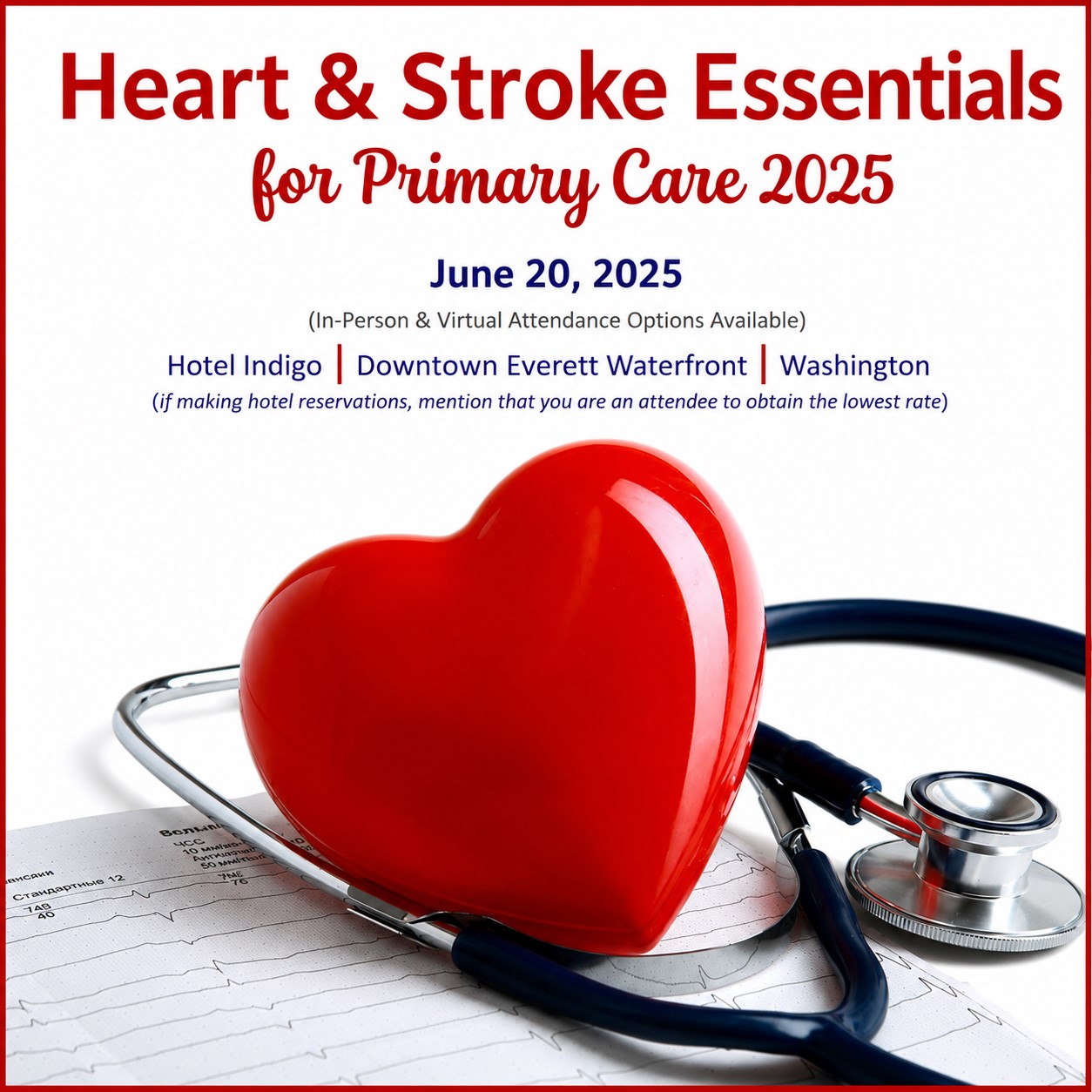
Providence Regional Medical Center Everett Heart & Stroke Essentials for Primary Care 2025
Comprehensive Updates in Cardiovascular Prevention, Stroke Management, Cerebrovascular Disease, Hypertension, Lipid Disorders, and Primary Care Cardiology
Providence Regional Medical Center Everett Heart & Stroke Essentials for Primary Care 2025 is a practical, evidence-based educational program designed to provide healthcare professionals with the latest advances in cardiovascular and cerebrovascular disease prevention, diagnosis, treatment, and long-term management. Through expert-led lectures and case-based discussions, participants gain clinically relevant insights into the rapidly evolving fields of cardiology and stroke medicine while strengthening their ability to deliver high-quality care in primary care and hospital-based settings.

This comprehensive program focuses on contemporary approaches to cardiovascular risk assessment, stroke prevention, guideline-directed medical therapy, emerging technologies, and multidisciplinary care strategies. Attendees will explore current recommendations from leading cardiovascular and stroke organizations while learning practical tools that can be immediately incorporated into everyday patient care.
Course Overview
Cardiovascular disease and stroke remain among the leading causes of death and disability worldwide. Primary care clinicians play a critical role in identifying at-risk patients, implementing preventive strategies, recognizing early warning signs, and coordinating timely interventions that can significantly improve outcomes.
Heart & Stroke Essentials for Primary Care 2025 provides a focused review of modern cardiovascular and cerebrovascular medicine, highlighting recent scientific advances, evidence-based therapies, and practical management approaches relevant to clinicians caring for patients with heart disease, stroke risk factors, and cerebrovascular disorders.
The program features presentations from nationally and regionally recognized experts and emphasizes real-world clinical decision-making through case-based learning and guideline-focused discussions.
Included Content
- 10 Video Lectures
- 1 Course PDF
Total Size: 5.27 GB
Course Date: June 20, 2025
Educational Level: Intermediate to Advanced
Comprehensive Curriculum
Cardiovascular Risk Assessment and Prevention
Participants will learn how to:
- Identify major cardiovascular risk factors
- Assess individual cardiovascular risk profiles
- Implement evidence-based prevention strategies
- Reduce long-term cardiovascular morbidity and mortality
- Optimize lifestyle interventions
Key topics include:
- Hypertension
- Hyperlipidemia
- Diabetes and cardiovascular disease
- Obesity management
- Smoking cessation
- Preventive cardiology
Hypertension Management
Comprehensive sessions review:
- Current hypertension guidelines
- Blood pressure targets
- Risk stratification
- Resistant hypertension
- Lifestyle modification strategies
- Pharmacologic treatment selection
- Long-term monitoring approaches
Participants gain practical tools for managing one of the most common cardiovascular risk factors encountered in primary care.
Lipid Management and Dyslipidemia
Topics include:
- Cholesterol screening
- ASCVD risk assessment
- Statin therapy updates
- LDL-lowering strategies
- Hypertriglyceridemia management
- Lipid guideline recommendations
- Preventive cardiovascular care
Faculty discuss evidence-based approaches to reducing cardiovascular events through optimized lipid management.
Stroke Prevention and Cerebrovascular Risk Reduction
Participants review:
- Primary stroke prevention
- Secondary stroke prevention
- Identification of high-risk patients
- Modifiable risk factor management
- Antiplatelet therapy
- Anticoagulation strategies
- Lifestyle interventions
Emphasis is placed on preventing recurrent cerebrovascular events and improving long-term outcomes.
Stroke Recognition and Early Intervention
The course explores:
- Recognition of early stroke symptoms
- Transient ischemic attacks (TIA)
- Acute stroke evaluation
- Emergency referral pathways
- Time-sensitive treatment considerations
- Rapid assessment strategies
Participants learn how early recognition and intervention can dramatically improve patient outcomes.
Pharmacologic Management Updates
Extensive coverage includes:
Lipid-Lowering Therapies
- Statins
- Combination therapies
- Emerging lipid agents
Antihypertensive Therapies
- Guideline-directed treatment
- Drug selection strategies
- Combination regimens
Antithrombotic Therapies
- Antiplatelet medications
- Anticoagulants
- Secondary prevention approaches
Novel Cardiovascular Agents
- Emerging evidence
- Clinical applications
- Patient selection
Cardio-Cerebrovascular Disease Integration
Special attention is given to:
- Shared cardiovascular and stroke risk factors
- Heart-brain interactions
- Comprehensive risk reduction
- Multidisciplinary management strategies
- Coordinated care pathways
Participants develop a holistic approach to cardiovascular and cerebrovascular health.
Emerging Technologies in Heart and Stroke Care
The program reviews:
- Advanced diagnostic technologies
- Modern imaging approaches
- Innovations in prevention
- Contemporary treatment strategies
- Future directions in cardiovascular medicine
- Stroke center advancements
Faculty discuss how emerging technologies are transforming patient care and outcomes.
Guideline Updates and Best Practices
Participants receive updates on:
- Current AHA recommendations
- ACC clinical guidelines
- Stroke society recommendations
- Evidence-based treatment pathways
- Quality improvement initiatives
- Best-practice implementation
Case-Based Clinical Learning
Interactive case discussions focus on:
- Complex cardiovascular patients
- Stroke prevention scenarios
- Multiple comorbidity management
- Medication selection
- Diagnostic decision-making
- Real-world clinical challenges
Case-based instruction helps bridge the gap between evidence and practice.
Learning Objectives
Upon completion of this activity, participants will be able to:
- Apply evidence-based cardiovascular risk assessment strategies.
- Implement effective prevention approaches for heart disease and stroke.
- Recognize early signs and symptoms of stroke requiring urgent intervention.
- Utilize current guidelines for hypertension and lipid management.
- Integrate modern pharmacologic therapies into cardiovascular care.
- Optimize secondary prevention strategies after cerebrovascular events.
- Develop individualized treatment plans for patients with multiple risk factors.
- Incorporate emerging technologies and advances into clinical practice.
- Improve interdisciplinary collaboration in cardiovascular and stroke care.
- Enhance long-term patient outcomes through preventive medicine approaches.
Educational Features
✔ Evidence-Based Cardiovascular Medicine
✔ Stroke Prevention Updates
✔ Hypertension Management Strategies
✔ Lipid Management Guidelines
✔ Antiplatelet & Anticoagulation Reviews
✔ Preventive Cardiology Approaches
✔ Case-Based Clinical Learning
✔ Emerging Technologies in Stroke Care
✔ Guideline-Focused Education
✔ Practical Primary Care Applications
Target Audience
This program is designed for:
- Primary Care Physicians
- Family Medicine Physicians
- Internal Medicine Physicians
- Hospitalists
- Preventive Medicine Physicians
- Cardiologists
- Neurologists
- Emergency Medicine Physicians
- Critical Care Clinicians
- Nurse Practitioners
- Physician Assistants
- Pharmacists
- Nurses
- Residents and Fellows
Why This Course Matters
Cardiovascular disease and stroke remain major causes of death, disability, and healthcare utilization worldwide. Effective prevention, early recognition, and timely intervention can dramatically improve patient outcomes and reduce long-term complications.
Providence Regional Medical Center Everett Heart & Stroke Essentials for Primary Care 2025 provides clinicians with practical, evidence-based education focused on cardiovascular prevention, stroke management, guideline updates, and emerging advances in heart and cerebrovascular medicine. The program equips healthcare professionals with the knowledge and confidence needed to improve patient care across outpatient, inpatient, and preventive care settings.
+ Topics:
- 01 Cardiogenic Shock- Shifting the Onus to the Accepting Center for Advanced Critical Care.mp4
- 02 Current Guidelines for Aortic Aneurysm.mp4
- 03 Code STEMI- A Race Against Time.mp4
- 04 Pulmonary Embolism and Interventions.mp4
- 05 Intracranial Hemorrhage- Hypertension & Aneurysms.mp4
- 06 Preventing Recurrent Stroke- Tailored Strategies, Emerging Therapies, & AI Innovations.mp4
- 07 Stroke Code in Action- Optimizing Acute Stroke Management Code.mp4
- 08 Update From International Stroke Convention 2025.mp4
- 09 Reducing Uncertainty- The PET CT Advantage.mp4
- 10 From Anatomy to Action- A Collaborative Approach to Vestibular Assessment & Treatment.mp4