-
Harvard Advanced Trauma Management 2026
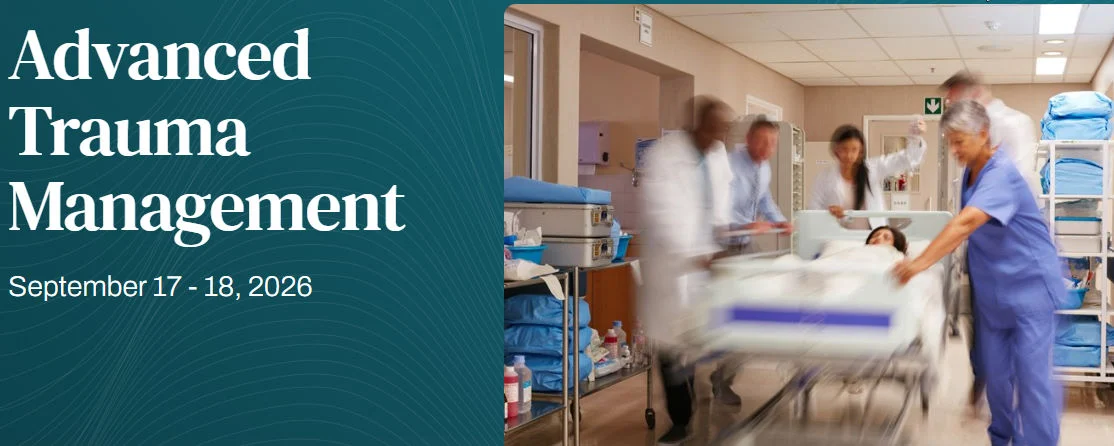
Harvard Advanced Trauma Management 2026 is an intensive two-day continuing medical education program focused on advanced, evidence-based trauma management from initial Emergency Department presentation through hospital admission and discharge. The course delivers state-of-the-art updates, practical protocols, and multidisciplinary strategies for clinicians managing high-risk traumatic injuries.
Course Details
- Title: Harvard Advanced Trauma Management 2026
- Dates: September 17–18, 2026
- Duration: 2 Days
- Format: Live Online
- Institution: Harvard Medical School Continuing Education
- Offered By: Beth Israel Deaconess Medical Center
- Specialties: Emergency Medicine / Trauma Surgery / Critical Care / Anesthesiology
- Language: English
- Recorded Access: Sessions are recorded and available to registered participants for on-demand viewing for 90 days following the course
Target Audience
This advanced trauma course is particularly relevant for:
- Emergency physicians
- Trauma surgeons
- Critical care physicians
- Anesthesiologists
- Emergency and trauma nurses
- Nurse practitioners
- Physician assistants
- Advanced practice providers
- Primary care physicians involved in acute trauma management
- Paramedics and EMTs
- Out-of-hospital emergency medical personnel
- Pediatricians
- Orthopedic surgeons
- Neurologists
- Allied healthcare professionals involved in the initial evaluation, resuscitation, and management of severely injured patients
The program is intended especially for clinicians who already possess a strong foundation in trauma care and want to strengthen advanced decision-making and management skills.
Program Overview
Advanced Trauma Management is a two-day course addressing contemporary approaches, best practices, new pathways, and clinical protocols for the acute management of major trauma patients.
The program follows the trauma patient across the continuum of care, beginning with Emergency Department arrival, initial assessment, resuscitation, and stabilization and continuing through hospital admission and discharge.
The educational focus extends beyond technical procedures to include:
- Trauma team leadership
- Interdisciplinary communication
- Non-technical skills
- Resuscitation strategies
- Massive transfusion protocols
- Imaging decisions
- Advanced Trauma Life Support principles
- Special trauma populations
- High-risk injury recognition
- Airway management
- Neurologic trauma
- Orthopedic trauma
- Thoracic trauma
- Trauma in austere and remote environments
- Mass casualty incidents
A major emphasis is placed on rapidly recognizing high-risk traumatic injuries and applying appropriate evidence-based interventions to optimize patient outcomes.
Course Highlights
Key areas emphasized in the 2026 program include:
- New sessions addressing Wilderness Medicine
- Updated approaches to concussion management
- Sports and orthopedic trauma
- Advanced management of thoracic trauma
- Trauma care for geriatric patients
- Management of pediatric trauma
- Management of the hypotensive trauma patient
- Trauma during pregnancy
- Massive transfusion and hemorrhage management
- Trauma team leadership
- Emergency airway management
- Traumatic brain injury
- Mass casualty incident management
Learning Objectives
Upon completion of this course, participants should be able to:
- Articulate best practices for treating trauma within special patient populations such as hypotensive, geriatric, pediatric, and pregnant patients.
- Identify clinical red flags, such as population-specific vital sign abnormalities, injury mechanisms, or physical examination findings of major vascular injury, to anticipate the patient’s clinical course and care needs.
- Recognize how to incorporate trauma management practices such as Advanced Trauma Life Support (ATLS), massive transfusion protocols, trauma team management, and selection of imaging studies into clinical practice.
- Articulate best practices for treating trauma within Wilderness Medicine, remote, on-field/live sports, and mass casualty incident settings.
Official Program Topics
Day 1 — Thursday, September 17, 2026
Keynote: Wilderness Medicine Trauma Care: From Tsunami to Summit
Faculty: N. Stuart Harris
Exploration of trauma assessment and management principles in wilderness, austere, remote, and resource-limited environments.
Problem Solving with the Hypotensive Trauma Patient
Faculty: Richard Wolfe
Advanced clinical decision-making for trauma patients presenting with hypotension, including rapid identification of life-threatening causes and appropriate resuscitation strategies.
Theme 1 — Trauma in Special Populations
The Elderly Trauma Patient
Faculty: Richard Wolfe
Recognition and management of trauma in older adults, with attention to altered physiology, comorbidities, medication effects, and atypical presentations.
Trauma in Pregnancy: Caring for Two Patients
Faculty: Carrie Tibbles
Assessment and management of trauma during pregnancy, integrating maternal stabilization with fetal considerations.
Pediatric Trauma: Beyond the Small Adult Model
Faculty: James F. Holmes
Trauma evaluation and resuscitation specifically adapted to pediatric anatomy, physiology, and injury patterns.
Theme 2 — Traumatic Resuscitation
Calm in the Chaos: Mastering Trauma Team Leadership
Faculty: Carlo Rosen
Principles of effective trauma leadership, team coordination, communication, and non-technical skills during high-pressure resuscitation.
Massive Transfusion Protocols
Faculty: Christie Fritz
Practical application of massive transfusion protocols for patients with severe traumatic hemorrhage.
Tranexamic Acid (TXA) for Trauma
Faculty: Matthew Bivens
Evidence, indications, timing, and appropriate use of tranexamic acid in bleeding trauma patients.
Time With The Experts: Let’s Talk Trauma
Faculty: Charles Parsons, Christie Fritz, Carrie Tibbles, Jake Hoyne
Expert discussion of challenging trauma scenarios and clinical decision-making.
Day 2 — Friday, September 18, 2026
Keynote: Challenging Cases in Thoracic Trauma
Faculty: Jessica Mason
Advanced approaches to the assessment and treatment of complex thoracic injuries.
Theme 3 — Head and Neck Trauma
Concussions
Faculty: Rebekah Mannix
Contemporary evaluation and management of concussion and mild traumatic brain injury.
Traumatic Brain Injury — From Mild to Severe
Faculty: Jake Hoyne
Clinical assessment, risk stratification, imaging, stabilization, and management across the spectrum of traumatic brain injury.
Spine Imaging: When to Order and How to Read
Faculty: William Copen
Selection and interpretation of spinal imaging in patients with suspected traumatic spine injury.
Managing Trauma in MCIs
Faculty: Gregory Ciottone
Management principles for trauma during mass casualty incidents, including triage, resource allocation, and systems-based emergency response.
Theme 4 — Airway Management
The Trauma Airway
Faculty: Brian Gacioch
Advanced airway assessment and management strategies in severely injured patients.
The Pediatric Airway
Faculty: Joshua Nagler
Management of the pediatric trauma airway with attention to anatomical and physiological differences from adults.
Theme 5 — Orthopedic Trauma
Field of Play Trauma
Faculty: Genevra Stone
Recognition, stabilization, and management of injuries occurring during sports and athletic activity.
Extremities in Extremis: Managing Orthopedic Trauma in the ED
Faculty: Amanda Doodlesack
Emergency evaluation and management of severe extremity and orthopedic trauma.
Time With The Experts: Let’s Talk Trauma
Faculty: Brian Gacioch, Carlo Rosen, Amanda Doodlesack, Natalie Jansen
Interactive discussion of complex trauma cases, management strategies, and practical clinical challenges.
Major Topics
Advanced Trauma Resuscitation
Rapid assessment, stabilization, hemorrhage control, physiologic resuscitation, and coordinated trauma care for critically injured patients.
Hypotensive Trauma
Recognition of shock and occult hemorrhage, identification of clinical warning signs, and selection of appropriate emergency interventions.
Massive Transfusion
Current approaches to massive transfusion protocols and resuscitation of patients experiencing major traumatic bleeding.
Tranexamic Acid in Trauma
Evidence-based use of TXA as part of hemorrhage-control strategies in appropriately selected trauma patients.
Thoracic Trauma
Assessment and management of high-risk chest injuries and potentially life-threatening thoracic trauma.
Traumatic Brain Injury
Evaluation and management strategies across mild, moderate, and severe traumatic brain injury.
Concussion Management
Contemporary assessment and clinical decision-making for patients with concussion.
Trauma Airway Management
Advanced management of difficult and high-risk airways in trauma patients.
Pediatric Trauma
Age-specific trauma assessment, resuscitation, and airway considerations in injured children.
Geriatric Trauma
Recognition of altered physiologic responses and specialized treatment needs in older trauma patients.
Trauma in Pregnancy
Clinical management of the injured pregnant patient while addressing both maternal and fetal needs.
Orthopedic Trauma
Emergency assessment and management of fractures, extremity injuries, and severe musculoskeletal trauma.
Sports Trauma
Evaluation and management of acute injuries occurring during athletic and on-field environments.
Wilderness and Remote Trauma
Adaptation of trauma-management principles to environments with delayed transport and limited medical resources.
Mass Casualty Incidents
Triage, trauma management, leadership, and resource utilization during mass casualty emergencies.
Trauma Team Leadership
Development of teamwork, communication, leadership, and non-technical skills required during complex trauma resuscitations.
Course Directors and Faculty
Course Directors
Amanda L. Doodlesack, MD
- Course Director
- Program Director, Harvard Affiliated Emergency Medicine Residency, Beth Israel Deaconess Medical Center
- Clinical Instructor in Emergency Medicine, Harvard Medical School
- Attending Physician, Department of Emergency Medicine, BIDMC
Jake Hoyne, MD
- Course Director
- Associate Director of Operations, Department of Emergency Medicine, Beth Israel Deaconess Medical Center
- Associate Program Director, Harvard Affiliated Emergency Medicine Residency
Carlo Rosen, MD
- Course leadership and faculty
- Emergency Medicine
- Beth Israel Deaconess Medical Center
Featured Faculty
The 2026 program includes expert faculty such as:
- N. Stuart Harris
- Jessica Mason
- Richard Wolfe
- Carrie Tibbles
- James F. Holmes
- Carlo Rosen
- Christie Fritz
- Matthew Bivens
- Rebekah Mannix
- Jake Hoyne
- William Copen
- Gregory Ciottone
- Brian Gacioch
- Joshua Nagler
- Genevra Stone
- Amanda Doodlesack
- Natalie Jansen
- Charles Parsons
Why This Course Is Relevant
Advanced trauma management requires rapid clinical judgment, effective teamwork, and the ability to recognize patients whose injuries may deteriorate quickly.
This Harvard Medical School continuing education program goes beyond introductory trauma principles by focusing on advanced decision-making, special patient populations, difficult resuscitation scenarios, and current evidence-based trauma strategies.
It is particularly valuable for clinicians working in:
- Level I and Level II trauma centers
- Emergency departments
- Community hospitals
- Intensive care units
- Urgent care environments
- Prehospital emergency care
- Remote clinical environments
- Wilderness medicine
- Sports medicine
- Mass casualty response systems
The course is designed to strengthen clinicians’ ability to identify critical injuries rapidly, coordinate effective resuscitation, anticipate complications, and improve outcomes in severely injured patients.
Short Description
Harvard Advanced Trauma Management 2026 is a two-day Harvard Medical School continuing education course focused on advanced trauma resuscitation, thoracic trauma, traumatic brain injury, airway management, massive transfusion, TXA, orthopedic trauma, pediatric and geriatric trauma, pregnancy, wilderness medicine, sports injuries, and mass casualty incidents. Designed for emergency medicine, trauma, critical care, and acute care clinicians seeking advanced evidence-based strategies for managing high-risk trauma patients.
-
+ Topics:
-
Welcome
-
Keynote Wilderness Medicine Trauma Care from Tsunami to Summit
-
Problem Solving with the Hypotensive Trauma Patient
-
The Elderly Trauma Patient
-
Trauma in Pregnancy Caring for Two Patients
-
Pediatric Trauma Beyond the Small Adult Model
-
Calm in the Chaos Mastering Trauma Team Leadership
-
Massive Transfusion Protocols
-
Tranexamic Acid (TXA) for Trauma
-
Time With the Experts Let’s Talk Trauma (Charles Parsons; Christie Fritz; Carrie Tibbles; Jake Hoyne)
-
Keynote Challenging Cases in Thoracic Trauma
-
Concussions
-
Traumatic Brain Injury – From Mild to Severe
-
Spine Imaging When to Order and How to Read
-
Managing Trauma in MCIs
-
The Trauma Airway
-
The Pediatric Airway
-
Field of Play Trauma
-
Extremities in Extremis Managing Orthopedic Trauma in the ED
-
Time With The Experts- Let’s Talk Trauma (Brian Gacioch; Carlo Rosen; Amanda Doodlesack; Natalie Jansen + Learni)
-
Interactive Q&A Sessions throughout the course with various experts
-