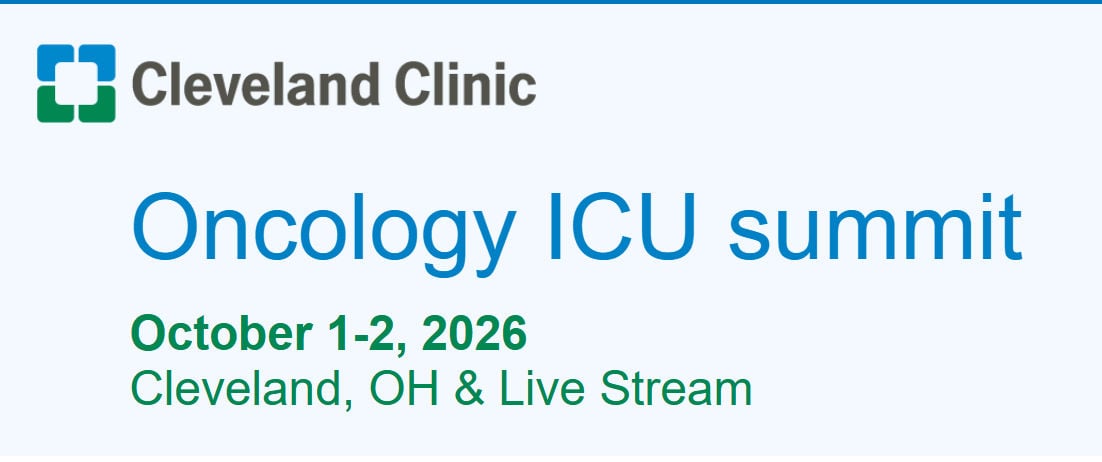
Cleveland Clinic Oncology ICU Summit 2026
$20.00
This Product is shared via google drive download link, So please share your correct Gmail id while placing the order .Please note that there are no CME points or certificate associated with this course
Cleveland Clinic Oncology ICU Summit 2026
Oncology Critical Care CME 2026 | Cancer-Related Emergencies | CAR T-Cell Therapy Toxicities | Immunotherapy Complications | Sepsis | Acute Respiratory Failure | ICU Management
Course Overview
The Cleveland Clinic Oncology ICU Summit 2026 is a specialized continuing medical education (CME) program focused on the management of critically ill patients with cancer, oncologic emergencies, and life-threatening complications of modern anticancer therapies.
Organized by Cleveland Clinic, this two-day hybrid educational summit brings together experts in oncology, intensive care medicine, pulmonary and critical care, hematology, infectious diseases, and clinical pharmacology to address the increasing complexity of oncology intensive care.
The program provides a comprehensive, case-based review of contemporary oncologic emergencies, with particular emphasis on complications associated with novel cancer treatments, including targeted therapies, immune checkpoint inhibitors, antibody-drug conjugates, bispecific antibodies, and chimeric antigen receptor (CAR) T-cell therapy.
These innovative treatments have transformed modern cancer care while introducing potentially life-threatening toxicities that require rapid recognition, accurate diagnosis, and specialized multidisciplinary management.
Through expert-led presentations, real-world clinical cases, and interactive discussions, the summit explores evidence-based strategies for managing acute respiratory failure, sepsis, immunotherapy-related toxicities, cytokine release syndrome (CRS), immune effector cell-associated neurotoxicity syndrome (ICANS), hemophagocytic lymphohistiocytosis (HLH), coagulopathies, and other critical oncology complications.
The Cleveland Clinic Oncology ICU Summit 2026 emphasizes practical approaches to early diagnosis, timely intervention, interdisciplinary collaboration, prognosis assessment, and patient-centered care in the oncology ICU.
Course Details
- Course Title: Cleveland Clinic Oncology ICU Summit 2026
- Organizer: Cleveland Clinic Center for Continuing Education
- Institution: Cleveland Clinic
- Dates: October 1–2, 2026
- Location: Cleveland Clinic Lerner College of Medicine, Cleveland, Ohio, USA
- Original Event Format: Hybrid (In-Person and Live Stream)
- Duration: Two Half-Day Sessions
- Main Specialties: Critical Care Medicine, Hematology/Oncology, Emergency Medicine, Internal Medicine, and Clinical Pharmacology
- Primary Focus: Oncology Intensive Care and Critical Care Management of Patients with Cancer
- Accreditation: Jointly Accredited Continuing Education Provider
- Original Live Activity CME Designation: Maximum of 8.0 AMA PRA Category 1 Credits™
Target Audience
This educational activity is specifically designed for:
- Intensivists and critical care physicians
- Hospitalists
- Emergency medicine physicians
- Community oncologists
- Advanced practice providers
The clinical content is also relevant to healthcare professionals involved in the multidisciplinary management of critically ill oncology patients.
Program Overview
The Cleveland Clinic Oncology ICU Summit 2026 provides a clinically focused exploration of modern oncology critical care through two comprehensive educational sessions.
Day 1: Respiratory Failure, Oncologic Airway Emergencies, and Novel Therapy Toxicities
The first day emphasizes acute respiratory failure in oncology patients, advanced bronchoscopy, infectious diagnostic strategies, drug-induced pneumonitis, neurotoxicity, immune checkpoint inhibitor complications, targeted therapy toxicology, and prognosis-based decision-making in the ICU.
Day 2: Cellular Immunotherapy, Sepsis, Hematologic Emergencies, and the Future of Oncology Critical Care
The second day focuses on emerging immune and cellular therapies, CAR T-cell therapy complications, cytokine release syndrome, ICANS, HLH, sepsis, septic shock, complex coagulopathies, acute leukemia, tumor lysis syndrome, and artificial intelligence in oncology intensive care.
Learning Objectives
Upon completion of this activity, learners will be able to:
- Describe the mechanisms and toxicity profiles of major classes of novel anticancer therapies, including targeted agents, immune checkpoint inhibitors, antibody-drug conjugates, bispecific antibodies, and cellular therapies.
- Apply evidence-based approaches to the evaluation and management of acute respiratory failure in patients with cancer.
- Differentiate sepsis, disease progression, and treatment-related toxicities in critically ill oncology patients to support timely diagnosis and management.
- Recognize and manage key toxicities associated with CAR T-cell therapy, including cytokine release syndrome, neurotoxicity, and hemophagocytic lymphohistiocytosis.
- Incorporate evolving evidence on treatment response, prognosis, and toxicity into multidisciplinary communication, shared decision-making, and care planning.
- Identify practical strategies for effective, patient centered interdisciplinary care delivery for critical care for oncology patients across practice settings.
Official Program Topics
Day 1 — Thursday, October 1, 2026
12:00 PM — Welcome
- Simon Mucha, MD
12:10–1:00 PM — Keynote: Respiratory Failure in Oncology Patients
- Elie Azoulay, MD
- Université Paris Cité, St. Louis Hospital, Paris, France
1:00–1:30 PM — Advanced Bronchoscopy for Oncologic Airway Emergencies
- Christine Girard, MD
- Sangita Goel, MD
1:30–1:50 PM — ID-BAL: How Does It Change Outcomes and Management?
- Dr. Majeed
- Christine Girard, MD
1:50–2:00 PM — Break – Q&A
2:00–2:20 PM — Drug-Induced Pneumonitis
- Michael Smith, MD
2:20–2:40 PM — Neurotoxicity of Novel Therapies
- Amy Kunchok, MD
2:40–3:00 PM — Immune Checkpoint Inhibitor Toxicity
- Lucy Boyce Kennedy, MD
3:00–3:20 PM — Break – Q&A
3:20–3:40 PM — Toxicology of Targeted Therapies
- Megan James, PharmD
3:40–4:00 PM — Pragmatic Approach to Cancer Treatment in the ICU in the Age of Targeted Therapies
- Marc Shapiro, MD
4:00–4:30 PM — Prognostication and Goal Setting – Time Limited Trials and Return to Therapy
- Simon Mucha, MD
- Anirudh Yalamanchali, MD
Day 2 — Friday, October 2, 2026
12:00 PM — Welcome to Day 2
- Simon Mucha, MD
12:10–1:00 PM — Keynote: The Evolving Landscape of Immune and Cell Therapy: What Every Intensivist Needs to Know
- Nirali Shah, MD, M.H.Sc
- National Institutes of Health
1:00–1:30 PM — Real-World CAR-T ICU Journey: Case-Based Discussion of CRS, ICANS, and IEC-HS
- Paolo Caimi, MD, MBA
1:30–1:50 PM — HLH
- Sudipto Mukherjee, MD, PhD
1:50–2:00 PM — Break – Q&A
2:00–2:20 PM — “Not Included in RCTs”: Sepsis in the Oncology Population
- Angel Coz Yataco, MD, FCCP
2:20–2:40 PM — Steroids in Sepsis and Septic Shock
- Jonathan Kissam, PharmD
2:40–3:00 PM — Managing Complex Coagulopathies: DIC and TMA
- Bethany Samuelson Bannow, MD, MCR
3:00–3:20 PM — Break – Q&A
3:20–3:40 PM — Critical Care Considerations for Acute Leukemias
- John Molina, MD, EdM
3:40–4:00 PM — Tumor Lysis Syndrome
- Deepa Jagadeesh, MD
4:00–4:30 PM — The Future of Oncology Critical Care
AI in Oncology and Critical Care
- Shravan Kethireddy, MD
- Louis Williams, MD
Lessons Learned from the Cleveland Clinic Oncology ICU
- Simon Mucha, MD
4:30 PM — Closing Remarks
- Oncology ICU Team
All official session times are listed in Eastern Time.
Major Topics Covered
Oncology Critical Care and Respiratory Emergencies
- Acute respiratory failure in patients with cancer
- Advanced bronchoscopy for oncologic airway emergencies
- Bronchoalveolar lavage (BAL) and infectious disease evaluation
- Diagnostic approaches to critical pulmonary complications
- Drug-induced pneumonitis
- Respiratory complications of contemporary cancer therapies
Novel Anticancer Therapy Toxicities
- Immune checkpoint inhibitor-associated adverse events
- Targeted cancer therapy complications
- Antibody-drug conjugates and emerging treatment toxicities
- Bispecific antibody-related complications
- Neurotoxicity of modern cancer treatments
- Management considerations for critically ill patients receiving anticancer therapy
CAR T-Cell Therapy and Immune-Related Emergencies
- CAR T-cell therapy complications
- Cytokine release syndrome (CRS)
- Immune effector cell-associated neurotoxicity syndrome (ICANS)
- Immune effector cell-associated hemophagocytic syndrome (IEC-HS)
- Hemophagocytic lymphohistiocytosis (HLH)
- Recognition and management of immune-mediated critical illness
Sepsis and Hematologic Emergencies
- Sepsis in immunocompromised oncology patients
- Septic shock and corticosteroid treatment considerations
- Disseminated intravascular coagulation (DIC)
- Thrombotic microangiopathy (TMA)
- Critical care considerations in acute leukemia
- Tumor lysis syndrome and metabolic emergencies
Multidisciplinary Oncology ICU Management
- Prognostication in critically ill cancer patients
- Time-limited trials of intensive care
- Goals-of-care discussions and shared decision-making
- Treatment response and potential return to cancer therapy
- Patient-centered interdisciplinary care
- Artificial intelligence applications in oncology critical care
- Lessons from the Cleveland Clinic Oncology ICU
Course Director and Faculty
Activity Director
Simon Mucha, MD
Planning Committee
- Maria Holztrager, PA-C
- Deepa Jagadeesh, MD
- Megan James, PharmD
- Aneela Majeed, MD
- John Molina, MD
- Laura Rhodes, ACNP
- Michael Smith, MD
- Heather Torbic, PharmD
Cleveland Clinic and Program Faculty
- Paolo Caimi, MD
- Angel Coz Yataco, MD
- Christine Girard, MD
- Sangita Goel, MD
- Deepa Jagadeesh, MD
- Megan James, PharmD
- Lucy Boyce Kennedy, MD
- Shravan Kethireddy, MD
- Jonathan Kissam, PharmD
- Amy Kunchok, MD
- Aneela Majeed, MD
- Simon Mucha, MD
- Sudipto Mukherjee, MD, PhD
- Bethany Samuelson Bannow, MD, MCR
- Marc Shapiro, MD
- Louis Williams, MD
- Anirudh Yalamanchali, MD
Guest Speakers
Elie Azoulay, MD
- Université Paris Cité, St. Louis Hospital, Paris, France
Nirali Shah, MD, M.H.Sc
- National Institutes of Health
Why This Course Is Relevant
Advances in cancer immunotherapy, targeted treatments, and cellular therapies have changed the clinical profile of critically ill oncology patients.
Clinicians working in intensive care units and emergency departments increasingly encounter complex complications that may resemble sepsis, disease progression, respiratory failure, or other critical illnesses.
The Cleveland Clinic Oncology ICU Summit 2026 addresses these challenges by combining oncology expertise with practical critical care strategies.
Key educational benefits include:
- Understanding emerging toxicities associated with modern anticancer therapies.
- Strengthening clinical recognition of CAR T-cell therapy complications.
- Reviewing evidence-based management of respiratory and infectious emergencies.
- Exploring complex hematologic and metabolic conditions in critically ill cancer patients.
- Improving multidisciplinary decision-making and goals-of-care discussions.
- Reviewing evolving approaches to oncology ICU practice.
The program is particularly valuable for physicians and advanced practice providers involved in the evaluation, stabilization, and ongoing management of patients with cancer who develop life-threatening complications.
Short Description
Cleveland Clinic Oncology ICU Summit 2026 is a two-day oncology critical care educational program focused on oncologic emergencies, CAR T-cell therapy complications, immune checkpoint inhibitor toxicities, respiratory failure, sepsis, and intensive care management of patients with cancer.
Key Highlights:
- ✅ Cleveland Clinic oncology and critical care expert-led education.
- ✅ Acute respiratory failure and oncologic airway emergencies.
- ✅ CAR T-cell therapy complications: CRS, ICANS, and HLH.
- ✅ Immunotherapy and targeted anticancer treatment toxicities.
- ✅ Sepsis, septic shock, and drug-induced pneumonitis.
- ✅ Acute leukemia, tumor lysis syndrome, DIC, and TMA.
- ✅ Prognostication and multidisciplinary ICU decision-making.
- ✅ Artificial intelligence and emerging developments in oncology critical care.
- ✅ Official two-day educational curriculum with case-based discussions.
+ Topics:
Day 1 | Thursday, October 1
|
|
|
12:00 PM
|
Welcome Simon Mucha, MD |
|
12:10–1:00 PM
|
Keynote: Respiratory Failure in Oncology Patients Elie Azoulay, MD Université Paris Cité, St. Louis Hospital, Paris, France |
|
1:00–1:30 PM
|
Advanced Bronchoscopy for Oncologic Airway Emergencies Christine Girard, MD and Sangita Goel, MD |
|
1:30–1:50 PM
|
ID-BAL: How Does It Change Outcomes and Management? Dr. Majeed and Christine Girard, MD |
|
1:50–2:00 PM
|
Break – Q&A |
|
2:00–2:20 PM
|
Drug-Induced Pneumonitis Michael Smith, MD |
|
2:20–2:40 PM
|
Neurotoxicity of Novel Therapies Amy Kunchok, MD |
|
2:40–3:00 PM
|
Immune Checkpoint Inhibitor Toxicity Lucy Boyce Kennedy, MD |
|
3:00–3:20 PM
|
Break – Q&A |
|
3:20–3:40 PM
|
Toxicology of Targeted Therapies Megan James, PharmD |
|
3:40–4:00 PM
|
Pragmatic Approach to Cancer Treatment in the ICU in the Age of Targeted Therapies Marc Shapiro, MD |
|
4:00–4:30 PM
|
Prognostication and Goal Setting – Time Limited Trials and Return to Therapy Simon Mucha, MD and Anirudh Yalamanchali, MD |
Day 2 | Friday, October 2
|
|
|
12:00 PM
|
Welcome to Day 2 Simon Mucha, MD |
|
12:10–1:00 PM
|
Keynote: The Evolving Landscape of Immune and Cell Therapy: What Every Intensivist Needs to Know Nirali Shah, MD, M.H.Sc National Institutes of Health |
|
1:00–1:30 PM
|
Real-World CAR-T ICU Journey: Case-Based Discussion of CRS, ICANS, and IEC-HS Paolo Caimi, MD, MBA |
|
1:30–1:50 PM
|
HLH Sudipto Mukherjee, MD, PhD |
|
1:50–2:00 PM
|
Break – Q&A |
|
2:00–2:20 PM
|
“Not Included in RCTs”: Sepsis in the Oncology Population Angel Coz Yataco, MD, FCCP |
|
2:20–2:40 PM
|
Steroids in Sepsis and Septic Shock Jonathan Kissam, PharmD |
|
2:40–3:00 PM
|
Managing Complex Coagulopathies: DIC and TMA Bethany Samuelson Bannow, MD, MCR |
|
3:00–3:20 PM
|
Break – Q&A |
|
3:20–3:40 PM
|
Critical Care Considerations for Acute Leukemias John Molina, MD, EdM |
|
3:40–4:00 PM
|
Tumor Lysis Syndrome Deepa Jagadeesh, MD |
|
4:00–4:30 PM
|
The Future of Oncology Critical Care
|
|
4:30 PM
|
Closing Remarks Onc ICU Team |
Related products

Critical Care - Emergency medicine
Internal Medicine
Critical Care - Emergency medicine
Anesthesiology & pain medicine
Critical Care Symposium: Mastering ED Mechanical Ventilation
Critical Care - Emergency medicine
ASN Critical Care Nephrology – 2022 Update (On-Demand and Livestream)
Critical Care - Emergency medicine
Internal Medicine