
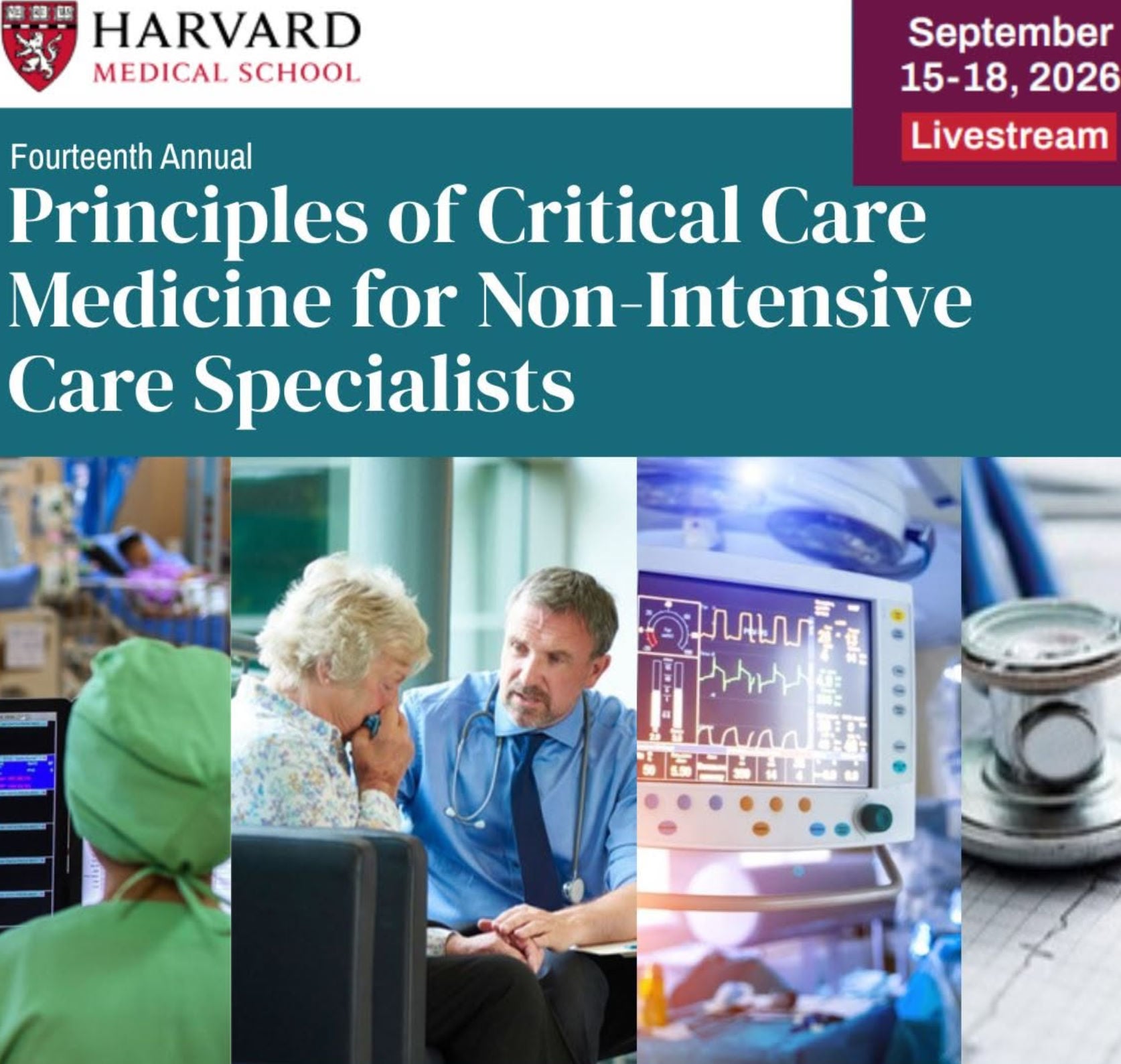
Harvard Principles of Critical Care Medicine for Non-Intensive Care Specialists 2026
$150.00
This Product is shared via google drive download link, So please share your correct Gmail id while placing the order .Please note that there are no CME points or certificate associated with this course Samples for Courses Can be found here : Free Samples Here!
Harvard Principles of Critical Care Medicine for Non-Intensive Care Specialists 2026
Harvard Principles of Critical Care Medicine for Non-Intensive Care Specialists 2026 is a comprehensive continuing medical education program focused on the practical, evidence-based evaluation and management of critically ill patients. Developed by faculty from Harvard Medical School teaching hospitals and offered by Beth Israel Deaconess Medical Center, the course provides high-yield critical care training for clinicians who routinely encounter seriously ill patients inside and outside traditional intensive care settings.
The 2026 curriculum emphasizes immediately applicable strategies for respiratory failure, mechanical ventilation, shock, sepsis, cardiovascular emergencies, point-of-care ultrasound, hematologic and oncologic critical care, neurologic emergencies, and multidisciplinary ICU supportive care.
Course Details
Course: Harvard Principles of Critical Care Medicine for Non-Intensive Care Specialists 2026
Program: Principles of Critical Care Medicine for Non-Intensive Care Specialists
Dates: September 15–18, 2026
Institution: Harvard Medical School
Offered By: Beth Israel Deaconess Medical Center
Format: Live Online / Interactive Distance Learning
Duration: 4 Days
Educational Focus: Critical Care Medicine and Intensive Care Medicine
AMA PRA Category 1 Credits™: Up to 39.25
Language: English
Target Audience
This course is designed for clinicians who care for critically ill patients and need practical, contemporary critical care knowledge.
It is especially relevant for:
- Hospitalists
- Nocturnists
- Emergency Medicine Physicians
- General Internists
- Family Medicine Physicians
- Critical Care Physicians
- Cardiologists
- Pulmonologists
- Hematologists
- Medical Oncologists
- Gastroenterologists
- Nephrologists
- Neurologists
- General Surgeons
- Anesthesiologists
- Obstetricians-Gynecologists
- Palliative Care Specialists
- Physician Associates
- Nurse Practitioners
- Nurses
- Pharmacists
- Other healthcare professionals involved in the care of critically ill patients
Program Overview
Principles of Critical Care Medicine for Non-Intensive Care Specialists provides a focused review of essential advances in modern critical care medicine together with practical strategies that can be applied immediately in clinical practice.
The curriculum addresses the recognition, stabilization, diagnosis, and initial management of critically ill patients presenting with respiratory, cardiovascular, infectious, neurologic, metabolic, surgical, hematologic, and oncologic emergencies.
The 2026 program features expanded content in cardiology critical care and a dedicated hematology/oncology critical care training track, together with updated teaching in mechanical ventilation, artificial intelligence in the ICU, point-of-care ultrasound, mechanical circulatory support, humanizing critical care, and contemporary ICU best practices.
Interactive clinical cases, audience-response questions, rapid refresher sessions, and multidisciplinary faculty teaching are used throughout the program to strengthen clinical decision-making and confidence when managing complex critically ill patients.
Learning Objectives
Upon completion of this activity, participants should be better able to:
- Review the basic principles of mechanical ventilation and describe indications for noninvasive and invasive ventilation.
- Describe evidence-based approaches to the diagnosis and management of common infections in the ICU.
- Categorize different types of shock, describe the underlying pathophysiologic mechanisms, and formulate appropriate treatment strategies.
- Identify evidence-based management strategies for hypoxic respiratory failure, including high-flow nasal cannula, lung-protective ventilation, PEEP optimization, prone positioning, and VV ECMO.
- Describe current approaches to cardiogenic shock, including indications and contraindications for different forms of mechanical circulatory support.
- Describe the importance of point-of-care ultrasound in assessing volume status.
- Identify contemporary approaches to sedation in the intensive care unit.
- Recognize post-intensive care syndrome and describe best practices for its management.
- Identify best practices for caring for dying patients in the intensive care unit.
Official Program Topics
Respiratory Critical Care
- Management of respiratory failure in 2026
- Acute hypoxic respiratory failure
- Acute respiratory distress syndrome
- High-flow nasal cannula
- Noninvasive ventilation
- Invasive mechanical ventilation
- Lung-protective ventilation
- PEEP optimization
- Prone positioning
- VV ECMO
- Mechanical ventilation troubleshooting
- Liberation from mechanical ventilation
- Asthma in the ICU
- COPD exacerbations in the ICU
- Pneumonia in critically ill patients
- Pneumothorax management
- Pleural effusion evaluation
Shock and Hemodynamic Management
- Classification of shock
- Septic shock
- Cardiogenic shock
- Hemorrhagic shock
- Volume assessment
- Fluid resuscitation
- Vasopressors
- Oral vasopressors
- Intravenous vasopressors
- Hemodynamic monitoring
- Point-of-care ultrasound
- Assessment of volume status
Cardiovascular Critical Care
- Cardiogenic shock
- Mechanical circulatory support
- Acute cardiovascular emergencies
- Atrial fibrillation
- Anticoagulation in atrial fibrillation
- Echocardiography in critical care
- Echo report interpretation
- VA ECMO
- Mechanical circulatory support devices
- Advanced Cardiovascular Life Support
- Critical care cardiology
Hematology and Oncology Critical Care
- Critically ill cancer patients
- Hematologic emergencies
- Oncologic emergencies
- Neutropenic sepsis
- Hematopoietic stem cell transplant patients in the ICU
- CAR-T cell therapy complications
- Cytokine release syndrome
- Immune effector cell-associated neurotoxicity syndrome
- Immune checkpoint inhibitor toxicities
- Thrombotic thrombocytopenic purpura
- Acute chest syndrome
- Immunocompromised patients in critical care
Infectious Disease and Sepsis
- Sepsis
- Septic shock
- ICU infections
- Pneumonia
- Neutropenic sepsis
- Evidence-based antimicrobial management
- Infection management in immunocompromised patients
Endocrine and Metabolic Emergencies
- Diabetic ketoacidosis
- DKA management in the ICU
- Hyperglycemic hyperosmolar state
- HHS
- Acid-base disorders
- Electrolyte abnormalities
- Metabolic emergencies in critically ill patients
Neurologic Critical Care
- Seizures in the ICU
- Diagnosis and management of seizures
- Intracerebral hemorrhage
- Neurologic emergencies
- Neurotoxicity associated with cancer therapies
- Neurologic assessment of critically ill patients
Gastrointestinal and Hepatic Critical Care
- Acute and critical liver failure
- Critical care management of liver failure
- Gastrointestinal emergencies in critically ill patients
- Multi-organ dysfunction involving the liver
Surgical Emergencies
- Surgical emergencies for the general intensivist
- Recognition of time-sensitive surgical conditions
- Initial stabilization of surgical critical care patients
- Multidisciplinary management of surgical emergencies
Toxicology
- Overdoses
- Toxidromes
- Toxicologic emergencies
- Initial stabilization of poisoned patients
Pain, Sedation, Delirium, and Withdrawal
- Multimodal pain management
- Agitation in critically ill patients
- ICU delirium
- Contemporary sedation strategies
- Alcohol withdrawal
- Opioid-related critical care issues
- Safe sedation practices
Humanizing Critical Care
- Patient-centered critical care
- Communication with intubated patients
- Emotional and psychological needs of ICU patients
- Family communication
- Compassionate critical care
- Post-intensive care syndrome
- ICU survivorship
- Clinician well-being
- Multidisciplinary ICU teamwork
Palliative and End-of-Life Care
- Palliative care integration
- End-of-life care in the ICU
- Care of the dying patient
- Goals-of-care discussions
- Patient-centered decision-making
Emerging Topics in Critical Care
- Artificial intelligence in the ICU
- Contemporary ICU best practices
- Advances in mechanical ventilation
- Modern critical care decision-making
- Evidence-based ICU medicine
- Case-based critical care management
Major Topics
- Critical Care Medicine
- Intensive Care Medicine
- Mechanical Ventilation
- Acute Respiratory Failure
- ARDS
- Shock
- Septic Shock
- Cardiogenic Shock
- Hemorrhagic Shock
- Sepsis
- Vasopressors
- Point-of-Care Ultrasound
- POCUS
- Hemodynamic Monitoring
- Mechanical Circulatory Support
- VA ECMO
- VV ECMO
- Cardiovascular Emergencies
- Atrial Fibrillation
- Echocardiography
- DKA
- HHS
- Acid-Base Disorders
- Electrolyte Disorders
- Neurologic Emergencies
- Seizures
- Liver Failure
- Hematology Critical Care
- Oncology Critical Care
- Neutropenic Sepsis
- CAR-T Toxicities
- Cytokine Release Syndrome
- ICANS
- Immune Checkpoint Inhibitor Toxicities
- Toxicology
- Pain and Sedation
- ICU Delirium
- Post-Intensive Care Syndrome
- Palliative Care
- End-of-Life Care
- Artificial Intelligence in Critical Care
What’s New in 2026
The 2026 Harvard critical care curriculum includes several important updates:
- New intensive training track in Hematology/Oncology Critical Care
- Expanded Cardiology Critical Care curriculum
- Enhanced Humanizing Critical Care sessions
- Updated mechanical ventilation education
- Artificial intelligence applications in the ICU
- Updated evidence-based ICU best practices
- Expanded management strategies for critically ill cancer patients
- Contemporary approaches to mechanical circulatory support
Why This Course Is Relevant
Clinicians outside dedicated intensive care units increasingly encounter patients experiencing rapid physiologic deterioration, acute respiratory failure, severe infections, cardiovascular instability, metabolic emergencies, and multi-organ dysfunction.
This Harvard Medical School CME program provides a structured approach to recognizing and managing these high-risk situations using evidence-based strategies that can be translated directly into clinical practice.
The broad multidisciplinary curriculum is particularly valuable for hospitalists, emergency physicians, internists, surgeons, subspecialists, and advanced practice clinicians seeking to strengthen their critical care knowledge without completing formal intensive care specialization.
Short Description
Harvard Principles of Critical Care Medicine for Non-Intensive Care Specialists 2026 provides a comprehensive evidence-based update in modern critical care medicine. Review mechanical ventilation, respiratory failure, ARDS, sepsis, septic and cardiogenic shock, POCUS, ECMO, cardiovascular emergencies, hematology/oncology critical care, neurologic and metabolic emergencies, sedation, delirium, ICU survivorship, and end-of-life care.
Topics
-
Core Shock, Hemodynamics & Resuscitation
-
Welcome from the Course Directors
-
Shock and Vasopressors: A Case-Based Physiologic Approach
-
From Infusion to Ingestion: Best Practices for Oral Vasopressor Use in 2026
-
Red Alert Practical Tips for Managing the Patient with Hemorrhagic Shock
-
Burning Clinical Question: Should I Start Steroids for Shock?
-
Rapid Refresher: Sepsis in 2026
-
POCUS and More Practical Tips for Assessing Volume Responsiveness at the Bedside
-
-
Cardiovascular Critical Care & Arrhythmias
-
Diagnosis and Management of Cardiogenic Shock in 2026
-
Quick Hit: NSTEMI in the ICU – What Do I Do?
-
Management of Ventricular Tachycardia in the ICU
-
Management of AFib and Other Arrhythmias What Every Intensivist MUST Know
-
Starting, Stopping, Bridging Anticoagulation for Atrial Fibrillation
-
The Anatomy and Physiology of Pacemakers and ICDs
-
Rapid Refresher: ECGs You MUST Know
-
Quick Hit: The Anatomy of an Echo Report – What Every Intensivist Must Know
-
Echo Essentials Every Intensivist Must Know
-
Mechanical Circulatory Support What Every Intensivist Must Know
-
Left and Right Heart Failure in the ICU: Tips and Tricks for Diagnosis and Management
-
Updates in the Management of Massive and Submassive PE: What’s New in 2026
-
Case Studies in Cardiac Critical Care
-
ACLS Pearls, Pitfalls and Practical Applications for the Intensivist
-
Burning Clinical Question: What Temperature Should I Target After ROSC?
-
-
Pulmonary, Mechanical Ventilation & Airway Management
-
Rapid Refresher: The ABCs of ABGs
-
Vents 101: A Review for Beginners
-
Vents 102: Moving Your Knowledge from Plateau to Peak
-
Management of Respiratory Failure in 2026
-
Best Practices for Managing Asthma and ECOPD in the ICU
-
Burning Clinical Question: How Do I Do a Recruitment Maneuver?
-
Connecting Function to Physiology: HFNC and Other Respiratory Devices You MUST Know
-
Non-Invasive Ventilation in the ICU: Evolution, Evidence and the Expertise You Need
-
Burning Clinical Question: What Settings Should My Patient Be on for a Spontaneous Breathing Trial?
-
Practical Tips for Extubating Difficult-to-Wean Patients
-
Burning Clinical Question: Should I Transfer My Patient for Consideration of VV ECMO?
-
Quick Hit: Anatomy and Physiology of Chest Tube Drainage System
-
Pneumothorax Management for the General Intensivist
-
Burning Clinical Question: Should I Drain This Pleural Effusion?
-
Self-Study On-Demand: Tracheostomy Tips What Every Intensivist Must Know
-
-
Infectious Diseases & Sepsis in Critical Care
-
Burning Clinical Question: What’s New in Pneumonia in 2026?
-
Five Infectious Disease Emergencies You Must Know
-
Respiratory Failure in the Immunocompromised Host: Is Anything Done Differently?
-
-
Hematology, Oncology & Transfusion Medicine
-
Heme-Onc Emergencies You Cannot Miss
-
Diagnosis and Management of Neutropenic Sepsis
-
Rapid Refresher: What the Intensivist Needs to Know about Hematopoietic Stem Cell Transplant in the ICU
-
Cutting-Edge Cancer Therapies What Every Intensivist Must Know to Manage and Safely Transfer Patients
-
Rapid Refresher: Immune Checkpoint Inhibitor Toxicities the ICU Provider MUST Know
-
Burning Clinical Question: Does My Patient with ICANS Need the ICU?
-
Quick Hit: Tips for Anticoagulant Reversal
-
Tales from the Blood Bank What Every Intensivist Must Know
-
Burning Clinical Question: Does My Patient Have Acute Chest Syndrome?
-
-
Metabolic, Renal & Endocrine Critical Care
-
Sugar, Sugar: Management of DKA and HHS in the ICU
-
What Every Intensivist Must Know – Part 1: Acid Base Disorders in the ICU
-
What Every Intensivist Must Know – Part 2: Electrolyte Abnormalities
-
Rapid Refresher: Nutrition in the ICU
-
-
Gastrointestinal & Surgical Emergencies in the ICU
-
To Scope or Not to Scope: The Endoscopist’s Perspective of GI Bleeding in the ICU
-
Critical Care Management of the Patient with Liver Failure
-
Can’t-Miss Surgical Emergencies for the General Intensivist
-
-
Neurological Emergencies & Neuro-Critical Care
-
Neuro Quick Hit: Diagnosis and Management of Seizures in the ICU
-
Neuro Quick Hit: The ABCs of IPH for the General Intensivist
-
Self-Study On-Demand: Altered Mental Status in the ICU: A Case-Based Approach
-
Self-Study On-Demand: Burning Clinical Question: Does My Patient Need a Head CT?
-
-
Sedation, Toxicology, Addiction & Delirium Management
-
Beyond Sedation: Multimodal Management of Pain, Agitation and Delirium
-
Burning Clinical Question: When Do I Need to Stop Propofol for High Triglycerides?
-
Agitation and Aggression in the Critically Ill: A Psychiatrist’s Perspective
-
Tips and Tricks for Diagnosing and Managing Alcohol Withdrawal in Your ICU
-
Self-Study On-Demand: Quick Hit: Managing Opioid Withdrawal in the ICU
-
Rapid Refresher: Tylenol Toxicity in the ICU
-
Toxicology 101: Four Tips for the Intensivist
-
-
Communication, Palliative Care, Quality & Humanizing the ICU
-
Burning Clinical Question: What Is a Time-Limited Trial?
-
Burning Clinical Question: How Can I Communicate with My Intubated Patient?
-
Practical Tips for Incorporating Palliative Care into the ICU
-
Critical-Illness Survivorship: What Every Intensivist Must Know
-
Humanizing Harm: Best Practices for Discussing Harm Experienced by Critically Ill Patients and Families
-
Humanizing the ICU: Strategies to Improve Care of Patients and Providers
-
Critical Thinking in Critical Care: Thinking Strategies to Minimize Cognitive Errors in the ICU
-
Artificial Intelligence in Action: Practical Strategies to Optimize Your ICU Performance
-
Self-Study On-Demand: Quality Control: CAUTI, CLABSI and HAPI Mitigation for Your ICU
-
Ripped from the Case Files: Challenging Cases in Critical Care
-
Related products

Internal Medicine

Critical Care - Emergency medicine

Critical Care - Emergency medicine

Internal Medicine

Medical Accounts

USMLE / kaplan and Board Review
Uworld USMLE COMLEX Level 1 Qbank, Updated Jan 2023, System- and Subject-wise (PDF)
Anesthesiology & pain medicine
Critical Care Symposium: Mastering ED Mechanical Ventilation

Internal Medicine