
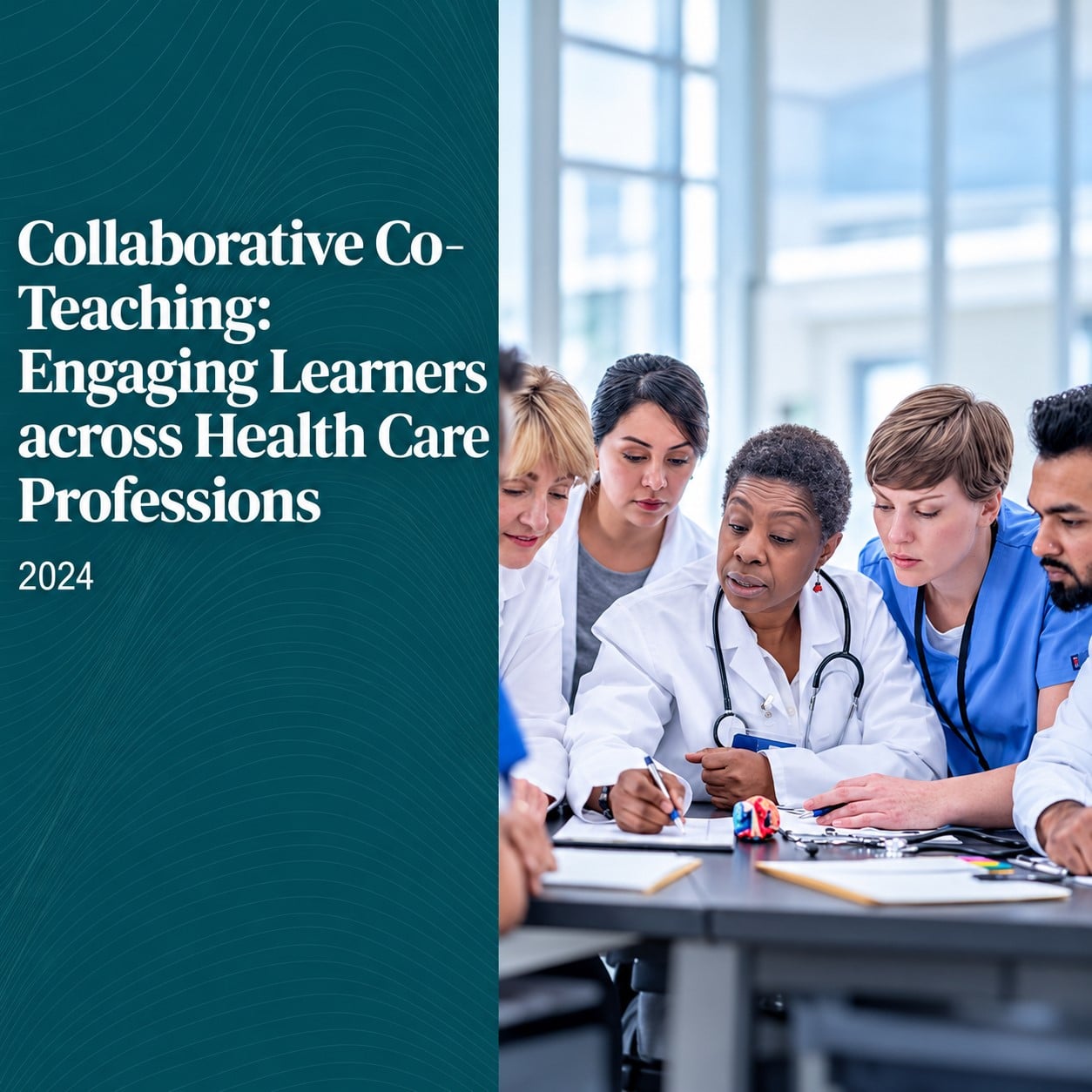
Harvard Collaborative Co-Teaching Engaging Learners across Health Care Professions 2024
$20.00
This Product is shared via google drive download link, So please share your correct Gmail id while placing the order .Please note that there are no CME points or certificate associated with this course Samples for Courses Can be found here : Free Samples Here!
Harvard Collaborative Co-Teaching: Engaging Learners across Health Care Professions 2024
Harvard Medical Education Course 2024 | Interprofessional Co-Teaching, Active Learning, Clinical Education, Team-Based Teaching, Instructional Design & Healthcare Faculty Development
The Harvard Collaborative Co-Teaching: Engaging Learners across Health Care Professions 2024 is a professional development and continuing medical education course focused on collaborative teaching, interdisciplinary learning, active educational methods, and evidence-based instructional design for healthcare professionals.
Developed and offered by Brigham and Women’s Hospital, with educational accreditation through Harvard Medical School, this course introduces practical methods for combining the expertise of physicians, nurses, pharmacists, psychologists, physician assistants, and other healthcare professionals in interactive teaching sessions.
The 2024 program was held on September 20, 2024, as a one-day educational activity featuring explanatory lectures, clinical teaching demonstrations, interactive breakout sessions, and discussions involving experienced medical educators.
The Collaborative Co-Teaching approach emphasizes the value of two or more educators from different healthcare professions working together to create educational experiences that are clinically relevant, engaging, interactive, and efficient.
Rather than relying exclusively on conventional lectures, this educational model uses active learning, multidisciplinary expertise, structured session design, rehearsal, and collaborative facilitation to improve the teaching experience.
Participants are introduced to practical teaching techniques and strategies for establishing collaborative co-teaching initiatives within hospitals, medical schools, nursing programs, residency programs, and other healthcare institutions.
The curriculum draws on the experience of the Collaborative Co-Teaching Initiative at Brigham and Women’s Hospital, providing examples of how interdisciplinary educators can share their clinical perspectives and teach effectively as a team.
Course Details
- Course: Harvard Collaborative Co-Teaching: Engaging Learners across Health Care Professions 2024
- Official Program: Collaborative Co-Teaching: Engaging Learners across Health Care Professions
- Educational Provider: Brigham and Women’s Hospital
- Accrediting Institution: Harvard Medical School
- Edition: 2024
- Historical Course Date: Friday, September 20, 2024
- Original Format: Live Online Professional Education
- Duration: One Day
- Original Agenda Time: 8:00 AM – 5:00 PM Eastern Time
- Primary Educational Focus: Interprofessional Healthcare Education
- Additional Focus: Medical Education, Nursing Education, Faculty Development, Clinical Teaching and Team-Based Learning
- MedicalAmboss Listed Format: Videos + PDFs
- Language: English
- Teaching Methods: Lectures, Interactive Demonstrations, Breakout Sessions, Expert Discussions and Implementation Planning
The 2024 date and detailed agenda are preserved from the historical program listing. The currently published Harvard course page describes a later edition and should not be used to assign newer dates or accreditation figures to this product.
Target Audience
The program is intended for healthcare professionals involved in clinical teaching, professional development, and interdisciplinary medical education.
The target audience includes:
- Physicians
- Primary Care Physicians
- Emergency Medicine Physicians
- Internal Medicine Physicians
- Hospitalists
- Specialist Physicians
- Surgeons
- Obstetricians and Gynecologists
- Physician Assistants
- Physician Associates
- Nurse Practitioners
- Registered Nurses
- Nurse Educators
- Clinical Pharmacists
- Pharmacists
- Psychologists
- Physical Therapists
- Occupational Therapists
- Speech-Language Pathologists
- Social Workers
- Dentists
- Dietitians
- Medical Residents
- Clinical Fellows
- Faculty Members
- Clinical Educators
- Healthcare Education Administrators
- Allied Healthcare Professionals
The course is particularly relevant to professionals interested in improving interprofessional communication, clinical teaching effectiveness, learner engagement, and collaborative educational practice.
Program Overview
Healthcare education frequently involves professionals from multiple disciplines who contribute different perspectives to patient care.
Physicians, nurses, pharmacists, therapists, and other clinicians often possess complementary knowledge that can enrich teaching when their expertise is integrated effectively.
The Harvard Collaborative Co-Teaching 2024 program examines how this multidisciplinary expertise can be used to create structured, engaging educational activities.
The curriculum covers:
- Collaborative Co-Teaching
- Interprofessional Education
- Healthcare Faculty Development
- Clinical Teaching Methods
- Active Learning
- Evidence-Based Education
- Educational Session Design
- Team-Based Teaching
- Interactive Learning
- Learner Engagement
- Collaborative Lesson Planning
- Rehearsal and Practice
- Feedback
- Shared Teaching Responsibilities
- Nursing and Physician Collaboration
- Clinical Case Demonstrations
- Teaching Implementation
- Healthcare Communication
- Professional Development
The course emphasizes learning through both explanation and observation, allowing participants to examine how experienced educators facilitate collaborative teaching sessions.
Official Learning Objectives
Upon completion of the original educational activity, participants should be better able to:
- Design an effective collaborative co-teaching session.
- Apply interactive educational methods and evidence-based content to develop efficient, engaging, and effective co-teaching experiences.
- Recognize the essential role of rehearsals in successful collaborative teaching.
Extended Educational Goals
Based on the program’s content, participants may also develop greater understanding of:
- Combining the knowledge of different healthcare professions in one educational session.
- Selecting active learning methods appropriate to clinical education.
- Organizing teaching roles and responsibilities.
- Developing structured lesson plans.
- Improving learner participation.
- Using clinical cases to demonstrate collaborative teaching.
- Providing constructive feedback.
- Coordinating rehearsals before educational sessions.
- Establishing co-teaching programs in healthcare institutions.
- Evaluating teaching effectiveness.
These additional goals expand on the three published learning objectives and are not presented as separate official accreditation objectives.
Historical 2024 Course Curriculum
Friday, September 20, 2024
The following program outline is preserved from the historical 2024 agenda displayed in the MedicalAmboss listing.
All times are Eastern Time.
Session I – Introduction to Collaborative Co-Teaching
Opening Remarks
8:00 AM – 8:10 AM
Faculty:
- Helen Shields, MD
- William Martin-Doyle, MD, MPH
The opening session introduces the educational program and the importance of collaborative learning among healthcare professionals.
Genesis of RN-MD Co-Teaching Project
8:10 AM – 8:30 AM
Faculty: Marina Zambrotta, MD, MEd
This presentation examines the development of the physician-nurse collaborative teaching model.
Important educational themes include:
- RN-MD Collaboration
- Interprofessional Teaching
- Shared Educational Responsibilities
- Clinical Experience
- Development of Teaching Partnerships
- Healthcare Education Innovation
Introduction to Co-Teaching
8:30 AM – 9:30 AM
Faculty:
- James Honan, EdD
- Noah Heller, PhD
This session provides an introduction to the educational principles underlying collaborative co-teaching.
Relevant considerations include:
- Collaborative Teaching Models
- Educational Design
- Active Learning
- Teaching Roles
- Interprofessional Communication
- Learner Participation
- Effective Facilitation
9:30 AM – 9:40 AM: Break
Session II – Clinical Implementation and Active Teaching
How We Did It – the VA Bedford Healthcare System Experience
9:40 AM – 10:00 AM
Faculty: James Meisel, MD, MHPEd
This presentation reviews an institutional experience implementing collaborative healthcare teaching.
Relevant themes include:
- Program Implementation
- Healthcare Systems
- Faculty Collaboration
- Teaching Partnerships
- Clinical Education
- Institutional Support
- Practical Challenges
Techniques for Active and Engaging Teaching
10:00 AM – 11:15 AM
Faculty: Marina Zambrotta, MD, MEd
This session examines interactive educational methods intended to increase learner engagement.
Important teaching approaches include:
- Active Learning
- Interactive Questioning
- Case-Based Learning
- Learner Participation
- Clinical Problem-Solving
- Group Discussion
- Teaching Feedback
- Structured Engagement
The educational emphasis is on transforming passive learning into active participation.
A Framework for Structured and Effective Co-Teaching Sessions
11:15 AM – 12:15 PM
Faculty:
- Helen Shields, MD
- Marina Zambrotta, MD, MEd
This presentation examines the structure and planning of collaborative teaching sessions.
Relevant topics include:
- Learning Objectives
- Educational Planning
- Teaching Session Structure
- Faculty Coordination
- Role Distribution
- Interactive Teaching Methods
- Timing
- Rehearsals
- Session Evaluation
The session provides a framework that educators may adapt to their own institutions.
12:15 PM – 1:00 PM: Lunch Break
Session III – Collaborative Teaching Demonstrations: Breakout A
1:00 PM – 1:45 PM
The first breakout period features multiple parallel demonstrations in which teams of healthcare professionals present clinical topics using collaborative teaching methods.
A1. Alcohol Withdrawal and CIWA-AR Scale
Faculty:
- William Martin-Doyle, MD, MPH
- Mary Hardiman, RN, MS
This demonstration uses alcohol withdrawal and the CIWA-Ar scale to illustrate collaborative physician-nurse teaching.
A2. Age-Friendly Prescribing: Less Is More
Faculty:
- Priscilla Kim, PharmD
- Lionel Lim, MBBS, MPH
Examines age-friendly prescribing through collaborative teaching involving medication safety, polypharmacy, and older adult care.
A3. Arterial Blood Gases
Faculty:
- Marliyatou Diallo, RN, BSN
- Helen Shields, MD
Demonstrates interdisciplinary education using arterial blood gas interpretation.
A4. H. pylori, Feeding Tubes and More
Faculty:
- Lori Newman, MD, PhD
- Christine Smith, MSN, RN, PCCN
Uses gastrointestinal clinical subjects to demonstrate shared teaching responsibilities and learner engagement.
A5. Medical Interpreters as Partners in Patient Care
Faculty:
- Yilu Ma, MS, MA, CMI
- Irene Yeh, MD, MPH
- Rosa Terrance, DNP
Examines collaborative teaching relevant to medical interpreters, patient communication, and culturally responsive care.
1:45 PM – 2:00 PM: Break
Session IV – Collaborative Teaching Demonstrations: Breakout B
2:00 PM – 2:45 PM
B1. Arterial Blood Gases
Faculty:
- Marliyatou Diallo, RN, BSN
- Helen Shields, MD
A collaborative teaching demonstration focused on blood gas interpretation.
B2. Catch My Flow – Fun Facts About CAUTIs
Faculty:
- Marina Zambrotta, MD
- Ewa Grudzinski, RN
Demonstrates interprofessional teaching using catheter-associated urinary tract infection prevention and management.
B3. The Agony and Ecstasy of Telemetry Alarms
Faculty:
- Bram Wispelwey, MD, MPH, MS
- Stephanie Bartelt, BSN, RN, CWOCN
Uses cardiac telemetry and alarm-related clinical issues as a framework for team-based healthcare education.
B4. Clostridioides difficile: Difficulties in Identification and Management
Faculty:
- Kety FlorGomes, RN, BSN
- Alexander Carbo, MD
Demonstrates clinical education using the diagnosis and management of Clostridioides difficile infection.
B5. Health Care Professional Well-Being: Protecting Against Burnout and Practicing Self-Care
Faculty:
- Maria Gianan, DBA
- Yanire Nieves, MD, MBA
Examines healthcare professional wellbeing and self-care within an interdisciplinary teaching format.
2:45 PM – 3:00 PM: Break
Session V – Collaborative Teaching Demonstrations: Breakout C
3:00 PM – 3:45 PM
C1. Protecting Patients from Pressure Injuries
Faculty:
- Ewa Grudzinski, RN
- Marina Pavia, DO, MS
Demonstrates collaborative teaching of pressure injury prevention and patient safety.
C2. Blood Cultures Done the Right Way
Faculty:
- Kety FlorGomes, RN, BSN
- Helen Shields, MD
Uses blood culture collection and clinical microbiology principles to illustrate coordinated healthcare education.
C3. The Agony and Ecstasy of Telemetry Alarms
Faculty:
- Stephanie Bartelt, BSN, RN, CWOCN
- Bram Wispelwey, MD, MPH, MS
A repeated teaching demonstration involving telemetry alarm management.
C4. Venous Thromboembolism: Can We Make a Difference?
Faculty:
- William Martin-Doyle, MD, MPH
- Mary Hardiman, RN, MS
Examines collaborative education concerning venous thromboembolism prevention and management.
C5. Delirium: Diagnosis and Management
Faculty:
- Sue Yie, MD
- Brittany Carey, NP
Demonstrates multidisciplinary teaching on delirium recognition and management.
The original breakout sessions occurred in parallel. Their inclusion in the historical agenda does not establish that every demonstration was attended or recorded.
3:45 PM – 4:00 PM: Break
Session VI – Keynote and Implementation
Keynote Address
4:00 PM – 4:10 PM
Faculty: Lisa Rosenbaum, MD
The keynote concludes the main educational demonstrations.
Partnering for Success: A Look Behind the Scenes
4:10 PM – 4:30 PM
Faculty:
- Patricia Aylward, BSN, MS, PCCN, NEA-BC
- Helen Shields, MD
This presentation explores the preparation and coordination involved in effective collaborative teaching.
Relevant considerations include:
- Faculty Partnerships
- Educational Planning
- Teaching Roles
- Rehearsals
- Interprofessional Communication
- Program Development
- Institutional Implementation
Implementation Strategies: Brainstorming Breakout Sessions
4:30 PM – 5:00 PM
Faculty:
- Helen Shields, MD
- Marina Zambrotta, MD, MEd
- William Martin-Doyle, MD, MPH
- Christine Smith, MSN, RN, PCCN
- James Meisel, MD, MHPEd
- Yanire Nieves, MD, MBA
The concluding session focuses on practical strategies for establishing collaborative co-teaching programs.
Important themes include:
- Institutional Readiness
- Faculty Collaboration
- Program Design
- Educational Objectives
- Implementation Planning
- Rehearsals
- Resource Considerations
- Learner Engagement
- Program Evaluation
Major Topics Covered
- Harvard Collaborative Co-Teaching 2024
- Healthcare Professional Education
- Medical Education
- Interprofessional Education
- Nursing Education
- Physician-Nurse Collaboration
- Team-Based Teaching
- Clinical Teaching Methods
- Active Learning
- Instructional Design
- Evidence-Based Education
- Faculty Development
- Collaborative Lesson Planning
- Teaching Rehearsals
- Interactive Lectures
- Clinical Case Demonstrations
- Learner Engagement
- Educational Implementation
- Team Communication
- Patient Safety Education
- Healthcare Teaching Innovation
- Professional Development
- Medical Curriculum Design
- Interdisciplinary Collaboration
Collaborative Co-Teaching in Healthcare
Collaborative co-teaching brings together healthcare educators who contribute complementary professional knowledge.
In clinical education, this approach allows physicians, nurses, pharmacists, therapists, and other professionals to demonstrate different perspectives on a clinical topic.
Effective collaboration can help learners understand how multiple healthcare roles contribute to patient assessment, treatment, communication, and safety.
Active Learning and Learner Engagement
Active learning methods encourage students to participate in the learning process rather than passively receive information.
The course emphasizes techniques such as:
- Interactive Questioning
- Clinical Cases
- Learner Participation
- Guided Discussion
- Collaborative Problem-Solving
- Reflection
- Feedback
These techniques can be adapted to healthcare classrooms, professional development sessions, residency teaching, and clinical education programs.
Designing Effective Co-Teaching Sessions
Collaborative teaching requires deliberate preparation.
The program explores the relationship among:
- Learning Objectives
- Teaching Structure
- Faculty Roles
- Educational Content
- Interactive Methods
- Timing
- Rehearsals
- Learner Feedback
A well-structured teaching session helps educators coordinate their contributions and maintain a consistent educational focus.
Why Rehearsals Matter
Rehearsal is a central learning objective of the Harvard course.
When multiple faculty members deliver a shared session, rehearsal allows them to:
- Clarify Teaching Roles
- Coordinate Transitions
- Refine Session Timing
- Practice Questions
- Check Educational Materials
- Identify Potential Problems
- Improve Presentation Flow
The educational goal is to develop a cohesive teaching experience rather than a series of disconnected lectures.
Clinical Demonstrations
The 2024 course uses real clinical subjects to illustrate collaborative teaching methods.
Examples include:
- Alcohol Withdrawal
- Arterial Blood Gas Interpretation
- Age-Friendly Prescribing
- Catheter-Associated Urinary Tract Infections
- Clostridioides difficile
- Blood Cultures
- Telemetry Alarms
- Pressure Injury Prevention
- Venous Thromboembolism
- Delirium
These clinical topics function as examples of co-teaching practice, not as evidence that this is a comprehensive clinical treatment course in all those specialties.
Establishing a Co-Teaching Initiative
An important aim of the program is helping participants apply collaborative teaching methods at their own institutions.
Relevant implementation considerations include:
- Identifying Faculty Partners
- Selecting Clinical Subjects
- Establishing Educational Objectives
- Planning Teaching Sessions
- Scheduling Rehearsals
- Choosing Interactive Methods
- Collecting Feedback
- Evaluating Outcomes
- Improving Educational Programs
The experience of Brigham and Women’s Hospital provides the institutional context for these discussions.
Continuing Medical Education
The course is associated with continuing education offered by Brigham and Women’s Hospital and accredited through Harvard Medical School.
Official CME and professional education credits are governed by the specific course edition, participation requirements, evaluation, and accreditation rules.
The current Harvard Medical School page describes later editions. Its newer credit information should not be assumed to apply to the 2024 product without independent verification.
Important CME Notice
Purchasing the separately distributed MedicalAmboss materials does not itself provide:
- Official Harvard CME Credits
- Completion Certificates
- Brigham and Women’s Hospital Course Registration
- Live Online Participation
- Interactive Breakout Attendance
- Publisher Course Accounts
- Harvard Learning Platform Access
- Publisher-Hosted Extras
Why This Course Is Relevant
The Harvard Collaborative Co-Teaching: Engaging Learners across Health Care Professions 2024 program provides a practical approach to improving healthcare education through interdisciplinary cooperation.
Its combination of teaching theory, interactive techniques, clinical demonstrations, rehearsal, and implementation strategies makes it especially relevant to physicians, nurses, pharmacists, physician assistants, psychologists, allied healthcare professionals, and medical educators.
The program can support the development of more engaging educational sessions, more effective faculty collaboration, and stronger integration of different professional perspectives in healthcare training.
Official Program Reference and MedicalAmboss Purchase Scope
Harvard Medical School Course:
https://learn.hms.harvard.edu/programs/collaborative-co-teaching
Harvard University Course Listing:
MedicalAmboss Product:
The current Harvard pages describe later offerings of the same educational program.
The September 20, 2024 schedule in this description is retained from the historical agenda present in the MedicalAmboss product listing.
The original agenda and publisher pages do not independently establish the number or completeness of files supplied with this separately distributed edition.
MedicalAmboss File Scope: This product describes educational content for reference. Official registration, CME credits, certificates, live attendance, interactive participation, publisher streaming access, accounts, memberships, and publisher-hosted benefits are not included unless explicitly listed as store files.
Short Description
Harvard Collaborative Co-Teaching: Engaging Learners across Health Care Professions 2024 provides practical education in interdisciplinary teaching, active learning, faculty collaboration, learner engagement, and evidence-based healthcare education.
Presented by Brigham and Women’s Hospital, the original September 20, 2024 program includes lectures, clinical teaching demonstrations, breakout sessions, and implementation discussions designed for physicians, nurses, pharmacists, physician assistants, psychologists, and other healthcare professionals.
Topics:
Introduction to Co-Teaching
- Opening Remarks
- Introduction to Co-Teaching
- Key Note Address
- Genesis of RN-MD Co-Teaching Project
- Agreement of Nurses’ and Physicians’ Attitudes on Collaboration
- Nurse-Doctor Co-Teaching- A Path Towards Interprofessional Collaboration
- A Framework for Structured and Effective Co-Teaching Sessions
- Techniques for Active and Engaging Teaching
- Partnering for Success – A Look Behind the Scenes
- How We Did It – the VA Bedford Healthcare System Experience
Collaborative Co-Teaching – A Sessions
- A1 Collaborative Co-Teaching Alcohol Withdrawal and CIWA-Ar Scale
- A2 Collaborative Co-Teaching Age-Friendly Prescribing Less is More
- A3 Collaborative Co-Teaching Arterial Blood Gases
- A4 Collaborative Co-Teaching- H pylori, Feeding Tubes and More
- A5 Collaborative Co-Teaching- Medical Interpreters as Partners in Patient Care
Collaborative Co-Teaching – B Sessions
- B1 Collaborative Co-Teaching – Arterial Blood Gases
- B2 Collaborative Co-Teaching – Catch My Flow – Fun Facts about CAUTIs
- B3 Collaborative Co-Teaching – The Agony and Ecstasy of Telemetry Alarms
- B4 Collaborative Co-Teaching – Clostridioides difficile – Difficulties in Identification and Management
- B5 Collaborative Co-Teaching – Health Care Professional Well-Being – Protecting against Burnout and Practicing Self-Care
Collaborative Co-Teaching – C Sessions
- C1 Collaborative Co-Teaching – Protecting Patients from Pressure Injuries
- C2 Collaborative Co-Teaching – Blood Cultures Done the Right Way
- C3 Collaborative Co-Teaching – The Agony and Ecstasy of Telemetry Alarms
- C4 Collaborative Co-Teaching – Venous Thromboembolism – Can We Make a Difference
- C5 Collaborative Co-Teaching – Delirium – Diagnosis and Management
Nurse Doctor Co-Teaching
- Nurse Doctor Co-Teaching Arterial Blood Gases
- Nurse Doctor Co-Teaching Catch My FLow What You Need to Know About CAUTIs
- Nurse Doctor Co-Teaching CIWA Scale
- Nurse Doctor Co-Teaching H. Pylori
- Nurse Doctor Co-Teaching Interruptions on the Medical Unit
- Nurse Doctor Co-Teaching Mastering Opioid Withdrawal with COWS
- Nurse Doctor Co-Teaching The Agony and Ecstasy of Telemetry Alarms
- Nurse Doctor Co-Teaching The Ins and Outs of HYPONATREMIA
- Nurse Doctor Co-Teaching Tres Difficile
- Nurse Doctor Co-Teaching Venous Thromboembolism on GMS Can we make a difference
Course Resources
- CourseResources_Books and Articles_082823finalr
Closing Session
- IT’S ALL ABOUT YOU SHARE ONE THING THAT YOU WILL TAKE AWAY AND SHARE WITH A COLLEAGUE
Related products
Internal Medicine
Critical Care - Emergency medicine

Pediatrics
Critical Care - Emergency medicine
Critical Care - Emergency medicine
2022 ISICEM International Symposium on Intensive Care & Emergency Medicine
Internal Medicine
Critical Care - Emergency medicine
International Symposium on Intensive Care & Emergency Medicine ( ISICEM ) 2020