
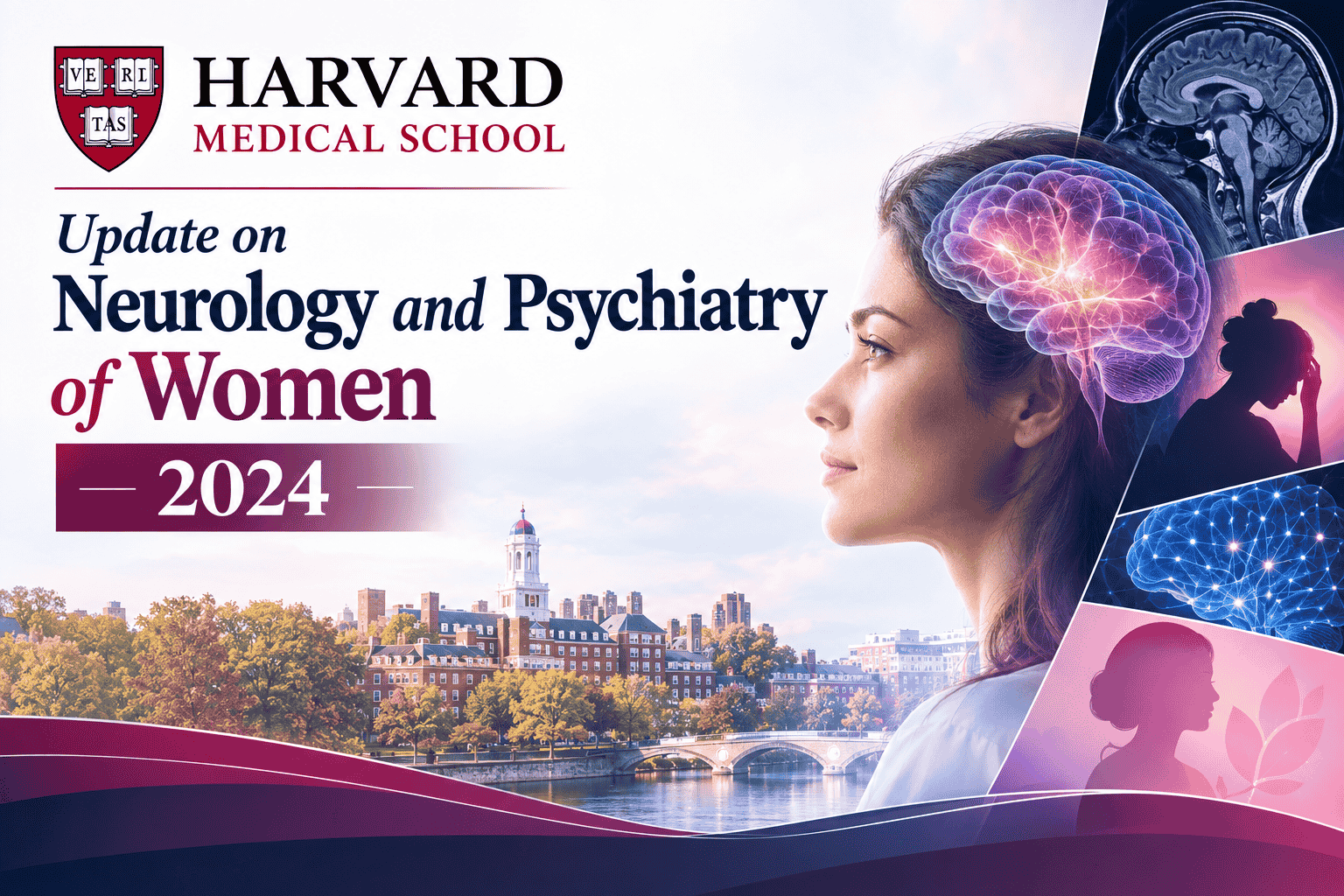
Harvard Update on Neurology and Psychiatry of Women 2024

$30.00
This Product is shared via google drive download link, So please share your correct Gmail id while placing the order .Please note that there are no CME points or certificate associated with this course Samples for Courses Can be found here : Free Samples Here!
Harvard Update on Neurology and Psychiatry of Women 2024
Neurology • Psychiatry • Women’s Health • Reproductive Neurology • Perinatal Mental Health
Harvard Medical School | Brigham and Women’s Hospital | 2024
Explore the complex interaction between sex, reproductive hormones, neurological disease, and psychiatric illness with Harvard Update on Neurology and Psychiatry of Women 2024.
Developed by faculty from Harvard Medical School’s teaching hospitals and offered by Brigham and Women’s Hospital, this multidisciplinary continuing education program focuses on neurologic and psychiatric conditions affecting women across all major stages of life.
The course examines sex-specific differences in disease presentation, risk, treatment response, medication safety, and clinical outcomes from:
Menarche → Reproductive Years → Pregnancy → Postpartum → Menopause → Later Life
Harvard Medical School describes the program as providing evidence-based, leading-edge education on women’s health and sex-specific care in both neurology and psychiatry, using interactive formats including:
- Case-based presentations
- Panel discussions
- Clinical lectures
- Question-and-answer sessions
- Evidence-based treatment reviews
- Guideline-based management
- Interdisciplinary discussion
The program is designed for clinicians across neurology, psychiatry, internal medicine, obstetrics, primary care, nursing, psychology, and related specialties.
Course Details
- Course: Update on Neurology and Psychiatry of Women
- Institution: Harvard Medical School
- Offered By: Brigham and Women’s Hospital
- Year: 2024
- Primary Specialty: Neurology
- Secondary Specialty: Psychiatry
- Related Fields: Women’s Health, Obstetrics, Internal Medicine, Primary Care
- Educational Focus: Sex- and Hormone-Specific Neurologic and Psychiatric Care
- Clinical Scope: Menarche through Pregnancy, Postpartum, Menopause, and Later Life
- Educational Formats: Lectures, Panels, Case-Based Presentations, Q&A
- Primary Audience: Physicians and Interprofessional Healthcare Professionals
- Core Competency: Medical Knowledge
- Educational Principles: Patient-Centered Care and Evidence-Based Practice
Harvard’s official course description specifically identifies neurologic and psychiatric disease in women, evidence-based clinical care, sex-specific management, and treatment across the female life cycle as the central educational framework.
Who Was the Original Program Designed For?
The official Harvard audience includes:
- Psychologists
- Physician Assistants
- Nurses
- Specialty Physicians
- Nurse Practitioners
- Primary Care Physicians
- Medical Students
- Residents
- Fellows
The course is additionally highly relevant for:
- Neurologists
- Psychiatrists
- Women’s Health Specialists
- Obstetricians and Gynecologists
- Internal Medicine Physicians
- Reproductive Psychiatry Clinicians
- Epilepsy Specialists
- Headache Specialists
- Neuroimmunology Specialists
- Perinatal Mental Health Professionals
The strongest clinical audience remains:
Neurology + Psychiatry + Women’s Health + Primary Care
Learning Objectives
At the conclusion of this activity, participants should be better able to:
- Integrate sex- and hormone-specific evidence into individualized treatment plans for neurologic and psychiatric disorders.
- Analyze therapeutic risks and benefits across key hormonal transitions to optimize outcomes and minimize adverse effects.
- Implement guideline-concordant care pathways tailored to women’s neurologic and psychiatric health needs.
These objectives reflect the current official Harvard framework for the course.
SEX DIFFERENCES IN NEUROLOGY & PSYCHIATRY
A central concept of the course is that neurologic and psychiatric disorders may differ between women and men in:
- Incidence
- Prevalence
- Clinical presentation
- Disease severity
- Hormonal sensitivity
- Medication response
- Adverse effects
- Pregnancy implications
- Long-term outcomes
Clinical management therefore cannot always rely on a completely sex-neutral framework.
The program encourages clinicians to ask:
Does Sex or Hormonal Status Change the Diagnosis, Risk, or Treatment?
Hormones & the Nervous System
Reproductive hormones can influence:
- Neuronal excitability
- Mood
- Sleep
- Pain processing
- Migraine
- Seizure threshold
- Vascular risk
- Cognition
- Neuroimmune activity
Changes in estrogen, progesterone, and other hormones may therefore alter neurological or psychiatric symptoms throughout life.
The clinical pathway can be summarized as:
Hormonal Transition → Neurologic / Psychiatric Effect → Risk-Benefit Assessment → Individualized Treatment
MENARCHE & REPRODUCTIVE YEARS
The reproductive years represent an important period for the emergence or modification of several neurologic and psychiatric conditions.
Relevant considerations include:
- Menstrual-cycle effects
- Migraine
- Epilepsy
- Mood disorders
- Contraception
- Medication teratogenicity
- Pregnancy planning
- Sexual health
The course emphasizes anticipatory management rather than waiting until pregnancy occurs.
Migraine in Women
Migraine is a major recurring topic within Harvard’s official course program.
Women may experience changes in migraine frequency or severity during:
- Menstrual cycles
- Pregnancy
- Postpartum
- Perimenopause
- Menopause
Harvard’s adjacent official agendas include dedicated teaching on Migraine and Women, reflecting its central place in women’s neurology.
Hormonal Migraine
Changes in estrogen can influence migraine patterns.
Important clinical questions include:
- Is the migraine hormonally sensitive?
- Is aura present?
- Is estrogen-containing contraception appropriate?
- Does pregnancy alter treatment choice?
- How should therapy change around menopause?
Management should balance:
Migraine Control + Vascular Risk + Reproductive Goals + Medication Safety
Contraception in Neurologic & Psychiatric Disorders
Contraception is especially important in patients using medications that:
- Interact with hormonal contraception
- Carry fetal risk
- Require pregnancy planning
- Alter thrombotic risk
Harvard’s official course program includes dedicated education on Contraception in Women with Neurologic and Psychiatric Disorders.
Neurologic Disorders & Contraceptive Choice
Contraceptive decisions may require consideration of:
- Migraine with aura
- Epilepsy
- Antiseizure medications
- Thrombotic risk
- Psychiatric medication
- Individual reproductive goals
The optimal choice should therefore be individualized rather than based solely on contraceptive efficacy.
Functional Neurological Disorder
Functional neurological disorder is another recurring topic in the Harvard program.
Official adjacent agendas include:
Functional Neurological Disorders – A Case-Based Panel Discussion.
FND can involve symptoms such as:
- Weakness
- Abnormal movements
- Non-epileptic events
- Sensory symptoms
- Speech changes
Clinical diagnosis should rely on positive neurologic features rather than simply a lack of structural disease.
Sex & Functional Neurologic Disease
Women are significantly represented among patients with functional neurological presentations.
The course integrates both:
- Neurological diagnosis
- Psychiatric / psychological understanding
making FND a strong example of why the traditional separation between neurology and psychiatry may be clinically limiting.
Autonomic Disorders in Women
Harvard’s official course program also includes teaching on:
Autonomic Disorders in Women.
Autonomic symptoms can include:
- Orthostatic intolerance
- Syncope
- Tachycardia
- Fatigue
- Temperature dysregulation
- Gastrointestinal symptoms
Recognition can be particularly challenging when symptoms span multiple organ systems.
PSYCHIATRIC HEALTH ACROSS THE FEMALE LIFESPAN
The psychiatric curriculum examines how hormonal transitions and reproductive events can influence:
- Mood disorders
- Anxiety
- Psychosis
- Bipolar disorder
- Substance use
- Trauma
- Sexual health
The overall psychiatric approach is:
Identify Disorder → Identify Reproductive Stage → Evaluate Medication Risk → Treat → Monitor Mother and Family
Mood Disorders
Mood symptoms may fluctuate in association with:
- Menstrual cycles
- Pregnancy
- Postpartum
- Perimenopause
The course emphasizes recognition of hormonal influences without assuming that every psychiatric symptom is caused by hormones.
Hormonally Mediated Mood Disorders
Harvard’s recurring curriculum includes:
Hormonally Mediated Mood Issues Across the Life Span.
This topic connects reproductive psychiatry with:
- Premenstrual symptoms
- Perinatal mood disorders
- Menopause-related mood change
Bipolar Disorder in Pregnancy
Another official recurring course topic is:
Bipolar Disorder and Psychosis in Pregnancy.
Pregnancy creates complex treatment decisions because clinicians must balance:
- Relapse risk
- Medication risks
- Maternal stability
- Fetal exposure
- Postpartum recurrence
The clinical goal is not simply medication avoidance.
Instead:
Untreated Illness Risk ↔ Medication Risk
must be evaluated individually.
Psychosis in Pregnancy
Psychosis during pregnancy or postpartum can represent a serious psychiatric emergency.
Important considerations include:
- Acute safety
- Medication choice
- Obstetric coordination
- Maternal functioning
- Postpartum relapse risk
Management frequently requires collaboration among:
- Psychiatry
- Obstetrics
- Primary care
- Pediatrics
- Family support
Trauma-Informed Care
Harvard’s official curriculum includes:
Trauma Informed Care.
Trauma-informed care asks clinicians to consider how previous trauma may influence:
- Symptoms
- Clinical communication
- Trust
- Treatment adherence
- Physical examination
- Healthcare experiences
Sexual Health
Another recurring session is:
Sexual Health and Treatment of Sexual Dysfunction in Women.
Sexual dysfunction may be related to:
- Neurologic disease
- Psychiatric illness
- Psychotropic medications
- Hormonal change
- Pregnancy
- Menopause
- Relationship factors
This makes sexual health relevant to both neurology and psychiatry.
PREGNANCY
Pregnancy represents one of the most important periods covered by the course.
It can modify:
- Neurologic disease activity
- Seizure control
- Migraine
- Stroke risk
- Psychiatric symptoms
- Medication pharmacokinetics
- Treatment safety
The overall approach is:
Preconception Planning → Pregnancy Management → Delivery Planning → Postpartum Follow-Up
What the Non-Obstetric Clinician Needs to Know
Harvard’s official course includes recurring teaching on:
Pregnancy – What the Non-OB Needs to Know.
This provides neurologists, psychiatrists, internists, and primary care clinicians with a framework for understanding:
- Normal physiologic changes
- Medication considerations
- Maternal risk
- Fetal risk
- When obstetric consultation is needed
Neurologic Consultations in Pregnancy
Another recurring session is:
Common Neurologic Consults in Pregnancy.
Potential clinical problems include:
- Headache
- Seizure
- Weakness
- Sensory changes
- Syncope
- Stroke symptoms
- Neuromuscular complaints
Pregnancy can change the differential diagnosis and thresholds for investigation.
Epilepsy & Pregnancy
Epilepsy in women requires long-term reproductive planning.
Harvard’s official adjacent agenda includes:
Epilepsy and Pregnancy, while newer editions broaden this to epilepsy across the lifespan.
Management requires attention to:
- Seizure control
- Antiseizure medication
- Teratogenic risk
- Folic acid
- Pharmacokinetic changes
- Breastfeeding
- Postpartum safety
Antiseizure Medication & Pregnancy
Pregnancy may alter medication levels and increase the risk of breakthrough seizures if treatment is not monitored appropriately.
Clinical management therefore requires:
Preconception Planning → Medication Review → Pregnancy Monitoring → Dose Adjustment When Needed → Postpartum Reassessment
Multiple Sclerosis & Women
Women represent the majority of patients with multiple sclerosis.
The contemporary Harvard course includes dedicated teaching on Multiple Sclerosis, reflecting the importance of reproductive counseling and sex-specific disease management.
Important areas may include:
- Pregnancy planning
- Disease-modifying treatment
- Relapse risk
- Postpartum disease activity
- Breastfeeding
- Contraception
POSTPARTUM NEUROLOGY & PSYCHIATRY
The postpartum period is associated with rapid changes in:
- Hormones
- Sleep
- Medication exposure
- Seizure risk
- Mood
- Psychosis risk
- Neuroimmune activity
The course treats postpartum care as a distinct clinical period rather than simply an extension of pregnancy.
Perinatal Anxiety & Depression
Harvard’s official program includes:
Perinatal Anxiety and Depression.
These conditions may affect:
- Maternal health
- Infant development
- Bonding
- Sleep
- Family function
Treatment options may include:
- Psychotherapy
- Medication
- Social support
- Specialist referral
Substance Use Disorder in Perinatal Patients
Another official recurring topic is:
Substance Use Disorder in Perinatal Patients.
Management requires balancing:
- Maternal safety
- Withdrawal risk
- Medication-assisted treatment
- fetal and neonatal considerations
- stigma reduction
- multidisciplinary support
MENOPAUSE
Menopause represents another major hormonal transition with potential neurologic and psychiatric implications.
Clinical issues may involve:
- Migraine
- Mood
- Sleep
- Cognition
- vascular risk
- sexual function
- hormone therapy
The course emphasizes individualized interpretation of symptoms rather than assuming that all midlife neurologic or psychiatric changes are menopausal.
Mood & Menopause
Changes in reproductive hormones may contribute to mood symptoms in susceptible individuals.
Treatment planning may require consideration of:
- Previous psychiatric history
- symptom severity
- sleep
- vasomotor symptoms
- medication
- hormone therapy
Sleep Disorders in Women
Sleep disturbances can interact with both neurologic and psychiatric disease.
The contemporary Harvard curriculum includes dedicated education on Sleep Disorders in women.
Sleep disturbance can influence:
- Mood
- cognition
- migraine
- seizure threshold
- fatigue
- quality of life
LATER LIFE & BRAIN AGING
Later life introduces additional sex-specific issues involving:
- Cognitive aging
- Alzheimer’s disease
- cerebrovascular disease
- medication burden
- menopause history
Alzheimer’s Disease in Women
Harvard’s adjacent official course agenda has included:
Alzheimer’s Disease in Women.
Women represent a substantial proportion of patients affected by Alzheimer’s disease.
The course framework encourages clinicians to consider:
- Sex differences in risk
- hormonal transitions
- genetics
- vascular factors
- cognitive decline
- patient and family counseling
Stroke & Vascular Disease in Women
The modern Harvard course also includes dedicated teaching on:
Stroke and Vascular Disease in Women.
Women may have sex-specific or reproductive factors affecting cerebrovascular risk, including:
- Pregnancy
- hypertensive pregnancy disorders
- hormonal therapy
- migraine
- age-related vascular risk
The broader objective is to integrate these variables into individualized risk assessment.
WOMEN’S NEUROLOGY
The field of Women’s Neurology recognizes that many neurologic diseases intersect with:
- reproductive physiology
- sex biology
- pregnancy
- menopause
- sex-specific risk
Harvard’s 2026 program even includes a session titled:
Not a Niche – A Necessity: The Importance of Women’s Neurology Training, reflecting the course’s broader educational philosophy.
Neurology–Psychiatry Integration
Many disorders covered in the course cannot be managed optimally when neurology and psychiatry are completely separated.
Examples include:
- Functional neurological disorder
- epilepsy with psychiatric comorbidity
- perinatal neurologic disease with mood symptoms
- cognitive disease
- trauma-associated symptoms
The educational model therefore encourages:
Neurologic Assessment + Psychiatric Assessment + Reproductive Context
Evidence-Based Prescribing
Medication decisions throughout the program require careful consideration of:
- efficacy
- reproductive safety
- breastfeeding
- drug interactions
- contraception
- relapse risk
- maternal health
The key principle is:
Avoiding a Medication Is Not Automatically Safer Than Treating the Disease
Risk must be evaluated on both sides of the clinical decision.
Individualized Risk-Benefit Assessment
For each medication or therapeutic intervention, clinicians should consider:
Maternal / Patient Risks
- Disease relapse
- hospitalization
- disability
- functional impairment
Treatment Risks
- Adverse effects
- reproductive effects
- fetal exposure
- neonatal effects
Disease-Specific Factors
- severity
- previous response
- recurrence risk
Interdisciplinary Care
Women with neurologic or psychiatric illness may require collaboration among:
- Neurology
- Psychiatry
- Obstetrics
- Maternal-Fetal Medicine
- Internal Medicine
- Primary Care
- Psychology
- Nursing
- Pediatrics
The course’s broad professional audience reflects this interdisciplinary approach.
Major Topics Covered
- Women’s Neurology
- Women’s Psychiatry
- Sex Differences in Medicine
- Hormones and the Brain
- Reproductive Neurology
- Reproductive Psychiatry
- Menarche
- Menstrual Cycle
- Pregnancy
- Postpartum
- Menopause
- Migraine in Women
- Hormonal Migraine
- Contraception
- Contraception in Neurologic Disorders
- Contraception in Psychiatric Disorders
- Functional Neurological Disorder
- Autonomic Disorders
- Multiple Sclerosis
- Epilepsy
- Epilepsy and Pregnancy
- Antiseizure Medications
- Neurologic Disease in Pregnancy
- Stroke in Women
- Vascular Disease
- Bipolar Disorder
- Psychosis in Pregnancy
- Perinatal Anxiety
- Perinatal Depression
- Perinatal Mental Health
- Substance Use Disorder
- Trauma-Informed Care
- Sexual Health
- Sexual Dysfunction
- Hormonally Mediated Mood Disorders
- Sleep Disorders
- Alzheimer’s Disease in Women
- Cognitive Aging
- Medication Safety in Pregnancy
- Breastfeeding
- Sex-Specific Treatment
- Evidence-Based Neurology
- Evidence-Based Psychiatry
- Women’s Mental Health
Who Should Take This Course?
Harvard Update on Neurology and Psychiatry of Women 2024 is particularly relevant for:
- Neurologists
- Psychiatrists
- Psychologists
- Primary Care Physicians
- Internal Medicine Physicians
- Obstetricians
- Women’s Health Specialists
- Physician Assistants
- Nurse Practitioners
- Nurses
- Medical Students
- Residents
- Fellows
- Headache Specialists
- Epilepsy Specialists
- Perinatal Mental Health Clinicians
The strongest clinical audience remains:
Neurology + Psychiatry + Women’s Health
Why This Course Is Useful
This Harvard program provides a concentrated review of how neurologic and psychiatric illness changes across the female life cycle.
Reproductive Neurology
- Migraine
- epilepsy
- multiple sclerosis
- autonomic disorders
- contraception
Reproductive Psychiatry
- mood disorders
- bipolar disorder
- psychosis
- anxiety
- depression
- substance use
Pregnancy & Postpartum
- neurologic consultation
- epilepsy
- medication management
- perinatal psychiatry
- postpartum risk
Midlife & Menopause
- hormonally mediated mood change
- migraine
- sleep
- sexual health
Later Life
- Alzheimer’s disease
- stroke
- vascular disease
- cognitive aging
Clinical Decision-Making
- sex-specific evidence
- hormonal transitions
- guideline-based care
- medication risk-benefit assessment
The overall clinical pathway can be summarized as:
Identify Neurologic or Psychiatric Disorder → Identify Hormonal / Reproductive Stage → Assess Sex-Specific Risks → Individualize Treatment → Monitor Across Life Transitions
Course Directors & Harvard Faculty Framework
The official Harvard course has been directed through the Brigham and Women’s Hospital Women’s Neurology and Reproductive Psychiatry programs.
Current official Harvard materials identify senior course leadership including:
- Mary O’Neal, MD – Chief of General Neurology and Director of the Women’s Neurology Program, Brigham and Women’s Hospital
- Polina Teslyar, MD – Director of Reproductive Psychiatry Consultation, Divisions of Women’s Mental Health and Medical Psychiatry, Brigham and Women’s Hospital
Later editions also identify faculty leadership including Maria Houtchens, MD, MSc and Paula Emanuela Voinescu, MD, PhD.
Harvard Accreditation Framework
Harvard Medical School is jointly accredited by:
- Accreditation Council for Continuing Medical Education – ACCME
- Accreditation Council for Pharmacy Education – ACPE
- American Nurses Credentialing Center – ANCC
to provide continuing education for the healthcare team.
The current public Harvard archive no longer exposes a clearly year-labeled 2024 credit total, so an exact 2024 CME number should not be assigned without the original 2024 certificate or archived registration materials.
Harvard’s later versions of this course have carried approximately 16 AMA PRA Category 1 Credits™, confirming that it is a substantial two-day CME activity, but those later credit totals should not automatically be represented as the exact 2024 designation.
An independently distributed MedicalAmboss package should not automatically be represented as providing:
- Harvard Medical School CME Credit
- AMA PRA Category 1 Credits™
- Harvard Certificate
- Brigham and Women’s Hospital Certificate
- Official Course Registration
- Official Harvard Recording Access
- Harvard Electronic Syllabus
- Harvard CME Evaluation Access
unless those benefits are specifically included.
Product Summary
- Product: Harvard Update on Neurology and Psychiatry of Women 2024
- Institution: Harvard Medical School
- Offered By: Brigham and Women’s Hospital
- Year: 2024
- Primary Specialty: Neurology
- Secondary Specialty: Psychiatry
- Related Fields: Women’s Health, Reproductive Psychiatry, Obstetrics, Internal Medicine
- Clinical Scope: Menarche through Pregnancy, Postpartum, Menopause, and Later Life
- Educational Style: Evidence-Based Lectures, Case-Based Education, Panels, Q&A
- Major Areas: Migraine, Epilepsy, Functional Neurology, Pregnancy, Perinatal Psychiatry, Hormonal Mood Disorders, Stroke, Cognition
- Primary Audience: Physicians, Psychologists, PAs, Nurses, NPs, Residents, Fellows, and Medical Students
Short Description
Harvard Update on Neurology and Psychiatry of Women 2024 provides evidence-based education on the unique neurologic and psychiatric needs of women across the lifespan, from menarche and reproductive years through pregnancy, postpartum, menopause, and later life.
The program integrates sex- and hormone-specific treatment, migraine, epilepsy, functional neurological disorders, contraception, pregnancy neurology, bipolar disorder, psychosis, perinatal anxiety and depression, substance use, sexual health, hormonally mediated mood disorders, stroke, cognitive aging, and women’s neurologic health. Harvard Medical School describes the course as an interdisciplinary, case-based program designed for specialists and primary care clinicians caring for women with neurological and psychiatric disease.
Topics
The exact 2024 session-by-session agenda is no longer exposed in Harvard Medical School’s current public archive, so the following are presented as verified course topic domains and recurring official Harvard course subjects, not as invented verbatim 2024 lecture titles.
Women’s Neurology
- Migraine in Women
- Hormonal Effects on Migraine
- Functional Neurological Disorders
- Autonomic Disorders in Women
- Multiple Sclerosis
- Epilepsy Across the Female Lifespan
- Epilepsy and Pregnancy
- Common Neurologic Consultations in Pregnancy
- Stroke and Vascular Disease in Women
- Cognitive Aging
- Alzheimer’s Disease in Women
- Sleep Disorders
Reproductive & Hormonal Medicine
- Menarche and Neurologic/Psychiatric Disease
- Menstrual-Cycle Effects
- Contraception in Neurologic Disorders
- Contraception in Psychiatric Disorders
- Pregnancy Physiology for Non-Obstetric Clinicians
- Medication Safety in Pregnancy
- Postpartum Neurologic and Psychiatric Risk
- Menopause
- Hormonal Transitions Across the Lifespan
Psychiatry
- Bipolar Disorder in Pregnancy
- Psychosis in Pregnancy
- Perinatal Anxiety
- Perinatal Depression
- Substance Use Disorder in Perinatal Patients
- Hormonally Mediated Mood Disorders
- Trauma-Informed Care
- Sexual Health
- Treatment of Sexual Dysfunction
Integrated Clinical Care
- Sex-Specific Treatment Selection
- Reproductive Planning
- Pregnancy Risk-Benefit Analysis
- Multidisciplinary Management
- Evidence-Based Prescribing
- Guideline-Based Neurologic Care
- Guideline-Based Psychiatric Care
- Case-Based Clinical Decision-Making
Harvard’s adjacent official agendas confirm recurring sessions in these domains, including Migraine and Women, Contraception in Women with Neurologic and Psychiatric Disorders, Functional Neurological Disorders, Autonomic Disorders in Women, Bipolar Disorder and Psychosis in Pregnancy, Epilepsy and Pregnancy, Perinatal Anxiety and Depression, Hormonally Mediated Mood Issues, Alzheimer’s Disease in Women, and Common Neurologic Consults in Pregnancy.
+ Topics:
- Autoimmune Disorders in Women
- Bipolar Disorder and Psychosis in Pregnancy
- Care for Transgender and Gender Diverse People
- Common Neurologic Consults in Pregnancy
- Contraception in Women with Neurologic and Psychiatric Disorders
- Epilepsy and Pregnancy
- Functional Neurological Disorder- a case based panel discussion
- Hormonally Mediated Mood Issues Across the Life Span
- Migraine and Women
- Perinatal Anxiety and Depression
- Pregnancy- What the Non-OB Needs to Know
- Sexual & Urological Dysfunction in Women
- Sleep Disorders in Women
- Sports Neurology- Is it a Man’s World.
- Substance Abuse in Women
- Trauma Informed Care- panel
- Update on Neurology and Psychiatry of Women- Day 1
- Update on Neurology and Psychiatry of Women- Day 2
Related products
Neurology / neurosurgery courses
International League Against Epilepsy 14th International Newborn Brain Conference 2023

Internal Medicine
Critical Care - Emergency medicine
Gulfcoast Ultrasound-Guided Upper Extremity Nerve Blocks for Emergency Medicine

Cardiology

Neurology / neurosurgery courses
Americas Committee for Treatment and Research in Multiple Sclerosis (ACTRIMS®) 2022 (Videos)

Neurology / neurosurgery courses

Internal Medicine

Neurology / neurosurgery courses