
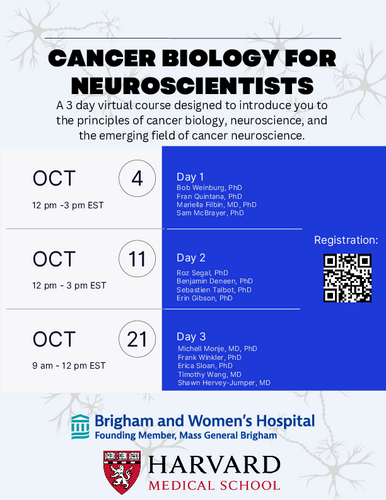
Brigham And Women’s Hospital Cancer Biology for Neuroscientists 2024


$30.00
This Product is shared via google drive download link, So please share your correct Gmail id while placing the order .Please note that there are no CME points or certificate associated with this course Samples for Courses Can be found here : Free Samples Here!
Brigham And Women’s Hospital Cancer Biology for Neuroscientists 2024
Cancer Neuroscience • Neuro-Oncology • Tumor Biology • Neuroimmunology • Translational Oncology
October 4, 11 & 21, 2024 | Virtual Course
Explore the rapidly emerging interface between cancer biology and neuroscience with Brigham And Women’s Hospital Cancer Biology for Neuroscientists 2024, a specialized interdisciplinary virtual training program designed to introduce neuroscientists, cancer biologists, translational investigators, and clinical researchers to the biological principles connecting the nervous system and malignancy.
The official program was presented as:
Neuroscience for Cancer Biologists / Cancer Biology for Neuroscientists
and consisted of three virtual sessions held on:
- October 4, 2024
- October 11, 2024
- October 21, 2024
The course was organized by Humsa Venkatesh, PhD and Tracy Batchelor, MD at Brigham and Women’s Hospital and supported by the National Cancer Institute of the National Institutes of Health under Award Number T32CA272386, a Cancer Neuroscience T32 training grant.
Harvard Cancer Center described the program as:
A 3-day virtual course designed to introduce participants to the principles of cancer biology, neuroscience, and the emerging field of cancer neuroscience.
The curriculum progresses logically through three educational levels:
Cancer Biology Fundamentals → Neuroscience Fundamentals → Integrated Cancer Neuroscience
allowing learners from either discipline to establish a common scientific foundation before examining how neuronal, glial, immune, vascular, metabolic, and systemic mechanisms influence cancer.
Course Details
- Course: Cancer Biology for Neuroscientists
- Extended Program Title: Neuroscience for Cancer Biologists / Cancer Biology for Neuroscientists
- Institution: Brigham and Women’s Hospital
- Harvard Affiliation: Harvard Cancer Center / Harvard Medical School Training Environment
- Year: 2024
- Format: Virtual Course
- Number of Sessions: 3
- Session 1: October 4, 2024
- Session 2: October 11, 2024
- Session 3: October 21, 2024
- Primary Field: Cancer Neuroscience
- Related Fields: Cancer Biology, Neuroscience, Neuro-Oncology, Neuroimmunology, Tumor Microenvironment
- Program Organizers: Humsa Venkatesh, PhD and Tracy Batchelor, MD
- Training Grant: NCI/NIH T32CA272386
- Educational Format: Expert Lectures / Virtual Scientific Training
- Primary Focus: Biological Interactions Between Cancer and the Nervous System
The official BWH program confirms the course structure, organizers, NIH/NCI support, dates, faculty, and lecture sequence.
Who Was the Original Program Designed For?
This course was designed primarily for:
- Basic Scientists
- Cancer Biologists
- Neuroscientists
- Translational Researchers
- Clinical Investigators
- Postdoctoral Fellows
- PhD Researchers
- MD Researchers
- MD/PhD Investigators
- Neuro-Oncology Researchers
- Brain Tumor Scientists
- Cancer Neuroscience Trainees
It is also particularly relevant for:
- Neuro-Oncologists
- Neurologists
- Medical Oncologists
- Radiation Oncologists
- Neurosurgeons
- Neuropathologists
- Immunologists
- Molecular Biologists
- Tumor Microenvironment Researchers
The strongest scientific audience remains:
Cancer Biology + Neuroscience + Neuro-Oncology + Translational Research
Learning Objectives
Upon participation in the course, attendees should be better able to:
- Understand the foundational principles of cancer biology and how they intersect with neurobiology.
- Analyze the intricate crosstalk between the nervous system, the immune system, and cancer cells, including interactions involving both central and peripheral nervous systems.
- Evaluate how cancer leverages the neuronal microenvironment, axon biology, and mechanisms of brain plasticity to drive tumor growth.
- Examine mechanisms relevant to cancer metastasis to the central nervous system and genomic evolution of brain metastases within the broader Cancer Neuroscience T32 educational framework.
- Discuss the development of novel neuro-therapeutic approaches and emerging technologies in cancer neuroscience.
The first three objectives align directly with the official three-session course content. Brain-metastasis education was also part of the broader Harvard Cancer Center T32 Cancer Neuroscience training activities in October 2024, including a separate mini-course on Cancer Metastasis to the Brain; it should not be confused with one of the three formal Cancer Biology for Neuroscientists sessions.
CANCER NEUROSCIENCE
Cancer neuroscience is an interdisciplinary field focused on understanding reciprocal interactions between:
- Tumor cells
- Neurons
- Glia
- Immune cells
- Vascular cells
- Peripheral nerves
- Central nervous system circuits
- Systemic neurobiological pathways
The field asks a fundamentally different question from traditional tumor biology:
How does the nervous system influence cancer—and how does cancer alter the nervous system?
The program provides a conceptual bridge between two historically separate scientific disciplines.
Cancer Biology + Neuroscience
Traditional cancer biology focuses heavily on:
- Oncogenes
- Tumor suppressors
- Cell proliferation
- Metabolism
- Angiogenesis
- Tumor microenvironment
- Epigenetics
Neuroscience focuses on:
- Neurons
- Glia
- Synaptic signaling
- neural circuits
- plasticity
- neuroimmune communication
Cancer neuroscience brings these domains together.
The integrated model becomes:
Cancer Cell Biology + Neural Biology + Microenvironment + Immune Signaling + Systemic Communication
SESSION 1 – CANCER BIOLOGY FOR NEUROSCIENTISTS
Friday, October 4, 2024
12:00 PM – 3:30 PM EST
The first session establishes the core cancer-biology principles needed for neuroscientists entering the field.
The official program included:
- Cancer Biology 101
- Brain Tumor Microenvironment
- Epigenetics of Pediatric Brain Tumors
- Cancer Metabolism
- Vascular Biology of Tumors
Cancer Biology 101
Robert A. Weinberg, PhD – MIT
The opening session was:
Cancer Biology 101
presented by Robert A. Weinberg, PhD, Massachusetts Institute of Technology.
This extended introductory lecture established the conceptual foundation for the remainder of the course.
Core cancer-biology concepts relevant to understanding the later sessions include:
- Malignant transformation
- Dysregulated cell proliferation
- Tumor evolution
- Invasion
- Metastatic behavior
- Tumor microenvironment
- Cellular heterogeneity
- Cancer-cell adaptation
The educational progression begins with:
Normal Cell → Molecular Dysregulation → Malignant Transformation → Tumor Evolution
Fundamental Cancer Biology for Neuroscientists
For scientists trained primarily in neuroscience, understanding tumor biology requires learning how cancer cells acquire capabilities that differ from those of normal cells.
Major conceptual domains include:
- Sustained growth
- Resistance to cell death
- Altered metabolism
- Interaction with surrounding tissue
- Vascular recruitment
- Invasion
- adaptability
These concepts provide a foundation for understanding why interaction with neurons and glia can become biologically important to tumors.
Brain Tumor Microenvironment
Francisco J. Quintana, PhD – Brigham and Women’s Hospital
The official Session 1 agenda included:
Brain Tumor Microenvironment
presented by Francisco J. Quintana, PhD.
The brain tumor microenvironment may contain interactions among:
- Malignant cells
- Immune cells
- Glial cells
- Neurons
- Vascular cells
- Extracellular signaling molecules
Understanding this ecosystem is essential because tumors do not develop in biological isolation.
Tumor Microenvironment
A tumor is more accurately understood as an ecosystem than as a collection of malignant cells alone.
The conceptual model is:
Cancer Cells ↔ Immune Cells ↔ Glia ↔ Neurons ↔ Vasculature
Each compartment can influence:
- Tumor growth
- therapeutic response
- resistance
- inflammation
- invasion
Recording Availability Note
The official Brigham and Women’s Hospital course document specifically states that the:
Brain Tumor Microenvironment
lecture was not recorded.
Therefore, an independently distributed recording package should not automatically claim that this lecture is included unless an alternative recording has been specifically supplied.
Epigenetics of Pediatric Brain Tumors
Mariella G. Filbin, MD, PhD – Dana-Farber Cancer Institute / Boston Children’s Hospital
The next official lecture was:
Epigenetics of Pediatric Brain Tumors.
This topic connects:
- Developmental biology
- gene regulation
- chromatin biology
- pediatric neuro-oncology
- tumor identity
Epigenetic Regulation
Epigenetics can regulate gene activity without altering the underlying DNA sequence.
Important regulatory mechanisms can involve:
- Chromatin state
- DNA methylation
- histone modifications
- developmental transcription programs
In pediatric brain tumors, developmental context can be particularly important because tumors may exploit molecular programs normally used during brain development.
Pediatric Neuro-Oncology
Pediatric brain tumors cannot simply be treated as smaller versions of adult tumors.
Differences may involve:
- Molecular drivers
- developmental origin
- epigenetic state
- tumor location
- therapeutic vulnerabilities
The session therefore connects fundamental cancer biology with developmental neuroscience.
Cancer Metabolism
Sam McBrayer, PhD – UT Southwestern
Another official lecture was:
Cancer Metabolism.
Cancer cells frequently alter their metabolism in order to support:
- Proliferation
- biosynthesis
- survival
- adaptation to hypoxia
- adaptation to nutrient limitation
Metabolic Adaptation
The tumor metabolic pathway can be conceptualized as:
Environmental Pressure → Metabolic Reprogramming → Cellular Adaptation → Tumor Survival
Cancer metabolism also interacts with the tumor microenvironment because different cells compete for:
- Glucose
- amino acids
- oxygen
- metabolites
Brain Tumor Metabolism
The central nervous system provides a distinct metabolic environment.
Brain tumors may therefore need to adapt to:
- Unique nutrient availability
- neuronal metabolic activity
- glial interactions
- blood-brain barrier constraints
This makes cancer metabolism particularly relevant to cancer neuroscience.
Vascular Biology of Tumors
Rakesh Jain, PhD – Massachusetts General Hospital
The final Session 1 lecture was:
Vascular Biology of Tumors.
Tumor vasculature influences:
- Oxygen delivery
- nutrient delivery
- immune-cell access
- drug delivery
- tumor hypoxia
- metastatic potential
Tumor Angiogenesis
Growing tumors often require vascular adaptation.
A simplified pathway is:
Tumor Growth → Increased Metabolic Demand → Vascular Response → Altered Tumor Perfusion
The resulting vessels may differ substantially from normal vascular networks.
Vascular Microenvironment
Vascular biology interacts with both cancer and neuroscience because the brain has highly specialized relationships among:
- Neurons
- glia
- endothelial cells
- pericytes
- blood-brain barrier structures
Understanding these relationships is important when studying brain tumors and drug delivery.
SESSION 2 – NEUROSCIENCE FOR CANCER BIOLOGISTS
Friday, October 11, 2024
12:00 PM – 3:00 PM EST
The second session reversed the educational direction.
Instead of teaching cancer biology to neuroscientists, it introduced cancer researchers to core principles of neuroscience.
The official lectures were:
- Neuroscience 101
- Glia within the Brain Microenvironment
- Neuroimmune Axis
- Neuro-glial Interactions
Neuroscience 101
Rosalind Segal, MD, PhD – Dana-Farber Cancer Institute
The opening Session 2 lecture was:
Neuroscience 101
presented by Rosalind Segal, MD, PhD.
The session established basic neuroscience concepts necessary for understanding cancer-neural interactions.
Important foundational domains include:
- Neurons
- axons
- synapses
- neurotransmission
- glia
- neural circuits
- plasticity
- neuroimmune signaling
Neuronal Signaling
Neurons communicate through:
- Electrical activity
- chemical neurotransmission
- synaptic connections
Cancer neuroscience investigates whether tumors can sense, exploit, or modify these signaling systems.
The central concept is:
Neural Activity Can Become Part of the Tumor Microenvironment
Axon Biology
Axons connect neuronal cell bodies to distant targets and create anatomical pathways for nervous-system communication.
Cancer neuroscience increasingly examines relationships between:
- Axonal growth
- neuronal innervation
- tumor growth
- cancer-cell migration
This makes axon biology an important conceptual bridge between neuroscience and oncology.
Neural Plasticity
The nervous system continuously adapts through changes in:
- Synaptic strength
- circuit connectivity
- cellular behavior
Cancer neuroscience asks whether tumors can exploit similar adaptive processes.
The broader concept is:
Neural Plasticity ↔ Tumor Plasticity
with each system potentially influencing the other.
Glia within the Brain Microenvironment
Benjamin Deneen, PhD – Baylor College of Medicine
The official program included:
Glia within the Brain Microenvironment.
Glial cells are essential components of the central nervous system and can participate in tumor-associated biological interactions.
Relevant glial populations can include:
- Astrocytes
- oligodendrocytes
- microglia
- glial progenitor populations
Glia & Cancer
Cancer cells may interact with glia through:
- secreted factors
- inflammatory signaling
- extracellular matrix
- metabolic pathways
- direct cell-cell interactions
Understanding these interactions is central to brain tumor biology.
Recording Availability Note
The official BWH program states that the:
Glia within the Brain Microenvironment
lecture was not recorded.
Accordingly, it should not automatically be represented as part of a video package unless a recording has separately been obtained.
Neuroimmune Axis
Sebastien Talbot, PhD – Queen’s University
The next confirmed lecture was:
Neuroimmune Axis.
This session addresses communication between:
- Nervous system
- Immune system
and provides important background for understanding how these systems can jointly influence cancer.
Neuroimmune Communication
Neural and immune systems communicate bidirectionally.
Potential mechanisms include:
- cytokines
- neurotransmitters
- neuropeptides
- immune-cell signaling
- autonomic nervous-system pathways
The conceptual model is:
Neural Signals ↔ Immune Responses ↔ Tumor Biology
Immunology & Cancer Neuroscience
The immune system plays a central role in cancer biology.
Adding neural regulation creates a more complex network:
Nervous System → Immune Environment → Cancer
and potentially:
Cancer → Immune Signaling → Nervous System
This systems-level perspective is one of the defining features of cancer neuroscience.
Neuro-Glial Interactions
Erin Gibson, PhD – Stanford University
The final official Session 2 lecture was:
Neuro-glial Interactions.
Neurons and glial cells continuously influence one another in normal nervous-system function.
Cancer may interact with these relationships through:
- altered signaling
- inflammation
- neuronal activity
- glial activation
- tissue remodeling
Neural Microenvironment
The brain microenvironment therefore includes multiple interacting components:
Neuron + Glia + Immune Cell + Vasculature + Cancer Cell
Cancer neuroscience attempts to understand this network rather than focusing on tumor cells alone.
SESSION 3 – CANCER NEUROSCIENCE
Monday, October 21, 2024
9:00 AM – 12:00 PM EST
The final session integrated the foundations from Sessions 1 and 2.
Official lectures included:
- Hijacking the CNS
- Neural Properties of Tumor Cells
- Systemic Interactions Between the Nervous System and Cancer
- Peripheral Innervation of Extra-Cranial Tumors
- Clinical Implications of Cancer Neuroscience
Hijacking the CNS
Michelle Monje, MD, PhD – Stanford University
The opening Session 3 presentation was:
Hijacking the CNS.
This concept captures a central principle of modern cancer neuroscience:
Tumors Can Exploit Normal Nervous-System Biology
Rather than merely existing beside neurons, certain cancers may utilize neuronal signaling and microenvironmental mechanisms to support disease progression.
Neuronal Activity & Tumor Growth
An emerging cancer-neuroscience framework examines how neuronal activity may influence:
- Tumor growth
- cell proliferation
- microenvironmental signaling
- disease progression
This introduces a new therapeutic question:
Can the neuron-to-cancer interaction itself become a treatment target?
Cancer Hijacking Neural Circuits
Tumors may potentially interact with:
- synaptic signaling
- neuronal activity
- growth factors
- axonal pathways
- glial biology
The field therefore extends beyond molecular oncology into the biology of neural networks.
Neural Properties of Tumor Cells
Frank Winkler, MD, PhD – German Cancer Research Center / DKFZ
The next official lecture was:
Neural Properties of Tumor Cells.
Some tumor cells may display properties that resemble neural-network behavior.
These concepts have generated interest in:
- Tumor-cell communication
- network formation
- cellular connectivity
- treatment resistance
- adaptive behavior
Tumor Networks
Rather than functioning only as isolated malignant cells, some tumor populations may create coordinated networks.
The conceptual shift is:
Individual Tumor Cell → Interconnected Tumor Network
This may have implications for:
- Resistance
- recurrence
- treatment response
Systemic Interactions Between the Nervous System and Cancer
Erica Sloan, PhD – Monash University
Another official lecture was:
Systemic Interactions Between the Nervous System and Cancer.
Cancer-neural interactions do not occur only inside the brain.
Systemic pathways may involve:
- Peripheral nervous system
- autonomic nervous system
- neuroendocrine signaling
- stress biology
- immune regulation
Systemic Cancer Neuroscience
This extends the field beyond neuro-oncology.
The conceptual model becomes:
Brain / Peripheral Nervous System → Systemic Signals → Tumor Microenvironment
and:
Cancer → Systemic Biology → Nervous-System Responses
Peripheral Innervation of Extra-Cranial Tumors
Timothy C. Wang, MD – Columbia University
The official course included:
Peripheral Innervation of Extra-Cranial Tumors.
This topic demonstrates that cancer neuroscience is not limited to primary brain tumors.
Peripheral nerves may interact with tumors arising in organs outside the CNS.
Tumor Innervation
Tumor innervation refers to the presence and potential biological influence of nerves within or surrounding tumors.
Questions in this field include:
- Do tumors recruit nerves?
- Does nerve activity influence tumor growth?
- Can tumors alter neural architecture?
- Can nerve-tumor communication be therapeutically disrupted?
Recording Availability Note
The official Brigham and Women’s Hospital document states that:
Peripheral Innervation of Extra-Cranial Tumors
was not recorded.
Clinical Implications of Cancer Neuroscience
Shawn Hervey-Jumper, MD – University of California, San Francisco
The final scheduled lecture was:
Clinical Implications of Cancer Neuroscience.
This session was designed to translate emerging cancer-neuroscience mechanisms toward clinical relevance.
Potential translational questions include:
- Can neural signaling be therapeutically targeted?
- Can neuronal activity alter tumor treatment response?
- Can neural pathways become biomarkers?
- Can neuroscience-informed strategies improve neuro-oncology treatment?
Recording Availability Note
The official BWH program identifies the:
Clinical Implications of Cancer Neuroscience
lecture as not recorded.
CANCER METASTASIS TO THE BRAIN
Brain metastasis was part of the broader Harvard Cancer Center T32 Cancer Neuroscience educational ecosystem in October 2024.
Harvard Cancer Center separately advertised:
T32 Cancer Neuroscience Mini-Course #4 – Cancer Metastasis to the Brain
on October 11, 2024, featuring:
- Genomic Evolution of Brain Metastases
- Heterogeneity of Breast Cancer Brain Metastases
- Cancer Neuroscience of Brain Metastasis
This was a separate T32 mini-course, not one of the three formal sessions listed in the official Cancer Biology for Neuroscientists agenda.
Brain Metastasis Biology
Cancer metastasis to the central nervous system creates unique biological challenges because tumor cells must adapt to:
- Brain vasculature
- blood-brain barrier
- neural microenvironment
- glial cells
- immune environment
- CNS metabolism
The metastatic pathway can be conceptualized as:
Primary Tumor → Dissemination → CNS Entry → Brain Microenvironment Adaptation → Metastatic Growth
Genomic Evolution of Brain Metastases
Tumor cells that establish brain metastases may undergo or select for genomic features supporting survival in the CNS.
The related T32 mini-course’s explicit focus on Genomic Evolution of Brain Metastases highlights the importance of studying how metastatic tumors change during CNS colonization.
Breast Cancer Brain Metastasis
The related mini-course also included:
Heterogeneity of Breast Cancer Brain Metastases.
This reinforces the broader cancer-neuroscience concept that even metastases originating from the same cancer type may demonstrate substantial biological heterogeneity.
TUMOR MICROENVIRONMENT
Across the formal course, microenvironmental biology appears repeatedly through:
- Brain tumor microenvironment
- glia
- neuroimmune interactions
- vasculature
- neural signaling
- peripheral innervation
This supports a systems-level model:
Tumor Biology Is Defined by Both Cancer Cells and Their Biological Environment
Tumor–Neuron Crosstalk
One of the most important emerging concepts in cancer neuroscience is reciprocal communication between:
Tumor Cells ↔ Neurons
Potential communication can involve:
- growth factors
- neurotransmitters
- synaptic signaling
- electrical activity
- secreted molecules
Understanding these pathways creates potential opportunities for therapeutic intervention.
Tumor–Glia Crosstalk
Similarly:
Tumor Cells ↔ Glia
may influence:
- inflammation
- tumor growth
- immune responses
- neuronal function
- tissue remodeling
The dedicated glia and neuro-glial sessions provide foundational neuroscience needed to understand these relationships.
Tumor–Immune–Neural Crosstalk
The Neuroimmune Axis lecture expands the model to:
Tumor ↔ Immune System ↔ Nervous System
This is especially important because both immune and nervous systems communicate across local and systemic environments.
Tumor Vascular Biology
The vascular session adds a fourth major biological system:
Cancer ↔ Nervous System ↔ Immune System ↔ Vasculature
Together, these relationships create a complex tumor ecosystem.
Pediatric Brain Tumors
The course includes a dedicated lecture on the epigenetics of pediatric brain tumors.
This reflects the importance of understanding tumors through:
- Developmental biology
- chromatin regulation
- cell-of-origin
- developmental stage
rather than simply histologic appearance.
Brain Tumor Epigenetics
Epigenetic alterations may influence:
- gene expression
- tumor identity
- differentiation
- therapeutic response
- disease progression
This is particularly relevant to pediatric tumors in which developmental regulatory pathways may be disrupted.
CANCER METABOLISM
Cancer metabolism provides another bridge between tumor cells and their microenvironment.
Tumor cells must compete within tissues for:
- Energy
- oxygen
- nutrients
while adapting to:
- hypoxia
- immune activity
- vascular abnormalities
The metabolic state of surrounding neural and glial cells may further shape brain tumor biology.
VASCULAR BIOLOGY
Tumor vessels influence both the biological behavior of tumors and the ability of therapies to reach malignant cells.
Important conceptual areas include:
- Angiogenesis
- hypoxia
- vascular permeability
- drug delivery
- immune-cell trafficking
In brain tumors, these issues must also be understood in relation to the specialized CNS vasculature.
NEUROIMMUNOLOGY
The Neuroimmune Axis lecture introduces an essential component of modern cancer neuroscience.
The nervous system can regulate immune behavior, while immune mediators can alter nervous-system function.
This creates the possibility that neural regulation may indirectly alter cancer through the immune environment.
Peripheral Nervous System & Cancer
The Session 3 focus on extracranial tumor innervation emphasizes that cancer neuroscience also includes the peripheral nervous system.
Potential research areas include:
- Tumor-associated nerves
- autonomic signaling
- sensory innervation
- nerve growth
- tumor-induced neural remodeling
CNS Cancer Neuroscience
Within primary brain tumors, research focuses heavily on interactions between malignant cells and:
- Neurons
- glia
- synaptic activity
- brain vasculature
- immune cells
The CNS therefore provides a particularly rich environment for studying direct neural–tumor interactions.
TRANSLATIONAL CANCER NEUROSCIENCE
A major objective of the broader field is to convert biological insight into therapeutic opportunity.
The conceptual pathway is:
Discover Neural–Cancer Mechanism → Validate Biological Importance → Identify Therapeutic Target → Develop Intervention → Translate to Patients
Neuro-Therapeutic Opportunities
Potential cancer-neuroscience therapeutic strategies may involve targeting:
- Neural signaling pathways
- tumor-neuron communication
- glial interactions
- neuroimmune pathways
- tumor network behavior
- peripheral innervation
These areas remain rapidly developing research domains.
Cancer Therapy & Neural Biology
The field also examines the reverse relationship:
How Does Cancer Therapy Affect the Nervous System?
This includes potential effects of:
- chemotherapy
- radiation
- immunotherapy
- targeted therapy
on neural function and quality of life.
Cancer Neuroscience Training
The course is embedded in a broader NCI-funded Cancer Neuroscience T32 training program.
The official BWH document explicitly identifies:
Award Number T32CA272386
as the supporting NIH/NCI training grant.
The program’s educational model emphasizes cross-training scientists who traditionally come from either:
- Cancer biology
or:
- Neuroscience
so they can communicate across disciplines.
Program Organizers
Humsa Venkatesh, PhD
Course organizer and cancer-neuroscience investigator.
Tracy Batchelor, MD
Course organizer at Brigham and Women’s Hospital with expertise in neuro-oncology.
The official BWH document identifies both investigators as organizers of the October 2024 course.
Confirmed Course Faculty
The official program lists:
- Robert A. Weinberg, PhD – MIT
- Francisco J. Quintana, PhD – Brigham and Women’s Hospital
- Mariella G. Filbin, MD, PhD – Dana-Farber Cancer Institute / Boston Children’s Hospital
- Sam McBrayer, PhD – UT Southwestern
- Rakesh Jain, PhD – Massachusetts General Hospital
- Rosalind Segal, MD, PhD – Dana-Farber Cancer Institute
- Benjamin Deneen, PhD – Baylor College of Medicine
- Sebastien Talbot, PhD – Queen’s University
- Erin Gibson, PhD – Stanford University
- Michelle Monje, MD, PhD – Stanford University
- Frank Winkler, MD, PhD – DKFZ
- Erica Sloan, PhD – Monash University
- Timothy C. Wang, MD – Columbia University
- Shawn Hervey-Jumper, MD – UCSF
Major Topics Covered
- Cancer Neuroscience
- Cancer Biology
- Neuroscience
- Neuro-Oncology
- Brain Tumors
- Brain Tumor Microenvironment
- Tumor Microenvironment
- Pediatric Brain Tumors
- Epigenetics
- Cancer Epigenetics
- Cancer Metabolism
- Tumor Metabolism
- Vascular Biology
- Tumor Vasculature
- Angiogenesis
- Neuroscience Fundamentals
- Neurons
- Glia
- Glial Biology
- Neuro-Glial Interactions
- Neuroimmune Axis
- Neuroimmunology
- Neural Microenvironment
- Neural Signaling
- Axon Biology
- Brain Plasticity
- Neural Plasticity
- CNS Tumor Biology
- Tumor-Neuron Crosstalk
- Tumor-Glia Crosstalk
- Neural Properties of Tumor Cells
- Tumor Networks
- Neuronal Activity
- Systemic Cancer-Neural Interactions
- Peripheral Nervous System
- Peripheral Tumor Innervation
- Extracranial Tumors
- Cancer Metastasis to the Brain
- Brain Metastases
- Genomic Evolution
- Breast Cancer Brain Metastases
- Translational Neuro-Oncology
- Cancer Neuroscience Therapeutics
- NCI Cancer Neuroscience Training
- T32 Cancer Neuroscience
Who Should Take This Course?
Brigham And Women’s Hospital Cancer Biology for Neuroscientists 2024 is particularly relevant for:
- Cancer Neuroscientists
- Neuro-Oncologists
- Neurologists
- Medical Oncologists
- Radiation Oncologists
- Neurosurgeons
- Neuropathologists
- Cancer Biologists
- Neuroscientists
- Immunologists
- Molecular Biologists
- Translational Researchers
- Clinical Investigators
- Postdoctoral Fellows
- PhD Researchers
- MD Researchers
- MD/PhD Researchers
- Researchers Studying Brain Tumors
- Researchers Studying the Tumor Microenvironment
The strongest scientific audience remains:
Cancer Biology + Neuroscience + Neuro-Oncology + Translational Oncology
Why This Course Is Useful
The 2024 program provides an unusually focused bridge between two rapidly converging disciplines.
Cancer Biology Foundations
- Cancer biology
- Tumor microenvironment
- epigenetics
- metabolism
- vascular biology
Neuroscience Foundations
- Neural biology
- glia
- neuroimmune signaling
- neuro-glial communication
- neural plasticity
Cancer Neuroscience
- CNS hijacking
- neural properties of tumor cells
- systemic nervous-system interactions
- peripheral tumor innervation
- clinical translation
Neuro-Oncology
- Pediatric brain tumors
- brain microenvironment
- neuronal interactions
- brain metastasis concepts within the broader T32 program
Translational Research
- New mechanisms
- therapeutic targets
- neuroscience-informed cancer treatment
The overall scientific pathway can be summarized as:
Understand Cancer Biology → Understand Neuroscience → Identify Neural–Cancer Interactions → Define Mechanisms → Discover Therapeutic Opportunities
Original Recording Information
Brigham and Women’s Hospital subsequently made recorded lectures from the October 2024 course available.
However, the official program specifically marks four lectures as not recorded:
- Brain Tumor Microenvironment – Francisco J. Quintana, PhD
- Glia within the Brain Microenvironment – Benjamin Deneen, PhD
- Peripheral Innervation of Extra-Cranial Tumors – Timothy C. Wang, MD
- Clinical Implications of Cancer Neuroscience – Shawn Hervey-Jumper, MD
Therefore, a video product based on the official recordings should not automatically claim that all scheduled lectures are present unless those four lectures were obtained from another authorized recording source.
CME / Accreditation Note
The official Brigham and Women’s Hospital and Harvard Cancer Center materials reviewed for this 2024 Cancer Biology for Neuroscientists / Neuroscience for Cancer Biologists program identify it as an NCI-supported T32 scientific training course, not as a Harvard Medical School physician CME course.
No specific:
- AMA PRA Category 1 Credit™ total
- Harvard CME designation
- ABIM MOC designation
- Nursing CE designation
was identified in the official course materials reviewed.
An independently distributed MedicalAmboss package therefore should not automatically be represented as providing:
- Harvard CME Credit
- AMA PRA Category 1 Credits™
- Brigham and Women’s Hospital CME Credit
- NIH / NCI Certificate
- T32 Training Credit
- Official BWH Certificate
- Official Harvard Cancer Center Registration
- Official Zoom Course Access
unless such benefits are separately documented and specifically included.
Product Summary
- Product: Brigham And Women’s Hospital Cancer Biology for Neuroscientists 2024
- Official Program: Neuroscience for Cancer Biologists / Cancer Biology for Neuroscientists
- Institution: Brigham and Women’s Hospital
- Harvard Ecosystem: Harvard Cancer Center / Harvard Medical School
- Year: 2024
- Format: Virtual / Recorded Lectures
- Number of Sessions: 3
- Session Dates: October 4, October 11 & October 21, 2024
- Program Organizers: Humsa Venkatesh, PhD and Tracy Batchelor, MD
- Funding: NCI/NIH T32CA272386
- Primary Field: Cancer Neuroscience
- Related Fields: Cancer Biology, Neuroscience, Neuro-Oncology, Neuroimmunology
- Major Areas: Tumor Microenvironment, Epigenetics, Cancer Metabolism, Vascular Biology, Glia, Neuroimmune Axis, CNS Hijacking, Tumor Neural Properties, Peripheral Innervation
- Primary Audience: Scientists, Translational Investigators, Clinical Researchers, and Neuro-Oncology Professionals
Short Description
Brigham And Women’s Hospital Cancer Biology for Neuroscientists 2024 is an interdisciplinary three-session virtual course introducing researchers and clinicians to cancer biology, neuroscience, and the emerging field of cancer neuroscience.
Held on October 4, 11, and 21, 2024, the NCI-supported program covers Cancer Biology 101, brain tumor microenvironment, pediatric brain tumor epigenetics, cancer metabolism, tumor vascular biology, Neuroscience 101, glial biology, the neuroimmune axis, neuro-glial interactions, CNS hijacking by cancer, neural properties of tumor cells, systemic nervous-system interactions with cancer, peripheral tumor innervation, and clinical implications of cancer neuroscience.
Topics
Session 1 – Cancer Biology for Neuroscientists
Friday, October 4, 2024 | 12:00 PM–3:30 PM EST
12:00 PM–1:30 PM
Cancer Biology 101
Robert A. Weinberg, PhD – MIT
1:30 PM–2:00 PM
Brain Tumor Microenvironment
Francisco J. Quintana, PhD – Brigham and Women’s Hospital
Official recording status: Not recorded
2:00 PM–2:30 PM
Epigenetics of Pediatric Brain Tumors
Mariella G. Filbin, MD, PhD – Dana-Farber Cancer Institute / Boston Children’s Hospital
2:30 PM–3:00 PM
Cancer Metabolism
Sam McBrayer, PhD – UT Southwestern
3:00 PM–3:30 PM
Vascular Biology of Tumors
Rakesh Jain, PhD – Massachusetts General Hospital
Session 2 – Neuroscience for Cancer Biologists
Friday, October 11, 2024 | 12:00 PM–3:00 PM EST
12:00 PM–1:30 PM
Neuroscience 101
Rosalind Segal, MD, PhD – Dana-Farber Cancer Institute
1:30 PM–2:00 PM
Glia within the Brain Microenvironment
Benjamin Deneen, PhD – Baylor College of Medicine
Official recording status: Not recorded
2:00 PM–2:30 PM
Neuroimmune Axis
Sebastien Talbot, PhD – Queen’s University
2:30 PM–3:00 PM
Neuro-glial Interactions
Erin Gibson, PhD – Stanford University
Session 3 – Cancer Neuroscience
Monday, October 21, 2024 | 9:00 AM–12:00 PM EST
9:00 AM–9:30 AM
Hijacking the CNS
Michelle Monje, MD, PhD – Stanford University
9:30 AM–10:00 AM
Neural Properties of Tumor Cells
Frank Winkler, MD, PhD – DKFZ
10:00 AM–10:30 AM
Systemic Interactions Between the Nervous System and Cancer
Erica Sloan, PhD – Monash University
10:30 AM–11:00 AM
Peripheral Innervation of Extra-Cranial Tumors
Timothy C. Wang, MD – Columbia University
Official recording status: Not recorded
11:00 AM–11:30 AM
Clinical Implications of Cancer Neuroscience
Shawn Hervey-Jumper, MD – University of California, San Francisco
Official recording status: Not recorded
Related T32 Cancer Neuroscience Topic
Harvard Cancer Center separately offered the related:
T32 Cancer Neuroscience Mini-Course #4 – Cancer Metastasis to the Brain
on October 11, 2024, covering:
- Genomic Evolution of Brain Metastases
- Heterogeneity of Breast Cancer Brain Metastases
- Cancer Neuroscience of Brain Metastasis
This was part of the broader Cancer Neuroscience T32 educational program but was separate from the three-session Cancer Biology for Neuroscientists course, so it should not be represented as an official Session 1–3 lecture unless specifically included in the product package.
Topics
- Day 1
- Day 2
- Day 3
Related products

Internal Medicine

Cardiology

Critical Care - Emergency medicine

Critical Care - Emergency medicine

Anesthesiology & pain medicine

Cardiology

Critical Care - Emergency medicine
Internal Medicine