
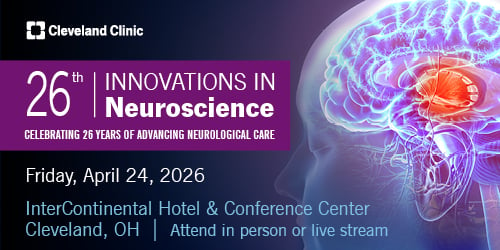
Cleveland Clinic 26th Innovations in Neuroscience 2026

$10.00
Innovations in Neuroscience 2026 covers epilepsy, dementia, stroke, neurocritical care, rehabilitation, pain, neuroplasticity and emerging neurology AI topics.
Delivery Information: This Product is shared via google drive download link. Please use your correct Gmail address at checkout.
Please note: there are no CME points or certificate associated with this course.
Samples for Courses Can be found here: Free Samples Here!
MedicalAmboss File Scope: This listing describes the educational subject matter for reference. Provider registration, live attendance, streaming-platform access, CME or other credit, certificates, memberships, apps, accounts, and publisher-hosted extras are not included unless they are explicitly listed as store files. MedicalAmboss.
Innovations in Neuroscience 2026: Cleveland Clinic Program
Cleveland Clinic Neuroscience 2026 | Neurology | Epilepsy | Stroke | Neurocritical Care | Dementia | Functional Neurological Disorders | Aphasia | Pain Management | Neurorehabilitation | Artificial Intelligence
Information
Cleveland Clinic 26th Innovations in Neuroscience 2026 is a multidisciplinary educational forum focused on contemporary advances in neurological diagnosis, treatment, rehabilitation, technology, and interdisciplinary patient care.
Presented by the Cleveland Clinic Neurological Institute, the 26th annual program brings together experts from neurology, epilepsy, cerebrovascular medicine, neurocritical care, pain medicine, behavioral health, physical therapy, occupational therapy, and speech-language pathology.
The program reviews both established standards of care and emerging innovations across a broad range of neurological conditions, including functional neurological disorders, dementia, epilepsy, neurocritical illness, aphasia, cerebrovascular disease, pain, neuroplasticity, rehabilitation, and artificial intelligence in neurological care.
A major theme of the symposium is the integration of multidisciplinary neurological care with rehabilitation and technology to improve both short- and long-term patient outcomes.
Course Details
- Course: 26th Innovations in Neuroscience
- Provider: Cleveland Clinic
- Institution: Cleveland Clinic Neurological Institute
- Date: April 24, 2026
- Location: InterContinental Hotel & Conference Center, Cleveland, Ohio
- Original Format: In-Person and Live Stream
- Specialty: Neurology / Neuroscience / Neurorehabilitation
- ANCC: Up to 6.75 Contact Hours
- AAPA: Up to 6.75 Category 1 CME Credits
- ASHA: 0.65 CEUs for eligible speech-language pathology participation
- Language: English
The original event also included an optional tour of the new Cleveland Clinic Neurological Institute building and reception following the scientific program.
Target Audience
The official Cleveland Clinic target audience includes:
- Nurses
- Nurse Practitioners
- Clinical Nurse Specialists
- Physician Assistants
- Occupational Therapists
- Physical Therapists
- Speech-Language Pathologists
The content is also particularly relevant for:
- Neurologists
- Epileptologists
- Vascular Neurologists / Stroke Specialists
- Neurocritical Care Specialists
- Behavioral Neurologists / Cognitive Specialists
- Physical Medicine and Rehabilitation Specialists (Physiatrists)
- Pain Medicine Specialists
- Psychiatrists
- Multiple Sclerosis Specialists
- Neurorehabilitation Specialists
- Advanced Practice Providers involved in neurological care
Program Overview
The 2026 Innovations in Neuroscience program addresses practical neurological problems across acute care, outpatient neurology, behavioral health, and rehabilitation.
Major areas include:
- Functional neurological disorders
- Dementia
- Epilepsy
- Neurocritical care
- Aphasia
- Cerebrovascular disease
- Pain management
- Neuroplasticity
- Neurological rehabilitation
- Artificial intelligence
- Healthcare technology
- Multidisciplinary neurological care
The conference combines lectures, breakout sessions, case-based learning, and expert discussion to support practical application in patient care.
Learning Objectives
After completing this activity, participants will be able to do the following:
- Recognize common neurological symptoms in various neurological diseases, and treatment options through lectures and case-based learning.
- Identify both standards of care and innovations in the management of specific neurological diseases, symptoms and patient populations.
- Discuss the role of functional medicine in neurological disorders.
- Describe the role of rehabilitation in the recovery process of patients with neurological disease and injury.
- Describe how multidisciplinary care is crucial to short- and long-term goals of patient management and how early intervention can help in achieving successful outcomes.
Official Program Topics
Treatment Options for Patients with Functional Neurological Disorders (FND)
Mary Kate Hutchinson, PT, DPT, NCS
This session reviews contemporary management of functional neurological disorders, emphasizing practical treatment approaches and the important role of rehabilitation.
Relevant areas include:
- Functional neurological symptoms
- Movement abnormalities
- Gait dysfunction
- Patient education
- Physical therapy
- Multidisciplinary care
- Functional recovery
Functional neurological disorders often require close collaboration between neurology, rehabilitation, psychology, and allied health professionals.
Advances in Dementia Management
Kasia Rothenberg, MD, PhD
This presentation reviews evolving strategies in dementia care.
Key clinical considerations include:
- Cognitive assessment
- Differential diagnosis
- Behavioral symptoms
- Disease progression
- Treatment options
- Caregiver support
- Long-term management
The session reflects ongoing advances in both diagnostic and therapeutic approaches to cognitive disorders.
Breakout Sessions
Clinical Pearls in Epilepsy
Susie Stanton, PA-C, MS, MSHS
This session provides practical clinical insights for evaluating and managing patients with epilepsy.
Topics may include:
- Seizure recognition
- Epilepsy diagnosis
- Treatment selection
- Medication management
- Patient counseling
- Clinical pitfalls
- Long-term follow-up
The presentation is particularly relevant for epileptologists, neurologists, and advanced practice providers caring for patients with seizure disorders.
Motivating the Non-Motivated
Sara Davin, PsyD, MPH
This behavioral-health session examines strategies for improving engagement in patients who may struggle with motivation, adherence, pain-related disability, or behavioral barriers to recovery.
Relevant concepts may include:
- Patient activation
- Motivation
- Behavioral change
- Goal setting
- Chronic pain
- Rehabilitation adherence
- Multidisciplinary care
Multi-Modality in Critical Care
Catherine Hassett, DO
This session addresses the use of multiple clinical tools and monitoring strategies in critically ill neurological patients.
Potential areas include:
- Neurocritical monitoring
- Cerebrovascular disease
- Physiologic assessment
- Neurological deterioration
- Multimodal decision-making
- Critical care integration
Advances in Aphasia Treatment
Megan Leonard, MA, CCC-SLP
This presentation reviews emerging and established approaches to rehabilitation of aphasia.
Major areas include:
- Language assessment
- Speech-language therapy
- Communication strategies
- Neuroplasticity
- Functional communication
- Recovery after neurological injury
The session highlights the role of speech-language pathology in neurological recovery.
Cerebrovascular Neurology
Inflammatory CV Disorders
G. Abbas Kharal, MD, MPH
This session examines inflammatory disorders affecting the cerebrovascular system.
Relevant topics may include:
- Cerebral vasculitis
- Vascular inflammation
- Stroke mechanisms
- Diagnostic evaluation
- Imaging
- Treatment
- Differential diagnosis
This topic is particularly relevant to vascular neurologists, neuroimmunologists, and physicians managing complex stroke presentations.
Pain and Neurorehabilitation
Advances in Pain Management for the Neurologic Patient Population
Pavan Tankha, DO
Neurological disease and injury are frequently complicated by acute or chronic pain.
This session reviews contemporary approaches to pain management in neurological patients.
Areas may include:
- Neuropathic pain
- Chronic pain
- Multimodal therapy
- Functional restoration
- Medication strategies
- Behavioral approaches
- Interdisciplinary pain management
Neuroplasticity in Rehab
Randy Karim, PT, DPT, NCS, CBIS, MSCS
Neuroplasticity is fundamental to rehabilitation after neurological injury and disease.
This session examines how therapeutic interventions can leverage adaptive changes in the nervous system to support:
- Motor recovery
- Functional improvement
- Skill relearning
- Mobility
- Participation
- Long-term rehabilitation
The presentation is especially relevant for physiatrists, physical therapists, occupational therapists, and clinicians involved in neurorehabilitation.
Artificial Intelligence and Technology
How Is AI/Tech Helping to Manage Neuro Patients
Robert Bermel, MD, MBA
Artificial intelligence and digital technology are increasingly influencing neurological care.
Potential applications include:
- Clinical decision support
- Medical imaging
- Data analysis
- Disease monitoring
- Predictive modeling
- Remote care
- Workflow optimization
- Personalized neurological management
The session examines how technology may support clinicians in managing complex neurological patients.
Future Neurological Care
New Cleveland Clinic Neurological Institute Building: An Advanced Healthcare Center
Panel: Kristen Vargo, Alex (Zhichun) Xu, and Robert Bermel
This session examines the new Cleveland Clinic Neurological Institute building and the role of advanced healthcare environments in neurological care.
Discussion may include:
- Integrated care delivery
- Facility design
- Patient-centered workflows
- Technology
- Multidisciplinary collaboration
- Rehabilitation integration
- Future models of neuroscience care
The program concluded with an optional tour of the Neurological Institute and reception.
Major Topics Covered
Functional Neurological Disorders
Functional neurological disorders can present with neurological symptoms that require careful clinical diagnosis and multidisciplinary treatment.
The symposium addresses practical therapeutic approaches with emphasis on rehabilitation.
Dementia and Cognitive Disorders
Cognitive decline and dementia represent increasingly important areas of neurological care.
The program reviews evolving management approaches and the role of behavioral neurology.
Epilepsy
Epilepsy management is included through a practical clinical pearls session emphasizing real-world decision-making.
Neurocritical Care
The critical care breakout track addresses multimodal approaches to the management of acutely ill neurological patients.
Stroke and Cerebrovascular Disease
Inflammatory cerebrovascular disorders are discussed within the context of vascular neurology and stroke diagnosis.
Aphasia
Language impairment after neurological injury is reviewed from a rehabilitation perspective.
Neurological Pain
Pain is an important contributor to disability in many neurological conditions and is addressed through a dedicated session on modern management.
Neuroplasticity
Neuroplasticity provides the biological foundation for neurological recovery and rehabilitation.
Artificial Intelligence in Neurology
The program explores how AI and technology can support diagnosis, monitoring, clinical decision-making, and neurological care delivery.
Multidisciplinary Neurological Care
The course emphasizes integration across:
- Neurology
- Neurocritical care
- Rehabilitation
- Pain medicine
- Psychology
- Nursing
- Physical therapy
- Occupational therapy
- Speech-language pathology
Multidisciplinary Neuroscience Care
Neurology
Provides diagnosis and management of neurological disease across epilepsy, stroke, cognitive disorders, and other conditions.
Epilepsy
Focuses on seizure recognition, treatment, and long-term epilepsy management.
Vascular Neurology
Addresses stroke, cerebrovascular inflammation, and vascular neurological disorders.
Neurocritical Care
Manages critically ill neurological patients requiring advanced monitoring and multidisciplinary care.
Behavioral Neurology and Psychiatry
Support patients with cognitive, behavioral, functional, and psychological neurological symptoms.
Physical Medicine and Rehabilitation
Coordinates restoration of function following neurological disease or injury.
Physical Therapy
Supports mobility, motor recovery, balance, and neuroplasticity-based rehabilitation.
Occupational Therapy
Helps patients regain independence in daily activities and meaningful participation.
Speech-Language Pathology
Addresses aphasia, communication, cognition, and swallowing-related rehabilitation.
Pain Medicine
Provides multimodal treatment for neurologic and chronic pain conditions.
Conference Directors
The official Cleveland Clinic conference directors were:
- Kristen Vargo, DNP, RN, NE-BC — Director of Nursing, Neurological Institute, Orthopaedics and Rheumatology
- Cindy Sutton, MSN, RN, CRRN — Nurse Manager, Neuro Step-Down and Epilepsy Monitoring Units
- Amy Young, MSN, APRN, ACCNS-AG, CCRN — Clinical Nurse Specialist, Neuro ICU and Neuro Step Down Units
Cleveland Clinic officially lists these three as the 2026 conference directors.
Selected Faculty
The official faculty included:
- Robert Bermel, MD, MBA — Mellen Center for Multiple Sclerosis
- Sara Davin, PsyD, MPH — Comprehensive Pain Recovery
- Catherine Hassett, DO — Cerebrovascular Center
- Mary Kate Hutchinson, PT, DPT, NCS — Physical Therapy
- Randy Karim, PT, DPT, NCS, CBIS, MSCS — Physical Therapy
- G. Abbas Kharal, MD, MPH — Cerebrovascular Center
- Megan Leonard, MA, CCC-SLP — Speech Therapy
- Kasia Rothenberg, MD, PhD — Lou Ruvo Center for Brain Health
- Susie Stanton, PA-C, MS, MSHS — Epilepsy Center
- Pavan Tankha, DO — Comprehensive Pain Recovery
- Zhichun (Alex) Xu, AIA, NCARB
These faculty members and affiliations are listed on the official Cleveland Clinic faculty page.
Why This Course Is Relevant
Modern neurological care increasingly depends on combining specialized medical treatment with rehabilitation, behavioral health, allied health expertise, and new technology.
The Cleveland Clinic 26th Innovations in Neuroscience 2026 integrates:
- Functional neurological disorders
- Dementia
- Epilepsy
- Neurocritical care
- Cerebrovascular disease
- Aphasia
- Pain medicine
- Neuroplasticity
- Rehabilitation
- Artificial intelligence
- Multidisciplinary neurological care
The program is especially relevant for clinicians who want a broad update on both traditional neurological management and emerging approaches to neurological recovery and patient-centered care.
CME and Continuing Education Information
Cleveland Clinic Center for Continuing Education is jointly accredited by ACCME, ACPE, and ANCC.
The original live activity was designated for:
- 6.75 ANCC Contact Hours
- 6.75 AAPA Category 1 CME Credits
- 0.65 ASHA CEUs for eligible speech-language pathology participation
Applications were also filed for occupational and physical therapy credit. Credit applies only to eligible participation in the original Cleveland Clinic activity and should not be assumed to accompany independently distributed educational recordings or files.
Short Description
Cleveland Clinic 26th Innovations in Neuroscience 2026 provides a multidisciplinary update on functional neurological disorders, dementia, epilepsy, neurocritical care, inflammatory cerebrovascular disease, aphasia, neurologic pain, neuroplasticity, rehabilitation, artificial intelligence, and emerging models of neurological care.
Topics
-
01 Dementia Management Updates – Emerging Therapies and Clinical Care Strategies
-
02 Managing Aphasia – Advances in Speech Therapy and Cognitive Rehabilitation
-
03 AI, Neurotechnology, and Digital Innovation in Neurologic Care at Cleveland Clinic
-
04 Neuropathic, Nociplastic, and Centralized Pain – New Approaches to Chronic Pain Management
-
05 Designing the Future of Neurologic Care – Cleveland Clinic’s New Neurological Institute
-
06 Vagus Nerve Stimulation, rTMS, and DBS in Poststroke Motor Recovery
-
07 Inflammatory Cerebrovascular Disorders – Diagnosing Vasculitis vs Atherosclerotic Stroke
-
08 Helping “Unmotivated” Patients in Neurology – Practical Strategies for Behavior Change and Engagement
-
09 Multimodality Monitoring in the NeuroICU – Personalized Cerebral Autoregulation and AI-Guided Care
-
10 Functional Movement Disorder Treatment – Education, Motor Retraining, and Nervous System Regulation
-
11 Clinical Pearls in Epilepsy – Seizure Classification, ASM Selection, and EEG Interpretation
Related products
Critical Care - Emergency medicine
2022 UPDATES IN THERAPEUTICS: CRITICAL CARE PHARMACY PREPARATORY REVIEW AND RECERTIFICATION COURSE
Critical Care - Emergency medicine
Internal Medicine

Internal Medicine

Internal Medicine
Internal Medicine
Internal Medicine
Cardiology