
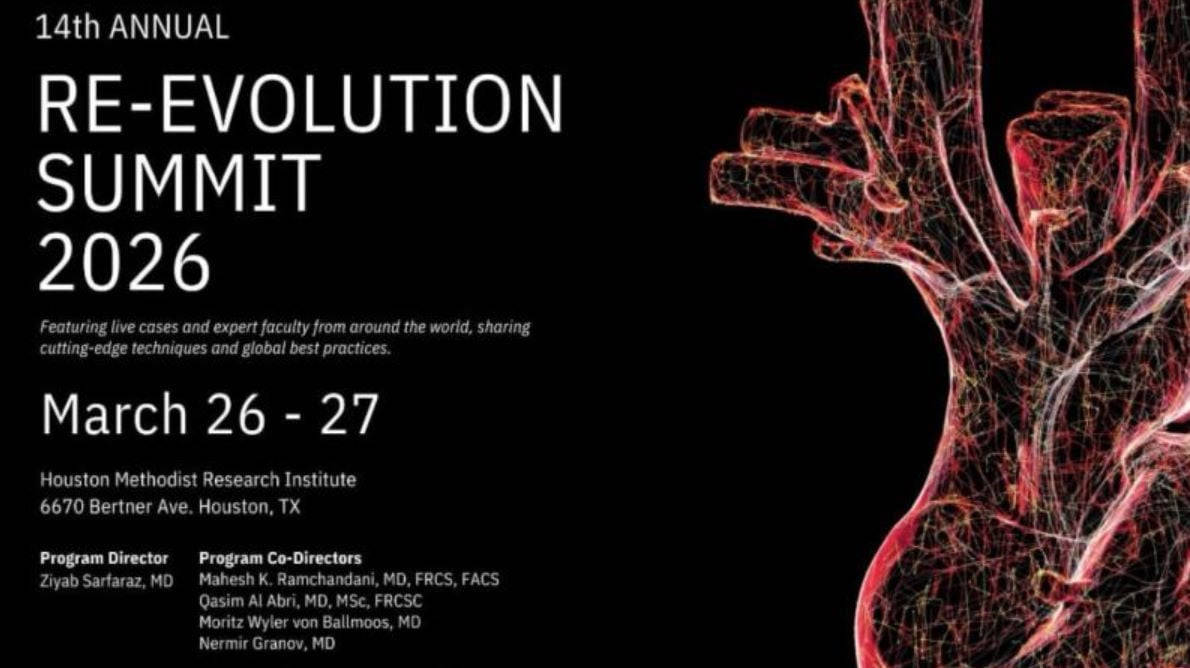
Houston Methodist 14th Annual Re-Evolution Minimally Invasive Cardiac Surgery (MICS) Summit 2026

$10.00
MICS Summit 2026 reviews minimally invasive and robotic cardiac surgery, mitral repair, AF ablation, valves, bypass and imaging.
Delivery Information: This Product is shared via google drive download link. Please use your correct Gmail address at checkout.
Please note: there are no CME points or certificate associated with this course.
Samples for Courses Can be found here: Free Samples Here!
MedicalAmboss File Scope: This listing describes the educational subject matter for reference. Provider registration, live attendance, streaming-platform access, CME or other credit, certificates, memberships, apps, accounts, and publisher-hosted extras are not included unless they are explicitly listed as store files. MedicalAmboss.
MICS Summit 2026: Minimally Invasive Cardiac Surgery
Houston Methodist MICS Summit 2026 | Minimally Invasive Cardiac Surgery | Robotic Mitral Valve Surgery | Aortic Valve Surgery | AF Ablation | TAVR | Coronary Bypass Surgery | Structural Heart Disease
Information
Houston Methodist 14th Annual Re-Evolution Minimally Invasive Cardiac Surgery (MICS) Summit 2026 is an advanced international cardiovascular surgical meeting focused on contemporary minimally invasive, robotic, endoscopic, and hybrid cardiac surgery.
Hosted at the Houston Methodist Research Institute and featuring hands-on training at the Houston Methodist Institute for Technology, Innovation & Education (MITIE), the summit brings together cardiac surgeons, interventional cardiologists, structural heart specialists, and other cardiovascular professionals to review practical techniques and emerging strategies designed to reduce surgical access trauma while maintaining procedural effectiveness.
The 2026 program emphasizes direct-vision and endoscopic mini-thoracotomy approaches, with lectures, live cases, hands-on training, and case-based discussions covering mitral valve surgery, atrial fibrillation treatment, aortic valve replacement, TAVR, coronary artery bypass strategies, advanced imaging, and aortic disease.
Houston Methodist describes the meeting as a practical training program in minimally invasive and robotic cardiac surgery with an emphasis on hybrid approaches and expert-instructed procedural education.
Course Details
- Course: 14th Annual Re-Evolution Minimally Invasive Cardiac Surgery (MICS) Summit
- Provider: Houston Methodist
- Institution: Houston Methodist Research Institute
- Training Center: Houston Methodist Institute for Technology, Innovation & Education (MITIE)
- Dates: March 26–27, 2026
- Location: Houston Methodist Research Institute, 6670 Bertner Ave., Houston, Texas
- Format: Lectures, Live Cases, Case Discussions, and Hands-On Training
- Specialty: Cardiothoracic Surgery / Structural Heart / Minimally Invasive Cardiac Surgery
- CME: Up to 9.0 AMA PRA Category 1 Credits™ for eligible participation in the original live activity
- Language: English
Target Audience
This activity is intended for:
- Cardiothoracic Surgeons
- Cardiovascular Surgeons
- Minimally Invasive Cardiac Surgeons
- Interventional Cardiologists
- Structural Heart Cardiologists
- Clinical Cardiac Electrophysiologists
- Cardiac Anesthesiologists
- Cardiovascular Imaging Specialists
- Perfusionists
- Physician Assistants
- Nurse Practitioners
- Nurses
- Cardiothoracic Fellows
- Surgical Residents
- Medical Students
- Allied Healthcare Professionals involved in advanced cardiac surgery
It is particularly relevant for Cardiothoracic Surgeons, Interventional Cardiologists, Clinical Cardiac Electrophysiologists, Cardiac Anesthesiologists, and Cardiovascular Imaging Specialists.
Program Overview
Cardiac surgery continues to move toward smaller incisions, improved visualization, faster recovery pathways, and increasingly sophisticated hybrid approaches.
The 2026 Re-Evolution Summit addresses this shift through practical education in:
- Minimally invasive cardiac surgery
- Robotic cardiac surgery
- Direct-vision mini-thoracotomy
- Endoscopic mini-thoracotomy
- Mitral valve repair
- Atrial fibrillation ablation
- Aortic valve replacement
- TAVR
- Minimally invasive coronary artery bypass surgery
- Advanced cardiovascular imaging
- Aortic disease
- Hybrid cardiac procedures
- Surgical education and training
The official program specifically identifies mitral valve and atrial fibrillation, advanced imaging, coronary artery disease, and aortic disease as major live-case and hands-on training domains.
Learning Objectives
Upon completion of this activity, participants should be able to:
- Evaluate operative techniques and patient selection criteria for minimally invasive and totally endoscopic aortic and mitral valve surgeries.
- Refine robotic surgical workflows for complex mitral valve repair, durable left atrial appendage (LAA) closure, and hybrid surgical ablation.
- Implement step-by-step minithoracotomy approaches for aortic valve replacement (AVR), annular enlargement, and ascending aorta/hemiarch replacement.
- Analyze lifetime management strategies comparing transcatheter (TAVR, TMVR, TR) and surgical valve interventions (SAVR, SMVR) in young and complex patients.
- Formulate salvage algorithms and re-operative strategies for structural valve failure and failed percutaneous interventions, including failed MitraClip.
- Integrate Enhanced Recovery After Surgery (ERAS) protocols, advanced intraoperative 3D imaging, and artificial intelligence into the modern cardiac surgical suite.
Major Topics Covered
Minimally Invasive Cardiac Surgery
The central theme of the summit is reducing operative access while preserving surgical precision.
Important concepts include:
- Mini-thoracotomy
- Direct-vision approaches
- Endoscopic approaches
- Reduced sternotomy strategies
- Robotic assistance
- Patient selection
- Operative exposure
- Cannulation strategies
- Team coordination
Robotic Cardiac Surgery
Robotic technology plays an increasingly important role in contemporary cardiac surgery.
The meeting provides practical exposure to robotic workflows and operative strategies that may support:
- Mitral valve repair
- Intracardiac visualization
- Smaller surgical access
- Precise dissection
- Suturing
- Multidisciplinary operating room coordination
Mitral Valve Repair
Mitral valve surgery is one of the core subjects of the summit.
The official program explicitly includes mitral valve repair within the practical MICS curriculum.
Key themes include:
- Minimally invasive mitral access
- Robotic repair
- Valve analysis
- Repair strategy
- Annuloplasty
- Leaflet techniques
- Patient selection
- Durable repair
Atrial Fibrillation Ablation
The summit addresses AF ablation as an important component of minimally invasive cardiac practice.
Surgical and hybrid approaches may be integrated with valve surgery or performed within dedicated rhythm-management strategies.
Relevant areas include:
- Surgical ablation
- Hybrid ablation
- Rhythm management
- Left atrial procedures
- Patient selection
- Collaboration with electrophysiology teams
Left Atrial Appendage Management
LAA management is an increasingly important consideration in patients undergoing surgery for atrial fibrillation and other cardiac conditions.
The program context supports discussion of:
- Surgical closure
- Durable exclusion
- Stroke-risk reduction
- Integration with AF treatment
- Technique selection
Aortic Valve Replacement
AVR is specifically identified by the official summit as a core educational topic.
The course focuses on adapting aortic valve surgery to reduced-access approaches.
Potential procedural considerations include:
- Mini-thoracotomy
- Limited access
- Valve exposure
- Cardiopulmonary bypass strategy
- Prosthesis implantation
- Operative efficiency
TAVR and Surgical Valve Strategy
The official program includes TAVR alongside surgical AVR, reflecting the need for cardiac teams to understand both transcatheter and operative approaches.
This encourages multidisciplinary decision-making based on:
- Age
- Anatomy
- Valve pathology
- Surgical risk
- Durability considerations
- Reintervention strategy
- Lifetime valve management
Structural Heart Disease
The summit brings surgical and interventional perspectives together.
Structural heart management increasingly requires coordinated decisions involving:
- Surgical valve replacement
- Transcatheter valve intervention
- Valve repair
- Re-intervention
- Hybrid strategies
- Imaging
- Heart-team evaluation
Minimally Invasive Coronary Artery Bypass Surgery
The official program specifically includes different strategies for minimally invasive coronary bypass surgery.
This may involve discussion of:
- Reduced-access CABG
- Limited thoracotomy
- Hybrid coronary revascularization
- Target selection
- Graft strategy
- Patient selection
- Technical exposure
Coronary Artery Disease
Coronary artery disease is listed as one of the key live-case and hands-on training domains.
The symposium approaches coronary revascularization from a minimally invasive and hybrid perspective.
Aortic Disease
Aortic disease is another major official program area.
Topics may involve:
- Aortic root disease
- Ascending aortic pathology
- Minimally invasive aortic surgery
- Operative exposure
- Complex reconstruction
- Patient selection
- Hybrid approaches
Advanced Imaging
Advanced cardiovascular imaging is specifically identified as a core training area.
Modern MICS depends heavily on accurate imaging for:
- Preoperative planning
- Valve assessment
- Structural heart evaluation
- Intraoperative guidance
- Procedural confirmation
- Postoperative evaluation
3D Imaging
Three-dimensional imaging can support planning and execution of complex minimally invasive procedures by improving visualization of:
- Valve anatomy
- Annular geometry
- Cardiac structures
- Surgical access
- Device positioning
Hybrid Cardiac Surgery
Houston Methodist states that the conference places emphasis on hybrid approaches.
Hybrid cardiac care combines surgical and catheter-based techniques to individualize treatment.
Potential applications include:
- Coronary revascularization
- Structural heart intervention
- Valve therapy
- Rhythm surgery
- Staged treatment strategies
Live Cases
Live operative cases are a major educational feature of the summit.
They allow participants to observe:
- Operating room workflow
- Surgical exposure
- Team communication
- Technical decision-making
- Imaging integration
- Procedural troubleshooting
Hands-On Training at MITIE
The course includes hands-on laboratory training at the Houston Methodist Institute for Technology, Innovation & Education (MITIE).
The practical format allows learners to reinforce:
- Procedural steps
- Instrument handling
- Minimally invasive access
- Surgical setup
- Robotic workflows
- Technical skills
Training the Next Generation of Cardiac Surgeons
The official program specifically identifies case-based lectures and discussions on how to train the next generation.
Important themes include:
- Skills development
- Simulation
- Robotic training
- Minimally invasive learning curves
- Faculty mentorship
- Team-based education
- Procedural standardization
Multidisciplinary Cardiac Care
The Re-Evolution Summit reflects the team-based nature of contemporary cardiac intervention.
Cardiothoracic Surgery
Provides operative expertise in minimally invasive, robotic, valve, coronary, and aortic procedures.
Interventional Cardiology
Contributes expertise in transcatheter valve and structural heart therapies.
Electrophysiology
Supports management of atrial fibrillation and hybrid rhythm strategies.
Cardiac Anesthesiology
Plays a central role in hemodynamic management, intraoperative imaging, and perioperative safety.
Cardiovascular Imaging
Supports anatomical assessment, procedural planning, intraoperative guidance, and outcome evaluation.
Perfusion
Supports cardiopulmonary bypass and extracorporeal management adapted to minimally invasive techniques.
Course Directors
The official 2026 faculty page lists the following course directors:
- Qasim Al Abri, MD
- Mahesh Ramchandani, MD, FRCS, FACS
- Nermir Granov, MD, PhD
- Ziyab Sarfaraz, BSc, MD, FRCSC
- Moritz Wyler von Ballmoos, MD, PhD, MPH, FACC, FAHA
Mahesh Ramchandani is listed as Chief, Section of Cardiac Surgery, Houston Methodist Hospital and Director of Minimally Invasive Cardiac Surgery.
Selected Faculty
The international 2026 faculty included:
- Joe Aoun, MD
- Marvin Atkins, MD
- Farhad Bakhtiary, MD
- Robert Balan, MHBA
- Gianluigi Bisleri, MD, FRCSC
- Ponraj Chinnadurai, MBBS
- Gry Dahle, MD, PhD
- Aly Ghoneim, MD, PhD, FRCSC
- Ali Hage, MD, MPH
- Zain Khalpey, MD, PhD, FACS
- Peter Knight, MD
- Ghulam Murtaza, MD
- Giulio Quarti, MD
- Basel Ramlawi, MD, FACS, FACC
- Michael Reardon, MD
- Lazar Velicki, MD, PhD
- Randall Wolf, MD, FACS, FACC
- Mahesh Ramchandani, MD, FRCS, FACS
- Moritz Wyler von Ballmoos, MD, PhD, MPH, FACC, FAHA
The faculty represented Houston Methodist and major cardiovascular centers from the United States, Canada, Europe, and other international institutions.
Why This Summit Is Relevant
Minimally invasive cardiac surgery is no longer limited to isolated valve procedures.
Modern MICS increasingly intersects with:
- Robotic surgery
- Structural heart intervention
- TAVR
- Hybrid revascularization
- Atrial fibrillation surgery
- Advanced imaging
- Aortic surgery
- Enhanced procedural training
The Houston Methodist 14th Annual Re-Evolution MICS Summit 2026 provides a concentrated technical update for clinicians seeking to refine operative technique while understanding how surgery fits within modern multidisciplinary cardiovascular care.
CME Information
The original live activity was jointly accredited through Amedco LLC and Well Assembled Meetings.
The activity was designated for a maximum of:
- 9.0 AMA PRA Category 1 Credits™ for physicians
- Up to 9.0 continuing education hours recognized for eligible nurse practitioners
- Up to 9.0 AMA PRA Category 1 Credits™ acceptable for eligible physician assistant recertification requirements
Credit applies only to eligible participation in the original accredited live activity and should not be assumed to accompany independently distributed recordings or files.
Short Description
Houston Methodist 14th Annual Re-Evolution Minimally Invasive Cardiac Surgery (MICS) Summit 2026 provides advanced education in minimally invasive and robotic cardiac surgery, including mitral valve repair, AF ablation, AVR, TAVR, minimally invasive coronary bypass, advanced imaging, aortic disease, hybrid approaches, live cases, and hands-on MICS training.
Topics
-
Welcome & Summit Vision
-
2026 Re-Evolution Summit – Welcome and Course Vision
-
-
Robotic & Endoscopic Mitral Valve Surgery
-
Robotic Mitral Valve Surgery – Technical Pearls for Durable LAA Closure
-
Robotic Mitral Valve Repair – Building a Sustainable Program From Launch to Mastery
-
Endoscopic Mitral Repair – Where Do We Stand in 2026
-
When Not to Offer Minimally Invasive Mitral Valve Surgery – The Talk Nobody Gives
-
Mitral Re-Operation Strategies Through Minimally Invasive Access
-
Failed MitraClip in Severe Mitral Regurgitation – Endoscopic Mitral Valve Replacement With Concomitant AF Ablation
-
-
Minimally Invasive & Endoscopic Aortic Valve & Aortic Surgery
-
Severe Aortic Regurgitation – Fully Endoscopic AVR via Lateral Minithoracotomy With 3D Visualization
-
Direct Vision Minithoracotomy AVR – Step by Step
-
Right Anterior Mini-Thoracotomy AVR with Annular Enlargement
-
Endoscopic Aortic Valve Replacement – Techniques, Outcomes, and Learning Curve
-
Robotic Aortic Valve Surgery – Where Roots Grow and Aneurysms Go
-
Ascending Aorta and Hemiarch Through a Mini-Thoracotomy – Techniques, Outcomes, Learning Curve
-
AVR Disaster – Houston, We Have a Problem
-
-
Structural Heart & Transcatheter Valve Interplay
-
Aortic Valve Disease in Younger Patients – Navigating TAVR-First vs SAVR-First Lifetime Management Strategies
-
When Should TAVI or SAVR Be First-Line Therapy for Aortic Valve Disease
-
Emerging Transcatheter Heart Valve Technologies – Which TAVR, TMVR, and TR Devices Are Shaping Future Care
-
Structural Heart and Valve Surgery – Navigating the Transition to Total Endoscopic Cardiac Surgery
-
-
Surgical Arrhythmia & Advanced Techniques
-
Mini Maze Revisited – Innovation, Durability, and Its Role in Modern AF Surgery
-
-
Quality, Technology & Program Building
-
Democratizing Minimally Invasive Surgery – Where Do We Stand in 2026
-
Artificial Intelligence in Cardiac Surgery – Building the AI-Enhanced Operating Room
-
Minimally Invasive Cardiac Surgery and ERAS – Building a Standardized Pathway for Faster Recovery
-
Minimally Invasive Cardiac Surgery – Advanced Imaging for Preoperative Planning and Intraoperative Guidance
-
Minimally Invasive Cardiac Surgery Training – Building Skills Through Fellowships and International Mentorship
-
-
Re-Evolution Talks – Moments with the Experts
-
Re-Evolution Talks – Moments with the Experts – Drs. Ramchandani and Velicki
-
Re-Evolution Talks – Moments with the Experts – Drs. Sarfaraz and Murtaza
-
Re-Evolution Talks – Moments with the Experts – Drs. Ramchandani and Knight
-
Re-Evolution Talks – Moments with the Experts – Drs. Sarfaraz and Bisleri
-
Re-Evolution Talks – Moments with the Experts – Drs. Ramchandani and Granov
-
Related products

Medical Accounts

USMLE / kaplan and Board Review
Uworld USMLE COMLEX Level 1 Qbank, Updated Jan 2023, System- and Subject-wise (PDF)

Internal Medicine
Cardiology

Internal Medicine

Critical Care - Emergency medicine
Critical Care - Emergency medicine

Internal Medicine