-
Harvard 41st Annual Critical Issues in Tumor Microenvironment 2026
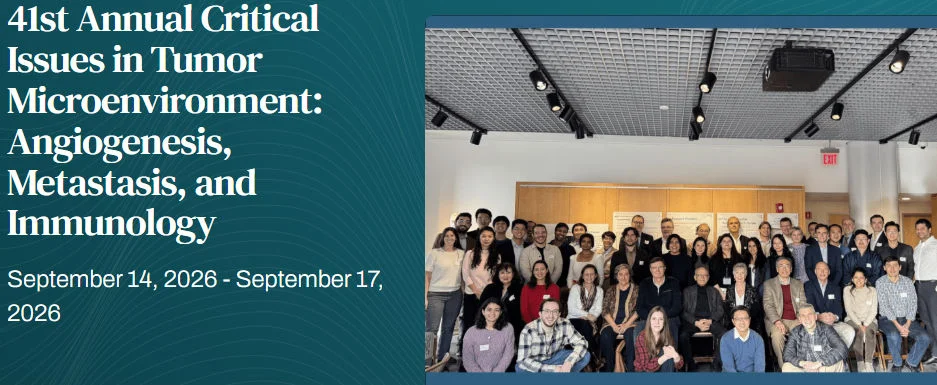
41st Annual Critical Issues in Tumor Microenvironment: Angiogenesis, Metastasis, and Immunology
Harvard 41st Annual Critical Issues in Tumor Microenvironment 2026 is an advanced four-day oncology and cancer research program examining the latest discoveries in tumor biology, angiogenesis, metastasis, cancer immunology, immunotherapy, metabolism, microbiome, cancer neuroscience, CAR T-cell therapy, tumor-associated fibroblasts, and artificial intelligence in oncology.
Directed by Professor Rakesh K. Jain, the program brings together internationally recognized investigators and clinicians to critically analyze current knowledge of the tumor microenvironment, identify major gaps in cancer research, and explore new directions for translating laboratory discoveries into improved cancer therapies.
Course Details
- Official Title: 41st Annual Critical Issues in Tumor Microenvironment: Angiogenesis, Metastasis, and Immunology
- Dates: September 14–17, 2026
- Duration: 4 Days
- Format: Live Online
- Institution: Harvard Medical School Continuing Education
- Offered By: Massachusetts General Hospital
- Course Director: Rakesh K. Jain, PhD
- Specialties: Oncology / Cancer Research / Tumor Biology / Immunology
- Language: English
- Recorded Access: Sessions are recorded and made available to registered participants for online viewing for 30 days following the course
Target Audience
This advanced program is particularly relevant for:
- Oncologists
- Cancer researchers
- Tumor biology researchers
- Immunologists
- Physician-scientists
- Specialty physicians
- Primary care physicians with an interest in oncology
- Radiation oncology professionals
- Cancer immunotherapy researchers
- Translational researchers
- Molecular and cellular biologists
- Biomedical scientists
- Fellows and trainees involved in cancer research
- Researchers studying tumor microenvironment, metastasis, angiogenesis, and cancer immunology
The official participant categories include Primary Care Physicians, Specialty Physicians, Researchers, and Others.
Program Overview
The 41st Annual Critical Issues in Tumor Microenvironment: Angiogenesis, Metastasis, and Immunology provides an in-depth critical analysis of current and emerging concepts in tumor microenvironment research.
The four-day online program examines how malignant cells interact with blood vessels, immune cells, fibroblasts, extracellular matrix, neurons, metabolic pathways, microbiota, and other components of the tumor ecosystem.
Major areas include:
- Tumor angiogenesis
- Vascular function
- Vascular normalization
- Cancer immunology
- Cancer immunotherapy
- Extracellular matrix
- Lymphatics
- Metastasis
- Cancer metabolism
- Tumor microbiome
- Circadian biology
- Cancer neuroscience
- Tumor-associated fibroblasts
- CAR T-cell therapy
- Solid-tumor immunotherapy
- Single-cell genomics
- Spatial genomics
- Biomarkers
- Pediatric malignancies
- Artificial intelligence in oncology
Learning formats include didactic lectures, trainee-led Q&A sessions, and group discussions.
The program emphasizes critical analysis of current evidence, limitations of existing research, emerging therapeutic approaches, biomarkers of treatment response and resistance, and opportunities to improve translation between laboratory research and clinical oncology.
Learning Objectives
Upon completion of this course, participants should be able to:
- Identify pharmacological approaches to normalize the tumor microenvironment, including tumor-associated blood vessels, fibroblasts, and the extracellular matrix.
- Evaluate molecularly targeted agents approved or currently in clinical development in combination with immunotherapies for cancer treatment and incorporate them into practice.
- Identify emerging determinants of immunotherapy outcomes, including blood vessels, fibroblasts, extracellular matrix, neuronal-tumor interactions, circadian cycle, microbiome, and discuss potential approaches to harness them.
- Compare correlative studies of biomarkers and their response and resistance to immunotherapies in cancer patients.
- Evaluate state-of-the-art genetic and imaging techniques and their applications in pre-clinical and clinical studies.
- Assess relevant, state-of-the-art, or translational pre-clinical models of anti-cancer therapies for adult and pediatric malignancies.
- Recognize the steps and determinants of the metastatic process of cancer.
- Identify the applications of AI in cancer care and research.
Official Program Topics
Day 1 — Monday, September 14, 2026
Opening Remarks
Faculty: Rakesh Jain
Tumor Microenvironment I: Angiogenesis and Vascular Function
Faculty: Rakesh Jain
An advanced examination of tumor angiogenesis and abnormal vascular function within the tumor microenvironment.
Q&A
Faculty: Rakesh Jain; Dai Fukumura
Tumor Microenvironment II: Vascular Normalization and Immunotherapy
Faculty: Rakesh Jain
Explores vascular normalization and its relationship to the effectiveness of cancer immunotherapy and other anticancer treatments.
Q&A
Faculty: Rakesh Jain; Dai Fukumura
Tumor Microenvironment III: Extracellular Matrix, Lymphatics and Metastasis
Faculty: Rakesh Jain
Examines the extracellular matrix, lymphatic system, tumor progression, and mechanisms involved in cancer metastasis.
Q&A
Faculty: Rakesh Jain; Dai Fukumura
Cancer Immunology and Immunotherapy Overview
Faculty: Arlene Sharpe
Comprehensive review of contemporary cancer immunology and the biological foundations and clinical development of cancer immunotherapy.
Q&A
Faculty: Arlene Sharpe; Zohreh Amoozgar
Day 2 — Tuesday, September 15, 2026
Skull Bone Marrow as a Site for Immuno-Surveillance of Healthy Brain and Brain Tumors
Faculty: Jonathan Kipnis
Explores the emerging role of skull bone marrow and immune surveillance in normal brain biology and brain tumors.
Q&A
Faculty: Marc Charbati
Neuron-Cancer Interactions in the TME
Faculty: Michelle Monje
Examines interactions between the nervous system and malignant cells and the emerging field of cancer neuroscience.
Q&A
Faculty: Anna Geraghty
Determinants of How Tumors Use Metabolism to Support Growth
Faculty: Matthew Vander Heiden
Explores metabolic adaptations that allow cancer cells and tumors to sustain proliferation and survival.
Q&A
Faculty: Sonu Subudhi
Emerging Strategies to Improve CAR-T Cell Therapy for Glioblastoma and Other Solid Tumors
Faculty: Hideho Okada
Examines emerging strategies designed to overcome barriers to effective CAR T-cell therapy in glioblastoma and other solid malignancies.
Q&A
Faculty: Sumedha Pareek
Day 3 — Wednesday, September 16, 2026
AI in Basic and Clinical Oncology
Faculty: Eliezer Van Allen
Explores applications of artificial intelligence in cancer biology, oncology research, precision medicine, and clinical cancer care.
Q&A
Faculty: Sonu Subudhi
Dissecting the Ecosystem of Gliomas by Single-Cell and Spatial Genomics
Faculty: Mario Suva
Examines the use of single-cell and spatial genomic technologies to characterize cellular heterogeneity and interactions within glioma ecosystems.
Q&A
Faculty: Daniel Radin
Mechanisms of the Gut Microbiome from Biomarker to Immunotherapy Adjuvant
Faculty: Bertrand Routy
Explores the relationship between the gut microbiome, cancer biomarkers, immune responses, and immunotherapy efficacy.
Q&A
Faculty: Benjamin Wolf
RREBELLIOUS INTERFERENCE: Challenging Old Paradigms and Discovering New Strategies for Targeting Pediatric Brain Tumors
Faculty: Robert Wechsler-Reya
Reviews emerging biological concepts and therapeutic strategies for pediatric brain tumors.
Q&A
Faculty: Taylor Uccello
Day 4 — Thursday, September 17, 2026
Fibroblast Heterogeneity in Solid Tumors: Implications for Pancreatic Cancer
Faculty: David Tuveson
Explores the biological diversity of cancer-associated fibroblasts and their implications for pancreatic cancer biology and treatment.
Q&A
Faculty: Heena Kumra
Metastasis Ecosystems
Faculty: Joan Massague
Examines the biological ecosystems and cellular interactions that support metastatic progression.
Q&A
Faculty: Lei Xu
Identifying Immune Vulnerabilities in Solid Tumors
Faculty: Lisa Coussens
Explores immune vulnerabilities within solid tumors and opportunities to exploit these mechanisms therapeutically.
Q&A
Faculty: Sumedha Pareek
Circadian Clock and Metabolic Vulnerabilities of Cancer
Faculty: Chi Dang
Examines connections between circadian biology, tumor metabolism, and potentially exploitable metabolic vulnerabilities in cancer.
Q&A
Faculty: Melin Khandekar
Summary and Closing Remarks
Faculty: Rakesh Jain
Major Topics
Tumor Microenvironment
Cellular, molecular, vascular, immune, stromal, and physical components that shape tumor development, progression, treatment response, and resistance.
Angiogenesis and Tumor Vasculature
Mechanisms of tumor angiogenesis, abnormal vascular function, and strategies for vascular normalization.
Vascular Normalization
Therapeutic approaches to normalize abnormal tumor blood vessels and improve drug delivery and immune responses.
Cancer Immunology
Interactions between cancer cells and the immune system, including mechanisms of immune surveillance and immune escape.
Cancer Immunotherapy
Biological mechanisms, biomarkers, resistance pathways, and strategies for improving responses to immunotherapeutic treatments.
CAR T-Cell Therapy
Emerging approaches for improving adoptive cellular therapies, particularly CAR T-cell treatment for glioblastoma and other solid tumors.
Cancer Metastasis
Biological steps and determinants involved in metastatic dissemination and the development of metastatic ecosystems.
Cancer-Associated Fibroblasts
Fibroblast heterogeneity, stromal biology, and the influence of fibroblasts on tumor progression and treatment response.
Extracellular Matrix and Lymphatics
Role of extracellular matrix architecture, physical forces, and lymphatic biology within the tumor microenvironment.
Cancer Metabolism
Metabolic adaptations and vulnerabilities that enable malignant cells to grow and survive.
Cancer Neuroscience
Emerging understanding of neuron-cancer interactions and the role of the nervous system within the tumor microenvironment.
Microbiome and Cancer
Influence of the gut microbiome on cancer biology, biomarkers, immune responses, and immunotherapy outcomes.
Circadian Biology and Cancer
Relationships between the circadian clock, metabolism, tumor biology, and potential therapeutic vulnerabilities.
Single-Cell and Spatial Genomics
Advanced genomic approaches for dissecting tumor heterogeneity and mapping cellular interactions within cancer ecosystems.
Brain Tumor Biology
Contemporary research into glioma, glioblastoma, pediatric brain tumors, immune surveillance, and tumor-neural interactions.
Artificial Intelligence in Oncology
Applications of AI in basic cancer research, precision oncology, biomarker discovery, clinical decision-making, and cancer care.
Course Director and Faculty
Course Director
Rakesh K. Jain, PhD
- Course Director
- A. Werk Cook Professor of Radiation Oncology, Harvard Medical School
- Director, Steele Laboratories for Tumor Biology, Massachusetts General Hospital
Professor Jain directs this long-running program examining the tumor microenvironment and its implications for cancer biology and therapy.
Featured Faculty
The 2026 program includes internationally recognized researchers and oncology experts, including:
- Rakesh K. Jain
- Dai Fukumura
- Arlene Sharpe
- Zohreh Amoozgar
- Jonathan Kipnis
- Marc Charbati
- Michelle Monje
- Anna Geraghty
- Matthew Vander Heiden
- Sonu Subudhi
- Hideho Okada
- Sumedha Pareek
- Eliezer Van Allen
- Mario Suva
- Daniel Radin
- Bertrand Routy
- Benjamin Wolf
- Robert Wechsler-Reya
- Taylor Uccello
- David Tuveson
- Heena Kumra
- Joan Massague
- Lei Xu
- Lisa Coussens
- Chi Dang
- Melin Khandekar
Why This Course Is Relevant
The tumor microenvironment is increasingly recognized as a critical determinant of cancer progression, metastasis, therapeutic response, and treatment resistance.
Rather than focusing exclusively on malignant cells, this program examines cancer as a complex biological ecosystem involving:
- Blood vessels
- Immune cells
- Fibroblasts
- Extracellular matrix
- Lymphatics
- Neurons
- Metabolic pathways
- Microbiota
- Circadian biology
- Physical properties of tumors
The program connects these mechanisms to major areas of contemporary cancer treatment, including immunotherapy, molecularly targeted therapies, CAR T-cell therapy, biomarkers, precision oncology, and AI.
Its translational emphasis makes it particularly valuable for investigators and clinicians seeking to understand how discoveries in tumor biology can be transformed into new therapeutic approaches and improved cancer treatment.
Short Description
Harvard 41st Annual Critical Issues in Tumor Microenvironment 2026 is a four-day advanced oncology and cancer research program directed by Rakesh K. Jain, PhD. The course explores tumor angiogenesis, vascular normalization, metastasis, cancer immunology and immunotherapy, CAR T-cell therapy, cancer metabolism, microbiome, cancer neuroscience, fibroblasts, extracellular matrix, single-cell and spatial genomics, brain tumors, circadian biology, and artificial intelligence in oncology.
- + Topics:
Day 1: Monday, September 14, 2026
Time Content Speaker 10:00 – 10:10 am Opening Remarks Rakesh Jain 10:10 – 11:20 am Tumor Microenvironment I: Angiogenesis and Vascular Function Rakesh Jain 11:20 – 11:35 am Q&A Rakesh Jain; Dai Fukumura 11:35 – 11:50 am Break 11:50 am – 1:10 pm Tumor Microenvironment II: Vascular Normalization and Immunotherapy Rakesh Jain 1:10 – 1:25 pm Q&A Rakesh Jain; Dai Fukumura 1:25 – 2:25 pm Lunch Break 2:25 – 3:45 pm Tumor Microenvironment III: Extracellular Matrix, Lymphatics and Metastasis Rakesh Jain 3:45 – 4:00 pm Q&A Rakesh Jain; Dai Fukumura 4:00 – 4:30 pm Break 4:30 – 5:35 pm Cancer Immunology and Immunotherapy Overview Arlene Sharpe 5:35 – 5:50 pm Q&A Arlene Sharpe; Zohreh Amoozgar Day 2: Tuesday, September 15, 2026
Time Content Speaker 10:00 – 11:05 am Skull Bone Marrow as a Site for Immuno- Surveillance of Healthy Brain and Brain Tumors Jonathan Kipnis 11:05 – 11:20 am Q&A Marc Charbati 11:20 – 11:50 am Break 11:50 am – 12:55 pm Neuron-Cancer Interactions in the TME *pre-recorded Michelle Monje 12:55 – 1:10 pm Q&A Anna Geraghty 1:10 – 2:10 pm Break 2:10 – 3:15 pm Determinants of How Tumors Use Metabolism to Support Growth Matthew Vander Heiden 3:15 – 3:30 pm Q&A Sonu Subudhi 3:30 – 4:00 pm Break 4:00 – 5:05 pm Emerging Strategies to Improve CAR-T cell Therapy for Glibolastoma and other Solid Tumors Hideho Okada 5:05 – 5:20 pm Q&A Sumedha Pareek Day 3: Wednesday, September 16, 2026
Time Content Speaker 10:00 – 11:05 am AI in Basic and Clinical Oncology Eliezer Van Allen 11:05 – 11:20 am Q&A Sonu Subudhi 11:20 – 11:50 am Break 11:50 am – 12:55 pm Dissecting the Ecosystem of Gliomas by Single-Cell and Spatial Genomics Mario Suva 12:55 – 1:10 pm Q&A Daniel Radin 1:10 – 2:30 pm Lunch Break 2:30 – 3:30 pm Mechanisms of the Gut Microbiome from Biomarker to Immunotherapy Adjuvant Bertrand Routy 3:30 – 3:45 pm Q&A Benjamin Wolf 3:45 – 4:00 pm Break 4:00 – 5:05 pm RREBELLIOUS INTERFERENCE: Challenging old paradigms and discovering new strategies for targeting pediatric brain tumors Robert Wechsler-Reya 5:05 – 5:20 pm Q&A Taylor Uccello Day 4: Thursday, September 17, 2026
Time Content Speaker 10:00 – 11:05 am Fibroblast Heterogeneity in Solid Tumors: Implications for Pancreatic Cancer David Tuveson 11:05 – 11:20 am Q&A Heena Kumra 11:20 – 11:50 am Break 11:50 am – 12:55 pm Metastasis Ecosystems Joan Massague 12:55 – 1:10 pm Q&A Lei Xu 1:10 – 2:10 pm Break 2:10 – 3:15 pm Identifying Immune Vulnerabilities in Solid Tumors *pre-recorded Lisa Coussens 3:15 – 3:30 pm Q&A Sumedha Pareek 3:30 – 4:00 pm Break 4:00 – 5:05 pm Circadian Clock and Metabolic Vulnerabilities of Cancer Chi Dang 5:05 – 5:20 pm Q&A Melin Khandekar 5:20 – 5:30 pm Summary and Closing Remarks Rakesh Jain