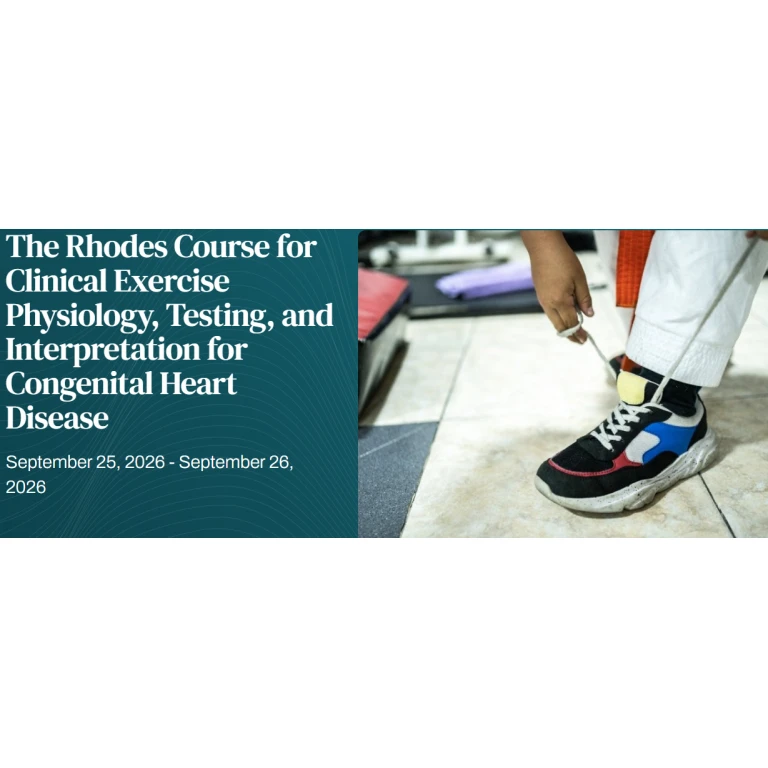
Harvard The Rhodes Course 2026 – Clinical Exercise Physiology, CPET Testing & Interpretation for Congenital Heart Disease (Videos + PDFs)

$64.00
Study CPET technique and interpretation in congenital heart disease with the 2026 Rhodes Course. Topics include exercise physiology, reliable data collection, clinical variables and case-based interpretation. The listing includes videos, PDF documents and subtitle files, with the original lecture and workshop agenda shown below.
Delivery Information: This Product is shared via google drive download link. Please use your correct Gmail address at checkout.
Please note: there are no CME points or certificate associated with this course.
Samples for Courses Can be found here: Free Samples Here!
Course Overview
The Rhodes Course examines how cardiopulmonary exercise testing can help assess patients with congenital heart disease. It moves from exercise physiology and test technique to data quality, interpretation and clinical cases involving hemodynamic changes, cyanosis and ischemia.
Developed by Boston Children’s Hospital, the September 25–26, 2026 program was held at the Museum of Science in Boston with an online attendance option. It is relevant to pediatric and congenital cardiology teams, exercise physiologists and professionals involved in CPET.
Listed materials: Video recordings, PDF documents and subtitle files. The original course included workshops; the download does not provide live workshop participation or establish that every interactive component was recorded.
Faculty and Contributors
The published 2026 program includes contributions from:
- William Orr
- Jesse Hansen, MD
- Tracy Curran
- Aimee Layton
- Francis Walsh, MS
- David A. White, PhD
- Adam Powell
- S. Moli Yin, MD
- Meg Vernon, MD
- Naomi Gauthier
- Daniel Ziebell, MD
- Shannon O’Malley, MS
- Jennifer H. Huang, MD
- Arash Sabati, MD
- Kendra Ward, MD, MS
- Danielle Burstein
- Jolie Britt
The faculty and workshop contributors represent pediatric cardiology, exercise physiology, congenital heart disease, cardiovascular diagnostics, and related clinical fields.
Topics
Day 1 – Friday, September 25, 2026
Introduction to Exercise Physiology, CPET, and Congenital Heart Disease
| Session | Faculty |
|---|---|
| Introduction | William Orr |
| Approach to CPET and Congenital Heart Disease | Jesse Hansen |
| Motivation: Science and Practice | Tracy Curran, Aimee Layton |
| Motivation Large Group Workshop | Tracy Curran, Aimee Layton |
| Conducting an Exercise Test: Pearls of Wisdom | Francis Walsh |
| Clinical Exercise Physiology Principles | David White |
| Exercise Physiology in Congenital Heart Disease | Adam Powell |
| CPET Data Variables: Definitions and Implications | Suellen Yin |
| CPET Demo | William Orr, Meg Vernon |
| Wrap Up | Naomi Gauthier |
Day 2 – Saturday, September 26, 2026
Advanced CPET Interpretation and Clinical Case Studies
| Session | Faculty |
|---|---|
| Introduction | Tracy Curran |
| Identifying High Quality Data | Aimee Layton |
| CPET Data Variable Review | Adam Powell |
| CPET Data Case Study Workshop | Daniel Ziebell, Shannon O’Malley, Jennifer Huang, Arash Sabati |
| Algorithms and Prediction Equations | William Orr |
| Case Study Workshop: Simple CHD | Daniel Ziebell, Shannon O’Malley, Jennifer Huang, Arash Sabati |
| Case Study Workshop: Exercise ECGs | Kendra Ward, Suellen Yin |
| Case Study Workshop: Hemodynamic Variations in CHD | Jesse Hansen, Danielle Burstein, Meg Vernon, Jolie Britt |
| Case Study Workshop: Complexity, Cyanosis, and Ischemia | Jesse Hansen, Danielle Burstein, Meg Vernon, Jolie Britt |
| Wrap Up and Summary | Naomi Gauthier |
Learning Objectives
After reviewing the educational content, learners should be better prepared to:
- Understand Exercise Physiology: Describe the fundamental principles of exercise physiology across different age groups, particularly in patients with congenital heart disease.
- Conduct and Interpret CPET: Understand the setup, conduct, and interpretation of cardiopulmonary exercise testing, including the clinical significance of key CPET variables.
- Analyze Physiological Responses: Evaluate physiological impairments and exercise limitations using clinical case examples involving congenital heart disease.
- Apply CPET Findings Clinically: Understand how CPET measurements can contribute to clinical assessment and management decisions.
- Recognize Reliable CPET Data: Identify factors affecting test quality, patient motivation, protocol selection, and the interpretation of exercise testing outcomes.
Related products
Obstetrics & Gynecology
Critical Care - Emergency medicine
Cardiology