
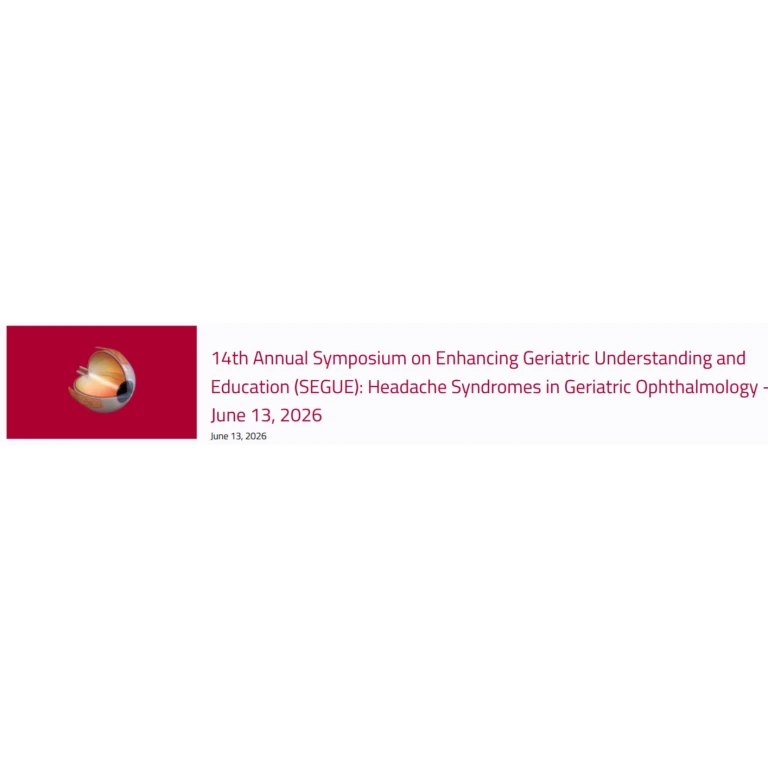
Houston Methodist 14th Annual SEGUE 2026 – Headache Syndromes in Geriatric Ophthalmology
$10.00
This Product is shared via google drive download link, So please share your correct Gmail id while placing the order .Please note that there are no CME points or certificate associated with this course Samples for Courses Can be found here : Free Samples Here!
EXPRESS DISCOVER PayPal
Houston Methodist 14th Annual SEGUE 2026 – Headache Syndromes in Geriatric Ophthalmology
12 Videos + Subtitles | Geriatric Ophthalmology • Neuro-Ophthalmology • Headache Medicine
Explore complex headache, visual, neuro-ophthalmic, and geriatric eye-care presentations with the Houston Methodist 14th Annual Symposium on Enhancing Geriatric Understanding and Education (SEGUE): Headache Syndromes in Geriatric Ophthalmology 2026.
Held on June 13, 2026, at the Houston Methodist Research Institute in Houston, Texas, this multidisciplinary symposium brings together ophthalmology, neuro-ophthalmology, headache medicine, geriatrics, rehabilitation, and primary care perspectives.
The MedicalAmboss digital package includes:
- 12 Recorded Symposium Videos
- Subtitle Files
- Approximately 5 Hours 22 Minutes
- English Language
- Download via Google Drive
- Offline viewing after download
- No PDFs
- No Presentation Slides
- No Handouts
- No Other Supplementary Course Materials
Important Package Notice
VIDEOS + SUBTITLES ONLY
No PDF syllabus, PowerPoint presentations, slide decks, handouts, or other supplementary materials are included.
Course Details
- Full Name: 14th Annual Symposium on Enhancing Geriatric Understanding and Education (SEGUE): Headache Syndromes in Geriatric Ophthalmology
- Provider: Houston Methodist
- Year: 2026
- Date: June 13, 2026
- Venue: Houston Methodist Research Institute
- Location: Houston, Texas
- Course Director: Andrew G. Lee, MD
- Videos: 12
- Duration: Approximately 5 Hours 22 Minutes
- Format: Videos + Subtitle Files
- Language: English
- Delivery: Google Drive
- Primary Specialty: Ophthalmology / Neuro-Ophthalmology
- Additional Focus: Headache Medicine / Geriatrics / Vision Rehabilitation
- MedicalAmboss CME / Certificate: Not Included
Course Overview
Older patients with headache and visual symptoms can present substantial diagnostic challenges.
A patient with:
- Headache
- Visual loss
- Diplopia
- Jaw claudication
- Ocular pain
- Anisocoria
- Papilledema
may have a relatively benign disorder—or a potentially sight-threatening or life-threatening condition.
The 2026 SEGUE symposium uses expert presentations and complex clinical cases to explore how clinicians can distinguish among:
- Ophthalmic disease
- Neuro-ophthalmic disease
- Neurologic disease
- Vascular disorders
- Inflammatory disease
- Systemic illness
- Neuropathic pain syndromes
The educational framework can be summarized as:
Presenting Symptom → Ocular Examination → Neurologic Assessment → Differential Diagnosis → Targeted Testing → Urgent vs. Non-Urgent Management → Functional Rehabilitation
Why Geriatric Ophthalmology Is Different
Older adults frequently have:
- Multiple medical conditions
- Polypharmacy
- Reduced mobility
- Cognitive impairment
- Hearing impairment
- Fall risk
- Reduced independence
- Complex treatment regimens
- Greater rehabilitation needs
These factors can influence:
- Diagnosis
- Treatment selection
- Medication adherence
- Surgical decisions
- Follow-up
- Functional outcomes
Geriatric ophthalmology therefore requires more than simply applying the same treatment strategy used in younger adults.
Major Clinical Areas Covered
The available recordings address:
- Geriatric Ophthalmology
- Neuro-Ophthalmology
- Headache in Older Adults
- Giant Cell Arteritis
- Jaw Claudication
- Diplopia
- Acute Vision Loss
- Choroidal Ischemia
- Acute Angle-Closure Glaucoma
- Papilledema
- Intracranial Hypertension
- Idiopathic Intracranial Hypertension
- Venous Sinus Stenting
- Stent Thrombosis
- Rheumatoid Arthritis-Associated Scleritis
- Ocular Inflammation
- Pharmacologic Anisocoria
- Trigeminal Neuralgia
- Anesthesia Dolorosa
- Occipital Nerve-Mediated Pain
- Vision Rehabilitation
- Low-Vision Care
- Functional Vision
- Private Equity in Ophthalmology
Complete Video Curriculum
1. Symposium Welcome
Duration: 10:22
Faculty: Andrew G. Lee, MD
Opening remarks introducing the 14th Annual Symposium on Enhancing Geriatric Understanding and Education (SEGUE) and its focus on geriatric eye care and headache syndromes.
2. Giant Cell Arteritis vs Cancer: Evaluating Headache, Jaw Claudication, and Diplopia in a Complex Patient
Duration: 31:51
Faculty:
- Safa Ibrahim
- Rod Foroozan
- Nagham Al-Zubidi
- Rosa Tang
- Jade Schiffman
- Edward J. Kroger
- Andrew G. Lee
This complex case explores a patient presenting with:
- Headache
- Jaw claudication
- Diplopia
with particular attention to differentiating giant cell arteritis (GCA) from cancer and other potential causes.
Giant Cell Arteritis
GCA is especially important in older adults because delayed diagnosis may result in irreversible visual loss.
Clinical clues can include:
- New headache
- Jaw claudication
- Scalp tenderness
- Constitutional symptoms
- Diplopia
- Acute visual symptoms
The key clinical principle is:
New Headache + Visual Symptoms in an Older Adult Requires Careful Evaluation for Secondary Causes
Diplopia in Older Adults
Diplopia may arise from multiple causes including:
- Cranial nerve dysfunction
- Neurologic disease
- Orbital disease
- Vascular disease
- Inflammatory disease
The clinical context helps determine which diagnoses require urgent evaluation.
3. Occupational Therapy Vision Rehabilitation: Optimizing Functional Vision and Quality of Life
Duration: 12:23
Faculty: Danny Zander
This session explores the role of occupational therapy in vision rehabilitation.
Major goals include helping patients:
- Make better use of remaining vision
- Improve safety
- Perform daily activities
- Maintain independence
- Improve quality of life
Functional Vision
Visual acuity alone does not fully describe how effectively a patient functions.
Clinicians should also consider:
- Reading
- Mobility
- Medication management
- Cooking
- Driving
- Fall risk
- Home safety
- Activities of daily living
4. Vision Rehabilitation in the Elderly: Strategies to Improve Functional Vision and Independence
Duration: 25:53
Faculty: Bhavani Iyer
This presentation reviews practical strategies for maximizing remaining visual function in elderly patients.
Vision rehabilitation can involve:
- Optical aids
- Environmental modifications
- Adaptive techniques
- Occupational therapy
- Patient education
- Multidisciplinary rehabilitation
The primary goal is:
Preserve Function and Independence Despite Visual Impairment
Low-Vision Rehabilitation
Low-vision services may be particularly important in patients whose vision cannot be fully restored medically or surgically.
Management should focus not only on disease treatment but also on:
- Independence
- Safety
- Daily function
- Quality of life
5. Idiopathic Intracranial Hypertension After Venous Sinus Stenting: Recognizing Chronic Headache From Stent Thrombosis
Duration: 14:24
This case examines recurrent or persistent headache following venous sinus stenting.
An important diagnostic consideration is:
Venous Sinus Stent Thrombosis
in a patient with recurrent symptoms after treatment for intracranial hypertension.
Idiopathic Intracranial Hypertension
IIH is associated with elevated intracranial pressure without an obvious mass lesion or other conventional structural cause.
Potential clinical findings include:
- Headache
- Papilledema
- Transient visual obscurations
- Diplopia
- Pulsatile tinnitus
- Visual-field abnormalities
Headache After Venous Sinus Stenting
Persistent headache after an intervention should not automatically be attributed to the original headache syndrome.
A clinician may need to consider:
- Recurrent intracranial hypertension
- Stent-related complications
- Thrombosis
- Alternative headache etiologies
6. Rheumatoid Arthritis–Associated Scleritis: Distinguishing Ocular Inflammation From Pharmacologic Anisocoria
Duration: 28:17
This case explores the intersection between:
- Rheumatoid arthritis
- Scleritis
- Ocular inflammation
- Anisocoria
- Medication-related findings
Rheumatoid Arthritis & Ocular Disease
Systemic inflammatory diseases can have ophthalmic manifestations.
Rheumatoid arthritis may be associated with inflammatory eye disorders such as scleritis.
Eye symptoms in a patient with systemic rheumatic disease should therefore be evaluated in the broader clinical context.
Pharmacologic Anisocoria
Anisocoria does not always represent structural neurologic disease.
Potential causes include:
- Physiologic variation
- Neurologic disease
- Ocular disease
- Pharmacologic exposure
The challenge is deciding whether the pupil abnormality is benign or requires urgent neurologic investigation.
7. Trigeminal Neuralgia After Radiofrequency Ablation: Recognizing and Managing Anesthesia Dolorosa
Duration: 18:49
The presentation reviews anesthesia dolorosa after radiofrequency ablation for trigeminal neuralgia.
Trigeminal Neuralgia
Trigeminal neuralgia typically causes episodes of severe facial pain involving one or more divisions of the trigeminal nerve.
Treatment may involve:
- Pharmacologic therapy
- Interventional procedures
- Selected surgical approaches
Anesthesia Dolorosa
Anesthesia dolorosa is a challenging neuropathic pain syndrome characterized by pain within an area of reduced or absent sensation.
This case reinforces the importance of recognizing potential complications following destructive trigeminal procedures.
8. Giant Cell Arteritis With Acute Vision Loss: Recognizing Choroidal Ischemia and Avoiding Misdiagnosis
Duration: 42:44
This case focuses on giant cell arteritis presenting with acute visual loss.
Particular attention is given to:
- Choroidal ischemia
- Acute vision loss
- Diagnostic pitfalls
- Avoiding delayed recognition
Acute Vision Loss
Sudden visual loss can be an ophthalmic emergency.
Potential mechanisms can involve:
- Retina
- Optic nerve
- Ocular circulation
- Inflammatory vascular disease
- Neurologic pathways
The timing and associated symptoms are critical.
Choroidal Ischemia
Choroidal circulation abnormalities can provide important clues in selected patients with suspected vascular or inflammatory eye disease.
Recognizing these findings may help prevent misdiagnosis.
9. Acute Angle-Closure Glaucoma: Recognizing Red Flags and Managing an Ophthalmic Emergency
Duration: 42:23
This session reviews one of the most important causes of headache associated with an ophthalmic emergency:
Acute Angle-Closure Glaucoma
Acute Angle Closure
Patients may present with combinations of:
- Severe ocular pain
- Headache
- Blurred vision
- Halos
- Red eye
- Nausea
- Vomiting
Prompt recognition is important because persistent elevated intraocular pressure can threaten vision.
Headache From Ocular Disease
Not every severe headache is neurologic.
Ophthalmic causes should be considered when headache occurs with:
- Eye pain
- Redness
- Visual disturbance
- Abnormal pupil findings
- Elevated intraocular pressure
10. Private Equity in Ophthalmology: How Practice Consolidation Is Reshaping Eye Care
Duration: 30:05
Faculty: Edward J. Kroger
This presentation examines the growing influence of:
- Private equity
- Practice acquisition
- Practice consolidation
- Changing ophthalmology business structures
and their potential effects on contemporary eye-care delivery.
Ophthalmology Practice Transformation
Clinical medicine increasingly operates within changing organizational and financial environments.
Ophthalmologists may therefore benefit from understanding:
- Ownership structures
- Practice consolidation
- Professional responsibilities
- Healthcare business trends
in addition to clinical knowledge.
11. Headache in Older Adults: Diagnosing and Managing Occipital Nerve–Mediated Pain
Duration: 18:55
Faculty: Pamela Blake
This presentation focuses on the evaluation of headache in older adults with particular attention to occipital nerve-mediated pain.
Headache in Older Adults
New headache in an older adult requires careful evaluation because the likelihood of a secondary cause differs from that in younger populations.
Important considerations may include:
- Giant cell arteritis
- Ocular disease
- Vascular disease
- Intracranial pathology
- Medication-related causes
- Neuropathic pain
Occipital Nerve-Mediated Pain
Occipital pain may arise from irritation or dysfunction involving the occipital nerves.
Clinical evaluation should distinguish this from:
- Migraine
- Cervicogenic headache
- Intracranial disease
- Other secondary headache disorders
12. Papilledema in Hemodialysis: Diagnosing AV Graft Thrombosis Causing Intracranial Hypertension
Duration: 45:43
The final recorded case combines:
- Papilledema
- Intracranial hypertension
- Hemodialysis
- AV graft thrombosis
within a multidisciplinary diagnostic discussion.
Papilledema
Papilledema indicates optic-disc swelling related to increased intracranial pressure.
Possible symptoms can include:
- Headache
- Transient visual obscurations
- Diplopia
- Pulsatile tinnitus
- Visual-field abnormalities
Identification should prompt evaluation for the underlying cause.
Intracranial Hypertension
Intracranial hypertension may result from multiple mechanisms.
The case demonstrates why clinicians should look beyond the eye and consider:
- Vascular disease
- Systemic disease
- Dialysis-related factors
- Thrombotic abnormalities
when evaluating papilledema.
Geriatric Neuro-Ophthalmology
Several recordings illustrate the overlap between:
Ophthalmology + Neurology + Headache Medicine
Conditions such as:
- Giant cell arteritis
- Papilledema
- Intracranial hypertension
- Diplopia
- Anisocoria
- Trigeminal neuralgia
may require coordinated evaluation rather than management within a single specialty.
Headache Red Flags in Older Adults
Important warning features may include:
- New-onset headache
- Sudden change in headache pattern
- Acute vision loss
- Diplopia
- Jaw claudication
- Papilledema
- Neurologic deficit
- Significant ocular pain
- Systemic symptoms
These findings can justify more urgent diagnostic evaluation.
Official Houston Methodist Learning Objectives
The original Houston Methodist activity also includes broader educational objectives in geriatric ophthalmology.
Participants were expected to improve their ability to:
- Describe glaucoma issues in elderly patients.
- Address treatment compliance and polypharmacy.
- Discuss medical and ophthalmic surgical decisions in elderly patients.
- Consider consent and postoperative fall/fracture risks.
- Review age-related macular degeneration.
- Discuss contemporary ARMD management.
- Understand the role of vitamin therapy where appropriate.
- Recognize the importance of low-vision services.
Important Package Distinction
These are objectives of the original Houston Methodist symposium.
The 12 available MedicalAmboss recordings are particularly concentrated on:
- Headache syndromes
- Neuro-ophthalmic cases
- GCA
- Vision rehabilitation
- Glaucoma-associated headache
- Intracranial hypertension
- Neuropathic pain
- Geriatric eye-care issues
Do not imply that every official SEGUE learning objective has a separate dedicated video in the MedicalAmboss package.
Major Topics Covered
- Geriatric Ophthalmology
- Neuro-Ophthalmology
- Headache Syndromes
- Headache in Older Adults
- Giant Cell Arteritis
- GCA
- Jaw Claudication
- Diplopia
- Acute Vision Loss
- Choroidal Ischemia
- Acute Angle-Closure Glaucoma
- Glaucoma
- Papilledema
- Intracranial Hypertension
- Idiopathic Intracranial Hypertension
- IIH
- Venous Sinus Stenting
- Stent Thrombosis
- Rheumatoid Arthritis
- Scleritis
- Anisocoria
- Trigeminal Neuralgia
- Anesthesia Dolorosa
- Occipital Neuralgia / Nerve-Mediated Pain
- Low Vision
- Vision Rehabilitation
- Occupational Therapy
- Ophthalmology Practice Management
Who Should Take This Course?
The official target audience includes:
- Ophthalmologists
- Optometrists
- Geriatricians
- Internists
- Family Practitioners
- Ophthalmology Residents
- Fellows
- Physician Assistants
- Registered Nurses
- Advanced Practice Nurse Practitioners
- Healthcare professionals interested in geriatric ophthalmology
The recordings are particularly useful for clinicians interested in:
- Neuro-Ophthalmology
- Headache Medicine
- Low-Vision Rehabilitation
- Geriatric Eye Care
Why This Symposium Is Useful
The Houston Methodist SEGUE 2026 recordings combine clinical ophthalmology with neurologic, systemic, geriatric, and rehabilitation perspectives.
Learners can review:
- Headache in elderly patients
- Giant cell arteritis
- Acute visual loss
- Diplopia
- Choroidal ischemia
- Acute angle-closure glaucoma
- Papilledema
- IIH
- Venous sinus stent thrombosis
- Scleritis
- Anisocoria
- Trigeminal neuralgia
- Anesthesia dolorosa
- Occipital nerve pain
- Low-vision rehabilitation
- Functional independence
- Ophthalmology practice trends
The educational pathway can be summarized as:
Headache / Visual Symptom → Identify Red Flags → Ophthalmic + Neurologic Differential → Diagnose → Treat / Refer → Preserve Vision and Function
Original Houston Methodist Accreditation
The original live Houston Methodist activity was designated for a maximum of:
- 5.00 AMA PRA Category 1 Credit™
- 3.50 Medical Ethics and/or Professional Responsibility
- 5.00 Attendance
- 5.00 Nursing Contact Hours
These credits applied to eligible participants completing the official Houston Methodist activity requirements.
MedicalAmboss CME / Certificate Notice
The MedicalAmboss product is independently supplied by Google Drive and does not include official CME points or a certificate.
Therefore, do not advertise this product as:
- 5 CME Credits Included
- 3.5 Ethics Credits Included
- Houston Methodist CME Certificate Included
- Official Nursing Contact Hours Included
The accurate wording is:
Original Houston Methodist Activity: Up to 5.00 AMA PRA Category 1 Credit™
and separately:
MedicalAmboss Digital Package: CME / Certificate Not Included
Package / Delivery Information
- Product: Houston Methodist 14th Annual SEGUE 2026 – Headache Syndromes in Geriatric Ophthalmology
- Provider: Houston Methodist
- Date: June 13, 2026
- Videos: 12
- Duration: Approximately 5 Hours 22 Minutes
- Language: English
- Format: Videos + Subtitle Files
- Delivery: Google Drive
- Offline Viewing: Available after download
- PDFs: Not Included
- Slides: Not Included
- Handouts: Not Included
- CME Points: Not Included
- Certificate: Not Included
4. Short Description
Houston Methodist 14th Annual SEGUE 2026 – Headache Syndromes in Geriatric Ophthalmology provides a multidisciplinary review of headache, neuro-ophthalmic disorders, visual loss, glaucoma, intracranial hypertension, and vision rehabilitation in older adults.
The MedicalAmboss package includes 12 videos + subtitle files with approximately 5 hours 22 minutes of content.
Topics include giant cell arteritis, jaw claudication, diplopia, acute vision loss, choroidal ischemia, acute angle-closure glaucoma, papilledema, IIH, venous sinus stent thrombosis, rheumatoid arthritis-associated scleritis, pharmacologic anisocoria, trigeminal neuralgia, anesthesia dolorosa, occipital nerve-mediated headache, and low-vision rehabilitation.
| Select | Full course Videos+Qbank, Only Videos, Only Qbank |
|---|
Related products

Neurology / neurosurgery courses

Neurology / neurosurgery courses
Critical Care - Emergency medicine

Internal Medicine
Critical Care - Emergency medicine
Gulfcoast Ultrasound-Guided Upper Extremity Nerve Blocks for Emergency Medicine

Neurology / neurosurgery courses
Critical Care - Emergency medicine